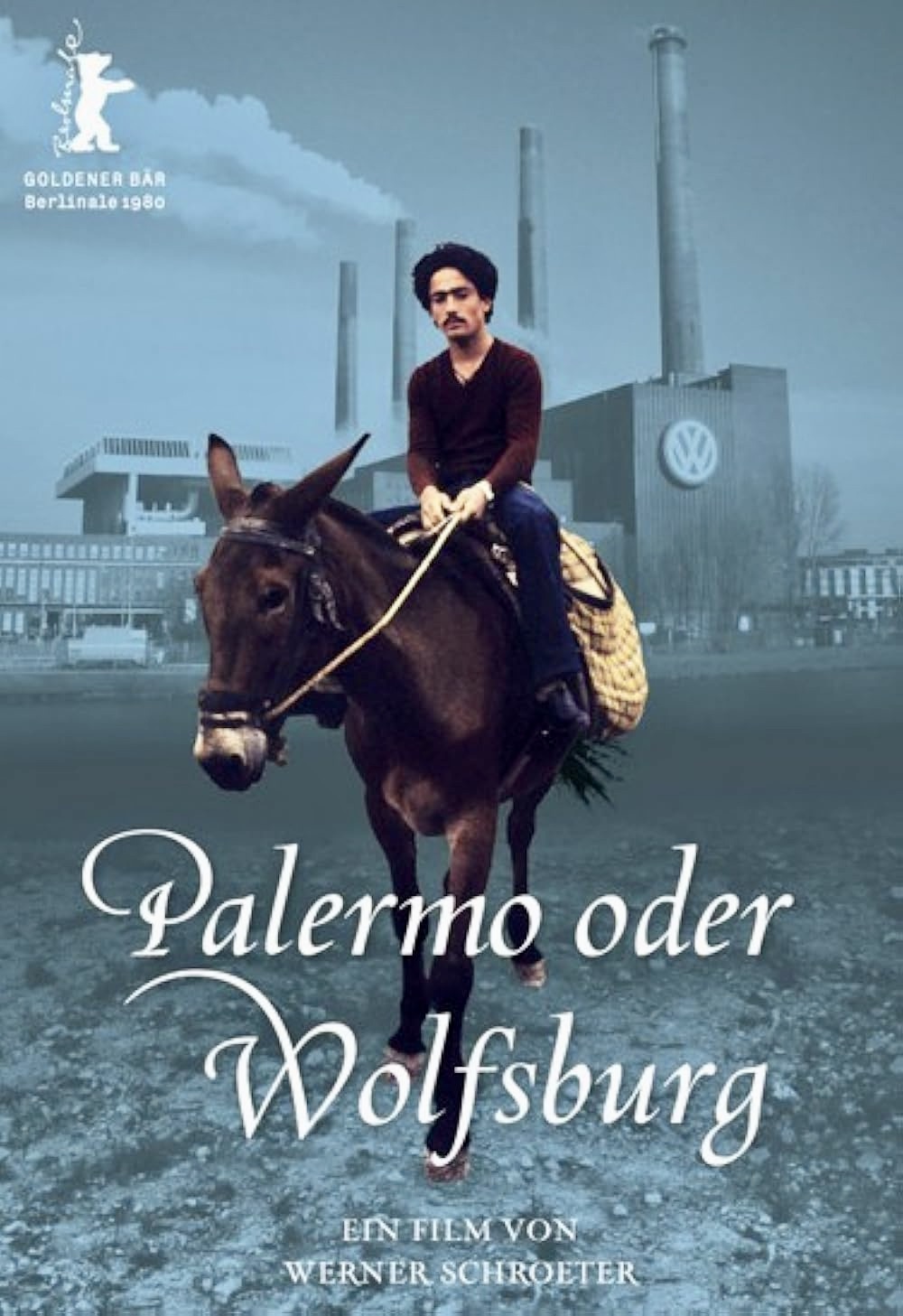
In recent years the immigrant problem in Germany has become more severe than previous times with Ukraine refugees joining the constant stream of immigrants from Turkey, Romania and other countries. This mirrors another migration that occurred in the seventies in Germany but that one helped fuel the country’s economy because the work force was supplemented by much needed laborers coming from Greece, Italy and other European locales. Palermo oder Wolfsburg aka Palermo or Wolfsburg (1980), directed by Werner Schroeder, is set during this latter period and tracks one man’s journey from Sicily to Germany where he hopes to find work to help support his impoverished family back home. Schroeder’s film not only shows the difficulties of outsiders trying to adapt to German life but also suggests that there is an incompatibility factor between Germany and other European cultures that can never be overcome. And this particular immigration tale unfolds like an epic tragedy.
Continue readingTag Archives: German cinema
The Perfect AI Companion
Artificial intelligence (AI) appears to be influencing almost every aspect of human life these days and that includes everything from robopets (as a replacement for the real thing) to the online dating industry. There are even humanoid robots powered by AI but, as yet, no one has created an android that could pass for a real person and interact with them without anyone being able to tell the difference. But it is only a matter of time and Ich Bin Dein Mensch (English title: I’m Your Man, 2021), directed by German filmmaker Maria Schrader, takes this premise and turns it into a thought provoking cautionary tale that is alternately amusing, disturbing, sexy and subversive without ever falling into the trap of being just a futuristic romantic comedy.
Continue readingArtist, Prankster and German Visionary
As 2017 drew to a close, Hollywood studios and independent film distributors raced to release their best movies in order to qualify for Oscar consideration. The documentary category in particular was unusually strong that year with such critically acclaimed contenders as JR & Agnes Varda’s Faces Places, Ai Weiwei’s Human Flow and Errol Morris’s The B-Side: Elsa Dorfman’s Portrait Photography. Mostly overlooked among the many offerings, however, was a remarkably diverse portrait of the artist Joseph Beuys (1921-1986) from Germany entitled Beuys (2017), directed by Andres Veiel.
Continue readingTrue Love Transcends Everything

Sometimes an offscreen scandal can kill or severely hamper a career (Fatty Arbuckle, Ingrid Bergman, Rose McGowan, etc.) or help bolster it as in the case of Mary Astor, Hedy LaMarr or Elizabeth Taylor. But what if the scandal is the film itself as in The Moon is Blue (1953), Baby Doll (1956) or Last Tango in Paris (1972)? That kind of notoriety can play out in different ways affecting the careers of the featured stars in a negative or positive way. A famous example of the latter is Die Sunderin (English title: The Sinner, 1951), a West German melodrama from Viennese director Willi Forst in which two social outcasts embark on a love affair which brings them true happiness and spiritual redemption after years of misery. The film created a public outcry in Germany due to a nude scene featuring the popular female star, Hildegard Knef. It might seem much ado about nothing today but at the time the typically conservative German moviegoer was offended. More importantly, it didn’t hurt Ms. Knef’s career at all and may have helped launch her international career. She was invited back to Hollywood the same year (where she had previously been under contract), made a few high profile films, and then returned to Germany where she not only resumed her film career but also became a renowned chanson-singer in the style of Marlene Dietrich, a mentor and friend.
Continue readingWhat a Piece of Work is Man
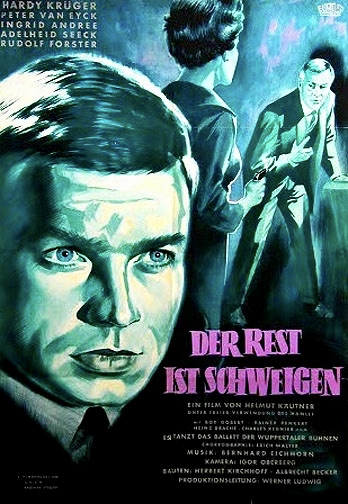
John Claudius, a professor of philosophy at Harvard, returns to his home in Germany after 20 years. As a young boy, he was sent to live with his mother’s relatives in Pittsburgh before World War II broke out. In his absence, his father built a financial empire with his munitions plant and became a respected member of the Nazi party. After Claudius senior was killed in a bombing raid, John’s mother Gertrud married Paul Claudius, the younger brother of her husband. The reason for John’s unexpected visit after 20 years is motivated by suspicions that his father was murdered by Paul and he is determined to learn the truth. Sound familiar? It should because The Rest is Silence (1959, German title: Der Rest ist Schweigen) is a loose adaptation of William Shakespeare’s Hamlet set in a post-WW2 Germany.
Continue readingBernard Wicki’s Die Brucke

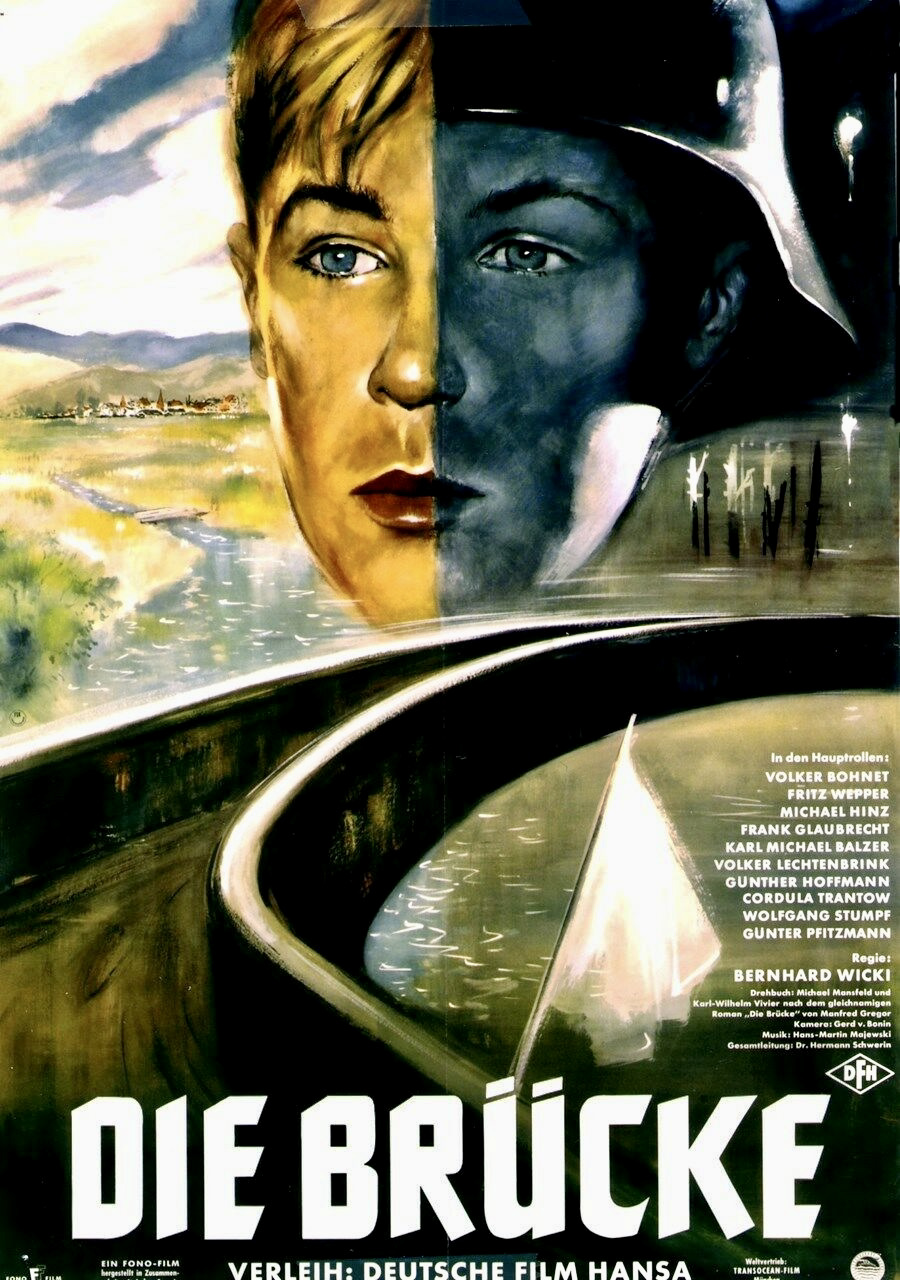
When film critics compile their favorite top ten lists of anti-war movies, you can usually expect to see titles like King Vidor’s The Big Parade (1925), Lewis Milestone’s All Quiet on the Western Front (1930), Stanley Kubrick’s Paths of Glory (1957), Kon Ichikawa’s Fires on the Plains (1959), Wolfgang Petersen’s Das Boot (1981) and Elem Klimov’s Come and See (1985) among the favored elite. It has only been in recent years that Bernhard Wicki’s The Bridge (German title: Die Brucke) has popped up on lists, thanks in part to The Criterion Collection, which remastered it on DVD and Blu-ray in June 2015. Almost forgotten since its original release in 1959, the film is just as powerful and moving as it was over sixty years ago.
Continue readingClimb Every Mountain

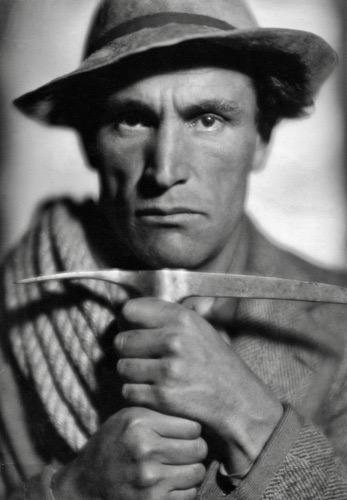
Luis Trenker – Alpinist, film director, architect, actor. photographer: Atelier Binder – property of Ullstein Bild – Atelier Binder/Everett Collection
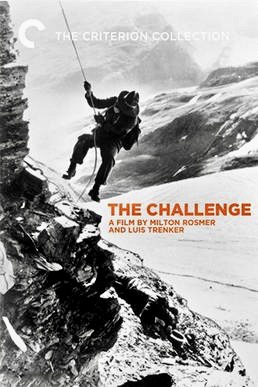
Rarely seen in the U.S. and not one of the better known films about a famous mountain-climbing expedition, The Challenge (1938) is an intriguing bridge between the German mountain films of Arnold Fanck (White Hell of Pitz Palu, 1929) and contemporary man-against-nature survival tales such as Philipp Stozl’s Northface (2008), where two Germans and two Austrians try to scale the Eiger in Switzerland, and Kevin Macdonald’s documentary reenactment Touching the Void (2003), the ill-fated trek by Joe Simpson and Simon Yates up the face of the Siula Grande in the Peruvian Andes. Luis Trenker, one of the stars of The Challenge, was honored in person at the Telluride Film Festival in 1983 at age 90 and Turner Classic Movies aired the film in one of their Telluride programming tributes in 2010. The Challenge was also offered on The Criterion Channel.
Continue reading
The Darling of Berlin

Eva Renzi makes her screen debut as an international model in Playgirl (1966), directed by Will Tremper.
A new kind of female protagonist emerged in the sixties who was free-spirited, independent, hedonistic and willing to exploit her beauty and charm for social advancement without being categorized as a typical prostitute. Audrey Hepburn certainly set the standard as the unconventional Holly Golightly in Breakfast at Tiffany’s (1961) but other famous examples include Julie Christie’s self-absorbed model in Darling (1965) and Genevieve Waite’s wide-eyed waif in Joanna (1968). Lesser known but a distinctly German variation on this prototype is 1966’s Playgirl (also known as That Woman in the U.S.) featuring Eva Renzi in her feature film debut. Continue reading
Voyage of Doom
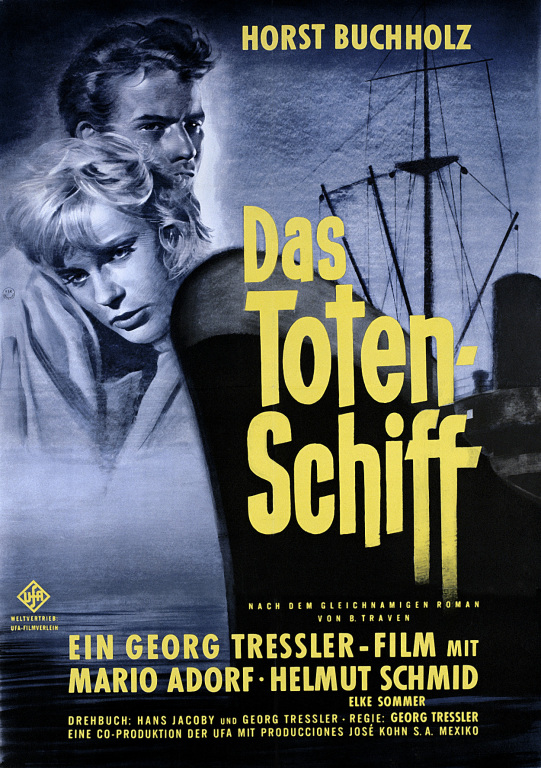
A former actor from Austria turned film director, Georg Tressler is not a name familiar to most American movie fans but for German filmgoers of the fifties he created a sensation with this 1956 feature film debut, Die Halbstarken (released in the U.S. as Teenage Wolfpack). As topical, incendiary and controversial in its day as The Wild One (1953), Rebel Without a Cause (1955) and Blackboard Jungle (1955), Die Halbstarken was a hard-hitting portrait of juvenile delinquency in post-war Germany and featured Horst Buchholz as a manipulative gang leader in a performance possibly inspired by James Dean. It was a huge hit and led Tressler to follow it up with two more youth-oriented films – Noch Minderjahrig (Under 18, 1957) and Endstation Liebe (Two Worlds, 1958). His fourth feature, Das Totenschiff (Ship of the Dead, 1959), was a complete departure from his trilogy in terms of content and was mostly ignored by critics and the public. But timing is everything and today Das Totenschiff looks like a lost classic from the pre-Berlin Wall era. And it may very well be Tressler’s finest achievement. Continue reading