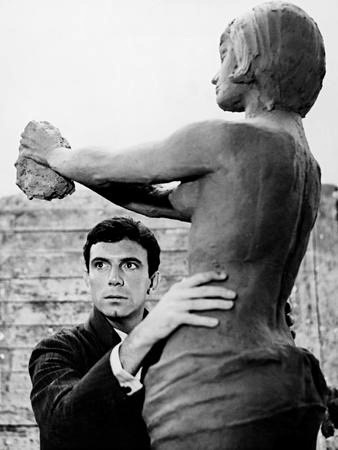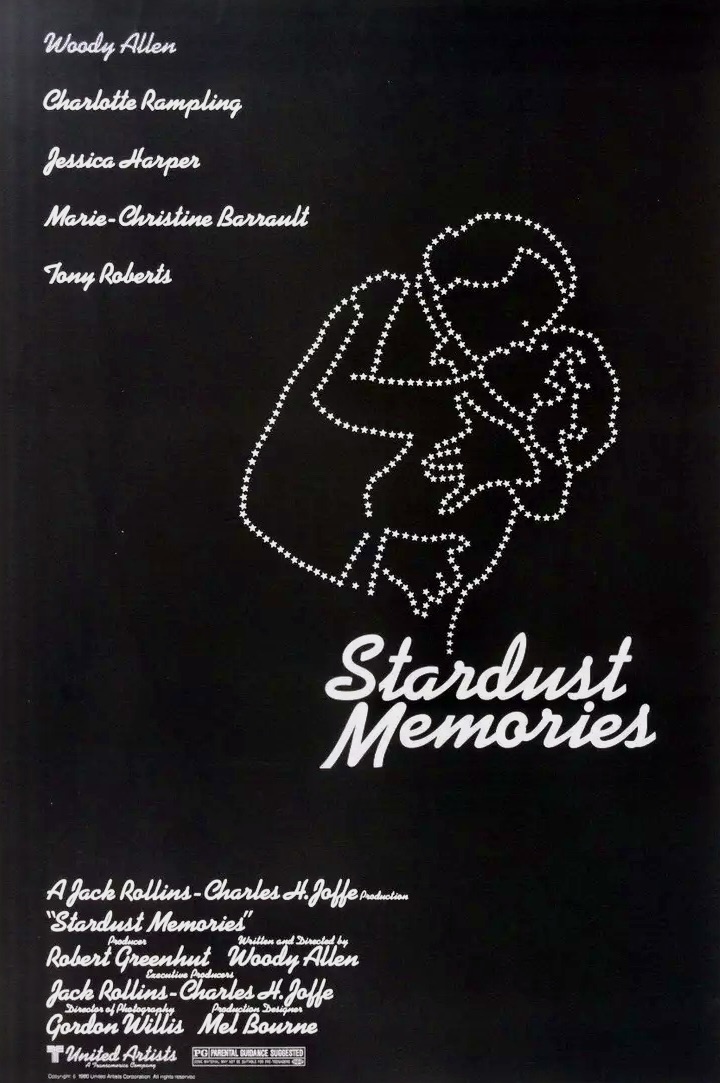
After directing more than fifty feature films including the three-part New York Stories (1989) with contributions from Francis Ford Coppola and Martin Scorsese and the re-edited/re-dubbed version of a Japanese spy thriller retitled, What’s Up, Tiger Lily? (1966), Woody Allen has one of the most impressive filmographies of any living director in Hollywood. Regardless of what you think about him as a person due to the controversy that surrounded his marriage to adopted stepdaughter Soon-Yi Previn, one can’t deny all of the critical acclaim he has amassed over the years, which includes 24 Oscar nominations, three of which won the Academy Award for Best Screenplay (Annie Hall, Hannah and Her Sisters and Midnight in Paris). Not all of his films have been box office hits and some have been minor efforts or polarizing like September (1987) or Deconstructing Harry (1997), but the true acid test for any fan or critic who loves Woody Allen movies is Stardust Memories (1980), his most misunderstood and generally maligned tenth feature about the downside of being famous.
Continue readingTag Archives: Dario Argento
There’s No Place Like Home
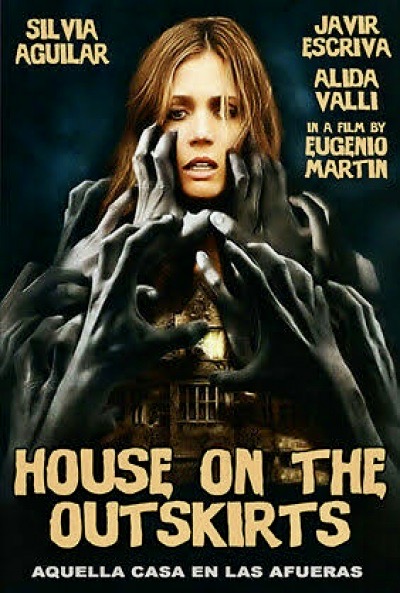
Spanish director Eugenio Martin is not a name familiar to the average American moviegoer but for fans of European genre films, he has developed a cult following over the years, thanks to the release on DVD and Blu-ray of some of his better known titles. Among these are the fast-paced, enormously entertaining sci-fi/horror/train disaster hybrid Horror Express (1970) with Christopher Lee, Peter Cushing and Telly Savalas, the giallo The Fourth Victim (1971) starring Carroll Baker, and A Candle for the Devil aka It Happened at Nightmare Inn (1973) in which two religious fanatic sisters are behind a series of murders. Martin also helmed several entrees in the Spaghetti Western genre such as The Ugly Ones (1966), Requiem for a Gringo (1968) and Bad Man’s River (1971) featuring Lee Van Cleef, James Mason and Gina Lollobrigida but some of his efforts defy easy categorization like Aquella Casa en las Afueras (English title: The House on the Outskirts, 1980), which is like a woman-in-peril melodrama crossed with an “old dark house” thriller. Throw in some unspoken but implied social commentary on women’s birthrights and you have a rather unique film from post-Franco Spain.
Continue readingSenilità aka Careless (1962)

Italian novelist Italo Svevo was the pseudonym for Ettore Schmitz, a novelist and short story writer who was born in Trieste in 1861. After publishing two unsuccessful novels, he gave up writing until his English tutor James Joyce encouraged him to continue and he wrote a third novel in 1823, Confessions of Zeno (considered his masterpiece) and several short stories which were not published until after his early death from an automobile accident in 1928. Svevo never received the acclaim he deserved during his own lifetime but now he is considered one of Italy’s most famous authors and a pioneer of the psychoanalytical novel. His novels and some of his short stories were later adapted for film and television productions but the first one to hit the screen was Senelita (aka Careless, 1962), based on his second novel. The story of an insecure, self-absorbed office worker approaching forty who develops an obsessive love for a beautiful working class girl, the film was an impressive early masterwork for director Mauro Bolognini and helped launch Claudia Cardinale as an international star (The following year she appeared in Federico Fellini’s 8 ½, Luchino Visconti’s The Leopard and made her American film debut in The Pink Panther).
Continue readingOedipus Rex in Drag
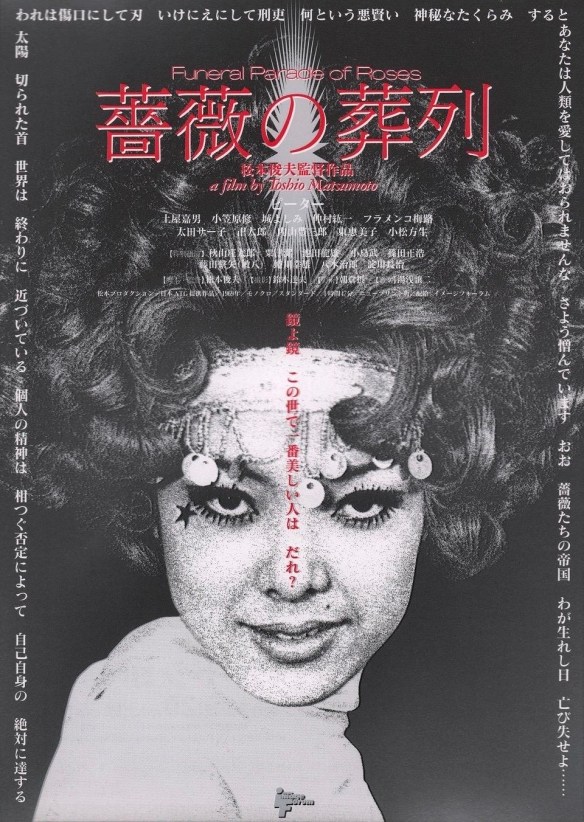
Next to William Shakespeare, Sophocles is probably the most enduring and internationally renowned dramatist in terms of his work still being adapted for the stage, television and cinema and I doubt you will find a more bizarre or outre version of his Greek tragedy Oedipus Rex than Funeral Parade of Roses. Directed by Japanese avant-garde filmmaker Toshio Matsumoto, this revelatory 1969 movie – it was his first feature film after several experimental shorts – is just as fresh and startling today as it was when it first appeared over fifty years ago. Continue reading
Anita Ekberg is a Screaming Mimi

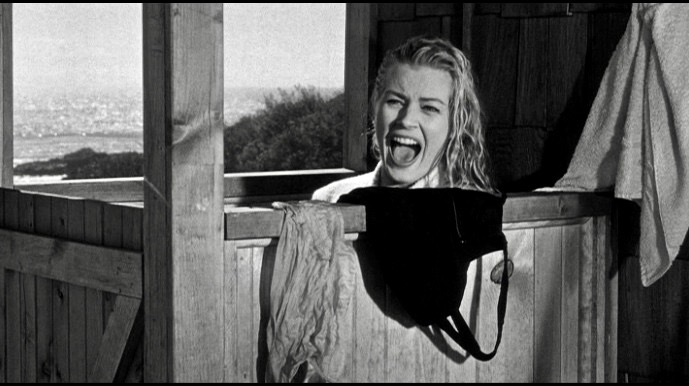
Anita Ekberg screams as a crazed maniac (offscreen) approaches her with a knife as she showers outside in Screaming Mimi (1958), directed by Gerd Oswald.
Every once in a while a psychological thriller comes along that is every bit as delusional and confused as its most disturbed character and that is certainly the case with Screaming Mimi (1958). Whether intentional or not, the movie abandons logic and the intricately plotted pleasure of a good whodunit to run amok in a nocturnal fantasy world populated by bohemians, strippers, sexual deviants and psychopaths. Continue reading
Cult of the Arachnids
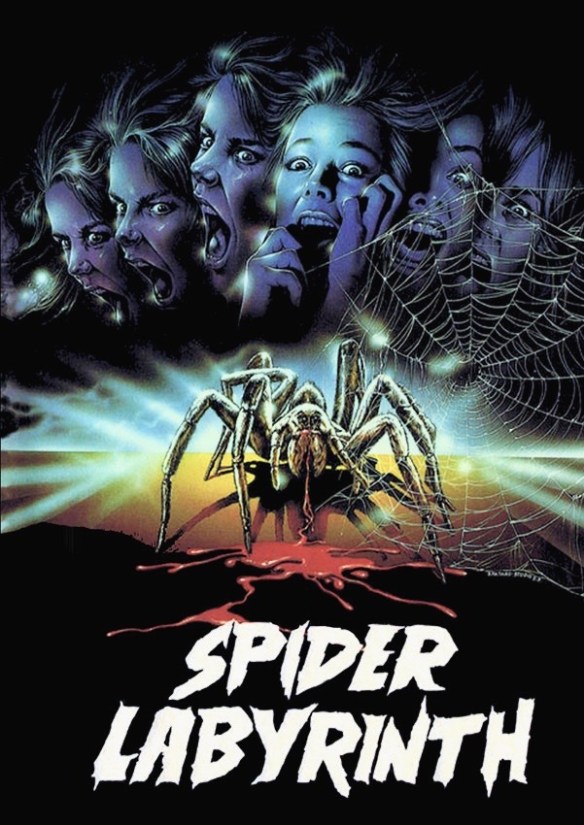
By the mid-1980s the Italian film industry was in a state of major decline. The glory years of the fifties and sixties were now fondly remembered footnotes in the history of world cinema and even the popular film genres – giallo, poliziotteschi, spaghetti western and horror – were near the end of their heyday. There were still a few determined stragglers such as Tinto Brass with his fetish based erotica (The Key, Miranda, Snack Bar Budapest) and Enzo G. Castellari, who soldiered on with formulaic hybrids like 1990: The Bronx Warriors, Tuareg: The Desert Warrior and Striker. But the horror genre, in particular, was suffering with masters of the macabre Lucio Fulci and Dario Argento trying but failing to top past high water marks like The Beyond (1981) and Suspiria (1977). It was during this downward trend that Gianfranco Giagni made his directorial debut with The Spider Labyrinth (Italian title: Il Nido del Ragno, 1988). Continue reading