Eskimo (1933) – Inuit Culture on Film

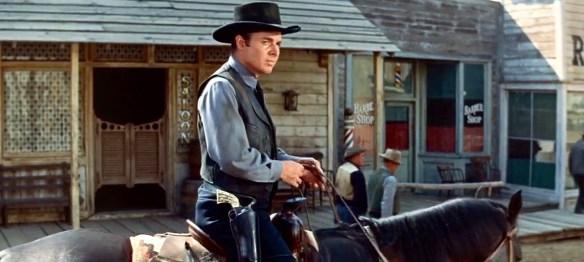
Alaskan actor Ray Mala (aka Mala, on right) stars in the 1933 MGM film ESKIMO.

Alaskan actor Ray Mala (aka Mala, on right) stars in the 1933 MGM film ESKIMO.

How many famous or highly regarded films about the Inuit culture can you name? Robert Flaherty’s Nanook of the North (1922) is probably at the top of the list but what else? The 1955 Oscar-nominated documentary Where Mountains Float, Nicholas Ray’s The Savage Innocents (1960), Zacharias Kunuk’s 2001 epic, Atanarjuat: The Fast Runner (2001), and Mike Magidson’s Inuk (2010) are all impressive achievements which need to be better known. But one of the most moving and evocative films is from 1933 entitled Eskimo, a word which is now an outdated and offensive reference to the Inuit and Yupik tribes who populate the Arctic Circle and northern bordering regions.   Continue reading

Satanic Sisterhood

(from left to right) Haydee Politoff, Ida Galli and Silvia Monti in Queens of Evil (aka La Regine, 1970)

(from left to right) Haydee Politoff, Ida Galli and Silvia Monti in Queens of Evil (aka La Regine, 1970)

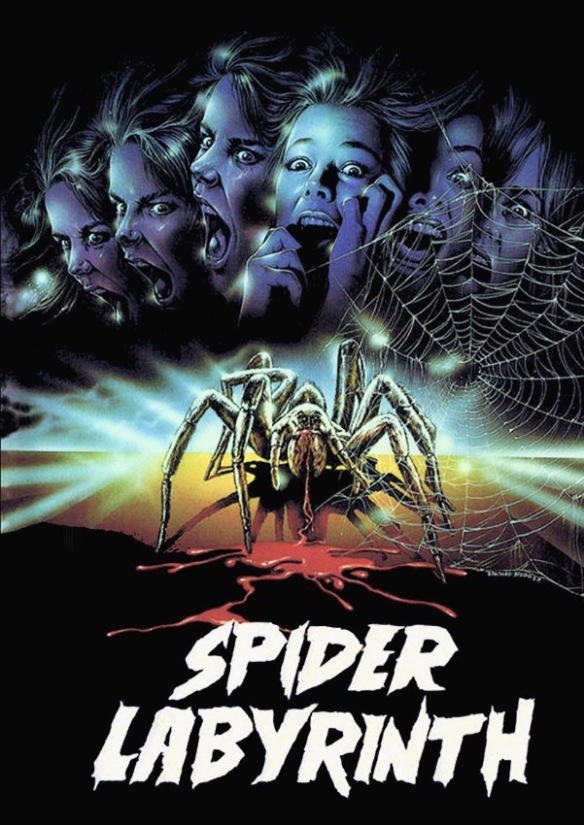
Tales of the Devil seducing and destroying man have been a popular theme in cinema since the silent era but Queens of Evil (aka La Regine,1970) puts a new spin on the concept which departs from the more familiar treatments we’ve seen in Faust (1926), The Devil and Daniel Webster (1941) or Rosemary’s Baby (1968). It’s weird, dreamlike, sexy, ominous, often unpredictable and unintentionally funny at times (in the English dubbed version). Though often lumped in the Italian horror category, Queens of Evil, directed by Tonino Cervi, is closer to a gothic fairy tale for adults or a cautionary allegory for its era about young idealists who reject the status quo but are susceptible to corruption when their innermost desires are unleashed.    Continue reading

House Proud

Kim Novak outside the dream house being designed by architect Kirk Douglas in Strangers When We Meet (1960).

Kim Novak outside the dream house being designed by architect Kirk Douglas in Strangers When We Meet (1960).

It’s not unusual for pre-production publicity on a new film to revolve around the star or the director but it’s particularly rare when it focuses on a construction site. In the case of the glossy 1960 soap opera, Strangers When We Meet, directed by Richard Quine, the real star of the movie was the cliff top Bel Air home that was constructed especially for the film by architect Carl Anderson and art director Ross Bellah.   Continue reading

Rocket Man

I Aim at the Stars (1960)It would be hard to find a more controversial figure in the history of space exploration than the brilliant rocket scientist Dr. Wernher von Braun, the subject of J. Lee Thompson’s biopic, I Aim at the Stars (1960).  Continue reading

Mimsy Farmer’s Strangest Movie?

Corpo d'amore (1972)Anyone who is a fan of Italian giallos, European art house fare and off the grid cult films is familiar with actress Mimsy Farmer. She left Hollywood in the late sixties after her “youth exploitation” days with American International Pictures in such films as Hot Rods to Hell and Riot on Sunset Strip. Relocating to Europe, she pursued film roles there for the remainder of her career. As an actress she was rarely drawn to mainstream commercial projects and a sampling of her eclectic filmography includes such diverse titles as Barbet Schroeder’s drug addiction opus, More (1969), George Lautner’s erotic melodrama Road to Salina (1970), Dario Argento’s 1972 murder mystery Four Flies on Grey Velvet, The Taviani Brothers’ critically acclaimed Allonsanfan (1974) and Serge Leroy’s survivalist thriller, La Traque (1975). But one of her most obscure and unusual roles is Fabio Carpi’s Corpo d’amore (aka Body of Love, 1972).

Continue reading

The Film Noir That Got Away

Maggie Smith and George Nader in the film noir, Nowhere to Go (1958)

Maggie Smith and George Nader in the film noir, Nowhere to Go (1958)

Ealing Studios. The name conjures up memories of the great British comedies such as The Man in the White Suit, The Ladykillers, The Lavender Hill Mob and Kind Hearts and Coronets.  Film noir, however, is not the genre that usually comes to mind although Ealing rubbed shoulders with it occasionally in It Always Rains on Sunday (1947) and Pool of London (1951). Oddly enough, one of the studio’s final releases, Nowhere to Go (1958) was pure, unadulterated noir and a stylish, terse little thriller to boot. Sadly, it has been overlooked and unappreciated for years even though it marks the feature film debut of director Seth Holt and gave actress Maggie Smith her first major screen role.  Continue reading

Dancing Queen

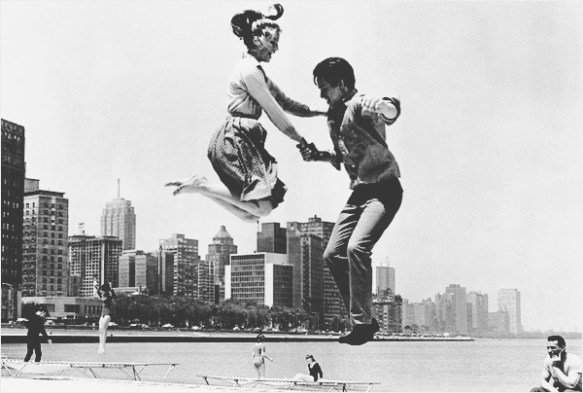
Helen (aka Helen Jairag Richardson Khan) is a Bollywood musical legend

Helen (aka Helen Jairag Richardson Khan) is a Bollywood musical legend

The title of the 31 minute documentary Helen, Queen of the Nautch Girls (1973) is a homage to the Indian superstar Helen, who may possibly hold the title of the most famous and beloved of all Bollywood film legends. A nautch girl in India is one who specializes in demonstrating a wide variety of popular dances and Helen had few rivals at this as demonstrated by the remarkable range of her talent in a head-spinning array of film clips from her long career. Continue reading

Defiantly Abnormal

(from left to right) Paul L. Smith, David Carradine, unidentified child actor, Brad Dourif) in Sonny Boy

(from left to right) Paul L. Smith, David Carradine, unidentified child actor, Brad Dourif) in Sonny Boy

Occasionally a movie comes along that is so unclassifiable and non-mainstream that you have to wonder who the filmmakers were targeting as their intended audience. Sonny Boy (1989), directed by the virtually unknown Robert Martin Carroll, is a remarkable example of this quandary. Is it an exploitation movie with art-film aspirations? The casting alone – David Carradine, Brad Dourif, Paul L. Smith, Sydney Lassick and Conrad Janis – has built-in cult appeal but the highly eccentric storyline and grotesque characters are completely polarizing. Either you’ll tune out immediately or watch in fascination and disbelief. It is hard to imagine an indifferent viewer.   Continue reading

Robert Altman and the Cult of James Dean

A young Robert Altman ponders a camera set-up.

A young Robert Altman ponders a camera set-up.

While it is rarely shown in retrospectives of his work, Robert Altman’s The James Dean Story (1957) is easily one of the more offbeat and poetic examples of documentary filmmaking. Officially cited as his second feature (Altman’s first was The Delinquents, 1957), The James Dean Story was co-produced and co-directed with George W. George, a former writing partner of Altman’s, as a serious exploration of the young actor’s mystique and impact on the youth culture of the fifties.   Continue reading

The Phobophobic Housewife

Margit Carstensen tries to relax by listening to music in Fear of Fear (1975) but it doesn't stop her increasing bouts of anxiety and depression.

Margit Carstensen tries to relax by listening to music in Fear of Fear (1975) but it doesn’t stop her increasing bouts of anxiety and depression.

Films about housewives losing their identity in a marriage or slowly going bonkers from the daily rituals of domesticity are plentiful enough to form their own distinctive subgenre. Among the most intriguing of these films, all of which reflect the specific time and cultural moment in which they were made, are Frank Perry’s Diary of a Mad Housewife (1970), John Cassavetes’ A Woman Under the Influence (1974), Chantal Akerman’s landmark 1975 feature, Jeanne Dielman, 23 Quia du Commerce, 1080 Bruxelles, Dusan Makavejev’s Montenegro (1981), and the curious Canadian indie Dancing in the Dark (1986), directed by Leon Marr. But the one I’d like to highlight and which I had the pleasure of revisiting recently on DVD is Fear of Fear (German title: Angst vor der Angst, 1975), directed by Rainer Werner Fassbinder. Continue reading