True Love Transcends Everything

Marina (Hildegard Knef) and Alexander (Gustav Frohlich) make a final toast to their eternal love for each other in Die Sunderin (English title: THE SINNER, 1951), a West German romantic tragedy directed by Willi Forst.

Sometimes an offscreen scandal can kill or severely hamper a career (Fatty Arbuckle, Ingrid Bergman, Rose McGowan, etc.) or help bolster it as in the case of Mary Astor, Hedy LaMarr or Elizabeth Taylor. But what if the scandal is the film itself as in The Moon is Blue (1953), Baby Doll (1956) or Last Tango in Paris (1972)? That kind of notoriety can play out in different ways affecting the careers of the featured stars in a negative or positive way. A famous example of the latter is Die Sunderin (English title: The Sinner, 1951), a West German melodrama from Viennese director Willi Forst in which two social outcasts embark on a love affair which brings them true happiness and spiritual redemption after years of misery. The film created a public outcry in Germany due to a nude scene featuring the popular female star, Hildegard Knef. It might seem much ado about nothing today but at the time the typically conservative German moviegoer was offended. More importantly, it didn’t hurt Ms. Knef’s career at all and may have helped launch her international career. She was invited back to Hollywood the same year (where she had previously been under contract), made a few high profile films, and then returned to Germany where she not only resumed her film career but also became a renowned chanson-singer in the style of Marlene Dietrich, a mentor and friend.

Continue reading

The Vampire Moth

The Japanese film poster for Kyuketsu-ga (English title: THE VAMPIRE MOTH, 1956).

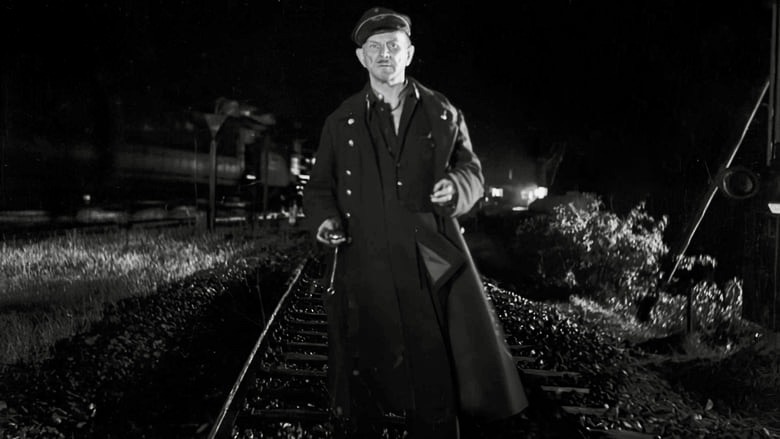
There are a number of classic Japanese horror/fantasy films from the fifties and sixties that genre fans in the U.S. have read about but never seen due to their unavailability on DVD or Blu-ray. In recent years a few of these have appeared in domestic release versions such as Nobuo Nakagawa’s 1960 allegorical masterpiece Jigoku (released by The Criterion Collection), in which a hit-and-run driver literally goes to hell, and the director’s 1968 supernatural tale Snake Woman’s Curse (released by Synapse Films). Many of the most famous examples of Japanese fantasy/horror from this period, however, still remain elusive for American viewers unless you own an all-region DVD/Blu-ray player and are willing to purchase import discs from Japan, often with no English subtitles. It is also true that many of these classic genre efforts were directed by Nakagawa who is famous for supernatural chillers as The Ghosts of Kasane Swamp (1957), Black Cat Mansion (1958), and The Ghost of Yotsuya (1959). But I have to admit that one of the director’s creepiest and least seen films is Kyuketsu-ga (English title: The Vampire Moth, 1956), which combines mystery thriller tropes with grotesque horror elements to achieve a delightfully macabre brew.

The Japanese poster for Kaidan Kasane-ga-fuchi (English title: THE GHOSTS OF KASANE SWAMP aka THE DEPTHS, 1957).
Continue reading

Cecil B. DeMille’s Seafaring Epic

When fans of classic films from Hollywood’s golden era exclaim “They don’t make ‘em like they used to,” they are usually referring to the kind of lavish, big-budget, audience-pleasing entertainments that were the specialty of Cecil B. DeMille during the silent and sound eras. Often derided by some critics as being corny and bombastic with an exploitable mix of sex, violence and quasi-religious elements, his most popular films were always in sync with what audiences wanted from a movie during his 45-year reign as a major Hollywood director/producer. Three of DeMille’s biblical epics, The Ten Commandments (1923), The King of Kings (1927), and Samson and Delilah (1949), along with Reap the Wild Wind (1942) are still considered some of the biggest box office hits in the history of Hollywood. The latter film, in particular, is an excellent example of his larger-than-life approach to storytelling mixing rival sea captains, a hurricane, and a giant red squid into a torrid romantic saga based on Thelma Strabel’s best selling novel.

Continue reading

Boy on a Mission

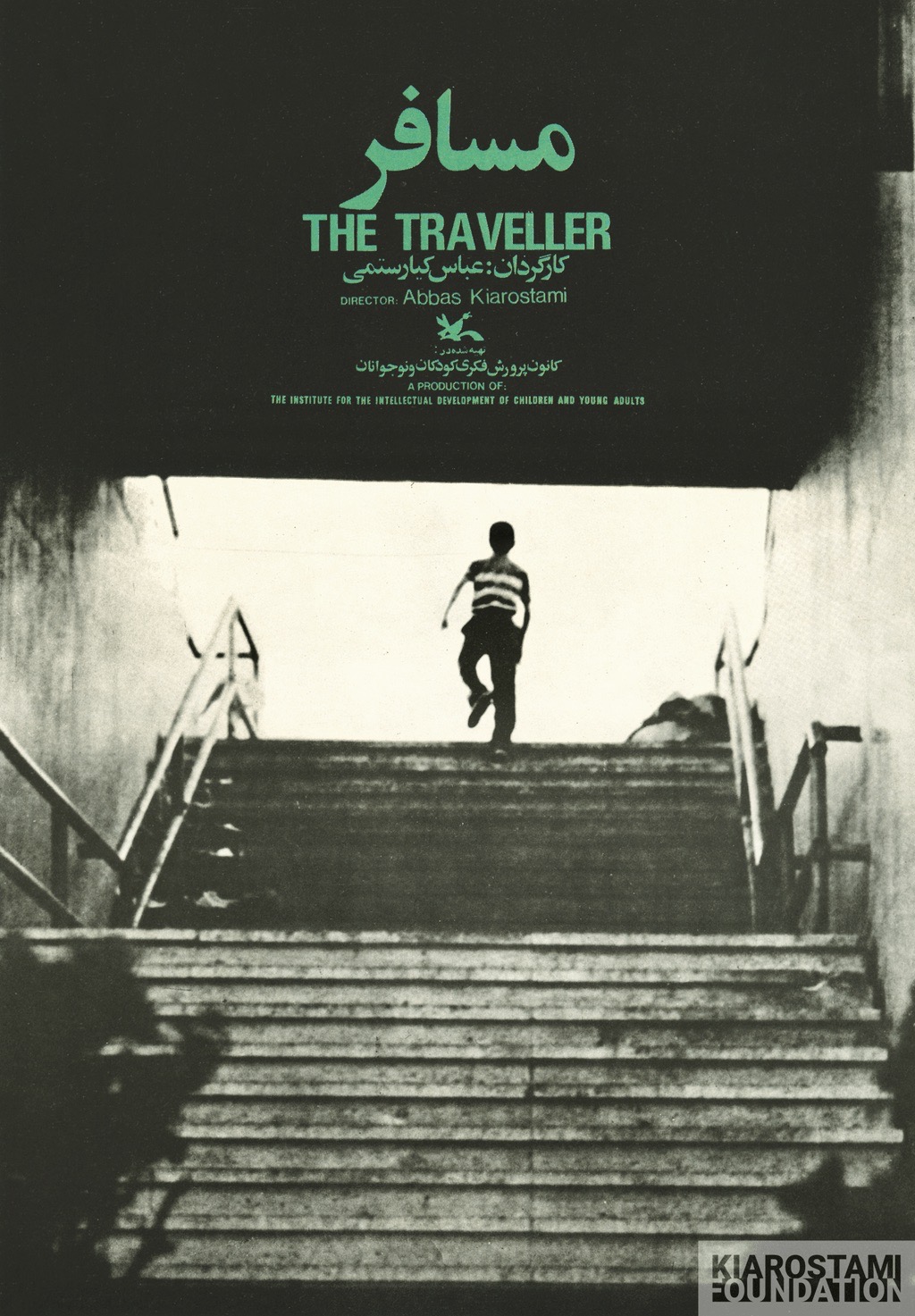
Qassam is a ten-year old living in the Iranian town of Malayer who is obsessed with soccer. When he isn’t skipping classes at school to play the game in back alleys, he is stealing money from his mother’s secret hiding place to buy soccer magazines. Considering the limited career choices available to Qassam after he finishes school, it is no wonder why soccer serves as the boy’s escape from reality. And his obsession becomes all-consuming when he learns that his favorite soccer team is coming to Tehran (which is approximately 385 miles away). He begins scheming of ways to raise the money required for the bus and game tickets. This is the basic premise of Abbas Kiarostami’s Mossafer (English title: The Traveler, 1974), which is both a parable about wanting something too much as well as an unsentimental portrait of an alienated and problematic kid in the tradition of Francois Truffaut’s The 400 Blows (1959).

Continue reading

Sherlock Holmes vs. Jack the Ripper

It seems surprising that Sir Author Conan Doyle’s most famous creation, Sherlock Holmes, and London’s most famous serial killer who stalked the Whitechapel neighborhood in 1888, were never brought together for one of Doyle’s novels. But the two were pitted against each other on screen for the first time in A Study in Terror (1966) and it’s one of the most underrated but entertaining entries among the Holmes-on-film mysteries created since the days of the Universal Basil Rathbone-Nigel Bruce series. 

Continue reading

Georgia on My Mind

Images from the 1930 film SALT FOR SVANETIA, filmed in the Republic of Georgia.

Svaneti is not a planet in the solar system or some alternate universe out of a science fiction fantasy but it might as well be. In truth, it is a remote region located in the northwestern part of the Republic of Georgia on the southern slopes of the Caucasus Mountain range. For centuries the area was cut off from civilization due to its inaccessible location in the mountains plus the extreme weather, that usually included eight straight months of snowfall, also made it unwelcoming. After Georgia was invaded and annexed by the Soviet Union in 1922, the region was subjected to Stalin’s five-year plan (1928-1932), which was created to spawn agriculture collectives across the nation and introduce large-scale industrialization. But Svaneti was so isolated from the rest of the world that it took a while for Soviet workers to reach the area and Jim Shvante (Marili svanets) [English title: Salt for Svanetia (1930)] is a portrait of the lives and traditions of the Ushkul tribe in that inhospitable domain before the Soviets arrived to develop it. The result is not a typical documentary but more of a folk culture microcosm as captured by some wildly creative ethnographic filmmaker. 

Continue reading

Portable Grindhouse: The Lost Art of the VHS Box

Fantagraphics Books, which was founded in 1976 by Gary Groth and Michael Catron, has always been one of the most creative and unique publishers of graphic novels, manga, comic strip anthologies and alternative comics like the Hernandez brothers’ Love and Rockets and Jay Disbrow’s The Flames of Gyro. The focus of the company has always been comics and graphic art but occasionally a one-of-a-kind anomaly will pop up in their release schedule such as Portable Grindhouse: The Lost Art of the VHS Box by Jacques Boyreau, which first appeared in their Fall 2009 catalog. With its oversized VHS box design complete with slipcase and fetishized detail, right down to the FBI warning and reminder to “Keep out of direct sunlight,” Portable Grindhouse is a must-have collectible for any movie buff.

Continue reading

Three Men and a Baby

Moviegoers often complain about the Hollywood practice of remaking a film that was popular the first time around so why make it again. The answer is obvious. A good story is worth retelling again and again and author Peter B. Kyne is one of those writers whose various novels and stories have been adapted to the screen more than 100 times, especially during the silent and early sound era. Many of these works were also adapted by screenwriters without his consent or any compensation from the studios but most film buffs will recognize his most popular creation, which was a 1913 novella entitled Three Godfathers (It first appeared in The Saturday Evening Post in November 1912). D.W. Griffith made a short silent version of it in 1913 with Harry Carey called The Sheriff’s Baby. There was a Universal silent version in 1916 which also starred Harry Carey, then a remake directed by John Ford in 1920 called Marked Men, and yet another remake by Ford in color and starring John Wayne in 1948 entitled 3 Godfathers. Other adaptations include a made-for-TV version entitled The Godson in 1974 and even a 2003 Japanese anime called Tokyo Godfathers from director Satoshi Kon as a homage to the original story. But one version that is often overlooked is Hell’s Heroes (1929) directed by William Wyler.

Continue reading

Fashion in the Nuclear Age

Models wearing metal sculptures as clothes are featured in a bizarre fashion show in the opening to William Klein’s WHO ARE YOU, POLLY MAGGOO? (1966).

The fashion industry has always been fair game as a target for satirists but the majority of movies about the fashion world have mostly been glamorizations of it (Funny Face, The Devil Wore Prada) or serious validations of the business like the 1995 documentary Unzipped featuring designer Isaac Mizrahi or The September Issue (2007), which focuses on Anna Wintour, editor-in-chief of Vogue. It is much harder to come up with memorable satires on the subject although the supremely silly Zoolander (2001) is fun and Robert Altman’s Ready to Wear aka Pret-a-Porter (1994) is an amusing minor trifle. One of the few exceptions is Qui Etes-Vous, Polly Maggoo? (English title: Who Are You, Polly Maggoo?, 1966), the feature film debut of renowned photographer William Klein, which brilliantly skewers the profession while dazzling you with its visual inventiveness and giddy high spirits.

Continue reading

The Stiletto Club

Conspiracy thrillers have been a popular subgenre in movies ever since the silent era with such memorable entries as The Ace of Hearts (1921) in which Lon Chaney stars as a member of a secret society that gets rid of people deemed unfit to live among them. Alfred Hitchcock’s The 39 Steps (1935) is an equally menacing early talkie classic and The Manchurian Candidate (1962), about a brainwashed ex-military hero being controlled by political subversives, is probably the best-known representative of all. However, it wasn’t until the 1970s that conspiracy thrillers reached an all-time high in popularity as witnessed by such iconic Hollywood releases as The Parallax View (1974), The Conversation (1974), Three Days of the Condor (1975), Capricorn One (1977) and The Boys from Brazil (1978). Other countries contributed their own variations on the genre like Spain, which released La Casa sin Fronteras (English title: The House Without Frontiers), a deeply unsettling effort from director Pedro Olea, which was made while General Franco was still in power and which prefigures the paranoid scenarios made popular by The Parallax View and others.

Continue reading