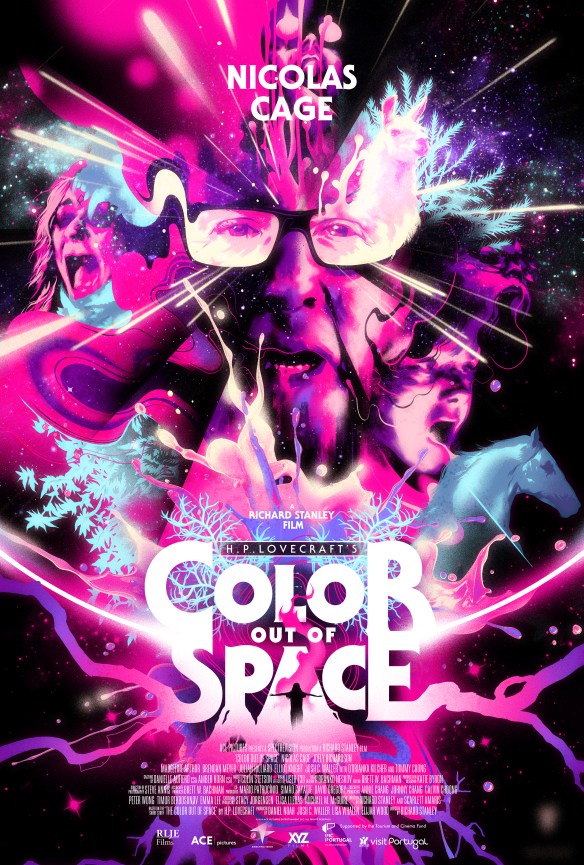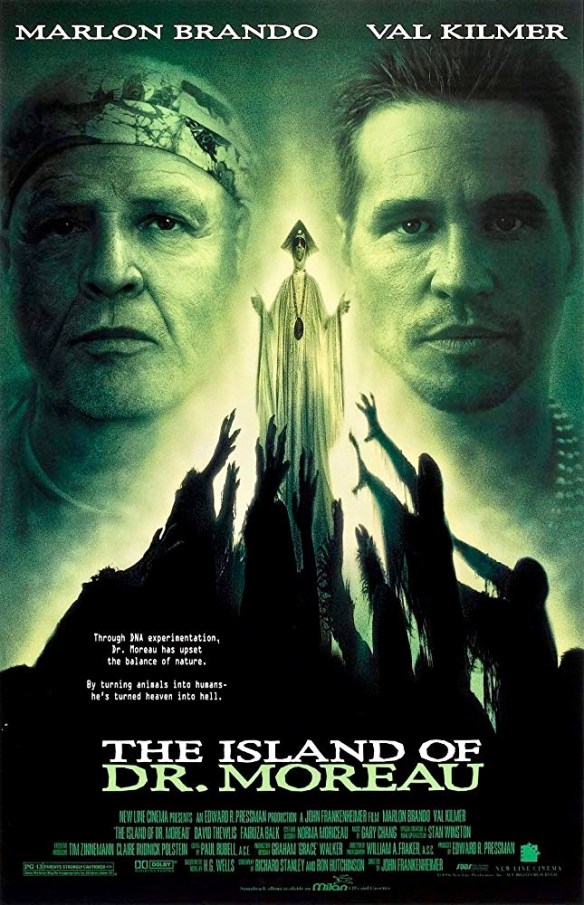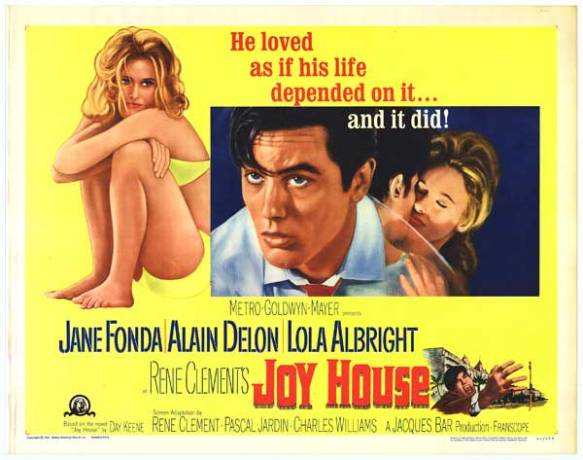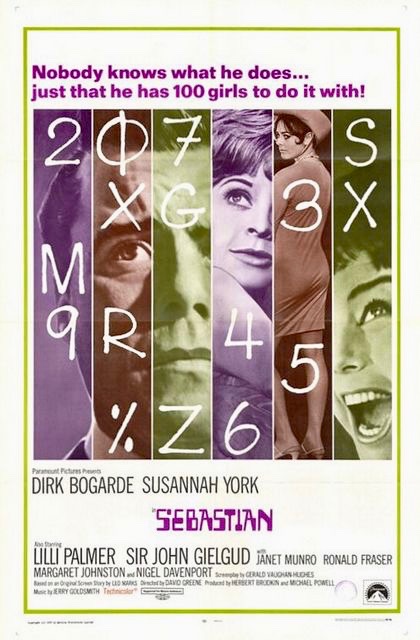
Matthew Weiner, the creator of AMC’s popular Mad Men franchise, has often pointed to specific films that influenced the look and feel of that popular TV series. Among them are obvious choices like Billy Wilder’s The Apartment (1960), Alfred Hitchcock’s North by Northwest (1959) and Fielder Cook’s Patterns (1956), based on Rod Serling’s teleplay, and less obvious influences such as David Lynch’s Blue Velvet and Claude Chabrol’s Les Bonnes Femmes (1960). One has to wonder though if Weiner ever saw the Jack Lemmon comedy Good Neighbor Sam (1964) because the art direction, production design and even the corporate politics on display seem to prefigure major aspects of Mad Men, albeit on a much lighter note. Continue reading
Category Archives: film
The Dogs of War
The title Werewolf invokes, especially among movie fans, images from the 1941 Universal horror classic The Wolf Man starring Lon Chaney Jr. and other descendants from that line like The Curse of the Werewolf (1961) and even the 2010 Benicio Del Toro reboot, The Wolfman. Polish filmmaker Adrian Panek’s Werewolf (aka Wilkolak, 2018) is not about that famous folklore legend but it does explore the bestial nature of man that emerges when people are brutalized and reduced to an animalistic state. It also qualifies as a horror film but not one set in a fantasy realm but in the grim aftermath of World War II. Continue reading
Robert Frank and The Rolling Stones

Photographer/filmmaker Robert Frank (left) and Mick Jagger (right) on The Rolling Stones’ private jet during their 1972 tour of the U.S. to promote the album “Exile on Main Street” as depicted in the rock documentary Cocksucker Blues (1972).
After being withheld from release for 15 years, Gerald Fox’s Leaving Home, Come Home: A Portrait of Robert Frank, is finally receiving a U.S. theatrical release. Famous for his seminal 1958 collection “The Americans,” Swiss-born photographer Frank is no stranger to films being withheld from public viewing and one of his most infamous projects C*cksucker Blues, a behind-the-scenes account of The Rolling Stones’ 1972 tour of America, remains unreleased to this day. Continue reading
Rene Clair’s Prophetic Fantasy
Film scholars generally agree that the silent era offerings (Entr’acte, Le Voyage Imaginaire) and early sound films of Rene Clair (Under the Roofs of Paris, Le Million) are the French writer-director’s finest work and deserve their exalted position in the history of cinema. But one shouldn’t discount the movies Clair made during his brief tenure in Hollywood from 1941 to 1945 where his subtle wit, sophistication and visual style were second only to the work of Ernst Lubitsch. The Flame of New Orleans (1941) with Marlene Dietrich and I Married a Witch (1942) starring Fredric March and Veronica Lake are delightful romantic comedies while And Then There Were None (1945) is an inventive adaptation of Agatha Christie’s thriller, Ten Little Indians. Much more underrated and lesser known is Clair’s It Happened Tomorrow (1944), which returns to the fantasy realm of earlier work like The Ghost Goes West (1935) and I Married a Witch. Continue reading
Diary of a Mad Prairie Housewife
Every once in a while a film comes along that doesn’t conform to the expectations of its designated genre. A case in point is Emma Tammi’s debut feature The Wind (2018) from a screenplay by Teresa Sutherland that is being positioned as a horror film by its distributor IFC Midnight at selected theaters across the U.S. and streaming services after a critically acclaimed run on the film festival circuit. Yes, The Wind has the necessary ingredients to attract horror film fans such as ghosts, demonology and unexplained phenomena. But the film could also be described as a psychological thriller from a feminist perspective or even a period western in which an inhospitable landscape becomes a central character. Continue reading
Ivan Passer’s Intimate Lighting
Krzysztof Kieslowski placed it on his Top Ten list for a Sight & Sound magazine poll. Dave Kehr, formerly of The Chicago Reader, called it “one of the finest works of the short-lived Czech New Wave.” The New York Times noted that Intimate Lighting (1965) was one of those movies that “loses none of its charm, to age or to repeated viewing,” and countless other critics who have seen it have championed this small-scale but beautifully observed character study about the brief reunion of two musician friends and their realization of how their lives have substantially changed since their school days. Continue reading
Divine Intervention
A political allegory that was one of the first films to openly address the problems resulting from the Great Depression, Gabriel Over the White House (1933), directed by Gregory La Cava, takes on such pressing issues as unemployment, homeless people and the rising crime rate in a storyline that comes across like a populist turned fascist fantasy. You also won’t see another Hollywood film from the 20th century in which our fearless leader is viewed by his constituents as either a madman or a messiah. Continue reading
It Was a Dark and Stormy Night….
This one sentence synopsis should sound familiar. A group of travelers are stranded during a severe storm at a creepy mansion where the hosts are the most unsettling part of the experience. It’s an audience-pleasing premise has served countless mystery thrillers and horror-comedies from James Whale’s The Old Dark House (1932) to The Rocky Horror Picture Show (1975) to Stuart Gordon’s Dolls (1987). But The Unnaturals (1969), directed by Antonio Margheriti, is one of the few dark and stormy night movies that stands out from the pack by virtue of its genre resistant narrative which begins as a decadent character study, slowly morphs into a supernatural thriller and signs off as an apocalyptic morality tale. Continue reading
Street Corner Confessions
Man-on-the-street interviews can often be unexpectedly hilarious, insightful or surprising if the interviewer is a prankster like Triumph The Insult Comic Dog or a non-traditional reporter such as an anthropologist, professional prostitute or ….a pair of nuns. The latter, in fact, are showcased in the 1968 documentary, Inquiring Nuns, which is not an oddball stunt but a sincere attempt to capture some honest responses about the human condition via two unlikely interviewers. It was produced by Kartemquin Films, the non-profit documentary collective that was founded in 1966 in Chicago by Gordon Quinn, Jerry Temaner and Stan Karter and has produced such acclaimed work as Hoop Dreams (1995), Vietnam, Long Time Coming (1998), the PBS miniseries The New Americans (2004) and The Interrupters (2011). Continue reading
Cinerama Disaster
In the disaster film genre, Krakatoa, East of Java (1969) holds the distinction of being the only one presented in the Cinerama widescreen format but is also the most erroneously titled movie of all time. As many historians and movie critics have pointed out, Krakatoa is west of Java but veracity is not one of Hollywood’s strengths in producing historical epics. And Krakatoa, East of Java is not a factual recreation of the famous 1883 volcanic eruption in the Indian Ocean but a lavish B-movie adventure that uses the cataclysmic event only as the background and climactic resolution to its cavalcade of international stars and multiple subplots that play out as pure soap opera. Continue reading