Unknown's avatar

About JStafford

I am a writer for The Travel Channel, ArtsATL.com, Burnaway.org and other publications. I am also a film researcher for Turner Classic Movies and a member of the Atlanta Film Critics Circle. This blog is dedicated to overlooked, obscure or underrated movies and other cinema topics that I want to share.

Truckin’ With Jean Gabin

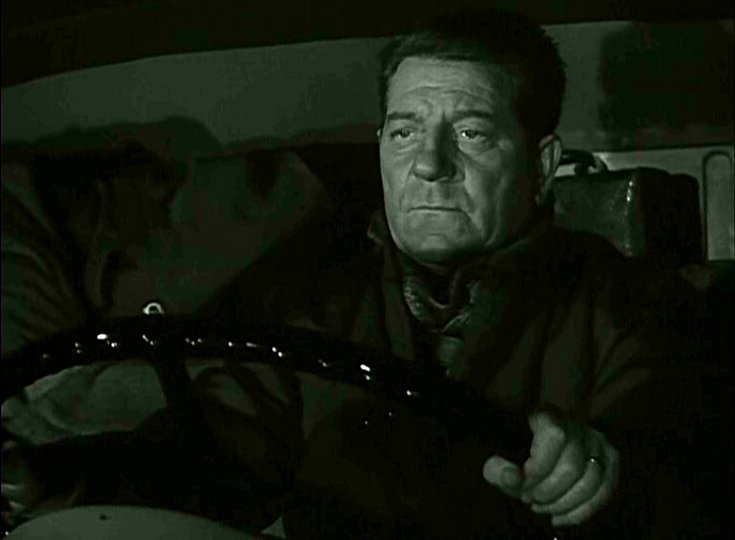
Jean Gabin plays a world weary trunk driver in Henri Verneuil's Des gens sans importance (1956, aka People of No Importance).

Jean Gabin plays a world weary trunk driver in Henri Verneuil’s Des gens sans importance (1956, aka People of No Importance).

One of the great stars of French cinema, Jean Gabin was also an unofficial film culture ambassador for his country whose career can be divided into five distinct phases; the first would be a brief stint in silent films and playing secondary roles in the first French “talkies” and the second would be as a ruggedly handsome, melancholy anti-hero and acclaimed actor who reached a career peak in the late thirties with Port of Shadows (1938), La Bete Humaine (1938), and Le Jour se Leve (1939). The third phase, the years between 1939 and 1953, are generally considered a fallow period in which he attempted an unsuccessful bid for Hollywood stardom and experienced equal disappointments in the French film industry.   Continue reading
The Pinku-Yakuza Eiga Combo That is Something Else Entirely

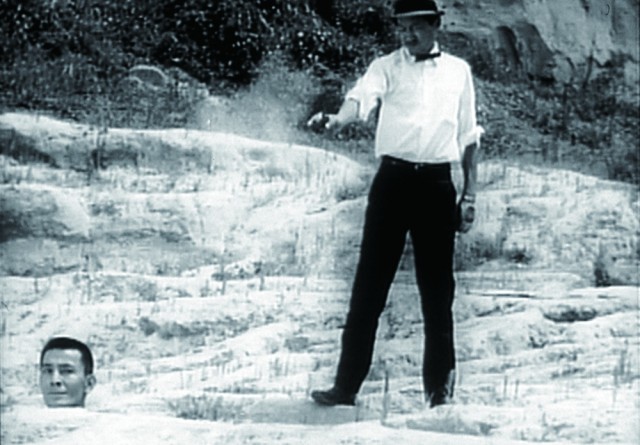
Hitman Sho (Yuichi Minato) fantasizes about killing his rival Ko (Shohei Yamamoto) in Sex Doll of the Wastelands (1967, aka Dutch Wife in the Desert)

Hitman Sho (Yuichi Minato) fantasizes about killing his rival Ko (Shohei Yamamoto) in Sex Doll of the Wastelands (1967, aka Dutch Wife in the Desert)

Inflatable Sex Doll of the Wastelands sounds like a make-believe movie title but it actually exists. Made in 1967, this genuine head scratcher that is also known as Dutch Wife in the Desert (Koya no Dacchi waifu) has elements of two popular genres in Japanese cinema – softcore erotic films (Pinku eiga) and gangster dramas (Yakuza eiga) – but is unlikely to please fans of either due to its fragmented narrative structure and emphasis on style at the expense of delivering the expected goods (sex and violence) in a logical linear progression. In other words, it’s chaotic, rude, goofy, pretentious, misogynistic (big surprise), and unafraid to be boring or narcissistic.    Continue reading

A Lost Version of Buster Keaton’s The Blacksmith is Discovered

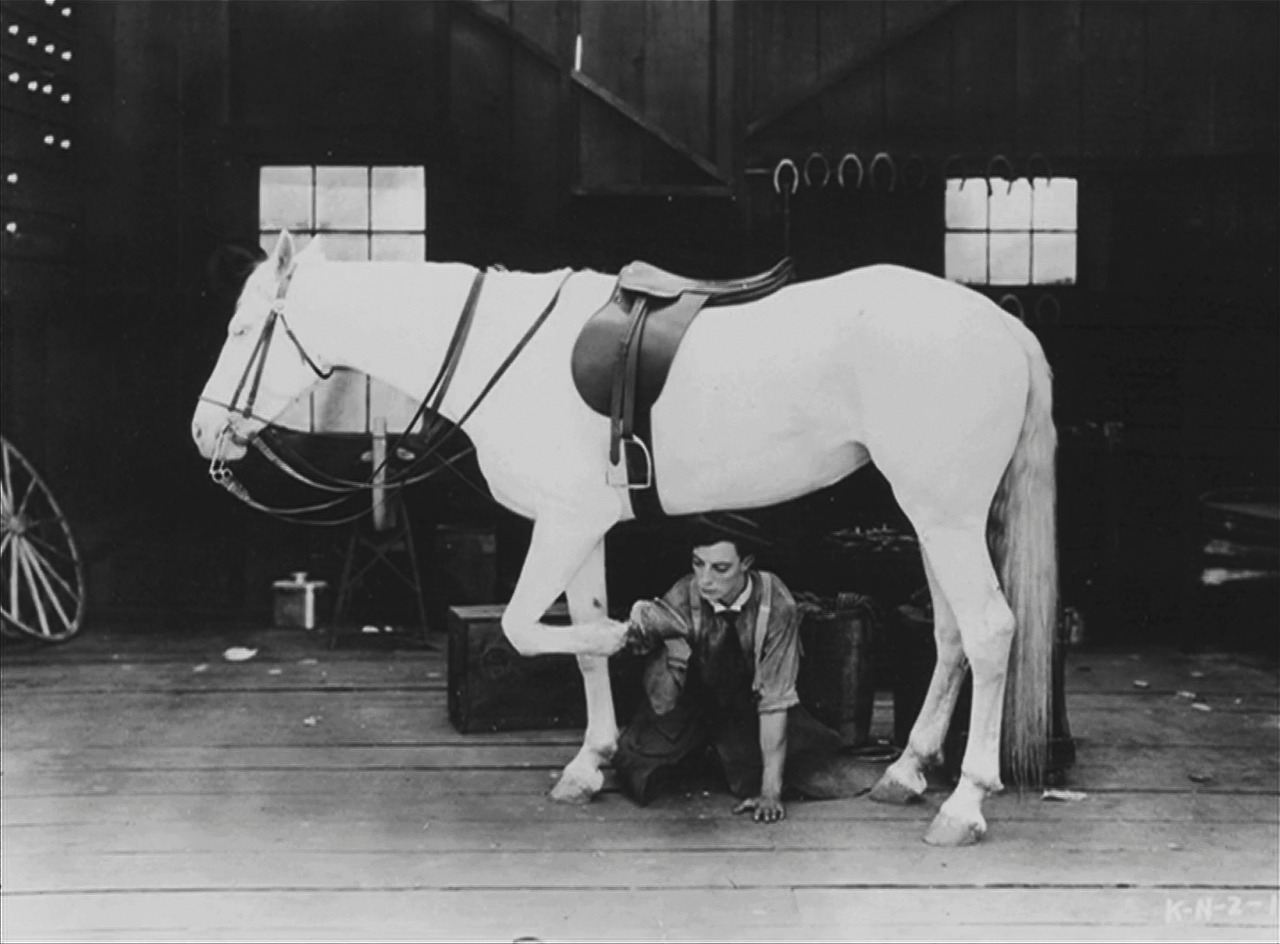
Buster Keaton in the two-reeler The Blacksmith (1922)

Buster Keaton in the two-reeler The Blacksmith (1922)

Often ranked by silent film historians as one of Buster Keaton’s lesser efforts when compared to his other two-reel shorts such as One Week (1920) or Cops (1922), The Blacksmith (1922) is now enjoying a major critical reassessment because of a remarkable turn of events. Film collector Fernando Peña who, in 2008, uncovered the original, uncut version of Fritz Lang’s Metropolis (1927) in the archives of the Museo del Cine in Argentina, discovered a remarkably different version of The Blacksmith that same year through fellow collector Fabio Manes who purchased a 9.5mm print of it online. Released by the Pathé company in France in 1922 with French intertitles, this previously undiscovered version includes missing material totaling more than four minutes of sight gags, settings, and characters not featured in what was considered the original American version of The Blacksmith.     Continue reading

God Stave the Queen

Criterion DVD cover of Derek Jarman's JubileeOne of the few films to emerge from Britain’s punk rock movement of the mid-seventies that succinctly expressed the anger and anarchic spirit of the times, Jubilee (1978) is possibly director Derek Jarman’s most accessible film though its irreverent mixture of history, fantasy and agitprop shot, guerilla-style, on the back streets of London is not for everyone. The loosely structured film has a framing device that is set in the year 1578 as Queen Elizabeth I ponders the future of her country. Along with her court magician, Dr. John Dee, and lady-in-waiting, she is transported to contemporary England by the angel Ariel. There she finds a mirror image of herself as Bod, the leader of an outlaw band of deviants, who struggles for dominance in a post-Margaret Thatcher wasteland controlled by the fascist media mogul Borgia Ginz.   Continue reading

Big Bands and Tap Dancing: World War II Escapism

Reveille with BeverlyWhen Reveille with Beverly was first released in 1943, it was viewed as little more than a snappy little B musical programmer that showcased a star on the rise (Ann Miller) along with some of the top musical acts of the day. It was also a reflection of the type of assembly line escapist fare being released by Hollywood for war weary audiences and servicemen who needed a distraction from the harsh realities of a global conflict.

https://www.youtube.com/watch?v=SXAXCezjj9M

Continue reading

Hamlet on the Range

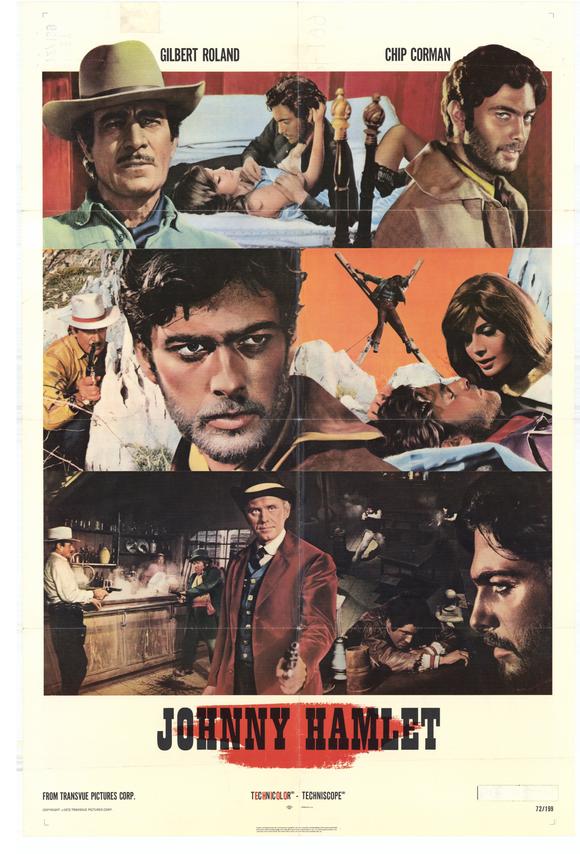
Chip Corman is a pseudonym for actor Andrea Giordana

Chip Corman is a pseudonym for actor Andrea Giordana

The plays of William Shakespeare have provided a bottomless well of material for filmmakers as either faithful adaptations or unacknowledged inspirations since the birth of cinema. Yet, the western genre seems under-represented in this regard with only a few examples coming to mind such as a thinly disguised version of Othello (Delmar Daves’ Jubal,1956) or a re-imagining of The Tempest (William A. Wellman’s Yellow Sky, 1948) or a gender twist on King Lear (Edward Dmytryk’s Broken Lance, 1954).     Continue reading

Roger Ebert, Sam Fuller, Woody Strode, Les Blank and Others at the 1981 Telluride Film Festival

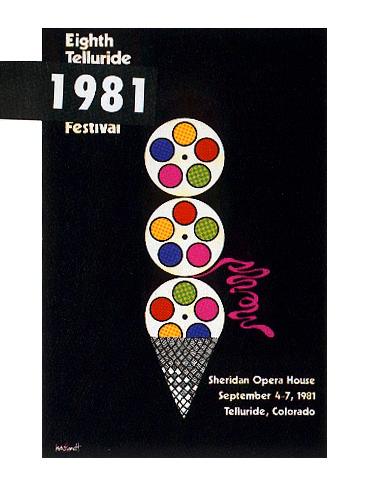
telluride_1981 posterLabor Day weekend for most people means a farewell to summer and a final official holiday before the Fall season but for me Labor Day usually means “The Show” – the annual Telluride Film Festival in Colorado. I have been lucky enough to attend several of the festivals over the year but since I won’t be able to attend the 41st annual event (Aug.29-Sept.1), I wanted to pay tribute to it with a blog about my first visit there – The 8th Telluride Film Festival in 1981Continue reading

Gypsies, Tramps and Thieves: The Bohemian Girl

Image courtesy of www.doctormacro.com and Dieter

Image courtesy of http://www.doctormacro.com and Dieter

Even though the 1936 Laurel and Hardy feature The Bohemian Girl is not ranked among their best by the duo’s fervent fans or film historians, I have a fondness for it because I saw it at an early age before I was even aware of their silent films or the movies which would later become all-time favorites – Way Out West (1937), A Chump at Oxford (1940) and Sons of the Desert (1933). What stood out were the hilarious sight/audio gags such as Ollie’s bafflement at his partner’s slight-of-hand tricks, the horse scrubbing sequence, and Stan’s switch from high soprano to basso while singing; those have a resonate power to make you laugh in the worst of times. Unfortunately, most operetta aficionados dislike it because the music is secondary to the narrative and is not given a showcase deserving of the libretto. And L&H devotees find the music as insufferable and annoying as those musical passages in the MGM Marx Brothers comedies where you just want the boys to get on with their business. For those who fall between both camps and have never seen The Bohemian Girl, this is your homework.   Continue reading

Romain Gary’s Cinematic Overdose

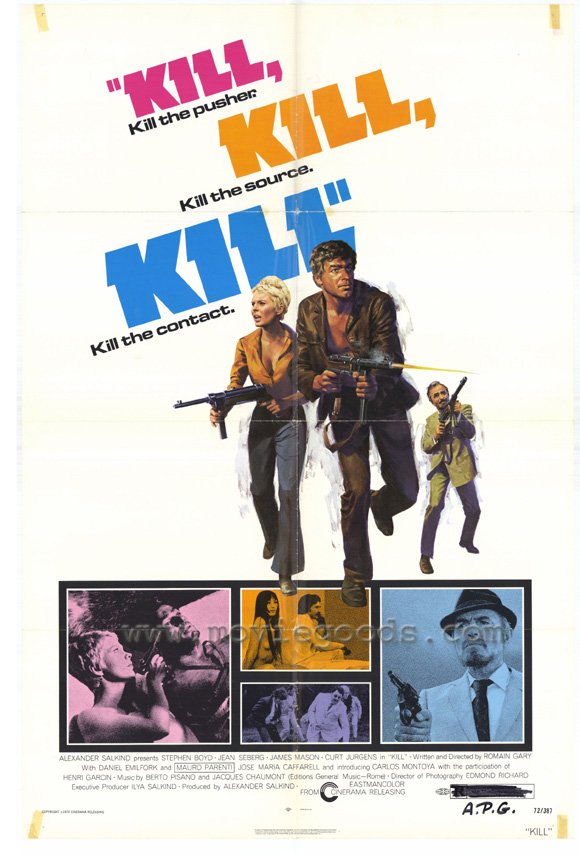
kill-kill-kill-movie-poster-1972-1020367435How many times do you need to say Kill! In a movie title if you want to stress that it is about murder on an international scale? Apparently the distributors of this 1971 oddity were uncertain about that so they created various poster versions for the global market that ranged from four emphatic Kills! to a succinct single Kill! for promotional purposes. They covered all their bases but forgot to identify a target audience for this chaotic, frenzied and wildly improbable mash-up that freebases elements from conspiracy thrillers, secret agent exploits and sexual melodramas with a political agenda. Of course, you wouldn’t expect anything less from author-turned-filmmaker Romain Gray whose only other directorial effort was the pretentious art house mega-bomb Birds in Peru (1968), which starred his wife Jean Seberg as a suicidal nymphomaniac in the Caribbean.   Continue reading

A Western for Adults

The Hanging TreeUnderrated at the time of its release, The Hanging Tree (1959) is now considered a superior western from the waning years of that popular genre which coincided with the end of the studio era. It is also considered one of Gary Cooper’s best performances from his final decade in film, comparable to his fine work in High Noon (1952) and Man of the West (1958), and a late period achievement for director Delmer Daves (Broken Arrow, 3:10 to Yuma). I encountered the film at a Saturday matinee in Harrisburg, Pennsylvania when I was eight years old and remember being disturbed by it. This is an adult western. It is not a film for children.  Continue reading