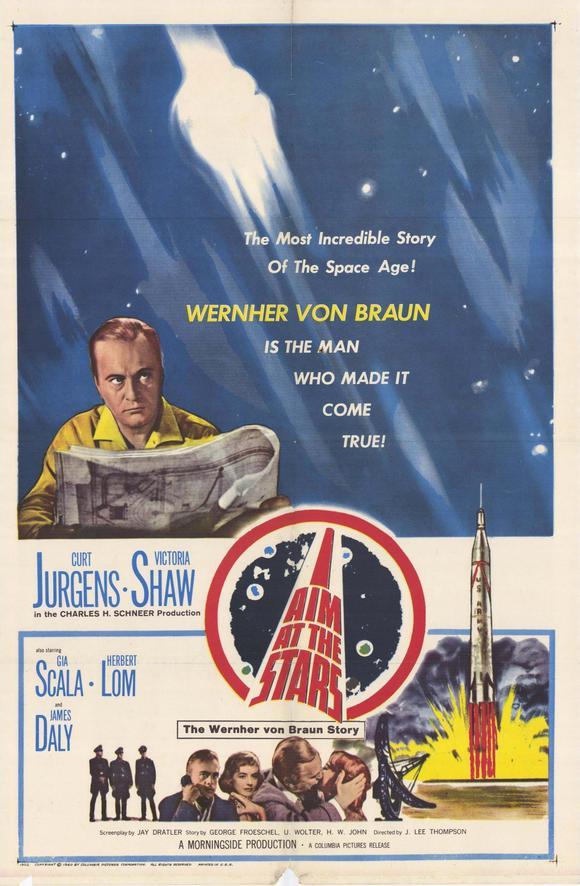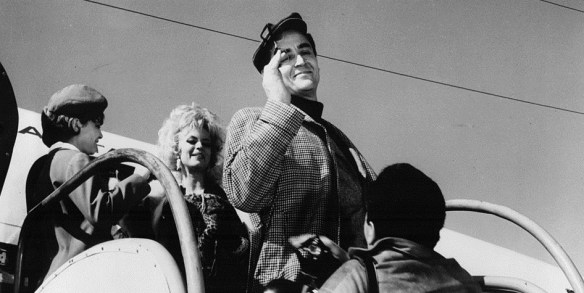
It would be hard to find a more controversial figure in the history of space exploration than the brilliant rocket scientist Dr. Wernher von Braun, the subject of J. Lee Thompson’s biopic, I Aim at the Stars (1960). Continue reading
Author Archives: JStafford
Mimsy Farmer’s Strangest Movie?
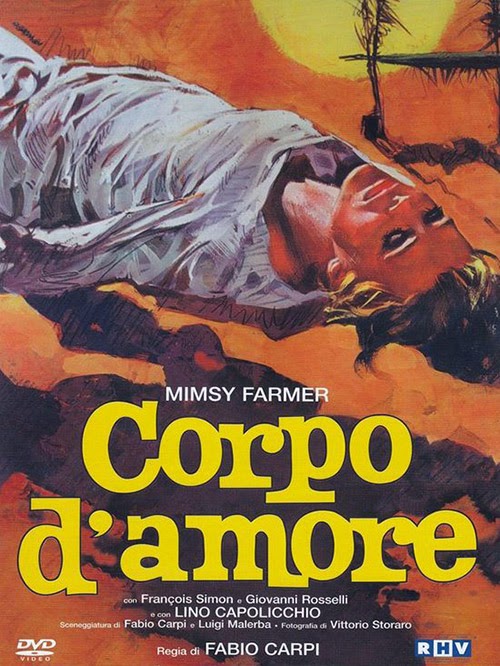
Anyone who is a fan of Italian giallos, European art house fare and off the grid cult films is familiar with actress Mimsy Farmer. She left Hollywood in the late sixties after her “youth exploitation” days with American International Pictures in such films as Hot Rods to Hell and Riot on Sunset Strip. Relocating to Europe, she pursued film roles there for the remainder of her career. As an actress she was rarely drawn to mainstream commercial projects and a sampling of her eclectic filmography includes such diverse titles as Barbet Schroeder’s drug addiction opus, More (1969), George Lautner’s erotic melodrama Road to Salina (1970), Dario Argento’s 1972 murder mystery Four Flies on Grey Velvet, The Taviani Brothers’ critically acclaimed Allonsanfan (1974) and Serge Leroy’s survivalist thriller, La Traque (1975). But one of her most obscure and unusual roles is Fabio Carpi’s Corpo d’amore (aka Body of Love, 1972).
The Film Noir That Got Away
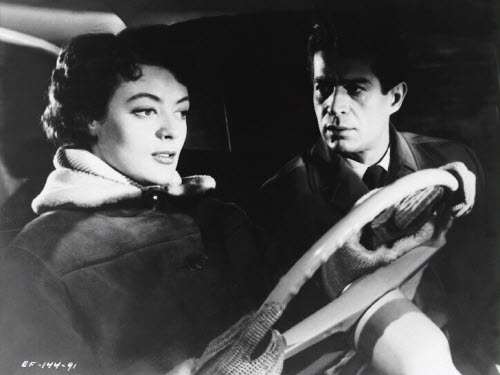
Ealing Studios. The name conjures up memories of the great British comedies such as The Man in the White Suit, The Ladykillers, The Lavender Hill Mob and Kind Hearts and Coronets. Film noir, however, is not the genre that usually comes to mind although Ealing rubbed shoulders with it occasionally in It Always Rains on Sunday (1947) and Pool of London (1951). Oddly enough, one of the studio’s final releases, Nowhere to Go (1958) was pure, unadulterated noir and a stylish, terse little thriller to boot. Sadly, it has been overlooked and unappreciated for years even though it marks the feature film debut of director Seth Holt and gave actress Maggie Smith her first major screen role. Continue reading
Dancing Queen
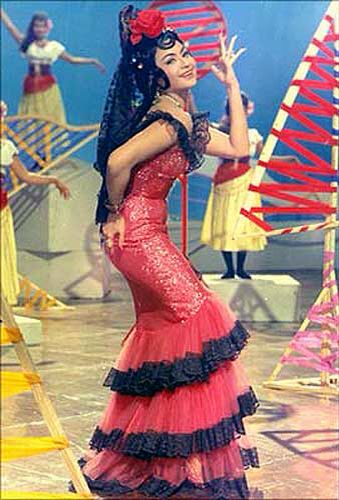
The title of the 31 minute documentary Helen, Queen of the Nautch Girls (1973) is a homage to the Indian superstar Helen, who may possibly hold the title of the most famous and beloved of all Bollywood film legends. A nautch girl in India is one who specializes in demonstrating a wide variety of popular dances and Helen had few rivals at this as demonstrated by the remarkable range of her talent in a head-spinning array of film clips from her long career. Continue reading
Defiantly Abnormal

(from left to right) Paul L. Smith, David Carradine, unidentified child actor, Brad Dourif) in Sonny Boy
Occasionally a movie comes along that is so unclassifiable and non-mainstream that you have to wonder who the filmmakers were targeting as their intended audience. Sonny Boy (1989), directed by the virtually unknown Robert Martin Carroll, is a remarkable example of this quandary. Is it an exploitation movie with art-film aspirations? The casting alone – David Carradine, Brad Dourif, Paul L. Smith, Sydney Lassick and Conrad Janis – has built-in cult appeal but the highly eccentric storyline and grotesque characters are completely polarizing. Either you’ll tune out immediately or watch in fascination and disbelief. It is hard to imagine an indifferent viewer. Continue reading
Robert Altman and the Cult of James Dean
While it is rarely shown in retrospectives of his work, Robert Altman’s The James Dean Story (1957) is easily one of the more offbeat and poetic examples of documentary filmmaking. Officially cited as his second feature (Altman’s first was The Delinquents, 1957), The James Dean Story was co-produced and co-directed with George W. George, a former writing partner of Altman’s, as a serious exploration of the young actor’s mystique and impact on the youth culture of the fifties. Continue reading
The Phobophobic Housewife

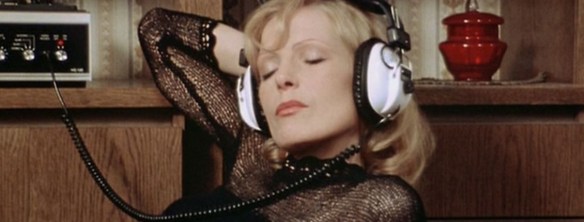
Margit Carstensen tries to relax by listening to music in Fear of Fear (1975) but it doesn’t stop her increasing bouts of anxiety and depression.
Films about housewives losing their identity in a marriage or slowly going bonkers from the daily rituals of domesticity are plentiful enough to form their own distinctive subgenre. Among the most intriguing of these films, all of which reflect the specific time and cultural moment in which they were made, are Frank Perry’s Diary of a Mad Housewife (1970), John Cassavetes’ A Woman Under the Influence (1974), Chantal Akerman’s landmark 1975 feature, Jeanne Dielman, 23 Quia du Commerce, 1080 Bruxelles, Dusan Makavejev’s Montenegro (1981), and the curious Canadian indie Dancing in the Dark (1986), directed by Leon Marr. But the one I’d like to highlight and which I had the pleasure of revisiting recently on DVD is Fear of Fear (German title: Angst vor der Angst, 1975), directed by Rainer Werner Fassbinder. Continue reading
The Strange Mating Rites of Venusians

A Venusian woman (Lorena Velazquez, right) contemplates the breeding potential of an alien suitor in La Nave de los Monstruos (1960)
Curvaceous, scantily clad female aliens from Venus. Monstrous beings from other galaxies. A robot with a soft spot for children. Singing cowboys. Norteño music. And lots of fighting. What could be better? La Nave de los Monstruos (aka The Ship of Monsters) has it all and is one of the more exotic genre hybrids that emerged from Mexico in the early sixties, mixing sci-fi, horror and Western elements into something uniquely original. Continue reading
Dreamer Schemer
“The worst poverty is not wanting to be rich!”
Something is gnawing at Guido. It’s the feeling that life is passing him by and he will never be anything but average which, to him, is the same as being a nobody. We’ve all known someone like Guido whose desire to be rich, famous and envied by all becomes his all-consuming obsession. Is it because his parents were peasants? Despite that, he still went to college, has a steady, respectable job at a major real estate firm and is married to Laura, a beautiful, talented woman who is on the fast track to success at a public relations firm with high end clients. So what’s the problem? Continue reading
Leonard Cohen’s 1972 Concert Tour
“If your life is burning well, poetry is just the ash.” – Leonard Cohen
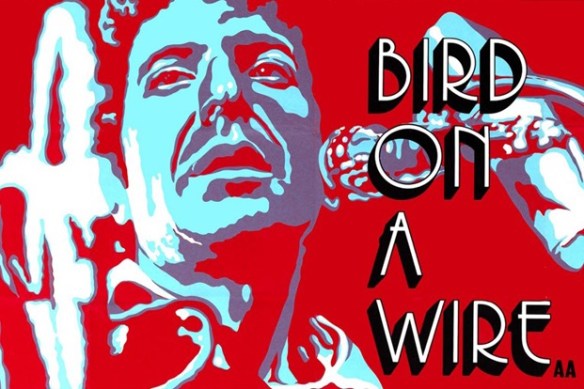
Missing in action since it was first filmed by Tony Palmer in 1972, Bird on a Wire, a documentary account of Leonard Cohen’s European tour, finally surfaced on DVD in 2010 after being painstakenly restored frame by frame by the director who described the long, complicated history on the extra audio features. It’s a shame the film didn’t garner more attention upon its DVD debut but for Cohen fans, the documentary is essential viewing and just as candid, raw and intimate as D.A. Pennebaker’s remarkable Bob Dylan portrait, Don’t Look Back (1967), which covered that singer/songwriter’s tour of England in 1965. Continue reading