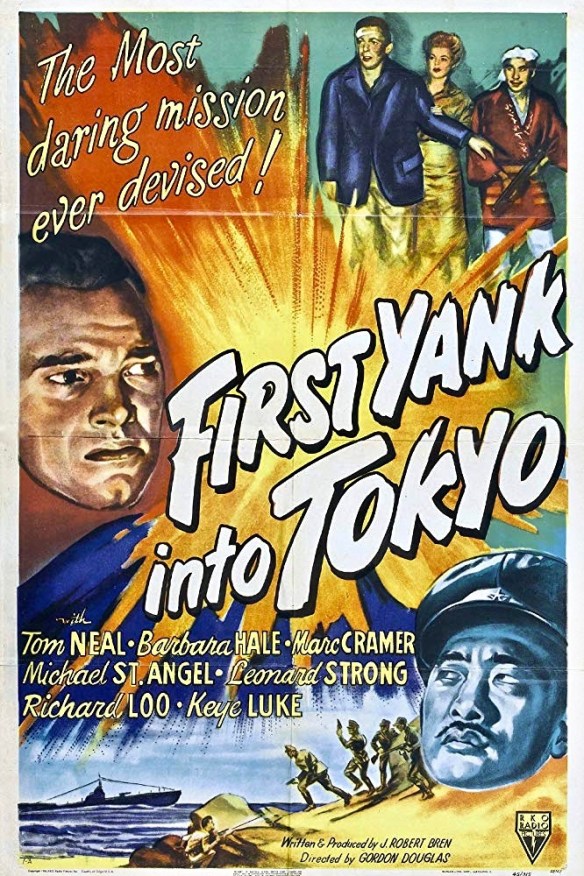
When the United States officially entered World War II after the bombing of Pearl Harbor, Hollywood got busy producing morale-boosting entertainments with a heavy accent on flag-waving patriotism and pro-American propaganda. One of the stranger efforts to emerge from this uncertain time in U.S. history was First Yank in Tokyo (1945), a B-movie espionage thriller directed by Gordon Douglas and set inside a Japanese concentration camp. Continue reading
Author Archives: JStafford
Payback is a Bitch
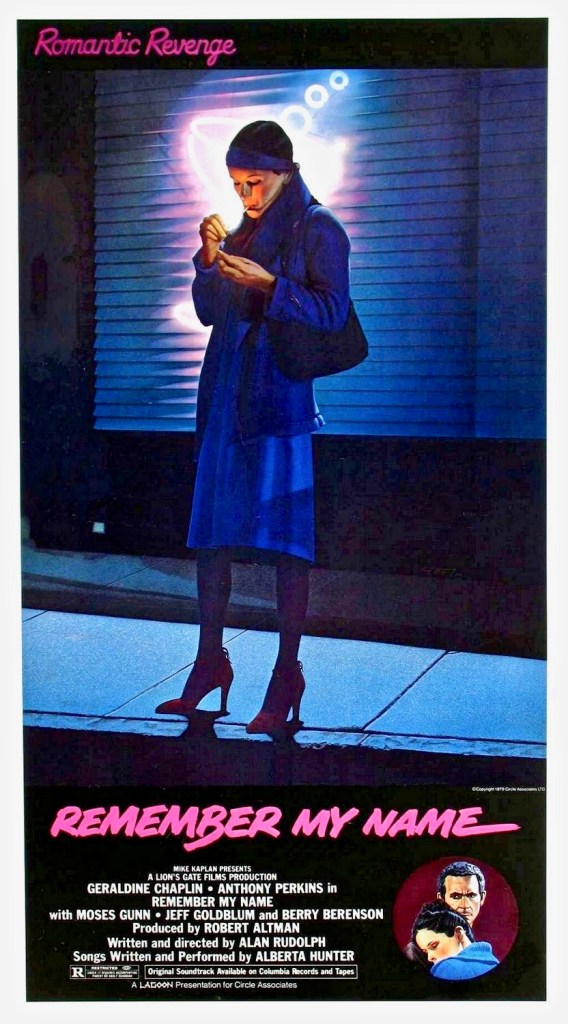
We’ve all heard the famous quote “Hell hath no fury like a woman scorned,” which came from the 1697 play The Mourning Bride by William Congreve, but what are the options for the discarded one? Shame the perpetrator in public? Internalize the rage? Become detached? Laugh it off? In Hollywood, the idea of the scorned woman bent on revenge is usually depicted more along the lines of Jessica Walter in Play Misty for Me (1971) and Glenn Close in Fatal Attraction (1987) but you really don’t have to wield a knife and go berserk to redeem your self-respect. Instead, you can be creative, unpredictable and non-threatening in appearance like Emily (Geraldine Chaplin), the protagonist of Alan Rudolph’s Remember My Name (1978). Continue reading
Happiness is a Thing Called Little Joe
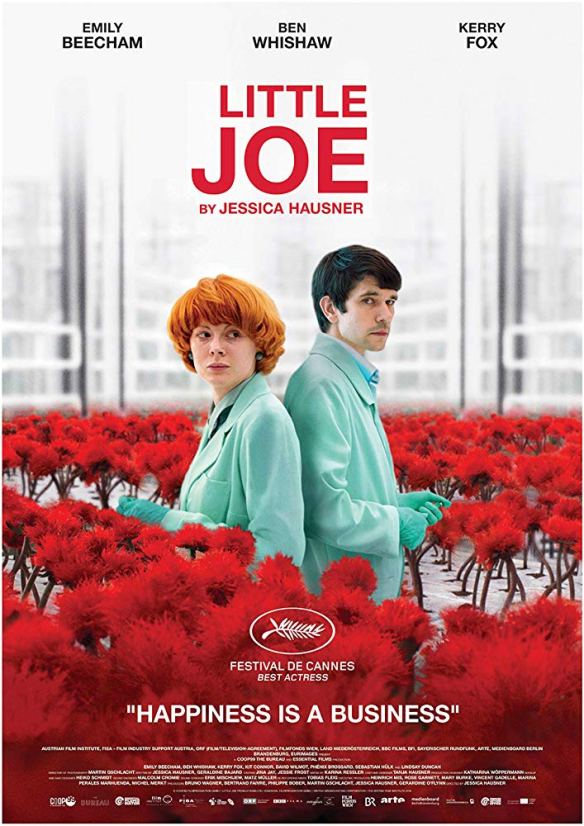
Austrian director Jessica Hausner has been a favorite of the Cannes Film Festival ever since her 45 minute short Inter-View won a Special Mention in 1999. Since then her subsequent feature films, Lovely Rita (2001), Hotel (2004) and Amour fou (2014) have all been nominated for Cannes’ Un Certain Regard Award. And her new feature Little Joe was nominated for the prestigious Palme d’Or award and won the Best Actress award for Emily Beecham. It is also worth noting that all of Hausner’s previous features with the exception of Lourdes (a French language production) have been in German. Little Joe, not to be confused with the 2008 documentary about Warhol star Joe Dallesandro also entitled Little Joe, marks Hausner’s English language debut and it is a remarkably self-assured and hypnotic work that displays none of the usual drawbacks that detract from a director’s first foray into a non-native language production. Continue reading
Female Drifters and Grifters
Films about hobos have always been predominantly about male characters, with few exceptions such as Veronica Lake donning a male hobo disguise and tagging along with Hollywood producer-turned-drifter Joel McCrea in Sullivan’s Travels [1941]. So, it’s particularly unexpected and refreshing to see a Depression era based film like Girls of the Road (1940), in which almost all of the central characters are women, playing runaways, vagrants and other homeless cases, fending for themselves on the margins of society. Continue reading
Freaking Out in Franco Era Spain
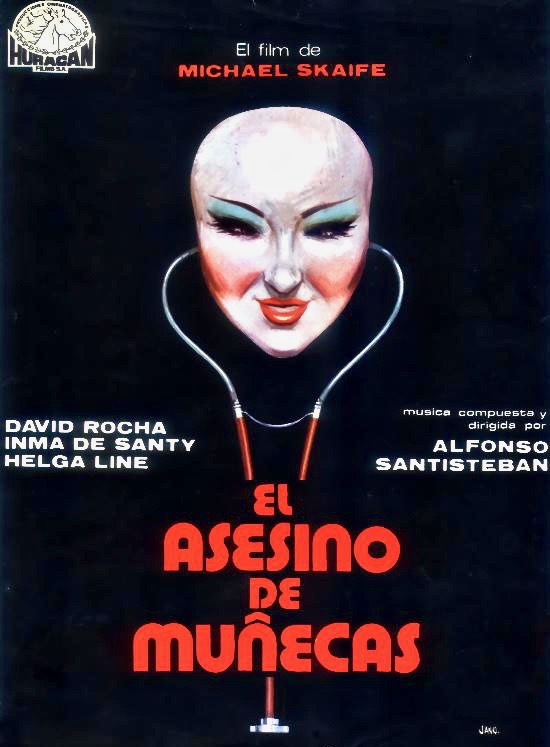
Not all film preservationists are focused on saving and restoring lost classics of silent and early cinema like Abel Gance’s Napoleon (1927) or overlooked noir indies from Hollywood’s golden era such as Richard Fleischer’s Trapped (1949). Mondo Macabro, which has been around since 2003 or so, is dedicated to introducing movie lovers to fringe cinema from around the world – obscure genre films that run the gamut from horror to sexploitation to art house oddities from countries as far flung as Japan, Latvia and South Africa. Among some of their offbeat releases are Lady Terminator (1989), a cheesy Indonesian rip-off of James Cameron’s The Terminator, The Living Corpse (1967), a vampire thriller from Pakistan, and Strip Tease (1963), a melancholy French drama starring Nico (of The Velvet Underground) with music by Serge Gainsbourg and Alain Goraguer. The company’s most recent release on Blu-Ray, The Killer of Dolls (El asesino de manecas, 1975), is easily one of their most peculiar and transgressive acquisitions to date. Continue reading
William Greaves: Pushing Boundaries
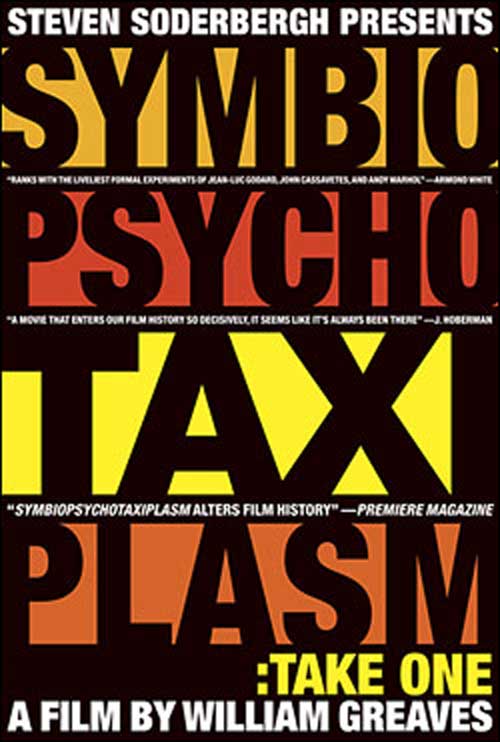
What the heck is Symbiopsychotaxiplasm Take One? Is it a documentary or is it fiction? Maybe it’s a pretentious mess masquerading as art or possibly the most unique experimental film of the late sixties. We’re talking about William Greaves’s rarely seen 1968 work which was released on DVD in December 2006 by the Criterion Collection, thanks to the efforts of filmmakers Steven Soderbergh and Steve Buscemi who were so impressed with this one-of-a-kind collaboration that they helped Greaves’s produce his long-in-the-works sequel to it – Symbiopsychotaxiplasm Take 2 1/2 – in 2005 (and which is also included on the Criterion disc). Continue reading
Hollywood’s Holy Grail
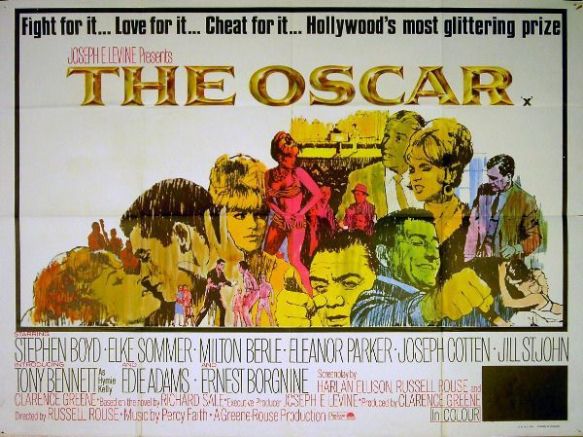
Often cited as one of the worst major studio movies ever made, The Oscar (1966) lives up to its infamous reputation but unlike many films which get tagged as “the world’s worst” and are usually tedious and only intermittently hilarious in small doses such as The Conqueror [1956] or The Swarm [1978], this one is consistently entertaining for its flamboyantly excessive performances, sordid situations and bitchy, mean-spirited dialogue that paints Hollywood as a place where you sell your soul and become an easily disposable product. Continue reading
A Time for Demonic Visitations
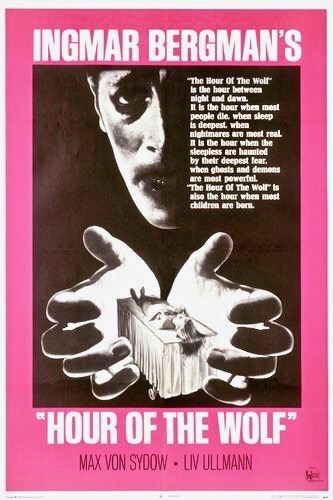
“According to the ancient Romans, the Hour of the Wolf means the time between night and dawn, just before the light comes, and people believed it to be the time when demons had a heightened power and vitality, the hour when most people died and most children were born, and when nightmares came to one.”
Setting the stage for what will follow with this ominous introduction, Ingmar Bergman’s 1968 feature Hour of the Wolf (Swedish title: Vargtimmen) is probably the closest the director has ever come to making a horror film, one that crosses over into the realm of the supernatural. Continue reading
The Next Wonder of the World
Imagine a tunnel under the Atlantic that connected the United States with Europe and provided a high speed form of transportation between the two points. It’s certainly not an unrealistic expectation for the near future when you consider that the undersea rail known as the Channel Tunnel (aka the Chunnel) that currently connects Folkestone, Kent in England to Coquelles, France has been in operation since 1994. But that remarkable feat of engineering is only 50.5 km. compared to the 5,000 km. that would be the more likely distance of an undersea rail that connected New York City with London. Still, proposed plans for under-the-sea travel connectors between countries separated by water continue to surface in news reports and may happen in the near future. What’s most remarkable is the fact that Transatlantic Tunnel (aka The Tunnel), a 1935 British film, envisioned the same thing and some of that movie’s futuristic art direction and design is not that far removed from some of the models you can view on the interest today (just do a search for undersea rail systems). Continue reading
Vittorio De Seta’s L’Invitata
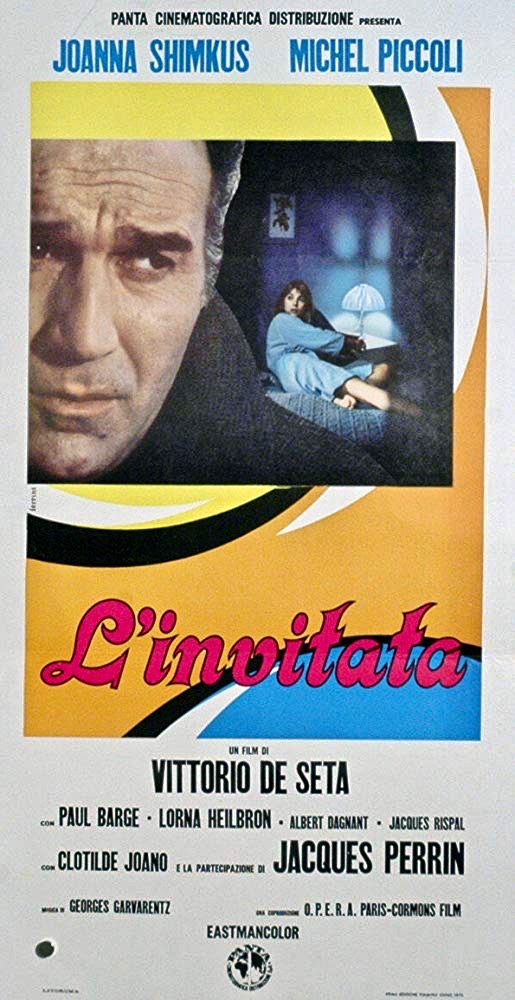
Road movies might seem like a home grown American film genre with such famous examples as Bob Rafelson’s Five Easy Pieces (1970) and Monte Hellman’s Two-Lane Blacktop (1971) but there have also been plenty of influential representatives from abroad such as Henri-Georges Clouzot’s The Wages of Fear (1953) and Wim Wenders’ Kings of the Road (1976). The latter film, in particular, takes a much more introspective and observational approach to character and narrative and such is the case with Vittorio De Seta’s little seen and almost forgotten 1969 feature, L’Invitata (aka The Uninvited). Continue reading