On September 6, 2021, France lost one of their biggest cinema icons of the 20th century with the death of Jean-Paul Belmondo at age 88. The actor attained international fame in 1960 for his charismatic performance in Jean-Luc Godard’s Breathless as an amoral car thief on the lam. He was the epitome of bad boy cool in that film and would enhance that screen persona in other crime dramas like Claude Sautet’s Classe Tous Risques (1960) and Jean-Pierre Melville’s Le Doulos (1962). Then, Belmondo reached an even wider international audience with the cross-over commercial hit, That Man from Rio (1964), which was even more accessible to the average moviegoer than Breathless, especially in America.
Continue readingAuthor Archives: JStafford
The Worm Turns
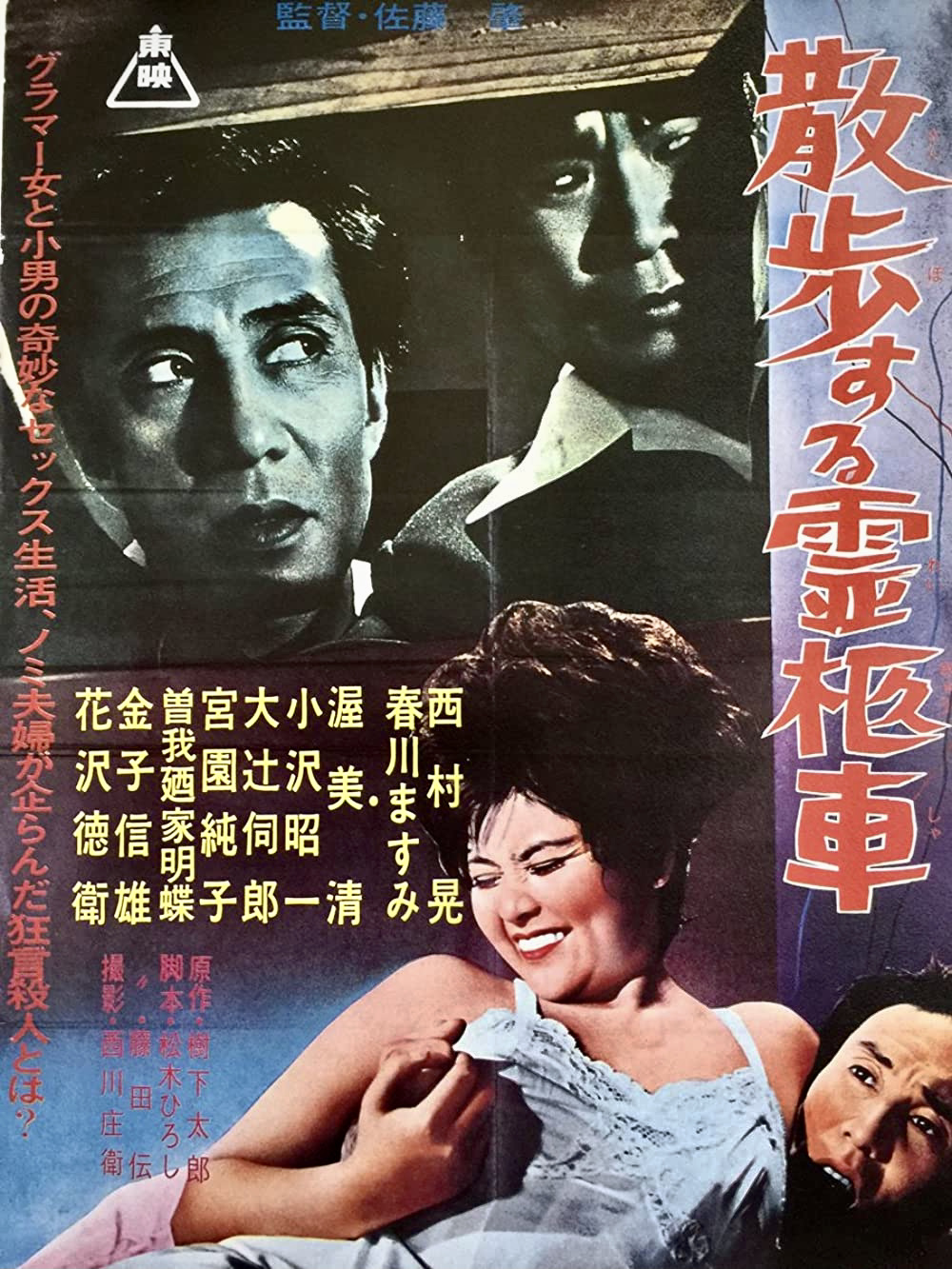
The Glamorous Ghost (Japanese Title: Sanpo Suru Reikyusha, 1964) is something of a rarity in Japanese cinema – a noir comedy. This is the sort of twisty, convoluted farce in which all of the main characters are greedy, immoral and deceitful and you end up rooting for Asami (Ko Nishimura), the taxi driver protagonist, only because he is a pitiful underdog with a simple dream – to retire and run a pig farm in the country. His plan to accomplish that, however, involves blackmail and worse and before The Glamorous Ghost reaches its macabre but amusing climax, most of the major players have departed this mortal coil.
Continue readingHonoring Marie Prevost
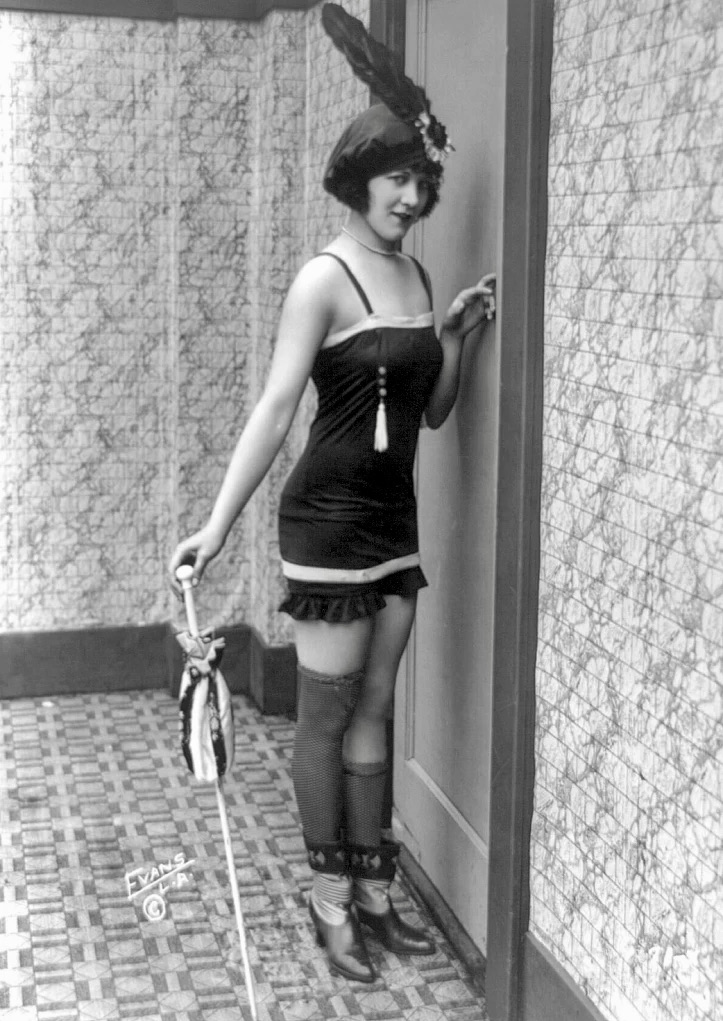
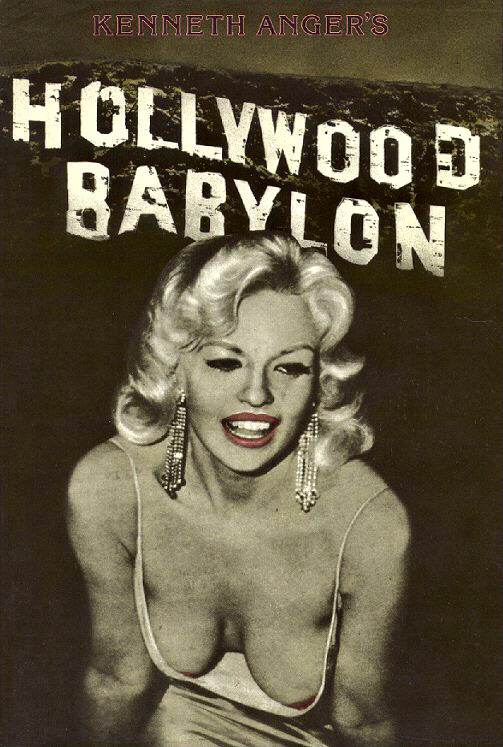
I can remember the first time I ever heard of Marie Prevost. It was while I was reading Kenneth Anger’s Hollywood Babylon back in 1975. For a book loaded with salacious and unsubstantiated stories about many famous stars, the tiny entry on this actress was particularly unkind and disturbing. There was a coroner photograph of Prevost (supposedly) lying on her stomach in bed with what looked like abrasions on her skin with the photo caption “Doggie’s Dinner.”
Continue readingStop the World…I Want to Get Off!
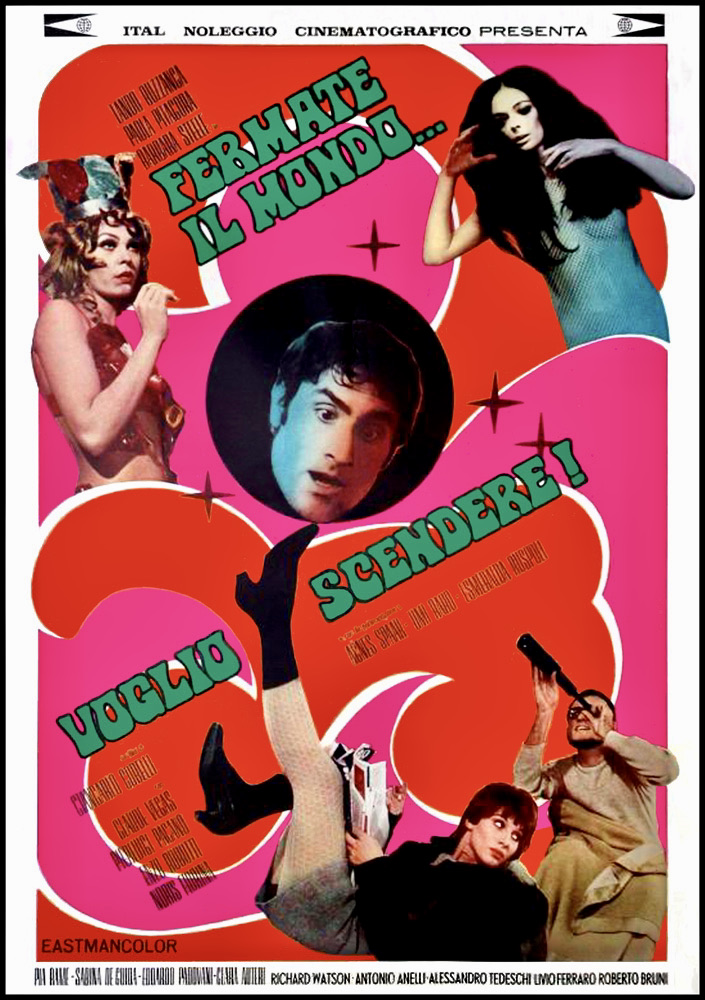
No, I am not referring to the 1961 musical by Anthony Newley and Leslie Bricusse, which enjoyed successful stage productions in London and Broadway before being adapted for the screen in 1966. I’m talking about the 1970 satire, Fermate il Mondo…Voglio Scendere! (the title translates as Stop the World…I Want to Get Off! In English), which was the directorial debut of Italian actor Giancarlo Cobelli, based on a screenplay he wrote with fellow thespians Giancarlo Badessi and Laura Betti, a close friend and frequent collaborator with Pier Paolo Pasolini. The film is a frenzied attack on consumerism and the Italian media but its bursting-at-the-seams energy emanates not so much from outrage as it does from a madcap sense of anarchy.
Continue readingIrving Lerner Double Feature
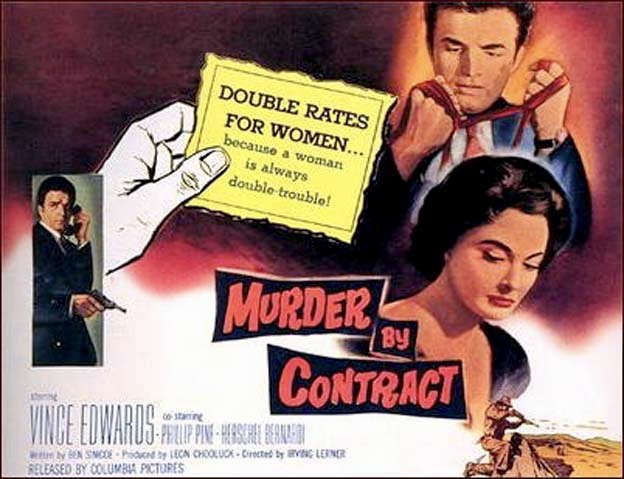
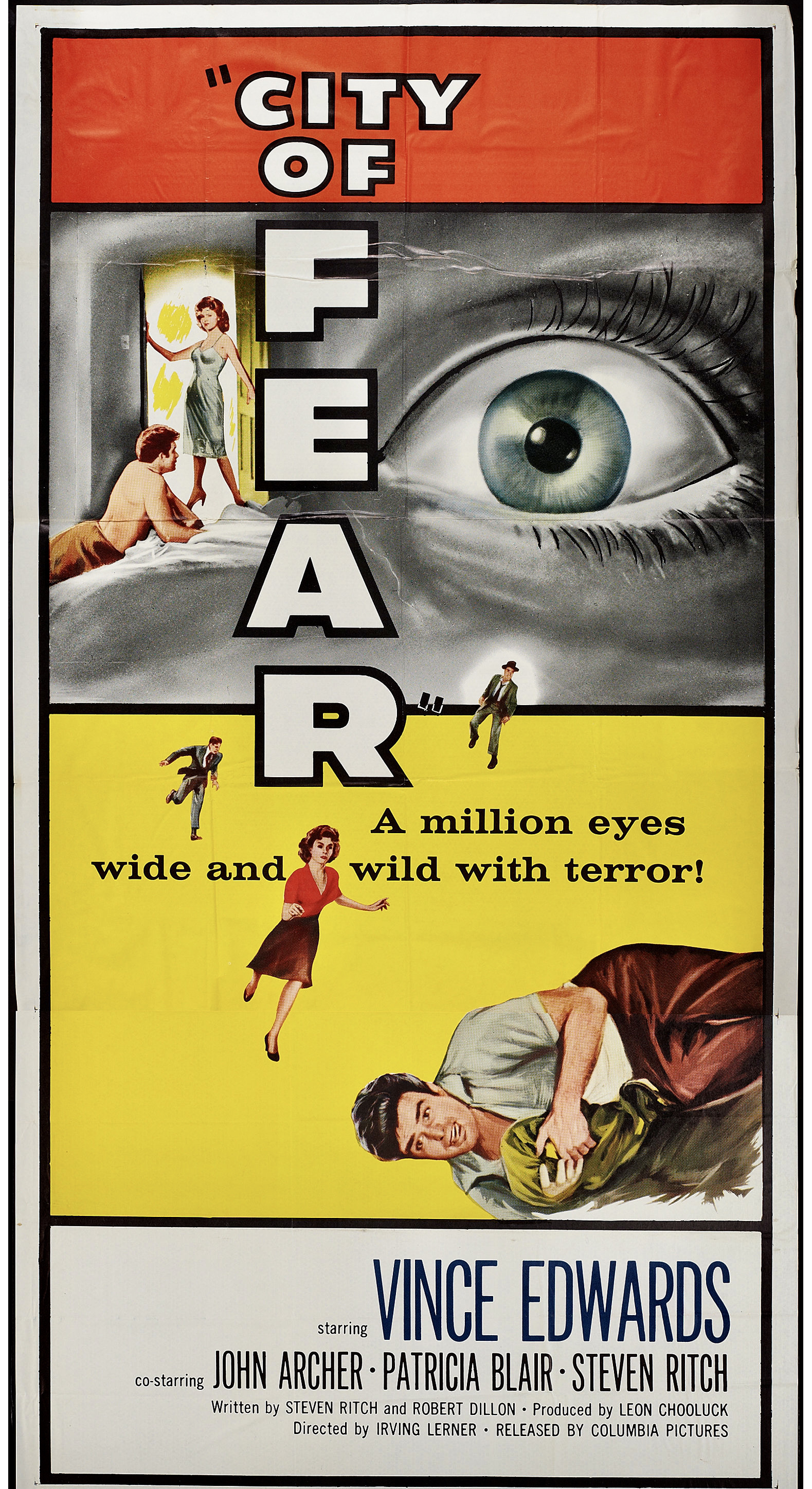
Irving who? The name may not be familiar to you but if you are a film noir fan, you might know the titles Murder by Contract (1958) and City of Fear (1959), two low-budget crime dramas, both of which star Vince Edwards. These were the third and fourth films in the filmography of Irving Lerner and the more famous of the two is Murder by Contract, which has often been championed by Martin Scorsese over the years. In recent years it has enjoyed wider exposure due to its release on DVD as well as retrospective screenings at events like the Noir City Film Festival, hosted by film noir expert Eddie Muller. Murder by Contract is a tautly directed minor masterpiece with an exceptionally chilling performance by Edwards. He plays Claude, a coldly efficient hit man who likes to make a nice clean kill with no mess, no slip-ups, and no surprises due to poor planning – “I wasn’t born this way. I trained myself! I eliminated all personal feeling.”
Continue readingThe Cinema Art House Visionary
When did movie theaters specializing in repertory cinema, foreign language films and alternatives to Hollywood mass-produced entertainments become an option for movie lovers in the U.S.? Some might think it all began with the Landmark Theater chain, founded in 1974, which eventually expanded into a network of 46 cinemas in 26 markets. No, the concept of the art house cinema can be traced back to 1952 when the Beekman Theater on Manhattan’s East Side opened and turned movie-going into an event. The man behind the venue was Donald Rugoff and his entrance into the world of film exhibition was due to his father Edward’s partnership with Herman Becker; the two men had built up a small empire of theaters across New York City during the days of the nickelodeon and vaudeville. Rugoff would soon have a major impact on movie-going, film distribution and film culture in the 1960s and 1970s but he is virtually forgotten today. Ira Deutchman, a former employee of Cinema V, Rugoff’s trail-blazing film distribution company, is bound to correct that situation with his fascinating, warts-and-all homage, Searching for Mr. Rugoff (The documentary was completed in 2019 and is finally screening and streaming at various venues).
Continue readingVanishing Act
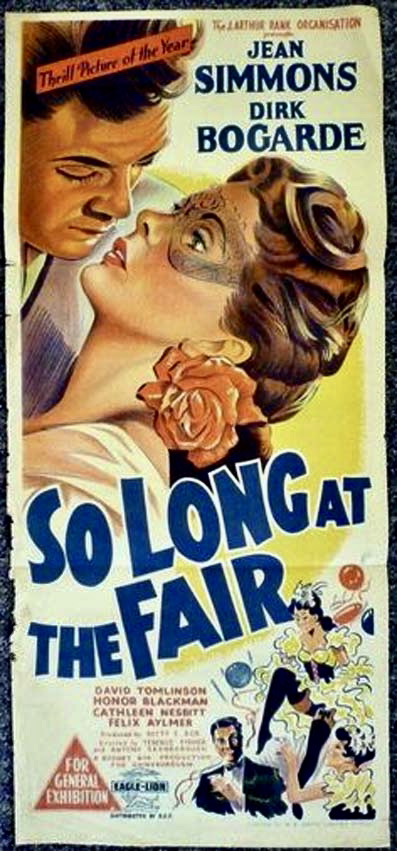
People who disappear without a trace always make the most compelling cold case mysteries, mainly because they baffle even the most intrepid investigators. The famous urban legend of “The Vanishing Lady” also known as “The Vanishing Hotel Room” may very well have been based on a real person but the true facts are lost to time. No matter. The strange tale, which first emerged in the early 1900s, has been appropriated by various writers and filmmakers in some form over the years such as the 1913 novel The End of Her Honeymoon by Marie Belloc-Lowndes (author of The Lodger), Sir Basil Thomson’s 1925 novel The Vanishing of Mrs. Fraser and the 1932 film The Midnight Warning. My favorite variation on this theme is the Victorian era mystery, So Long at the Fair (1950), produced by the British film studio, Gainsborough Pictures. The title comes from the English folk tune “Oh Dear! What Can the Matter Be?,” which contains the line, “Johnny’s so long at the fair.”
Continue readingNo Exit

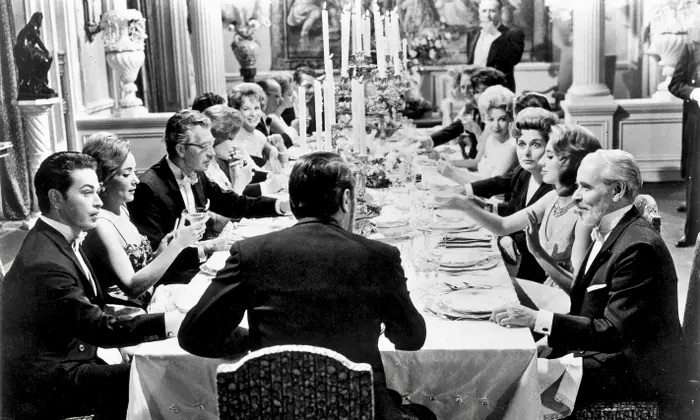
Almost everyone has attended a dinner party at some point in their lives that was mandatory as well as a memorably bad experience. Maybe it was a communal meal with the boss and co-workers or a formal affair with an annoying in-law or relative. Just be glad you were able to leave the event when it became convenient. The assembled guests in Luis Bunuel’s surreal satire, The Exterminating Angel (1962), don’t have that option but the reasons for their entrapment are never clear.
Continue readingIntroducing The Ramones
There was a time in the 1970s when film distributors were able to test-market their more offbeat offerings as “Midnight Movies” for adventurous moviegoers. Sometimes these developed into cult phenomenas like El Topo (1971), The Rocky Horror Picture Show (1975), or Eraserhead (1976). Sometimes they failed to find any audience at all like Pelvis (aka All Dressed Up in Rubber with No Place to Go, 1977) or Elevator Girls in Bondage (1972). Arriving at the tail end of the Midnight Movie craze, Rock ‘n’ Roll High School (1979) fell somewhere between these two extremes.
Continue readingMondo Man

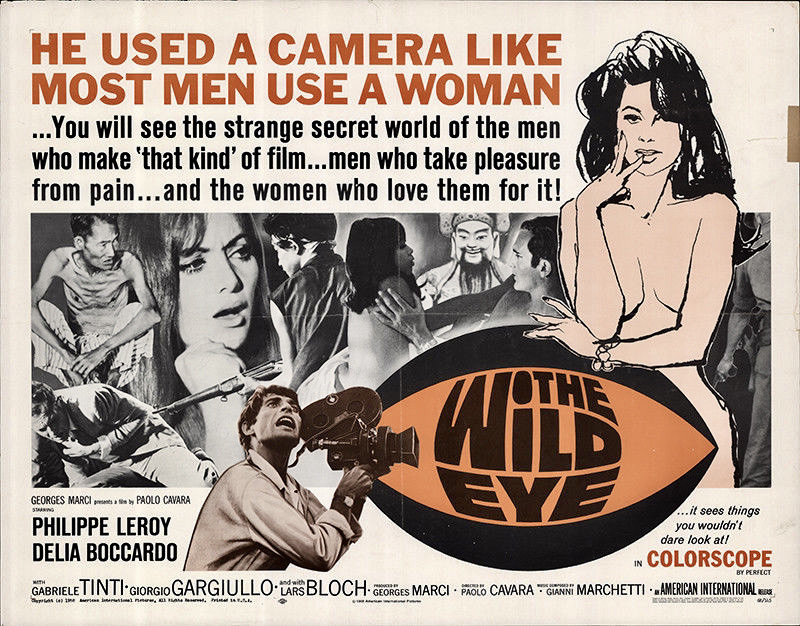
Gualtiero Jacopetti and Franco Prosperi are generally acknowledged as the “Godfathers of Mondo” and took a sensationalist approach to documentaries that revelled in bizarre and shocking cultural practices around the world. Mondo Cane (A Dog’s Life, 1962) was their wildly popular debut film and it spawned a new genre that included their later work Women of the World (1963), Mondo Cane 2 (1963), Africa Addio aka Africa: Blood and Guts (1966) and Goodbye Uncle Tom (1971), a critically reviled and polarizing account of the origins of the American slave trade that was filmed as a you-are-there dramatization. What is usually left out of the Jacopetti-Prosperi backstory are the contributions of Paolo Cavara, who co-directed and co-wrote Mondo Cane and Women of the World with Jacopetti. He broke off his association with the other two filmmakers after their second collaboration and went solo with two more Mondo films (Malamondo [1964], Witchdoctor in Tails [1966]) before turning his camera on a fictionalized version of himself in The Wild Eye (L’occhio Selvaggio, 1967), an unforgiving portrait of a ruthless Mondo filmmaker that should be better known today.
Continue reading