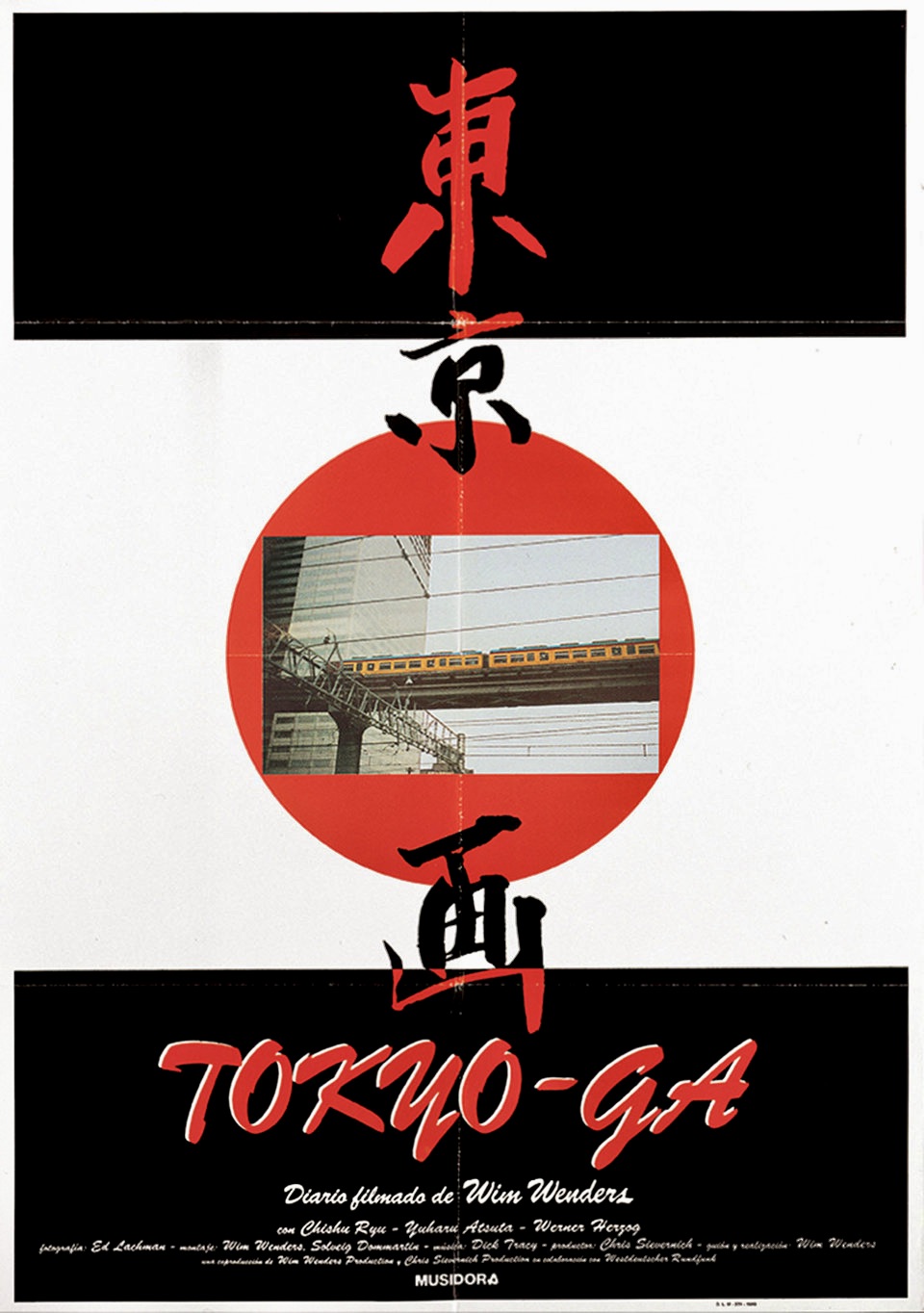
By the time Wim Wenders won the Palme d’Or at Cannes for Paris, Texas in 1984, he was well established as an internationally renowned director. He made his first big splash on the world stage in the early 1970s along with other New German Cinema directors (Werner Herzog, R.W. Fassbinder, etc.) with films such as The Goalie’s Anxiety at the Penalty Kick (1972) and Alice in the Cities (1974). Wenders had also dabbled with non-fiction-like formats in early experimental shorts, music videos and the Cannes-focused TV documentary of various film directors in Chambre 666 (1982). Yet, it was Tokyo-Ga 1985), the feature length portrait he made directly after Paris, Texas, that really triggered Wenders’s interest in not just non-fiction filmmaking but in Japan cinema and culture, especially the works of Yasujiro Ozu.
Continue readingTag Archives: Werner Herzog
Man of Mystery

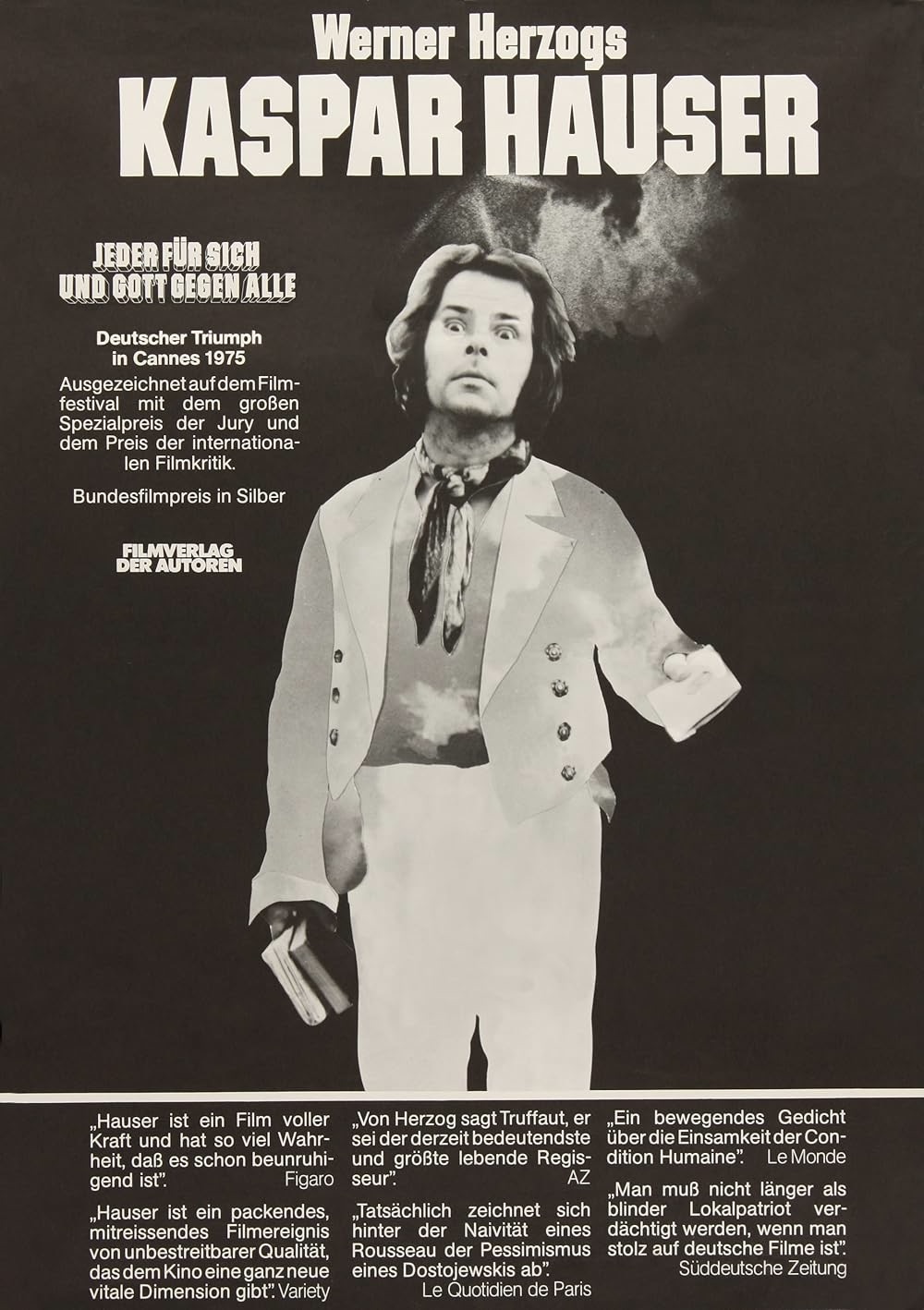
In May 1828 a young man appeared in a town square in Nuremberg, Germany carrying a prayer book and two letters written by his former caretaker. He spoke very little and was unable to answer any questions about his identity, where he came from or why he was there. One of the letters stated that he had come to the city to meet the captain of the 6th cavalry regiment with the hope of becoming a cavalryman. The other letter claimed he had been born in 1812 and had been raised in complete isolation from other people although he had been taught rudimentary reading and writing skills. His name was Kaspar Hauser but his mysterious nature and childlike presence baffled the townspeople and he was housed as a vagabond at the local prison until he was made a ward of the city and put under the protective care of Lord Stanhope, a wealthy aristocrat. Stanhope devoted himself to Hauser’s further education and re-entry into society and the young man’s bizarre demeanor aroused the curiosity of the public as well as doctors, professors and members of the clergy. Unfortunately, Hauser’s life came to an abrupt end in April 1833 when the mysterious man who first brought him to Nuremberg returned and stabbed him to death, escaping without a trace. The case has been a source of fascination for years in Germany and numerous films, television series and made-for-TV movies have been made about him but The Enigma of Kaspar Hauser aka The Mystery of Kaspar Hauser aka Every Man for Himself and God Against All (German title: Jeder fur Sich und Gott Gegen Alle, 1974), directed by Werner Herzog, is probably the most famous and critically acclaimed of all the versions made to date.
Continue readingPorcelain Mania
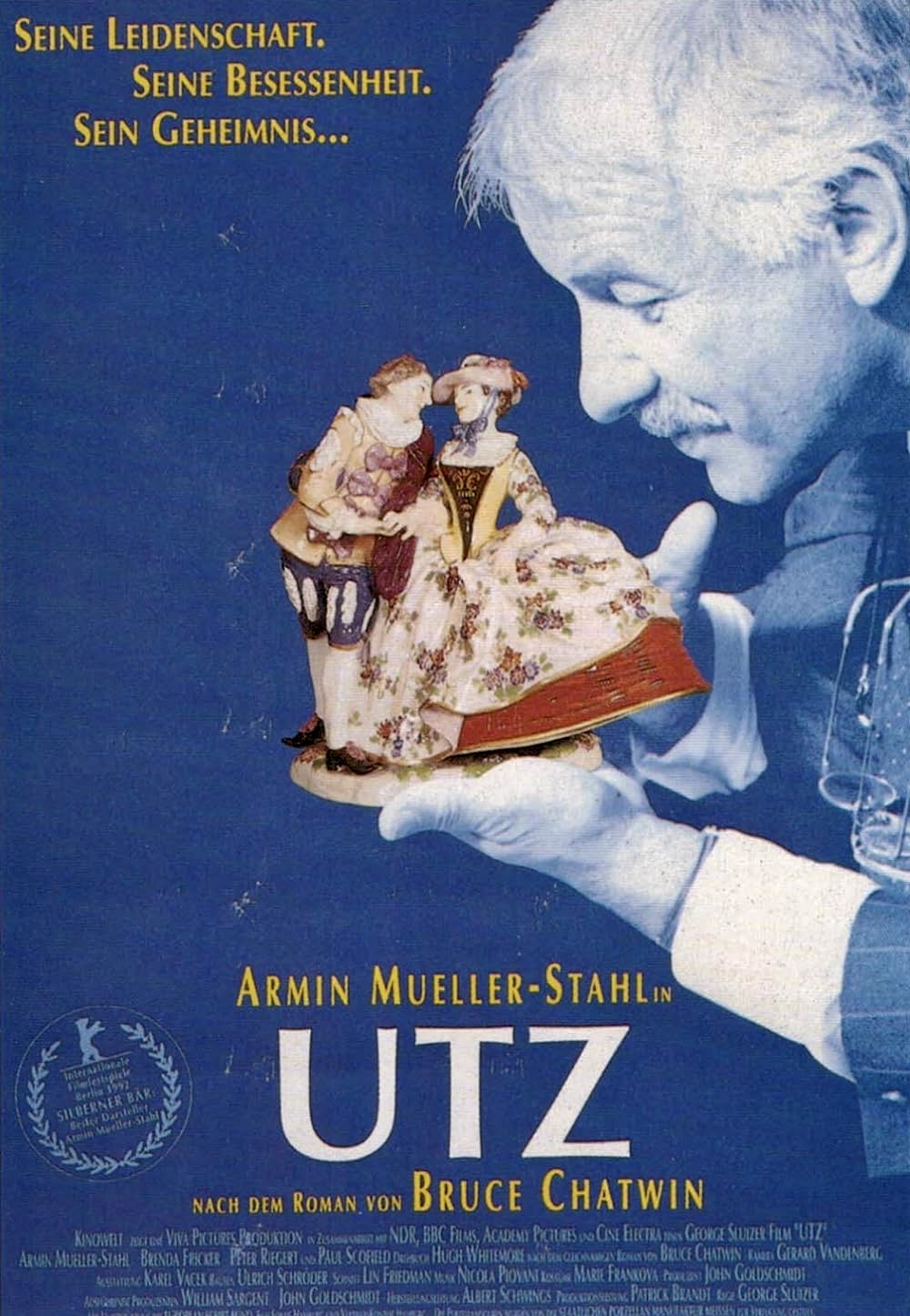
Often considered one of the most acclaimed and intriguing writers of the 20th century, Bruce Chatwin was more than just a novelist. He was also a journalist, anthropologist, and world traveler who is best known for his debut novel In Patagonia (1977), which he wrote after leaving his prestigious position as an art expert at Sotheby’s. Three of his novels have been adapted to the screen, including Cobra Verde (1987), based on his novel The Viceroy of Ouidah and directed by Werner Herzog with Klaus Kinski in the lead, On the Black Hill (1988), which was filmed on location in Wales by Andrew Grieve, and Utz (1992), which Chatwin once described as a “Middle European fairy-story”. Of these three film adaptations, Utz is often considered the most personal and intricately detailed of the lot because it reflects the author’s own interest in antiquities and art objects. The movie also transforms a highly eccentric story into an accessible portrait of an obsessive personality, one who has amassed a priceless collection of pottery, much of it devoted to ceramic figurines from the Meissen factory (Europe’s oldest porcelain manufacturer).
Continue readingTo Dream is To Fly
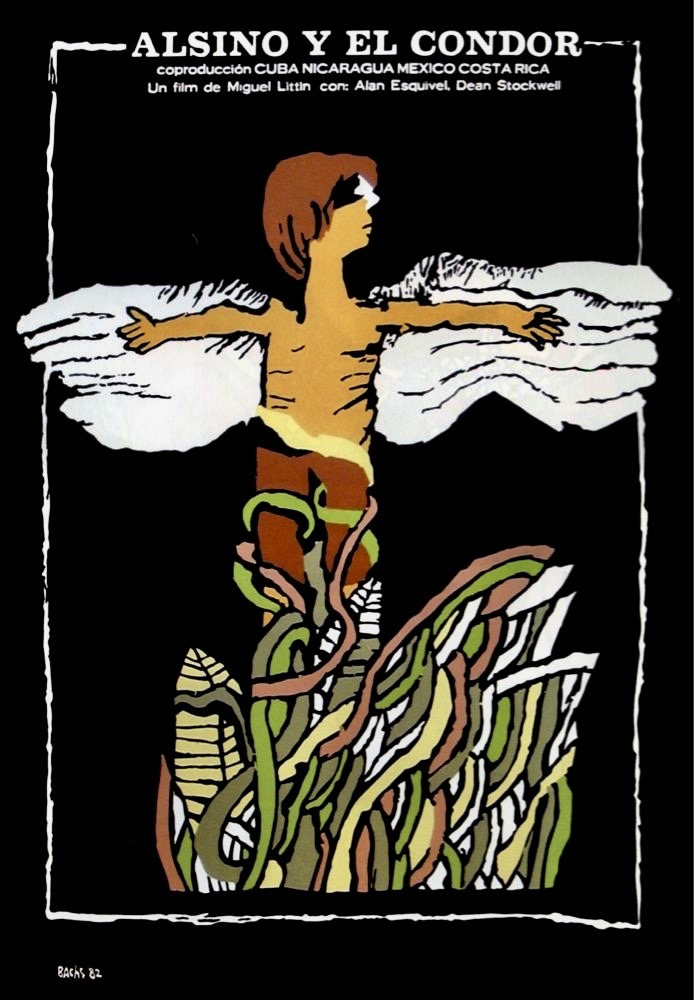
In 1979, the Somoza dictatorship of Nicaragua was overthrown by the FSLN (Sandinista National Liberation Front) and it led to a decades long war with the country’s National Guard and the U.S. backed Contras aligned against the left wing Sandinista forces. The conflict raged until 1990 and it was a terrible time for the people of Nicaragua, especially the peasants and native communities like the Miskito in rural areas. Although several documentaries have been made on the subject over the years such as Werner Herzog’s Ballad of the Little Soldier (1984), there have been few high-profile dramatic features about the conflict. One of the rare exceptions is Under Fire (1983), Roger Spottiswoode’s intense drama about three journalists (Nick Nolte, Gene Hackman and Joanna Cassidy) covering the final days of the corrupt Somoza regime. Another worthy contender is Alsino and the Condor (1982), directed by Miguel Littin, which was filmed on location in Nicaragua and was Oscar nominated for the Best Foreign Language Film. Unlike the more realistic approach of Under Fire, Alsino and the Condor functions more as an allegory and was loosely based on Pedro Prado’s famous 1920 novel Alsino about a young boy who dreams of flying like a bird.
Continue readingGaze into the Face of Madness!

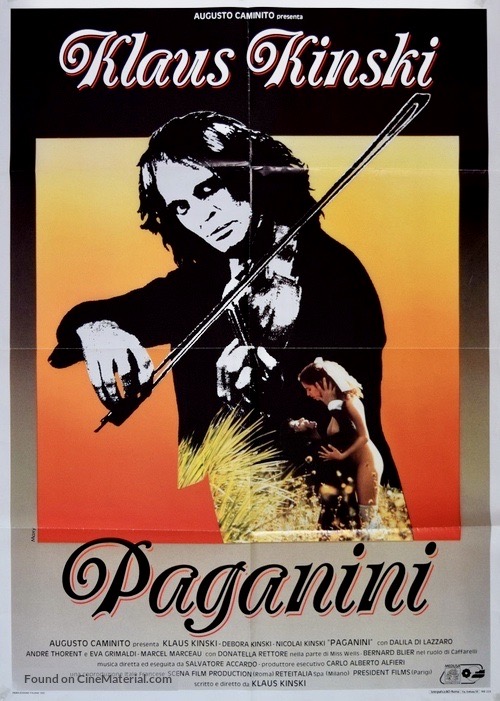
I’ve always thought that you had to be a little crazy to be a great actor and Klaus Kinski was more than a little crazy. If you don’t believe me read his purple prose autobiography Kinski Uncut which was also published under the title All I Need is Love in 1988. Or watch Werner Herzog’s 1999 film biography Mein liebster Feind (My Best Fiend-Klaus Kinski) about the German director’s volatile relationship with the actor. Better yet, try to get your hands on Paganini (aka Kinski Paganini), the actor’s only directorial effort and his final film, which was released in 1989. For those with all-region DVD players, you can still find PAL copies of it on Amazon’s German web site in a double disc release from SPV Recordings. If you thought Ken Russell’s film biographies of Tchaikovsky (The Music Lovers, 1970) and Liszt (Lisztomania, 1975) were excessively over-the-top and in flamboyant bad taste, you ain’t seen nothin’ yet! Paganini also features supporting roles for French actor Bernard Blier (Les Miserables, 1958), Dalilia Di Lazzaro (Andy Warhol’s Frankenstein, 1973), Eva Grimaldi (Joe D’amoto’s Convent of Sinners, 1986), Marcel Marceau as – big surprise – a pantomine artist and Kinski’s wife Debora Capriolglio in her first lead role.
Continue readingThomas Schamoni’s Almost Forgotten 1970 Experiment from the New German Cinema Movement
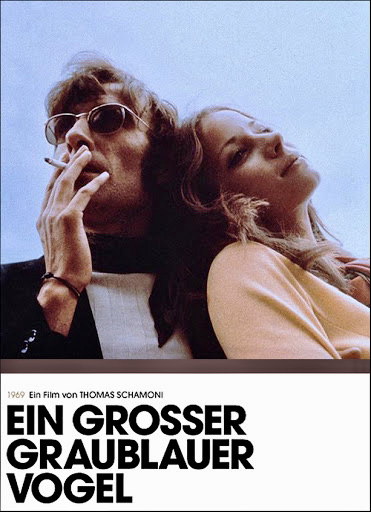
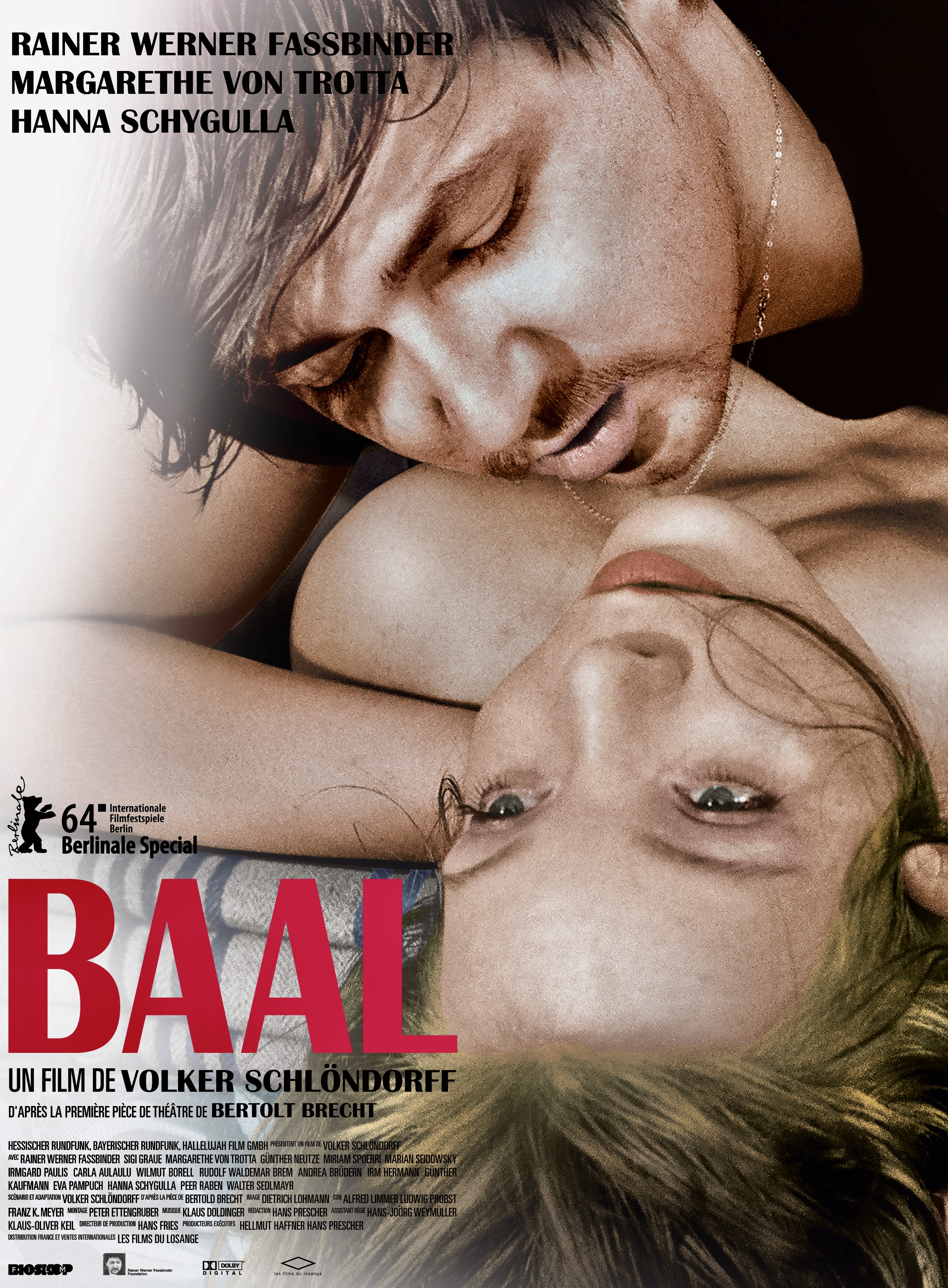
The New German Cinema of the late sixties-early seventies introduced the world to some of the most original and provocative filmmakers of the 20th century such as Rainer Werner Fassbinder, Wim Wenders, Werner Herzog and Volker Schlondorff, but some of pioneers never attracted much attention outside their own country and their films are in danger of being forgotten. Among them are Helma Sanders-Brahms, Peter Lilienthal, Hans W. Geissendorfer and Thomas Schamoni, who is probably the most obscure of them all. Schamoni worked for most of his career in television, turning out documentaries and made-for-TV movies, but in 1970 he directed his only feature film, A Big Grey-Blue Bird (German title: Ein grober graublauer Vogel). A lo-fi mashup of sci-fi and spy genre elements reminiscent of Jean-Luc Godard’s Alphaville (1965), it is a playful and surprisingly entertaining cinematic “experiment” that should have found a wider audience.
Continue readingThe Holy Bray

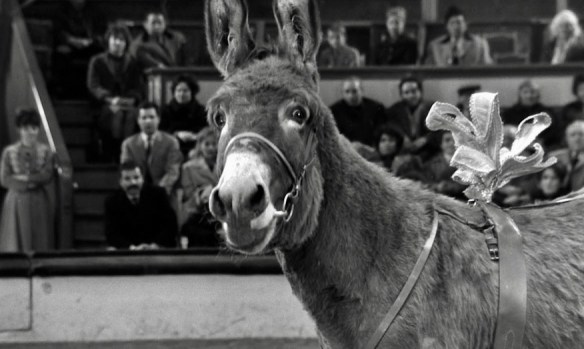
The title character of Robert Bresson’s Au Hasard Balthazar (1966) is a donkey who goes through a series of owners in his sad life as a beast of burden.
Films about animals or featuring them as the main protagonists are usually the province of Walt Disney and other family friendly productions such as Benji (1974) and March of the Penguins (2005). Other than the horror genre, though, there have been relatively few departures from the usual formulaic approach to this type of movie with Jerome Bolvin’s dark satire Baxter (1989) and the ethnographic Story of the Weeping Camel (2003) being two of the rare exceptions. Yet nothing can really compare with Au Hasard Balthazar (1966), directed by French filmmaker Robert Bresson, which stands alone as a profound and singular achievement in this category. Continue reading
Mortal Thoughts
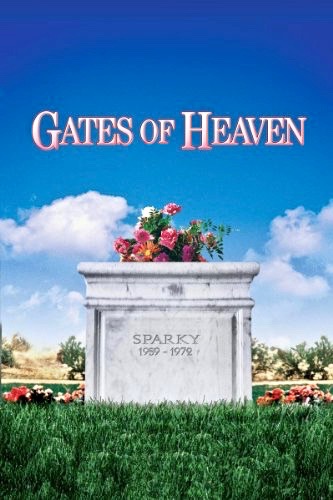
The story goes like this. German director Werner Herzog made a bet with aspiring filmmaker Errol Morris that if the latter ever completed the film he was working on – which was inspired by a news story about the mass relocation of the graves from a California pet cemetery – he would eat his shoe. Morris did indeed complete his film, which was called Gates of Heaven (1978) and, true to his word, Herzog boiled and ate his show at the film’s premiere in Berkeley. Filmmaker Les Blank recorded the event and turned it into a documentary short entitled Werner Herzog Eats His Shoe in 1980. Continue reading
Hunted and Haunted

Klaus Kinski plays an escaped mental patient in the German psychological drama/thriller, Der Rote Rausch (1962).
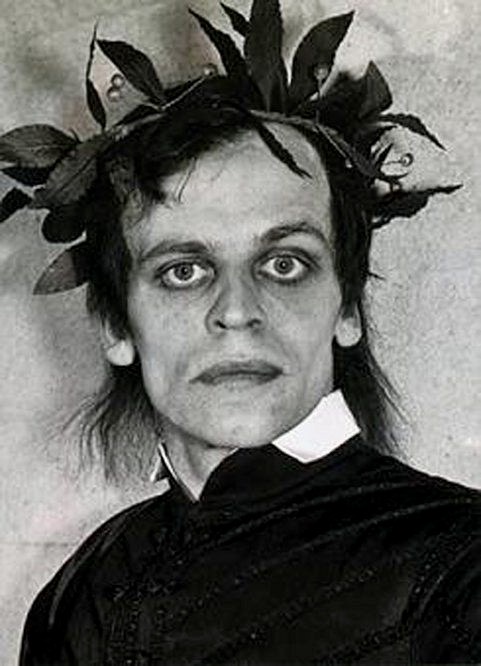
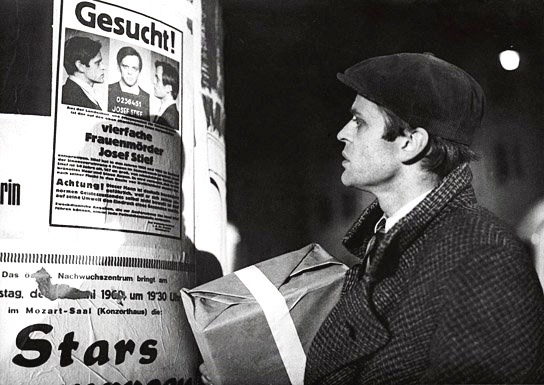
When did Klaus Kinski first burst upon the international film world? The evidence points to his portrayal of the obsessive Spanish expedition leader Don Lope de Aguirre in Werner Herzog’s Aguirre, Wrath of God in 1973. He followed that with other critically praised performances in Andrzej Zulawski’s The Most Important Thing: Love (1975), Herzog’s Nosferatu the Vampyre (1979), Woyzeck (1979) and Fitzcarraldo (1982) and even appeared in mainstream commercial fare like Billy Wilder’s Buddy, Buddy (1981) and George Roy Hill’s The Little Drummer Girl (1984). But most of Kinski’s early work from 1955’s Morituri (in an uncredited bit part) up to the ‘70s were supporting roles; some were breakout parts such as 1955’s costume drama Ludwig II: Glanz und Ende wines Konigs (he was nominated for best supporting actor in the German Film Awards) or superior genre efforts like Sergio Corbucci’s spaghetti western The Great Silence (1968). Still, leading roles were a rarity for Kinski but one of the early exceptions was Der Rote Rausch (1962), directed by Wolfgang Schleif. Continue reading
Les Blank, 1935-2013
The prolific independent filmmaker Les Blank died on April 7, 2013 but somehow that sad news slipped past me. I’m just now reading a host of glowing eulogies and tributes to the man, mostly from fellow filmmakers and critics. He wasn’t ever a household name because his movies rarely received theatrical distribution outside of a few major cities. Unless you happened to catch one on your local PBS station or attended a film festival, which is where most of his work first premiered, there’s a good chance you never even heard of Les Blank. Even though he made more than 40 non-fiction features and shorts, the only Les Blank film you can view on Netflix is Burden of Dreams (1982), his justly famous chronicle of the trouble plagued production of Werner Herzog’s Fitzcarraldo, filmed on location in the Amazon. Continue reading