Child’s Play

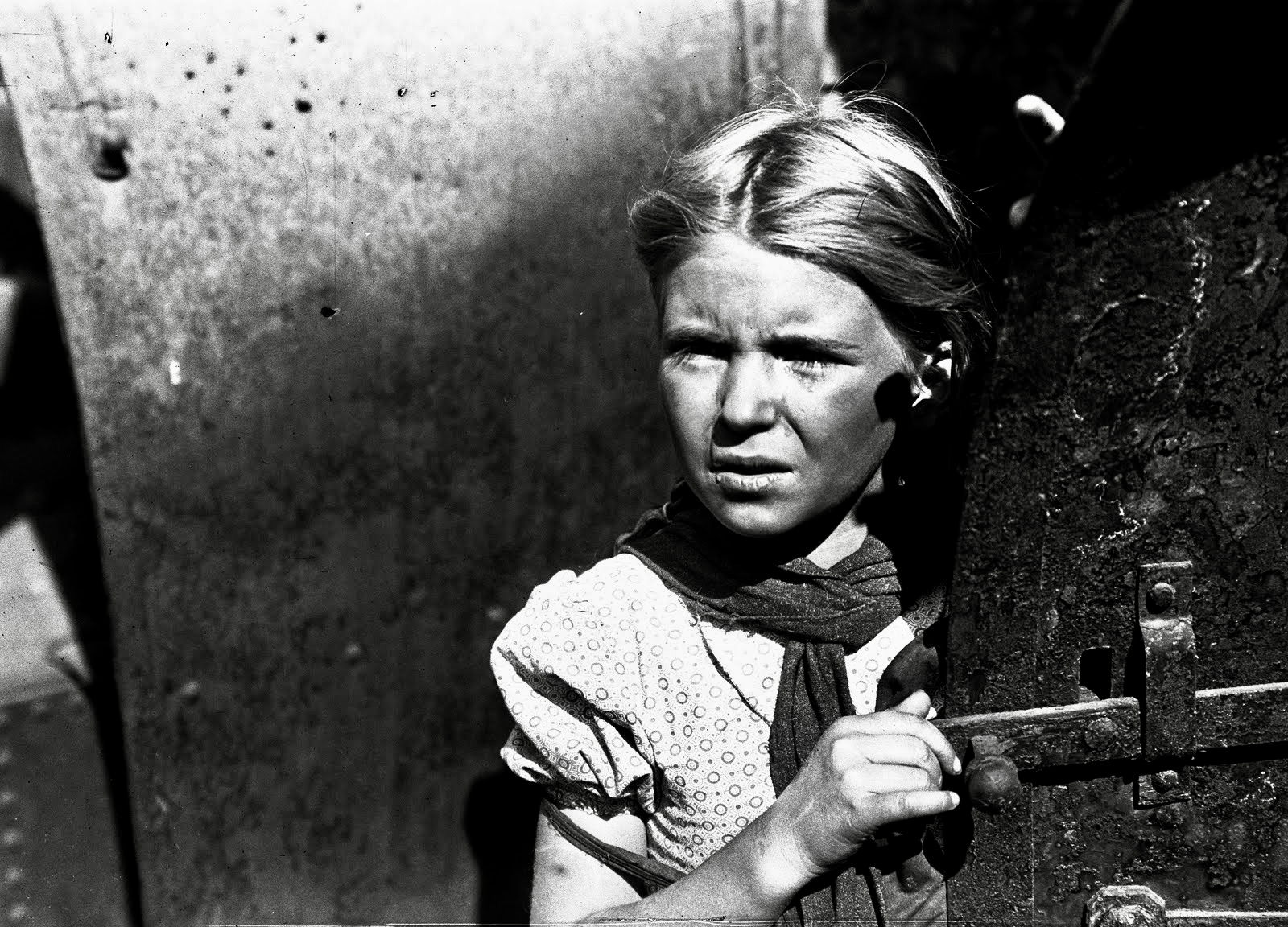
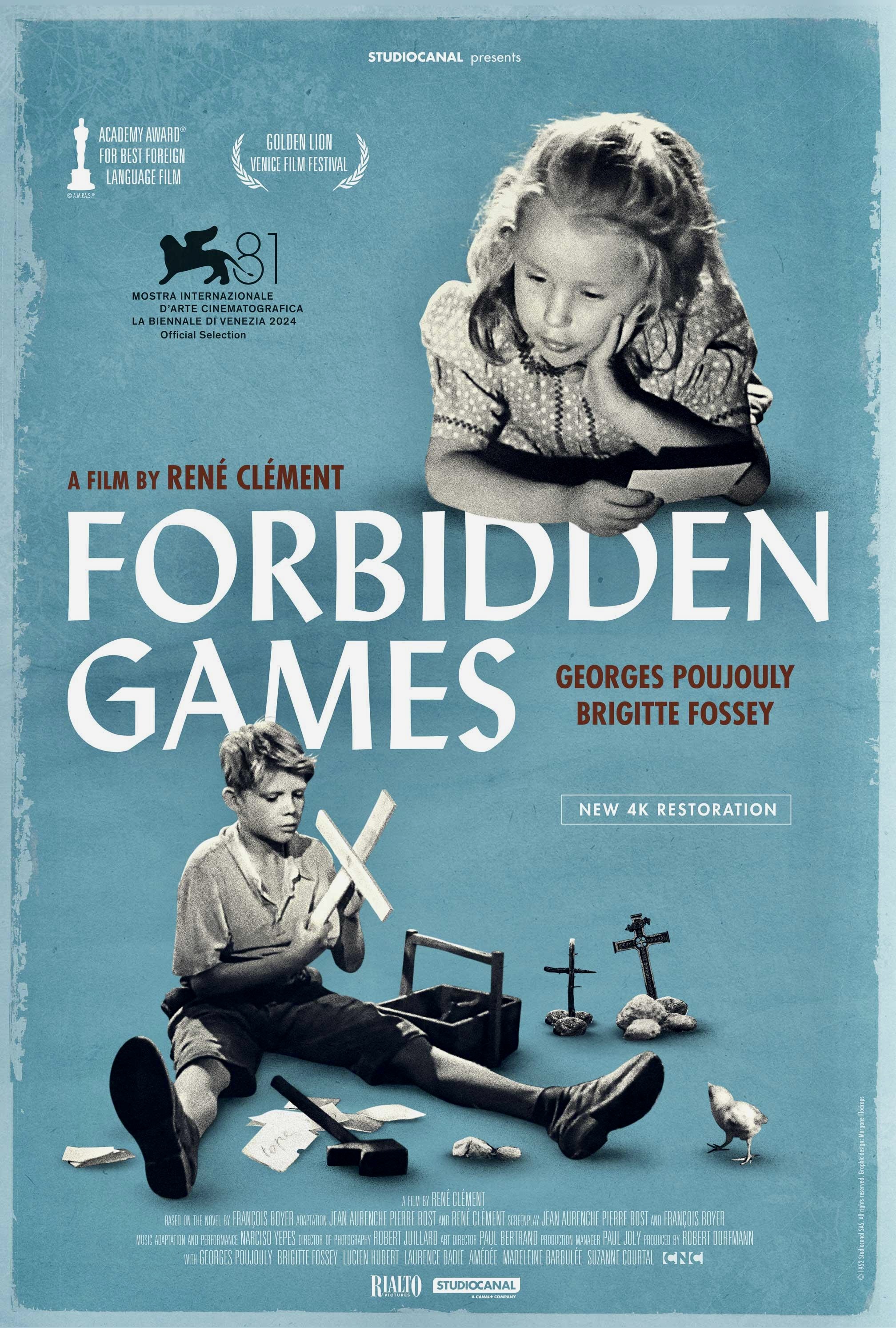
June 1940. A long line of French refugees flee Paris for the countryside during the German invasion of France in WW2. Among the evacuees are a young couple with their 5-year-old daughter Pauline and her pet dog Jock. When the couple’s car stalls on the road, angry refugees push it out of the way and down a hill. The family grab whatever they can carry from their stranded vehicle and return to the road as German aircraft start dropping bombs. In the confusion, Jock runs off and Pauline chases after him. Her parents follow in pursuit but the family is forced to take shelter again as aerial machine-gunners target the escaping Parisians. This time the parents and the dog are mortally wounded and Pauline is left abandoned. She wanders into the countryside clutching her dead pet, not really comprehending what has happened to her. All of this occurs in the few ten minutes of Jeux Interdits (English title: Forbidden Games), one of the most powerful war films of all time. Yet, it is unique within its specific genre because it does not focus on the war itself but the effects of the devastation on a young child. Directed by Rene Clement, the film became an international sensation and won a honorary Oscar as Best Foreign Film of 1952.
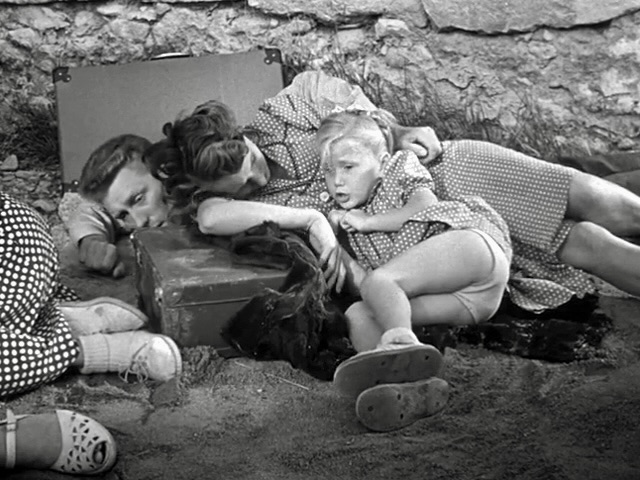
Paulette (five year old Brigitte Fossey) is left an orphan after her parents are killed in a German aerial raid in FORBIDDEN GAMES (1952).
Continue reading

Saint/Sinner

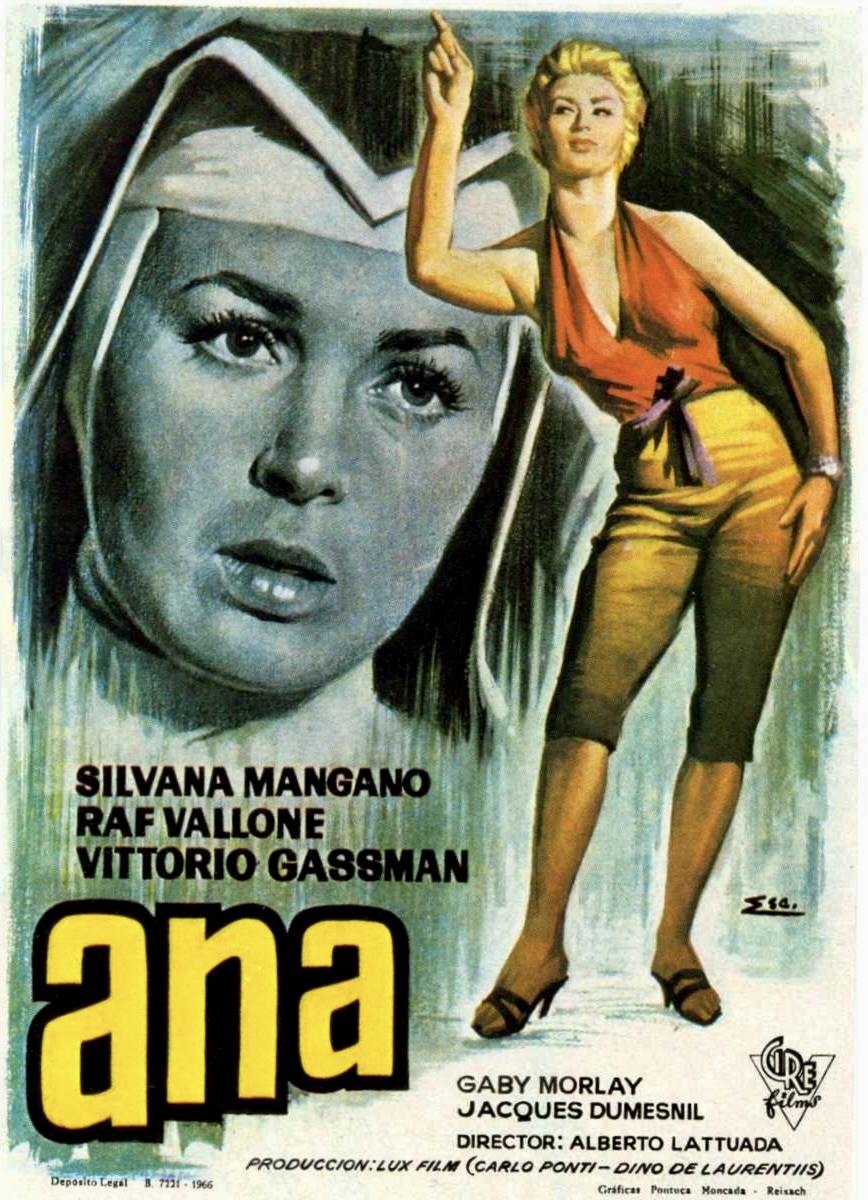
The Italian film poster for ANNA (1951).

He was a prominent and commercially successful director for most of his career but Alberto Lattuada is often overlooked when film scholars discuss the important Italian filmmakers of the postwar era. Part of the problem was that he was hard to pigeonhole due to his eclectic filmography yet he always seemed to have his finger on the pulse of Italian popular culture. And his films reflected the changing times and interests of his generation from the birth of the neorealism movement [Il Bandito aka The Bandit (1946), Senza Pieta aka Without Pity (1948)] to literary adaptations [Il Mulino del Po aka The Mill on the Po (1949), La Steppe aka The Steppe (1962)] to popular entertainments focused on female protagonists like Guendalina (1957) featuring Jacqueline Sassard in her first starring role and Nastassja Kinski in Cosi come sei aka Stay as You Are (1978). Lattuada might be just a footnote in film history due to his collaboration with Federico Fellini on Luci del Varieta (English title: Variety Lights, 1950) but Italian audiences flocked to his films and they made his 1951 melodrama Anna starring Silvana Mangano (in the title role) into a major box office smash.

Continue reading

Fotoromanzi Fantasy

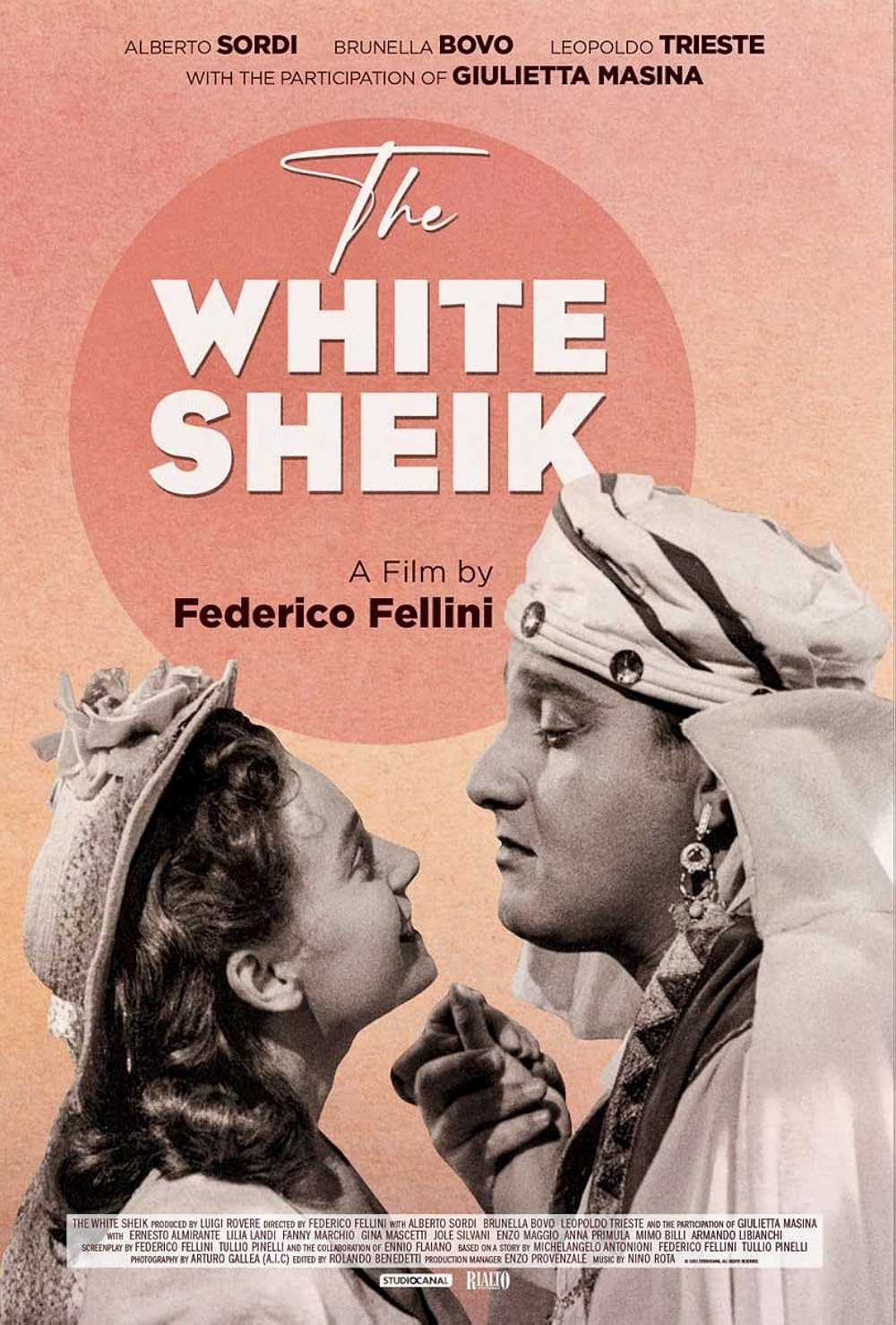
“With Paisan, I knew that I wanted to be a film director. I thought maybe this was where my future was, not as a journalist. It was with The White Sheik that I knew I was a film director.” – Federico Fellini (from I, Fellini by Charlotte Chandler)

In The White Sheik (Italian title: Lo Sceicco Bianco, 1952), Fellini’s first solo directorial effort (he co-directed Variety Lights with Alberto Lattuada the previous year) he drew upon his experiences as a journalist and script writer to tell a bittersweet story about a provincial newlywed couple vacationing in Rome for their honeymoon. Wanda (Brunella Bovo), the young bride, is a naive romantic, prone to impulsive behavior and passionate fantasies. She is also an avid fan of fotoromanzi (a comic book with photo captions instead of cartoon drawings) and is secretly infatuated with “The White Sheik,” the hero of her favorite series.

Continue reading

On the Loose in Amsterdam

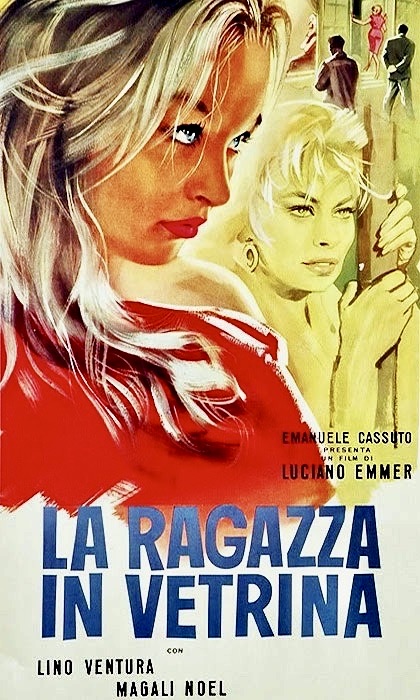
The Italian film poster for THE GIRL IN THE PICTURE WINDOW (1961), directed by Luciano Emmer.

The controversial problem of immigration in Italy has been a problem for decades, not just with internal migration of workers from the south to the north, but also with the influx of refugees from Africa and other areas around the Mediterranean. Not surprisingly, there have been numerous Italian films to address this situation over the years but only a handful of them have received praise and recognition outside their own country. Among them are Pietro Germi’s Il Cammino della Speranza (The Path of Hope, 1950), in which a group of Sicilian workers try to emigrate illegally to France, I Magliari (The Swindlers, 1959), Francesco Rosi’s drama about an out-of-work Italian miner (Renato Salvatore) in Germany, and Lina Wertmuller’s Tutto a Posto e Niente in Ordine (All Screwed Up, 1974), which focuses on immigrants from southern Italy trying to find work in Milan. To this short list, I would like to add Luciano Emmer’s rarely seen La Ragazza in Vetrina (The Girl in the Picture Window, 1961), a tale about two immigrant miners in Belgium who enjoy a weekend getaway in Amsterdam.

Continue reading

The Night of Counting the Years

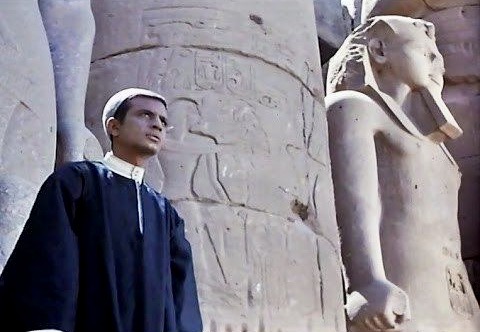
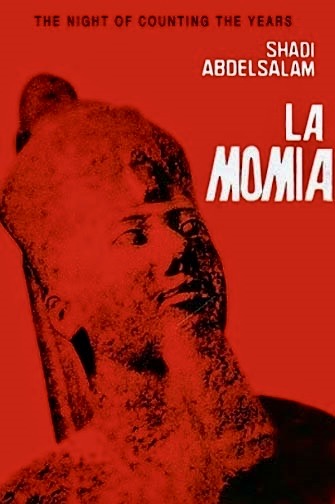
Wanis (Ahmed Marei) wants his tribe to stop looting their heritage in the 1969 Egyptian drama THE NIGHT OF COUNTING THE YEARS aka Al-mummia (The Mummy).

It is not that common to encounter films from Egypt in the U.S. and only a handful have managed to enjoy theatrical distribution here in either film festival or art house screenings over the years. Youssef Chahine from Alexandria, Egypt is probably the best known director with more than 40 feature films to his credit including The Blazing Sun (1954) featuring Omar Sharif in his film debut and Bab el Hadid (Cairo Station, 1958), which brought him international attention. Other than Chahine, you might recognize Moshi Mizrahi although his best-known films were made in other countries; The House on Chelouche Street (1973), an Oscar nominee for Best Foreign Language Film was made in Israel, and Madame Rosa (1977) and I Sent a Letter to My Love (1980), both starring Simone Signoret, were filmed in France. A more contemporary Egyptian director is Atom Egoyan, although he was raised in Western Canada where most of his movies have been made including Exotica (1994) and The Sweet Hereafter (1997).

The Spanish film poster for The Mummy (Al-mommia, 1969) aka THE NIGHT OF COUNTING THE YEARS from Egyptian director Chadi Abdel Salam.

Many film historians and critics, however, often list Chadi Abdel Salam as one of the greatest Egyptian directors of all time on the basis of his solo feature film from 1969, Al-mummia (The Mummy aka The Night of Counting the Years), which has slowly acquired the status of a classic in its own country and around the world, thanks to the efforts of Martin Scorsese and The Film Foundation, which restored the film in 2009 in association with the Cineteca di Bologna and the Egyptian Film Center.  

Continue reading

Christmas Lockdown in the Eternal City

An alternate release poster for the Roberto Rossellini film ERA NOTTE A ROMA (1960)

Available for years in inferior public domain prints and poor video transfers, Robert Rossellini’s influential WW2 trilogy [Rome Open City (1945), Paisan (1946) and German Year Zero (1949)], which firmly established him as the “father of Neorealism”, finally received 4K high-definition digital transfers from The Criterion Collection in 2017. Linked thematically to this trilogy, however, is a later Rossellini film, Era Notte a Roma [English title, Escape by Night aka Blackout in Rome,1960), which, unfortunately, has never enjoyed the reputation or respect of this seminal trilogy. I first saw a 16mm print of the film from Films Inc. years ago when it still licensed titles from The Audio Brandon Collection. I had a chance to revisit Era Notte a Roma again recently on DVD and am still baffled by the movie’s low profile since its original release.

Continue reading

The Great Displacement

At the end of WW2, it was estimated that more than 6 million people had been displaced from their homes and roughly 180,000 of these were children. Some were concentration camp survivors, others were orphaned or separated from their families, hiding in monasteries or living with strangers. There have been a handful of films that dealt with this traumatic situation and Fred Zinnemann’s The Search (1948) is probably the most famous post-war American film on the subject. It was nominated for four Academy Awards and won a special Juvenile Oscar for Ivan Jandl as a homeless kid separated from his Czech mother. Europe also produced some landmark films about displaced children during WW2 including Roberto Rossellini’s Germany Year Zero (1948) and Rene Clement’s Forbidden Games (1952) but Somewhere in Europe aka It Happened in Europe (Hungarian title: Valahol Europaban) from Hungarian director Geza von Radvanyi was one of the first films to address war orphans trying to fend for themselves. Released in 1947, the film is less well known than other post-war dramas from the same period but it is a harrowing portrait of a dire situation affecting Eastern Europe, especially Hungary, during the final days of the war.

Continue reading

A Funny Thing Happened on the Way to Ghana

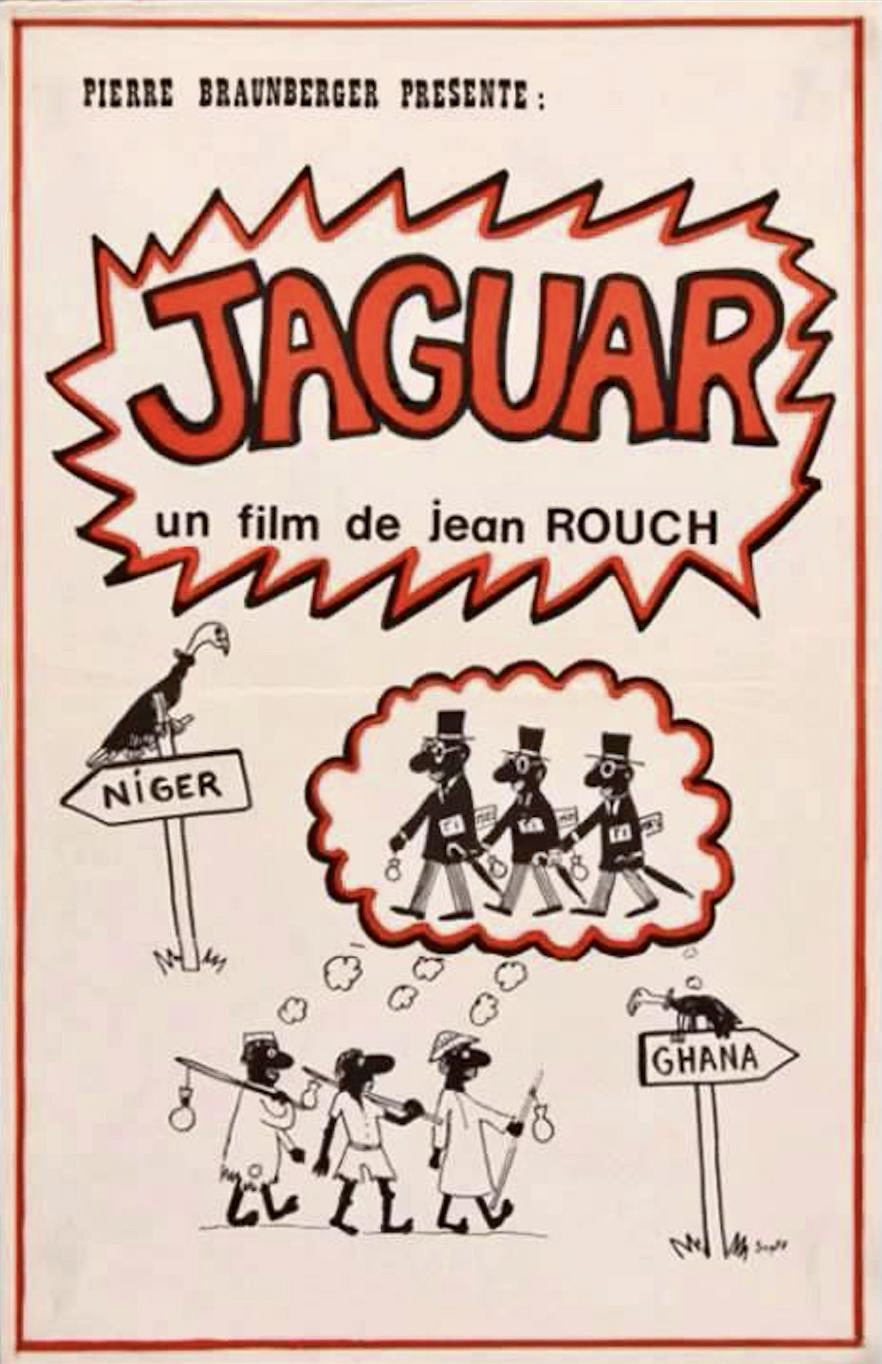
“The camera eye is more perspicacious and more accurate than the human eye,” French filmmaker Jean Rouch once said, and his idiosyncratic documentaries, which were often fusions of reality and fiction, bear this out. Jaguar (1967) is a perfect example of this duality.

Continue reading

Abattoir Blues

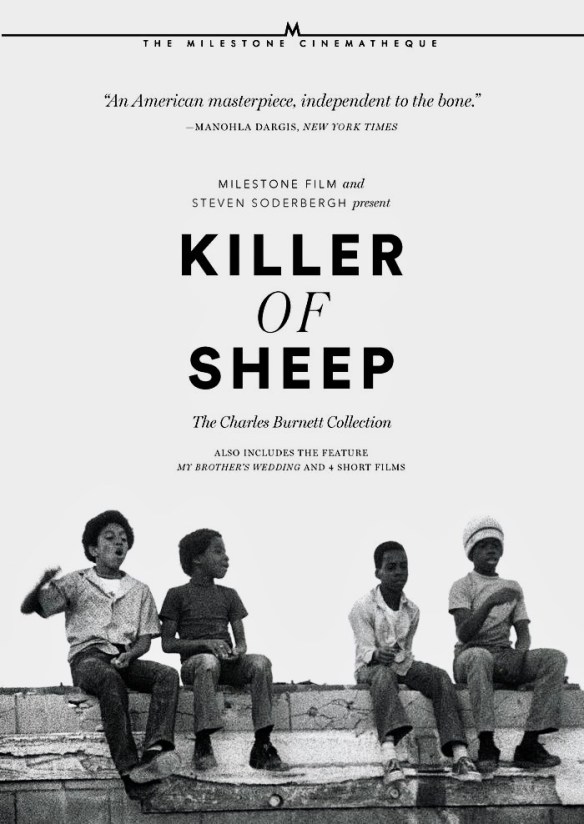
“I wanted to do something that reflected the way people in the community would see themselves. Coming from another place, you can see a much larger picture. But when you’re in a well, you can only see the narrow light above. If you’ve been living like that for a long time, it can have an unproductive effect on you in many ways. So it wasn’t my personal conflicts. It was the conflict of the community.” – Director Charles Burnett in an interview with Filmmaker Magazine about his film Killer of Sheep.

After more than 42 years, Charles Burnett’s Killer of Sheep (1977) is now recognized as a seminal film in the indie film movement of the ‘70s even though it didn’t receive a wide release until 2007 via Milestone Films. In fact, Burnett never really intended for the film to have a theatrical release; he made it as his thesis film at UCLA. But retrospective screenings of the film and the resulting critical acclaim culminated in Killer of Sheep winning the Forum of New Cinema prize at the 1981 Berlin International Film Festival. Other accolades followed such as being selected by the National Film Registry in 1990 for film preservation and winning a special award from the New York Film Critics Circle in 2007. Not bad for a movie shot on 16mm and made for a rock bottom budget of $10,000 from film grants.   Continue reading

A Tale from the Slums of Rome

In its own way, Pier Paolo Pasolini’s 1961 directorial debut Accattone could be seen as the last gasp of the Italian neo-realism movement. It is also a remarkably self-assured first film that blends the lyrical with the sordid in its depiction of life on the outskirts of Rome where pimps, thieves and petty criminals scrounge for a living with little hope of ever escaping their dead-end existence. Based on Pasolini’s second novel, Una Vita Violenta, Accatone successfully launched Pasolini as a film director but also marked the beginning of an acting career for Franco Citti in the title role. What is most interesting is that Una Vita Violenta was again adapted for the screen under that title the following year but it is hardly ever mentioned or revived. Pasolini had no involvement with the production but it did star Franco Citti in the central role of Tommaso, a character similar to Accattone, and the two films would make a fascinating double feature in terms of their contrasting tones and directorial style.  Continue reading