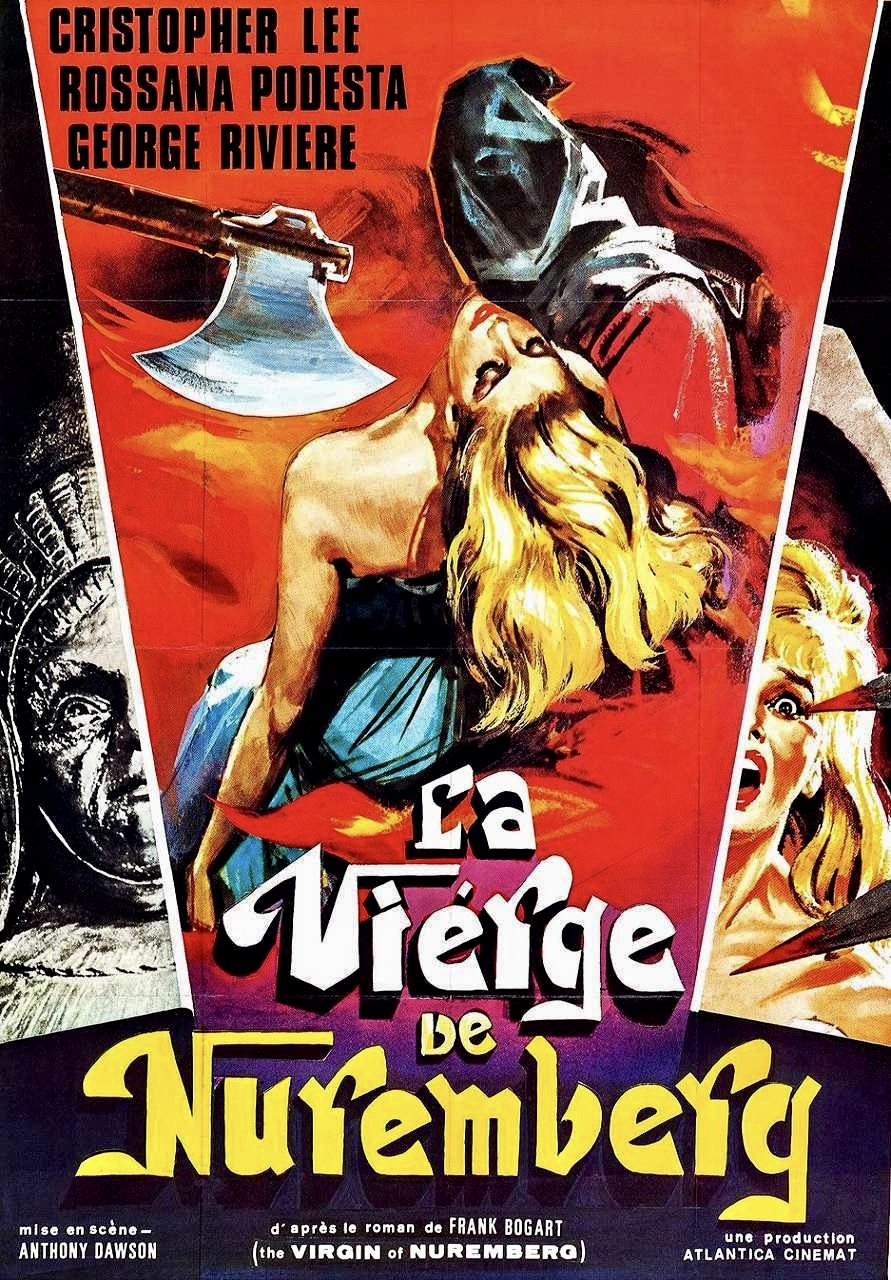
The Virgin of Nuremberg

The Italian film poster for THE VIRGIN OF NUREMBERG which is also known as HORROR CASTLE (1963), starring Rossana Podesta.

Mary, the wife of German aristocrat Max Hunter, is visiting her husband’s ancestral castle for the first time and is completely unsettled by the mansion’s violent past; 300 years earlier it was the home of “The Punisher”, a sadistic fiend who tortured and killed women deemed guilty of adultery. One room of the mansion even serves as a shrine to the past with its museum-like displays of the family implements of torture. The castle’s domestic staff is no less intimidating with Erich, a disfigured servant, and Marta, a grim-faced housekeeper with a flair for morbid stories, in constant attendance. Left alone by her husband while he conducts business away from home, Mary tries to suppress her mounting terror as reports of a missing servant girl lead to rumors of “The Punisher” and his return from the grave.
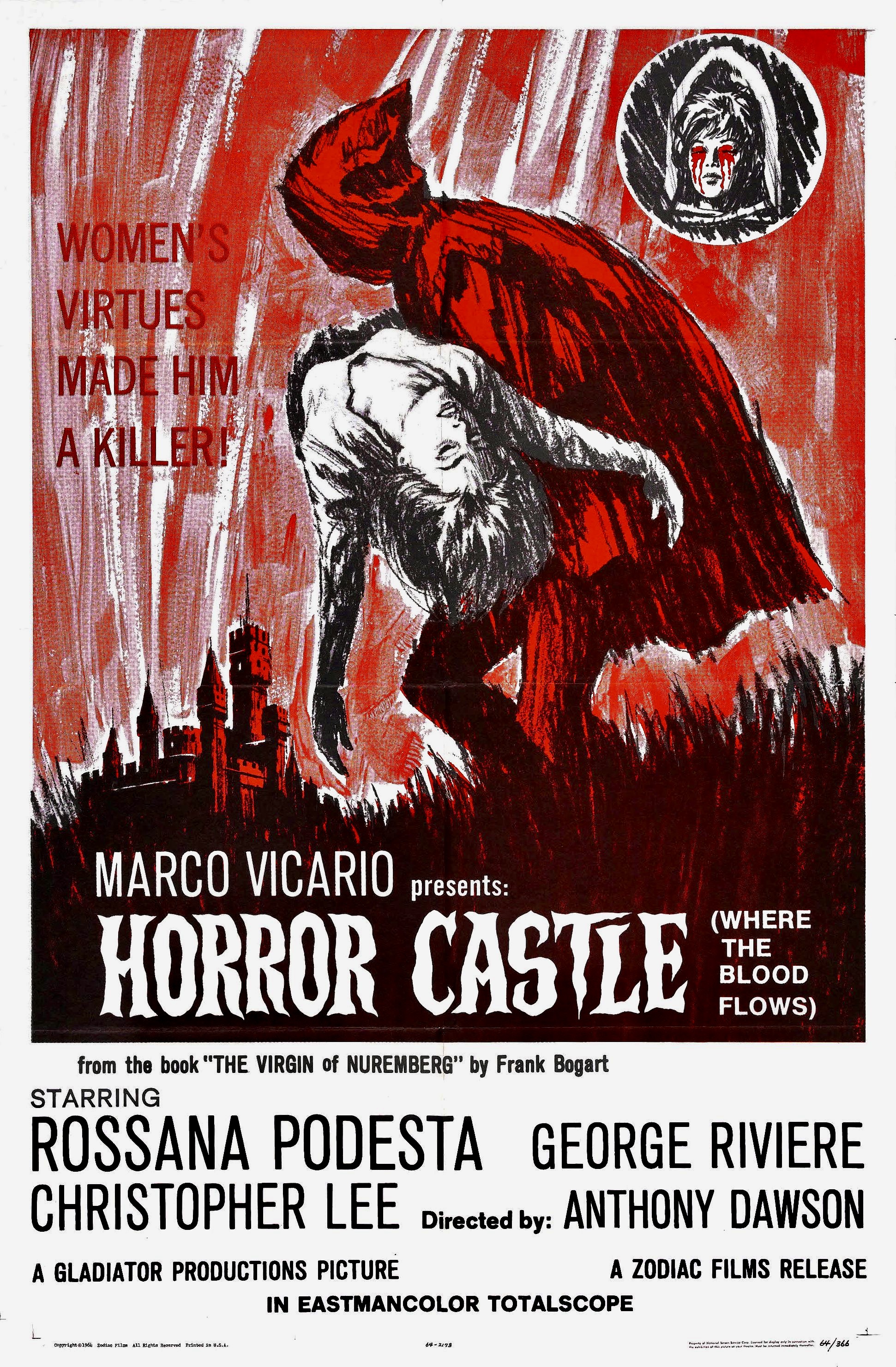
The opening sequence of the Italian film La Vergine di Norimberga (U.S. release title, Horror Castle (1963) could be a primer for Gothic horror films with every cliche of the genre on display. A dark, stormy night. A creepy castle. A frightened woman in a nightgown exploring the darkened corridors by candlelight. Where it departs from the predictable formula is in the dramatic payoff – the gruesome discovery of a mutilated woman locked inside an iron maiden, “The Virgin of Nuremberg” (the original Italian title of the film).

Continue reading
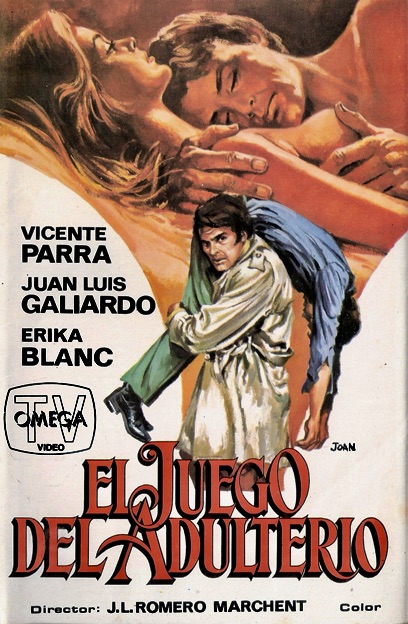
The Game of Adultery

The Spanish film poster for THE GAME OF ADULTERY (1973).

Giallo thrillers and spaghetti westerns are generally considered genres created by the Italian film industry but producers and filmmakers in other European countries also created their own versions in these categories, especially in Spain. Director/Screenwriter Joaquin Luis Romero Marchent, a native of Madrid, is best known for his Spanish take on wild west oaters but he did make a film that could be classified as a giallo. El Juego del Adulterio (English title: The Game of Adultery aka The Deadly Triangle, 1973) is blessed with a title that sounds like an erotic melodrama or maybe a softcore soap opera for the grindhouse crowd. It definitely has elements of that but is actually a psychological thriller crossed with a murder mystery.

Continue reading

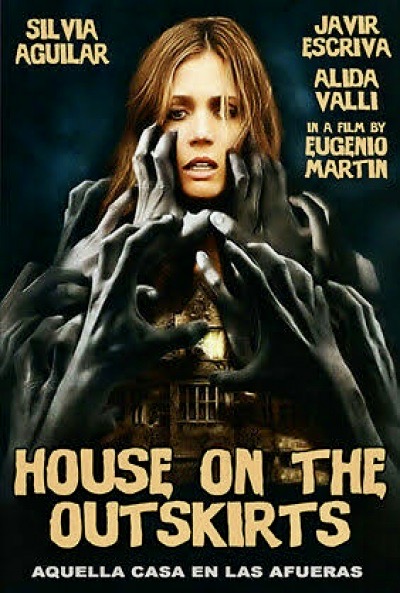
There’s No Place Like Home

Spanish director Eugenio Martin is not a name familiar to the average American moviegoer but for fans of European genre films, he has developed a cult following over the years, thanks to the release on DVD and Blu-ray of some of his better known titles. Among these are the fast-paced, enormously entertaining sci-fi/horror/train disaster hybrid Horror Express (1970) with Christopher Lee, Peter Cushing and Telly Savalas, the giallo The Fourth Victim (1971) starring Carroll Baker, and A Candle for the Devil aka It Happened at Nightmare Inn (1973) in which two religious fanatic sisters are behind a series of murders. Martin also helmed several entrees in the Spaghetti Western genre such as The Ugly Ones (1966), Requiem for a Gringo (1968) and Bad Man’s River (1971) featuring Lee Van Cleef, James Mason and Gina Lollobrigida but some of his efforts defy easy categorization like Aquella Casa en las Afueras (English title: The House on the Outskirts, 1980), which is like a woman-in-peril melodrama crossed with an “old dark house” thriller. Throw in some unspoken but implied social commentary on women’s birthrights and you have a rather unique film from post-Franco Spain.

Continue reading

Roll the Credits

An example of Stephen Frankfurt’s iconic title treatment for the 1962 film TO KILL A MOCKINGBIRD.

In their increasing eagerness to capture a wider viewing audience for their annual awards ceremony, you would think the Academy of Motion Picture Arts & Sciences would create a few more categories that could generate some genuine interest with the average moviegoer. How about Best Title Credits? It’s an art form in its own right. Graphic designer Saul Bass certainly proved that years ago with his innovative opens for the films of Otto Preminger (Carmen Jones, The Man With the Golden Arm, Saint Joan, Bonjour Tristesse, Anatomy of a Murder, Advise and Consent, Exodus, The Cardinal and several more) and Alfred Hitchcock (Vertigo, North by Northwest, Psycho). Other title designers you might recognize are Stephen Frankfurt (To Kill a Mockingbird, Rosemary’s Baby), Pablo Ferro (Dr. Strangelove, Being There) and Maurice Binder (Dr. No, Charade). Even before them, opening title credits were a key component of the film, often setting the tone and even encapsulating the movie’s theme or storyline into a compact visual nugget.

Continue reading

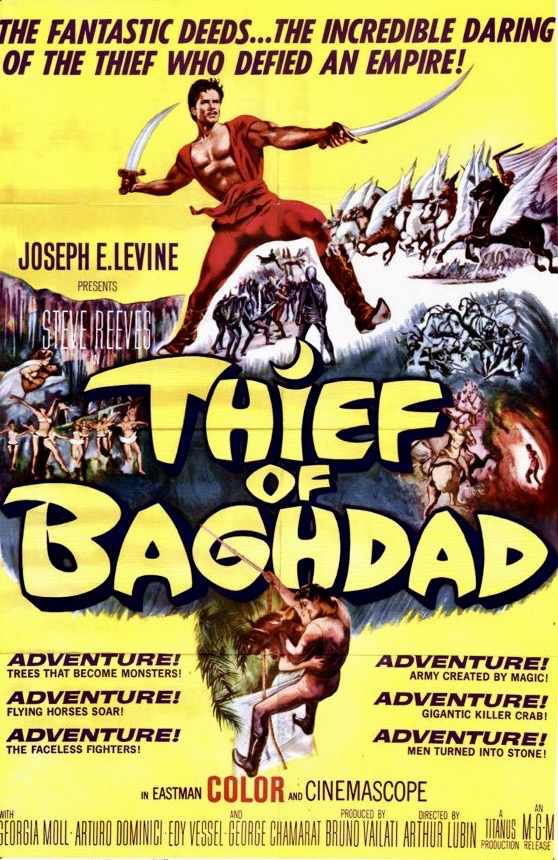
Steve Reeves as The Thief of Baghdad

One Thousand and One Nights also known as the Arabian Nights is a collection of stories from the Middle East and India that can be traced back to the 9th century although the author or authors of the tales are anonymous. What is known is that the stories introduced such famous fictional characters as Sinbad, Aladdin, Ali Baba and others, all of whom have inspired numerous film versions of their exploits. One of my favorite Arabian Nights fables is The Thief of Bagdad but the first movie version I encountered was the 1961 Italian fantasy-adventure Il Ladro di Bagdad (released in an English dubbed version as The Thief of Baghdad in the U.S.) starring Steve Reeves. First seen at a kiddie matinee during its original release, it made a strong impression on me as a ten-year-old, even if it is not the best known, most lavish or critically respected of the many film versions. 

Continue reading

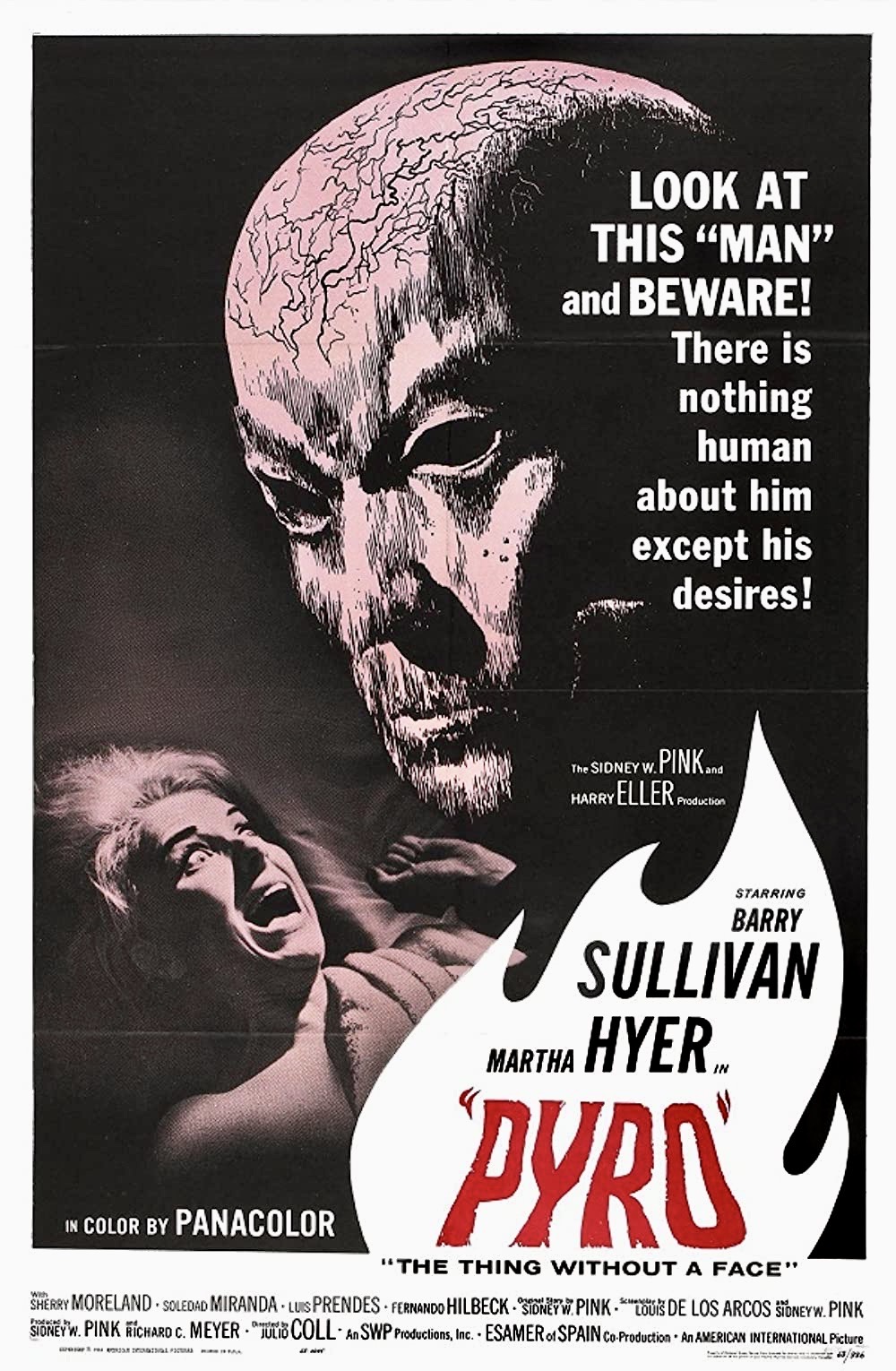
Burning Love

The early 1960s was a turbulent time for the film industry and the Hollywood studio system was becoming a relic of the past as television and other competitors in the entertainment field lured audiences away. Some movie actors could see the writing on the wall and began to pursue film offers outside Hollywood and the U.S. Some of the more famous former studio contract players who escaped and reinvented themselves in Europe were Clint Eastwood, Charles Bronson, Lee Van Cleef, Jean Seberg and Jane Fonda. Even seasoned veterans like Edward G. Robinson, Lee J. Cobb and Bette Davis appeared in movies made overseas but one of the more unusual examples of American actors appearing in an international production is Barry Sullivan and Martha Hyer in Pyro…The Thing Without a Face (1964, aka Fuego in the European market), directed by Julio Coll and filmed in Spain. 

Continue reading

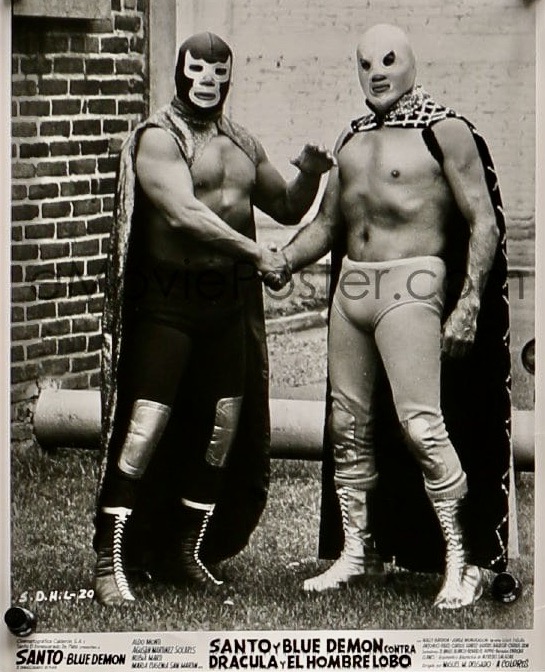
A Double Dose of Santo and Blue Demon

For American moviegoers weaned on comic books and superheroes like Superman, Batman and The Hulk, the names El Santo and Blue Demon might not be as familiar. But in Mexico, they are major cultural icons. They were the main attractions in a popular film genre known as the lucho libre (wrestling hero movies) but had first established themselves as bona-fide professional wrestlers. In real life, Santo and Blue Demon were often rivals in the ring but they teamed up on the screen nine times and two of their most representative features together are Santo y Blue Demon vs. Dracula y el Hombre Lobo (Santo and Blue Demon vs. Dracula and the Wolf Man, 1973) and Santo y Blue Demon contra el Doctor Frankenstein (Santo and Blue Demon vs. Dr. Frankenstein, 1974), which are good entry points for beginners.

Continue reading

The Lost Souls of Sao Paulo

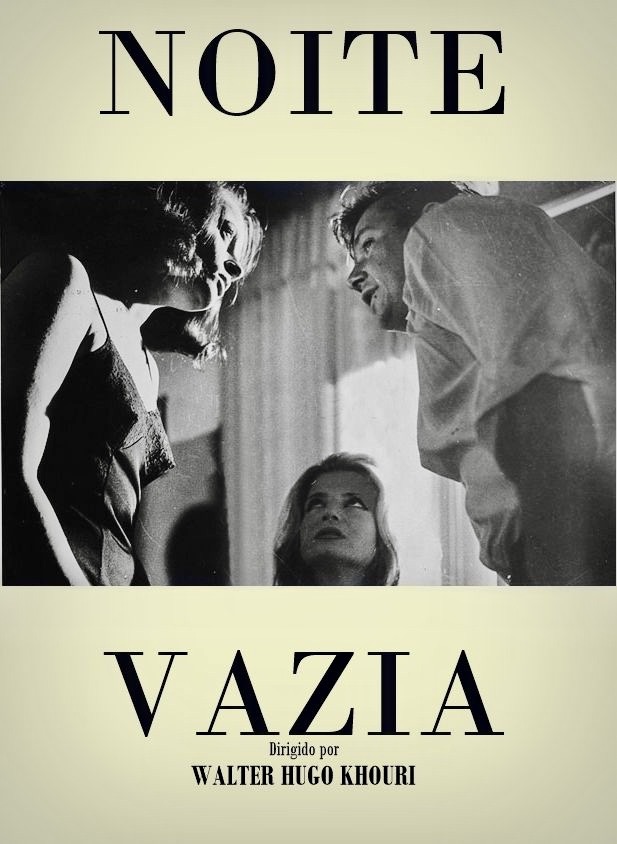
Long Day’s Journey into Night is the title of Eugene O’Neill’s Pulitzer Prize winning 1956 play but it could also serve as a succinct capsule description of numerous movies from the 1960s that were clearly influenced by Michelangelo Antonioni’s L’avventura (1960) and its themes of alienation and existential despair. Some examples include Giuseppe Patroni Griffi’s Il Mare (1962) which follows three strangers on the isle of Capri during a bleak winter season as they try to connect with each other. Jean-Luc Godard’s Alphaville (1965) depicts a dystopian futuristic society in which a detective finds himself out of place in a modernistic Paris controlled by an oppressive artificial intelligence. And Jacques Demy’s Model Shop (1969) uses the urban sprawl of Los Angeles and its smog-creating car culture as a backdrop to an unemployed architect’s search for meaning in his life. Yet, the most Antonioni-like film of all and the least known is probably Noite Vazia (1964) by Brazilian director Walter Hugo Khouri, which traces a dusk-to-down encounter between two men and two women amid the sterile cityscapes of modern Sao Paulo.

Continue reading

The Runaway Nuclear Physicist

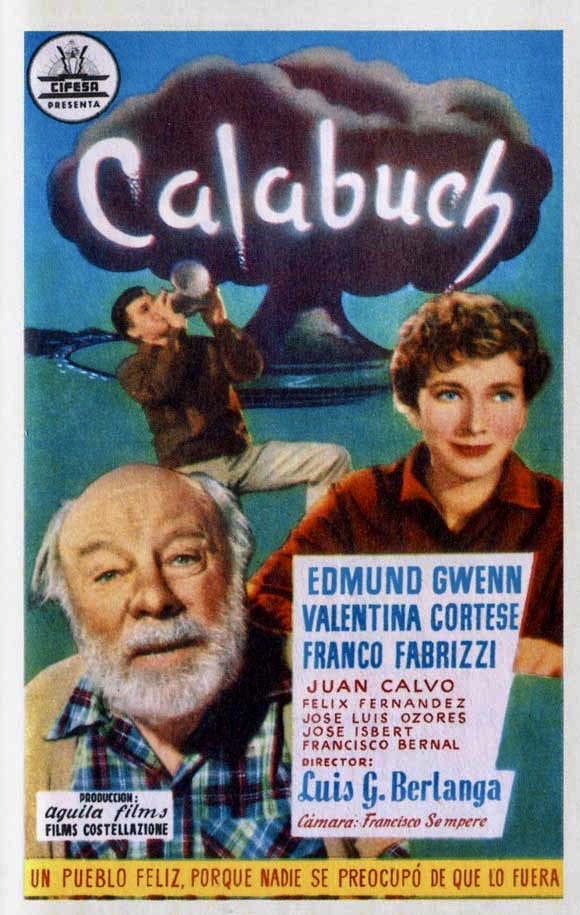
Often considered alongside Luis Bunuel as one of the most important and influential Spanish film directors of the 20th century, Luis Garcia Berlanga (1921-2010) and his work is still being discovered in the U.S. Bienvenido, Mister Marshall! (Welcome, Mr. Marshall, 1953), Berlanga’s post-WW2 satire of the European Recovery Plan aka the Marshall Plan, was the first of his films to receive wide distribution at art houses in America and went on to win the International Prize for Best Comedy Film at Cannes. Placido (1961), a black farce in which a homeless man is invited to a Christmas Eve dinner sponsored by a cookware corporation, was nominated for a Best Foreign Language Film Oscar. And El Verdugo (The Executioner, 1963) might be his most famous triumph with Nino Manfredi as an undertaker who is pressured into taking over his father-in-law’s profession as an executioner. The Criterion Collection released a special edition of it on Blu-ray and DVD in 2016, which helped introduce Berlanga’s satiric masterwork to new audiences. Less well known today but praised by critics during its original release in 1956 is Calabuch aka The Rocket from Calabuch, a seemingly gentle but subversive satire about life in a rustic seaside village which is disrupted by the arrival of an amiable but mysterious stranger.

Continue reading

Stare If You Dare at The Hypnotic Eye!

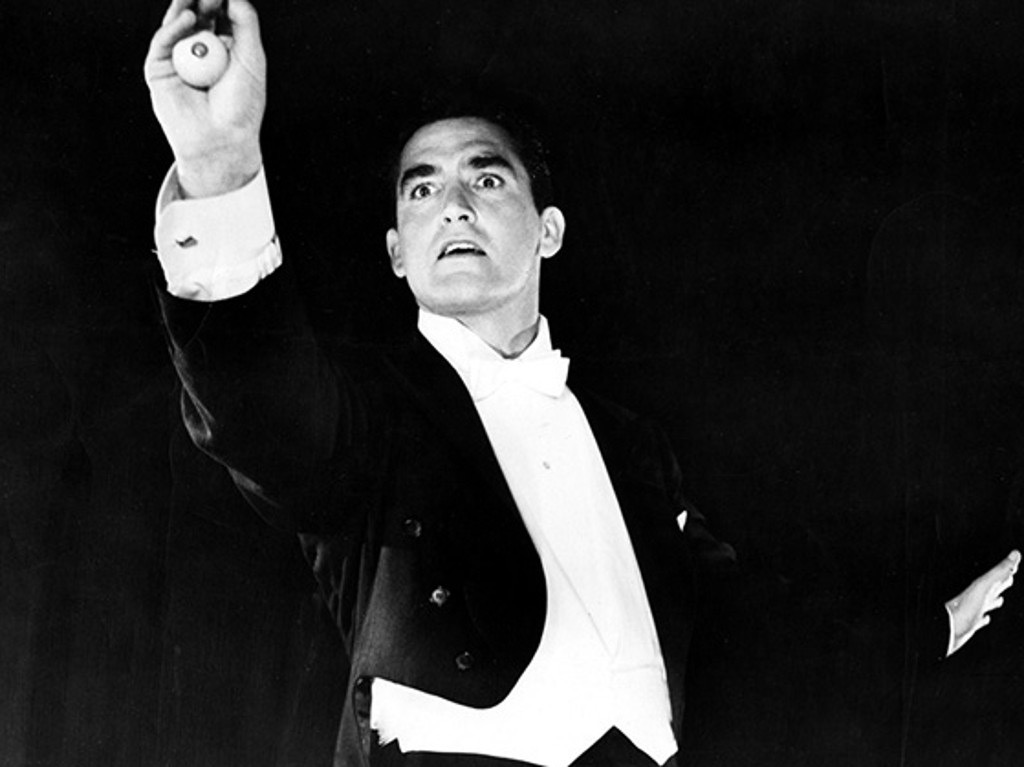
Jacques Bergerac is Desmond the Great, a famous hypnotist who is linked to a series of female self-mutilations in The Hypnotic Eye (1960), directed by George Blair.

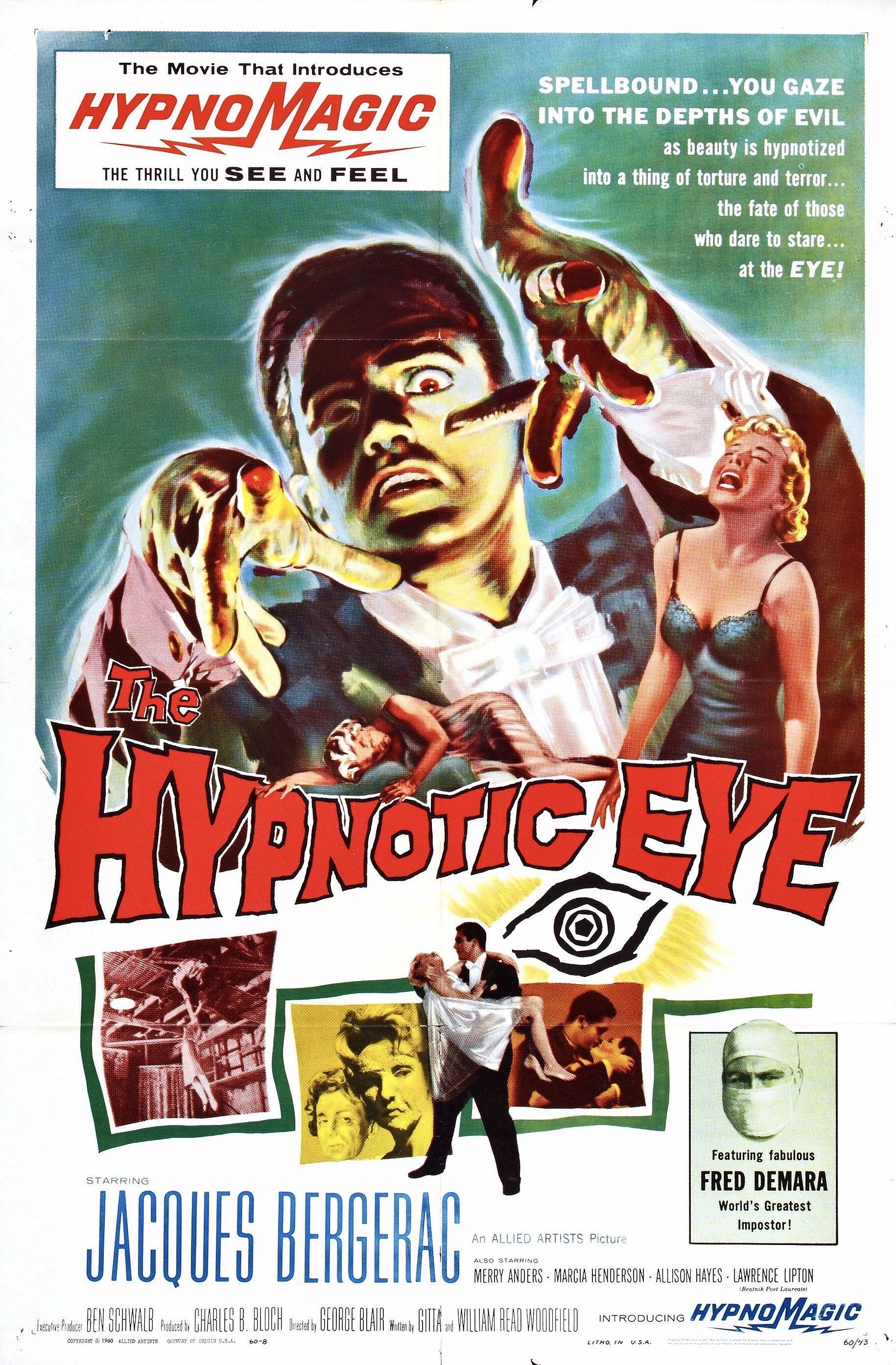
Everybody has probably been haunted or permanently tramatized by some movie they saw as a kid that burned images into their brain they couldn’t process or handle. For me it was a sick little B-movie that popped up on the late show called The Hypnotic Eye (1960), which I saw at the age of nine.       

Continue reading