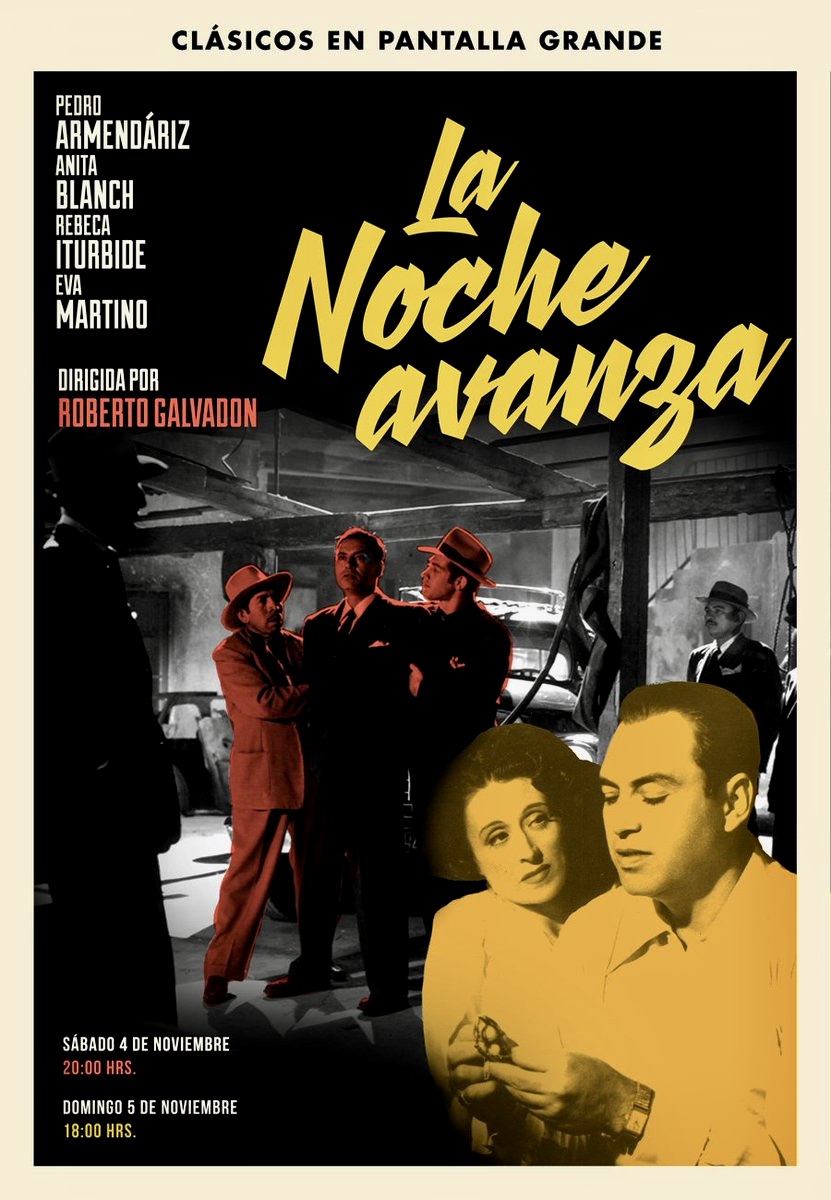
Men behaving badly could easily qualify as a cinema subgenre with such classic examples as Kirk Douglas in Champion (1949) and Robert De Niro in Raging Bull (1980) leading the pack but the athletic anti-hero of La Noche Avanza (English title: Night Falls or The Night Draws On, 1952) might even surpass them in terms of sheer toxic masculinity. Marcos (Pedro Armendariz) is Mexico’s most famous undefeated jai alai champion, a public hero and a sexually magnetic lure for women. He is also the epitome of an arrogant macho muchacho Latin male who considers everyone else inferior with boasts like “I’m one of the victorious, the strong…The weak don’t count.”
Continue readingTag Archives: Luis Bunuel
Georgia on My Mind

Svaneti is not a planet in the solar system or some alternate universe out of a science fiction fantasy but it might as well be. In truth, it is a remote region located in the northwestern part of the Republic of Georgia on the southern slopes of the Caucasus Mountain range. For centuries the area was cut off from civilization due to its inaccessible location in the mountains plus the extreme weather, that usually included eight straight months of snowfall, also made it unwelcoming. After Georgia was invaded and annexed by the Soviet Union in 1922, the region was subjected to Stalin’s five-year plan (1928-1932), which was created to spawn agriculture collectives across the nation and introduce large-scale industrialization. But Svaneti was so isolated from the rest of the world that it took a while for Soviet workers to reach the area and Jim Shvante (Marili svanets) [English title: Salt for Svanetia (1930)] is a portrait of the lives and traditions of the Ushkul tribe in that inhospitable domain before the Soviets arrived to develop it. The result is not a typical documentary but more of a folk culture microcosm as captured by some wildly creative ethnographic filmmaker.
Continue readingLily in Wonderland

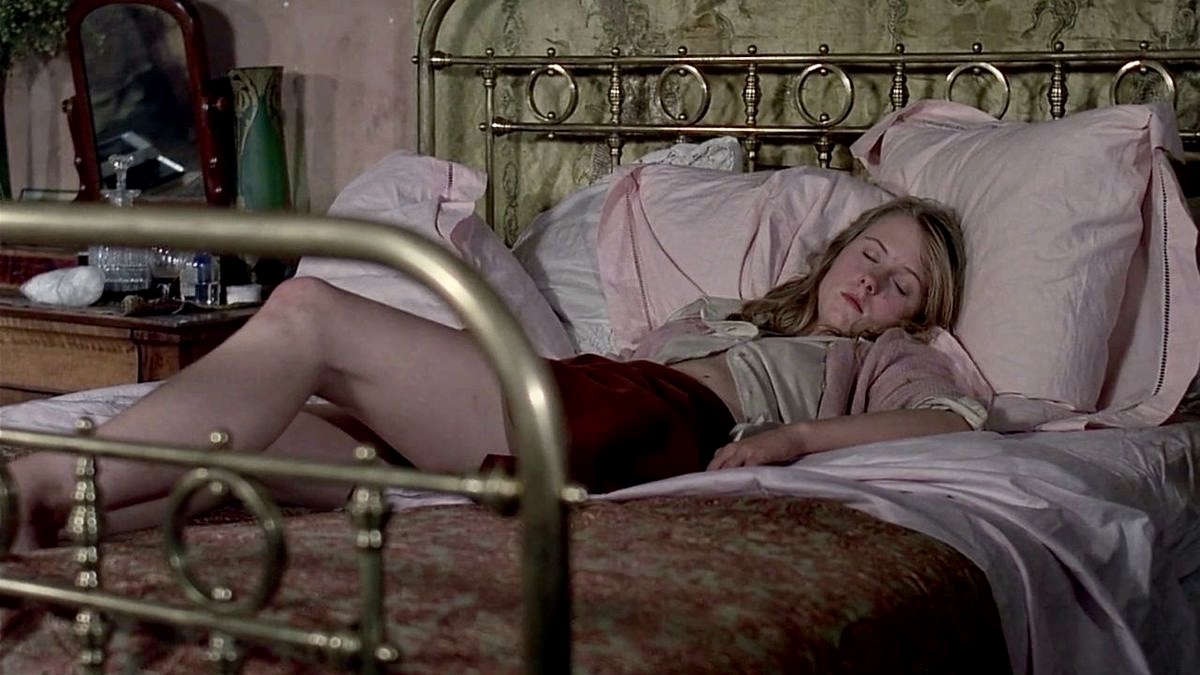
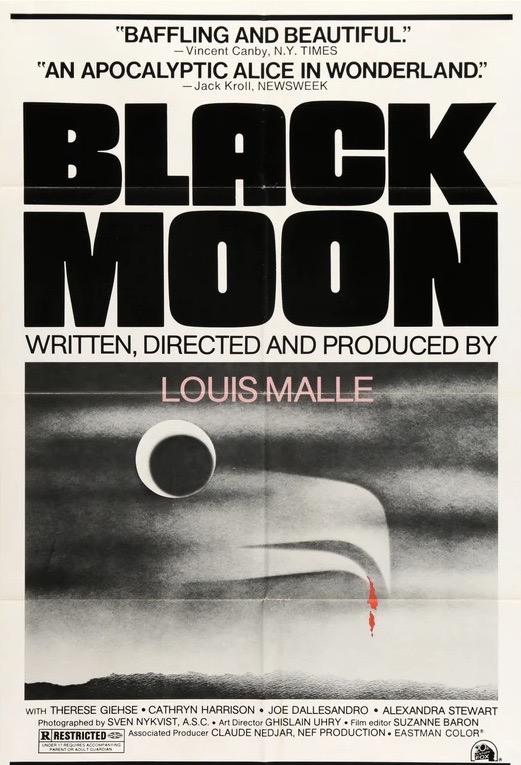
Louis Malle has never been the sort of filmmaker critics could easily pigeonhole in terms of his style and interests. He’s worked in practically every film genre (thriller, social satire, melodrama, documentary, etc.) and his restless curiosity has led him to explore a vast array of subjects from underwater life (The Silent World, 1956) to sexual liberation (The Lovers, 1958) to life under the Nazi occupation (Au Revoir, Les Enfants, 1987). Yet, for even an iconoclast like Malle, his 1975 film Black Moon is unlike anything he’s ever done before or since. “Opaque, sometimes clumsy, it is the most intimate of my films,” he once said. “I see it as a strange voyage to the limits of the medium, or maybe my own limits.”
Continue readingAnts in Your Pants and Worse!
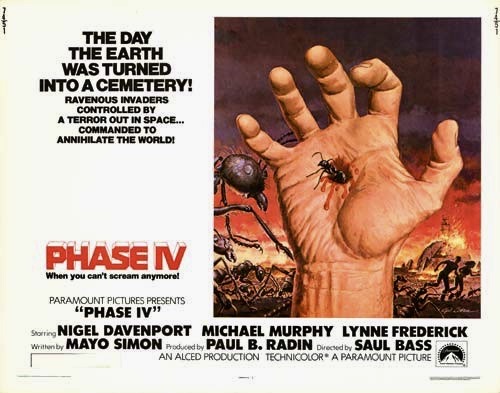
There have been killer ant movies before – Them! (1954), The Naked Jungle (1954), and Empire of the Ants (1977) come to mind – but Phase IV, released in 1974, may be the first and only killer ant art film. With its abstract, almost experimental approach to narrative and character development, it’s a much closer cousin to something like…say, Last Year at Marienbad (1961) than Them! While it was marketed as a science fiction film and clearly belongs in that genre, the film was both puzzling and disappointing to a certain sector of that audience that expected a killer ant movie to deliver thrills, chills and a satisfying ending. Yet, once you accept the fact that Phase IV is not a conventional sci-fi film and will not conform to the genre conventions that you expect, you may find it absolutely chilling and brilliant.
Continue readingSiren of the Danube
One of the most important Czech films to emerge during the Czech New Wave of the 1960s was The Shop on Main Street (Czech title: Obchod na Korze, 1965), which was awarded the Oscar for Best Foreign Language Film of 1966 and snagged a Best Actress nomination for Ida Kaminska the following year. The important thing to note is that The Shop on Main Street was not really a part of the Czech New Wave. The film’s directors, Jan Kadar and Elmar Klos, were more than a generation older than the young upstarts of that movement that included Milos Forman (Loves of a Blonde), Ivan Passer (Intimate Lighting) and Jan Nemec (Diamonds of the Night), among others. And even though The Shop on Main Street made Kadar and Klos internationally famous, their other films are not as well known to most American filmgoers. That is a shame because their final collaboration, Adrift (1971), is one of their most fascinating features but the troubled production behind it is possibly one of the reasons it is almost unknown today.
Continue readingNo Exit

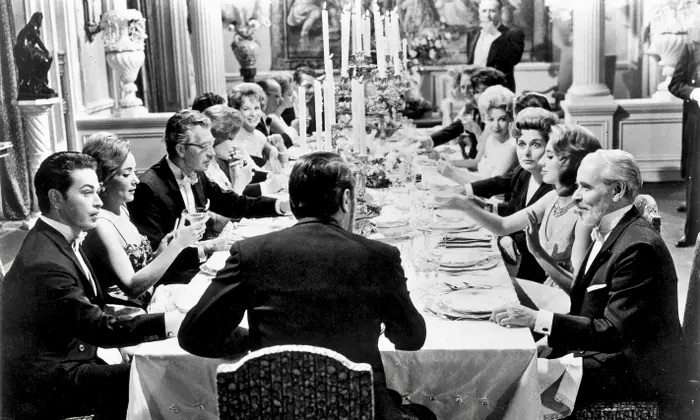
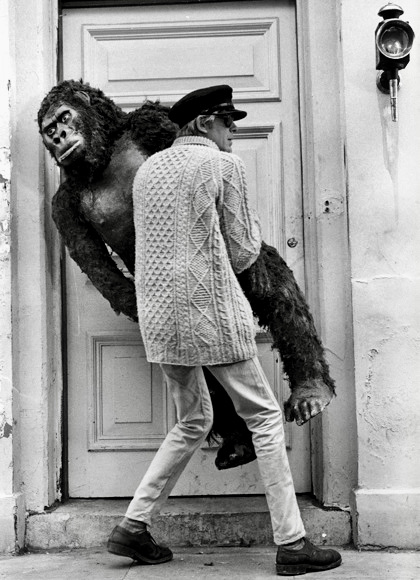
Almost everyone has attended a dinner party at some point in their lives that was mandatory as well as a memorably bad experience. Maybe it was a communal meal with the boss and co-workers or a formal affair with an annoying in-law or relative. Just be glad you were able to leave the event when it became convenient. The assembled guests in Luis Bunuel’s surreal satire, The Exterminating Angel (1962), don’t have that option but the reasons for their entrapment are never clear.
Continue readingA Suitable Case for Treatment
Is mental illness a laughing matter? When it comes to cinematic treatments, it all depends on the filmmaker’s approach and this was an issue that divided critics and audiences over Morgan! (1966, released in the U.K. as Morgan: A Suitable Case for Treatment). Whether embraced as a wild, eccentric anti-establishment farce or derided as a schizophrenic mess that can’t decide whether it’s a comedy or a tragedy, Morgan!, remains a polarizing film even today; there is no middle ground here. Most people either love it or hate it.
Continue readingThe Great Displacement

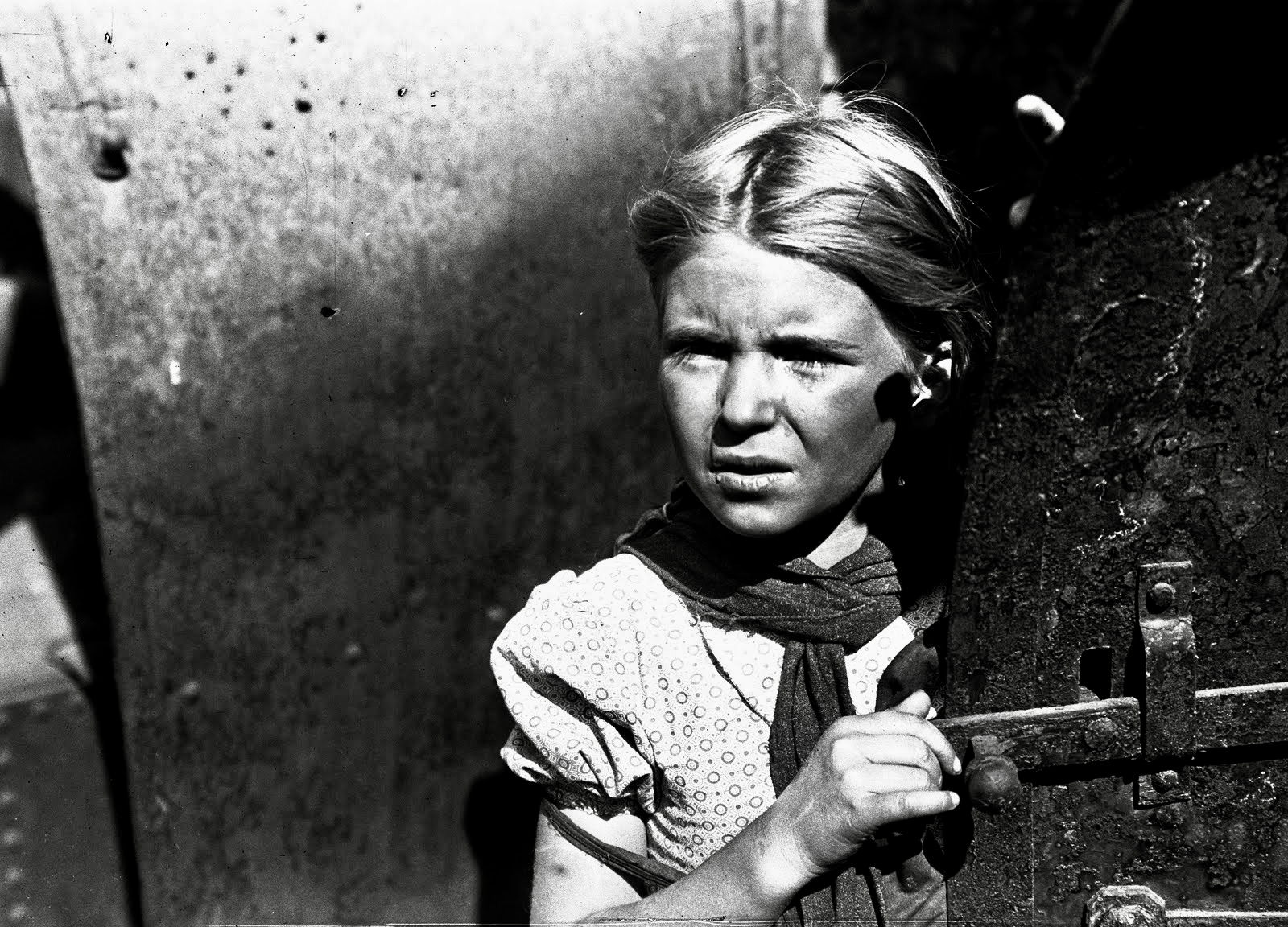
At the end of WW2, it was estimated that more than 6 million people had been displaced from their homes and roughly 180,000 of these were children. Some were concentration camp survivors, others were orphaned or separated from their families, hiding in monasteries or living with strangers. There have been a handful of films that dealt with this traumatic situation and Fred Zinnemann’s The Search (1948) is probably the most famous post-war American film on the subject. It was nominated for four Academy Awards and won a special Juvenile Oscar for Ivan Jandl as a homeless kid separated from his Czech mother. Europe also produced some landmark films about displaced children during WW2 including Roberto Rossellini’s Germany Year Zero (1948) and Rene Clement’s Forbidden Games (1952) but Somewhere in Europe aka It Happened in Europe (Hungarian title: Valahol Europaban) from Hungarian director Geza von Radvanyi was one of the first films to address war orphans trying to fend for themselves. Released in 1947, the film is less well known than other post-war dramas from the same period but it is a harrowing portrait of a dire situation affecting Eastern Europe, especially Hungary, during the final days of the war.
Continue readingA Marriage of Convenience?
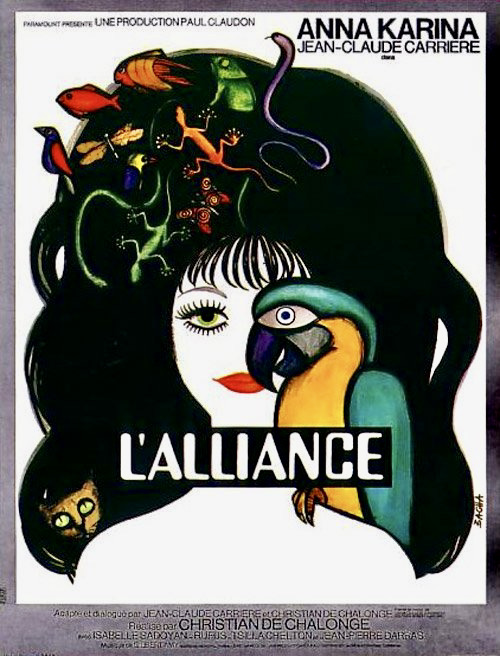
Almost everyone has a good reason for why they want to get married but for Hugues, there is a very specific need. He wants to find a woman with a place of her own, preferably one with ample square footage that includes a sitting room and a large, walk-in closet. Love or companionship isn’t a main objective. Nor does he have any particular preferences concerning the woman’s appearance or personality as long as she is close to the same age. Strangely enough, Hugues finds the ideal candidate through the Duvernet Agency, a professional matchmaker. Jeanne is not only lovely and charming, if a bit elusive, and she has never been married before. Plus, she resides in a sprawling ground floor apartment once owned by an uncle. What could be better? So begins 1970’s L’Alliance (also known as The Wedding Ring), an exceedingly peculiar tale that slowly lures the viewer down a rabbit hole.
Mickey Rooney Hires a Wet Nurse
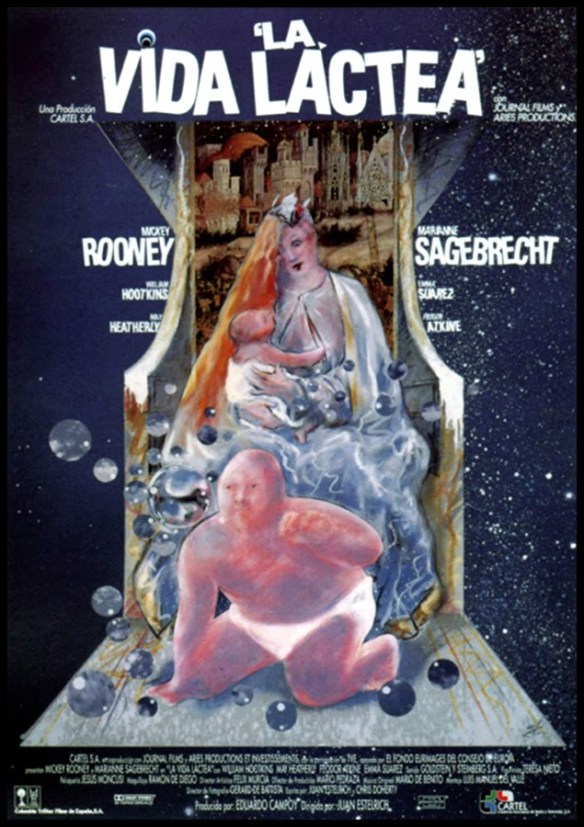
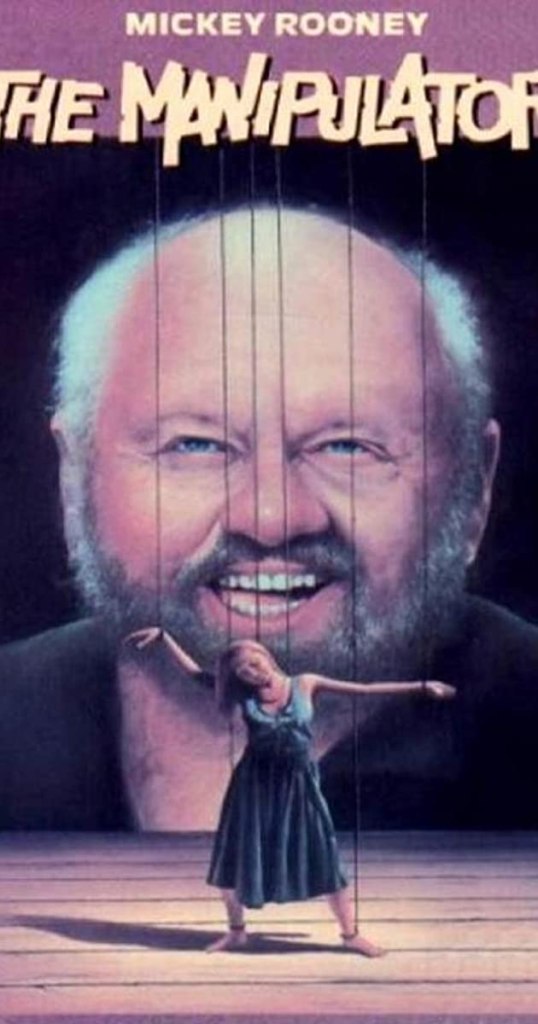
In the many peaks and valleys of his long career the Mickster never shied away from taking on difficult or questionable roles in his relentless desire to perform and entertain. While this adventuresome spirit might alienate part of his fan base that prefers to remember him as Andy Hardy or Judy Garland’s musical partner, it has won him an entirely new set of admirers. I’m talking about those who have seen and been amazed by his participation amid those lost post-MGM years in such eclectic fare as The Private Lives of Adam and Eve (1960), Platinum High School (1960), Everything’s Ducky (1961 with Buddy Hackett and a talking duck), Roger Corman’s The Secret Invasion (1964), How to Stuff a Wild Bikini (1965), the Mafia-Hippie-LSD comedy Skidoo (1968), and 1971’s The Manipulator (aka B.J. Lang Presents), where he plays a psychotic former director living in an abandoned warehouse with a female captive. 
Rooney’s energy, range and versatility are truly awe-inspiring from his desperate loser of Quicksand (1950) to his subtle, moving portrayal in Requiem for a Heavyweight (1962) to his unexpected cameo in Babe: Pig in the City (1998). But I’m willing to bet that La Vida Lactea (aka The Milky Life), made in Spain in 1992, is probably the weirdest thing he’s ever done and very few people have seen it. Continue reading