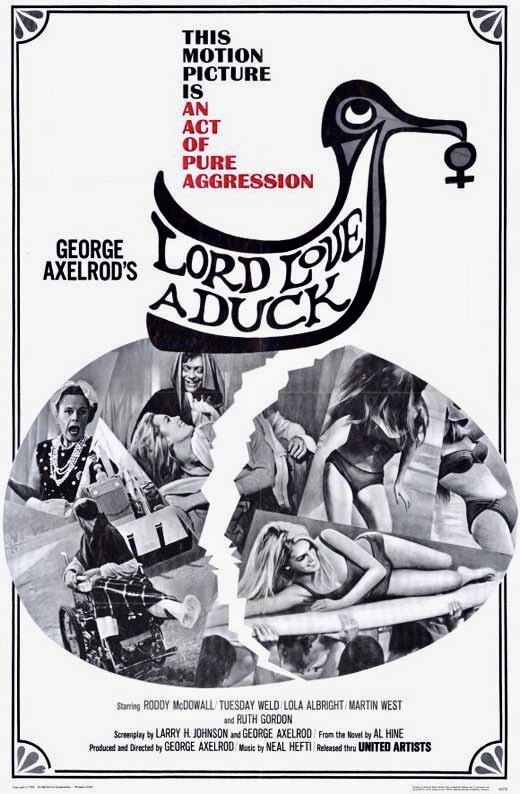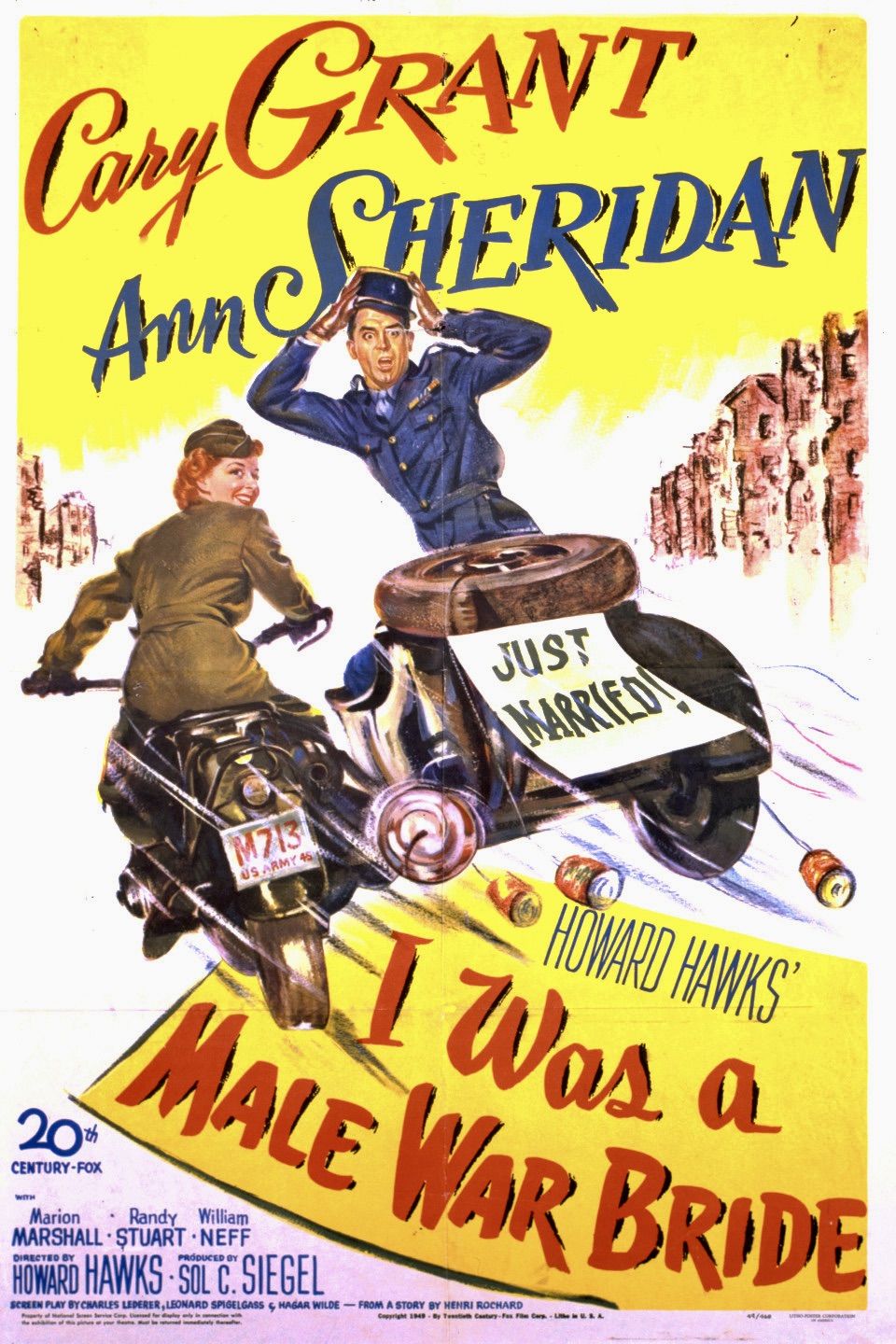
There are certain movie titles that make you pause and consider the mystery, allure or absurdity of their meaning. They can promise so much and deliver so little like Billy the Kid vs. Dracula (1966) or She Gods of Tiger Reef (1958). Or they can overdeliver on their promise to an astonished but grateful audience as in Russ Meyer’s infamous Faster, Pussycat! Kill! Kill! (1965). They can also mislead and confound you with wording so vague or fanciful that you have no earthly idea what it’s about as in Lord Love a Duck (1966), The Day the Fish Came Out (1967), or All the Fine Young Cannibals (1960), which inspired the name of the Brit pop trio that had a hit with “She Drives Me Crazy.” Then there are those completely frank and unambiguous titles that reveal the pure essence of the film in a no-nonsense manner – Teenagers from Outer Space (1959) and I Was a Male War Bride (1940). Or titles that are so much fun to say that you simply love saying them out loud just to hear the sound of them rolling off your tongue like Rat Pfink a Boo Boo (1966) or Puddin’ Head (1941).
Continue readingTag Archives: Lord Love a Duck
Too Chicken to Watch This Giallo?

Maybe giallo is too specific a film genre for this movie because it is in a class of its own and works as a violent crime thriller but also as an erotic melodrama, black comedy and a satire on scientific experimentation and marketing. If you tried to describe the movie to friends they’d probably swear you dreamed it or are running a high fever but no, this bizarre, fascinating and once obscure giallo actually exists in various titled versions. The original Italian release title was La Morte Ha Fatto L’uovo (1968), but it has been distributed under such monikers as Plucked!, A Curious Way to Love and Death Laid an Egg, which is the more common title. So what’s with the chickens? The film is set, for the most part, in a poultry factory where a new breed of chicken is being produced in an experimental lab. The opening credits, featuring science classroom footage of egg fertilization, embryos and microscopic life forms prepare you for this strange new world.
Continue readingGrowing Pains

I’m a sucker for any film starring Tuesday Weld. Ditto any high school/teen angst/juvenile delinquent flick from the fifties and sixties. Toss in American radio and TV personality Dick Clark in his dramatic film debut and musical appearances by the “King of Twang” Duane Eddy and Because They’re Young (1960) becomes essential viewing.
Continue readingSoCal Culture Bashing

An immensely talented playwright, screenwriter, and satirist, George Axelrod has rarely received the recognition he deserves within the Hollywood industry yet he was the man behind some of the wittiest screenplays of the fifties and early sixties. Foremost among them are two of Marilyn Monroe’s best films (The Seven Year Itch (1955) and Bus Stop, 1956), Breakfast at Tiffany’s (1961) starring Audrey Hepburn in her signature role, and The Manchurian Candidate (1962), a highly paranoid thriller about a political conspiracy which prefigured President Kennedy’s assassination by a year. Less well known but equally audacious is his go-for-broke directorial debut, Lord Love a Duck (1966), a wicked lampoon of the movie business that nourished him and a satire of Southern California culture with its drive-in chapels, fast food restaurants, and self-improvement seminars.
High School Was Never Like This!
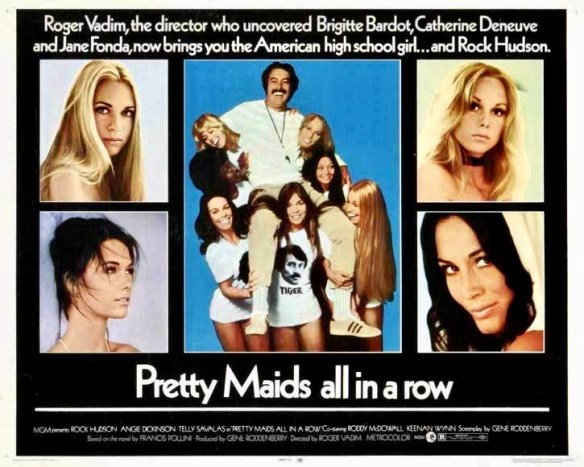
Among the many peculiar assemblages of cast and crew in Hollywood history, Pretty Maids All in a Row (1971) is in a class by itself. A black comedy set in a California high school where someone is murdering female students, the film marked the U.S. film debut of French director Roger Vadim (Barbarella, 1968) with Star Trek creator Gene Roddenberry producing and writing the screenplay. Mix in a number of seasoned Hollywood professionals (Rock Hudson, Angie Dickinson, Roddy McDowall, Keenan Wynn, William Campbell) with a hip, younger cast of aspiring actors and starlets. Top it off with a music score by Lalo Schifrin (Mission: Impossible, 1996) and a theme song co-written by Christian music mogul Mike Curb and sung by The Osmonds. And the result is a delicious guilty pleasure for some and a cringe-inducing embarrassment for others. There is no middle ground here unless you choose to view the film as a sociology experiment. Continue reading
Two Cats and a Mouse
When a movie is released under various titles it usually means there are problems. It could be confusion over how to market it or a simple case of a movie that doesn’t fit clearly into any designated genre or maybe it’s a star-driven, major studio release that’s too quirky for the average moviegoer but yields enough curiosity value to inspire various promotional approaches to finding the right audience. All of these could apply to Joy House (1964), an international production based on a pulp fiction paperback by American author Day Keene and filmed on the Riviera near Nice. It stars English-speaking (Lola Albright, Jane Fonda, Sorrell Booke, George Gaynes of Tootsie fame) and French-speaking actors (Alain Delon, Andre Oumansky, Annette Poivre, Marc Mazza) and is also known as The Love Cage and Les Felins (the original French title). Joy House was not a popular success at the time (most critics were unkind in their coverage) but it is a favorite film of mine, flaws and all. Continue reading