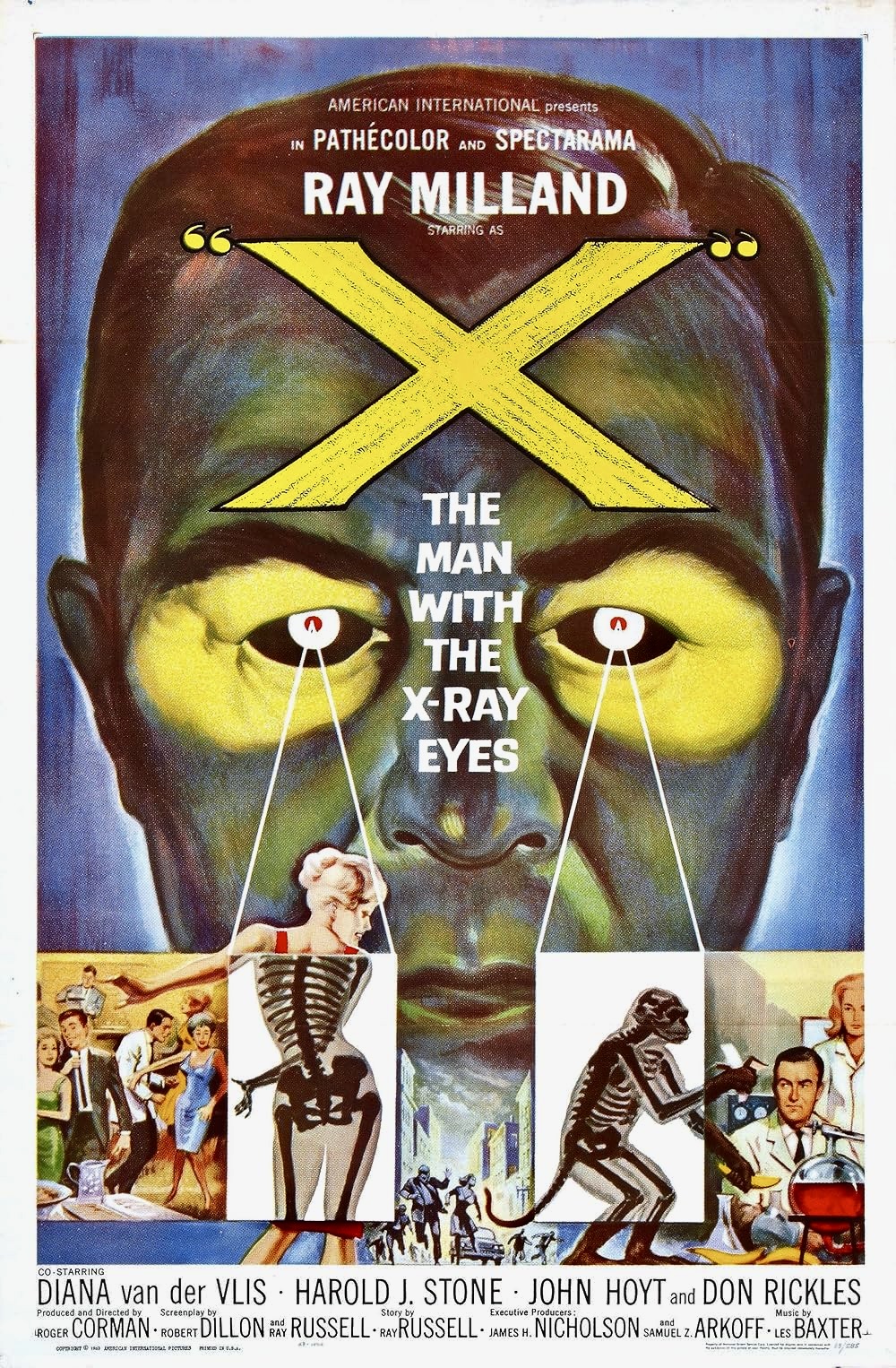
Pere Ubu Meets X: The Man with the X-Ray Eyes

I thought it was some kind of avant-garde prank when I first saw a poster advertising a special showing of Roger Corman’s X, The Man with the X-Ray Eyes (1963) accompanied by the legendary Cleveland, Ohio band Pere Ubu performing a live score. It sounded too good to be true but how would it work?  Would the audio be turned off so that the movie would essentially be treated as a silent film with a new score? Would the band perform a spontaneous live remix of Les Baxter’s score while riding the volume levels? Would the film’s dialogue be heard at all in this presentation? All of my questions were answered on Tuesday, March 25th, 2008 at Atlanta’s Plaza Theater when I attended the Pere Ubu show.

*This is an archival reprint of an article that originally appeared on Movie Morlocks, the official blog of Turner Classic Movies (the blog was discontinued in the Fall of 2018 and is no longer available).

Continue reading
The Pairans Are Among Us

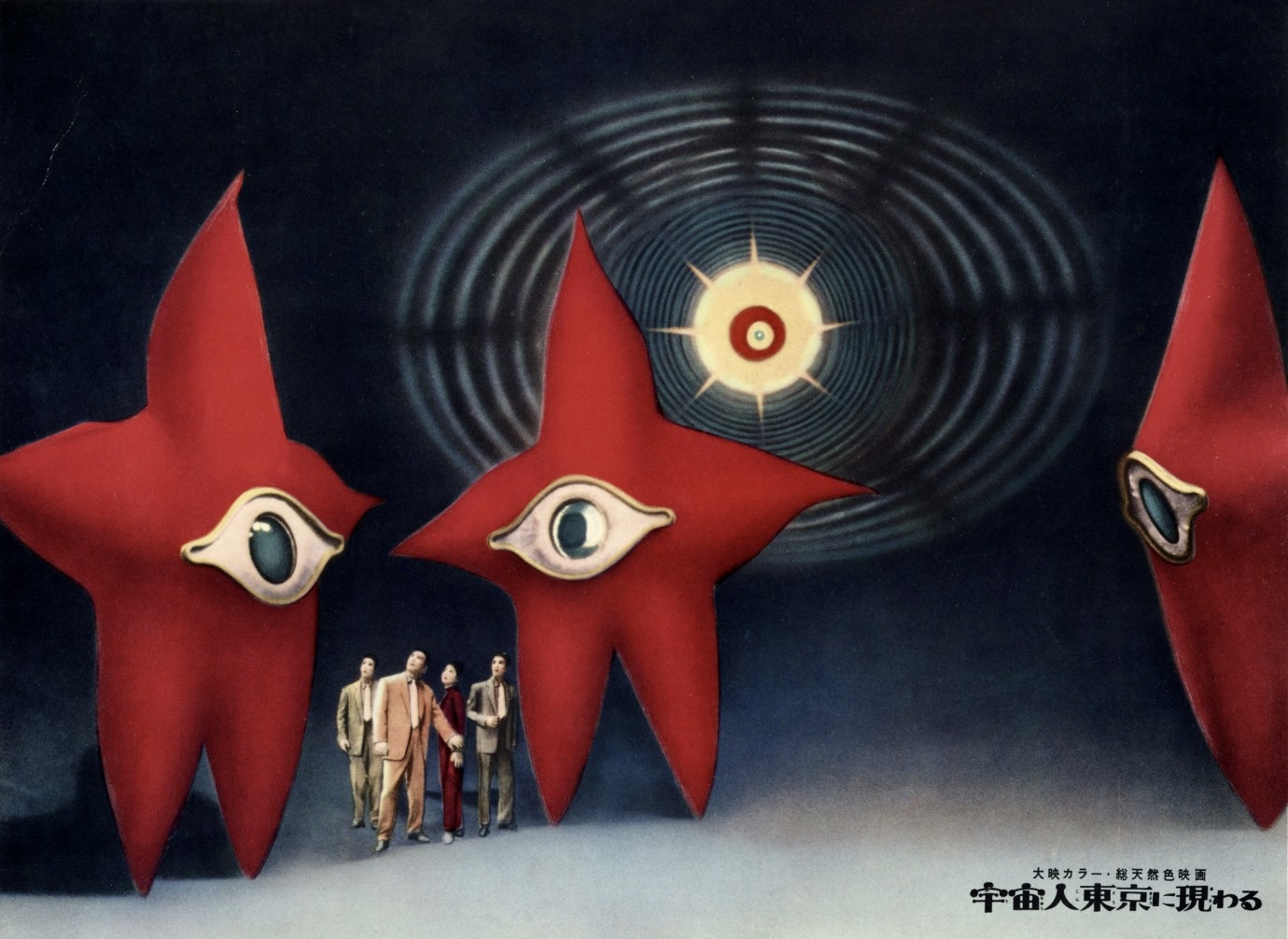
A promotional still from the Japanese science fiction film Uchujin Tokyo ni Arawaru (1956), which was released in the U.S. in 1963 as WARNING FROM SPACE.

The early 1950s is generally regarded as the time when science fiction truly became a popular and profitable film genre thanks to a number of pioneering efforts from Hollywood such as The Day the Earth Stood Still (1951), The Thing from Another World (1951), The Man from Planet X (1951), It Came from Outer Space (1953) and Invaders from Mars (1954). Other countries quickly followed suit producing their own sci-fi entries but Japan was a latecomer in this regard. It wasn’t until 1956 when Daiei Studios released the first Japanese movie to address the subject of UFOs and extraterrestrials – Uchujin Tokyo ni Arawaru aka Spacemen Appear in Tokyo, directed by Koji Shima. The film was a commercial failure and quickly vanished from cinemas before turning up seven years later on American television screens in an English-dubbed version known as Warning from Space. Unfortunately, this altered version for TV syndication with its pan-and-scan format deviating from the original presentation was intended for juvenile audiences. The original 1956 Japanese version, however, is a fascinating and important genre entry in the development of the science fiction film and deserves to be better known today. (When I refer to Warning from Space throughout the following article, I am talking about the Japanese version).

Continue reading