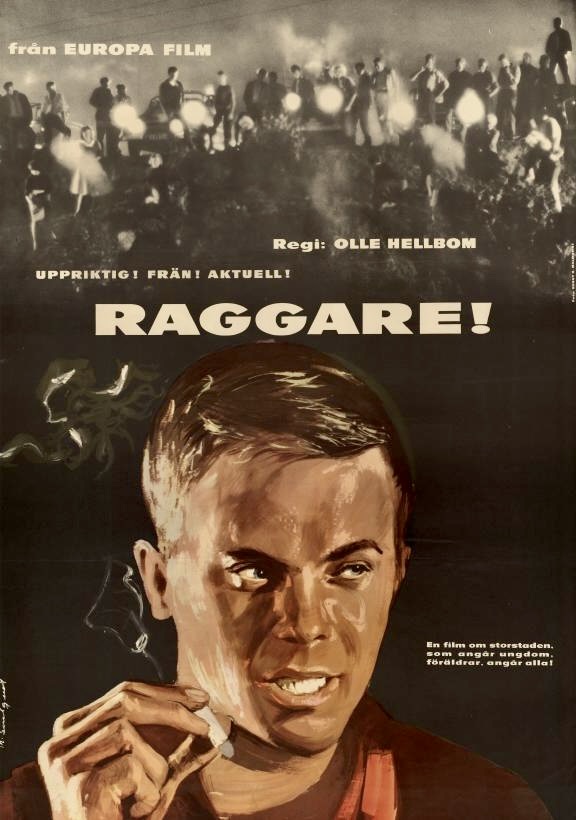
In America during the mid-1950s there was a backlash against conservatism and conformity which was fueled by the rise of rock ‘n’ roll and a pervasive mood of rebelliousness and frustration among teenagers. Much of this was reflected in the pop culture of the era, especially movies such as The Wild One (1953), Rebel Without a Cause (1956), and Blackboard Jungle (1956). Yet, this social change was not exclusive to America and was happening simultaneously all around the world. Juvenile delinquency, gang warfare, wild, alcohol-fueled parties and sexually promiscuous behavior were typical of the kinds of anti-social behavior on display in films as diverse as Die Halbstarken (English title: Teenage Wolfpack, 1956) from West Germany, Kurutta Kajitsu (English title: Crazed Fruit, 1956) from Japan, and Violent Playground (1958) from Great Britain. One of the lesser-known entries in this category is Raggare! (1959) aka Blackjackets, which stirred up considerable controversy in its native Sweden but didn’t attract much attention outside Scandinavia (It never received a theatrical release in the U.S.). There are also hardly any black leather jackets on display and most of the characters don’t share any physical similarities with the cast of Grease.
Continue reading