
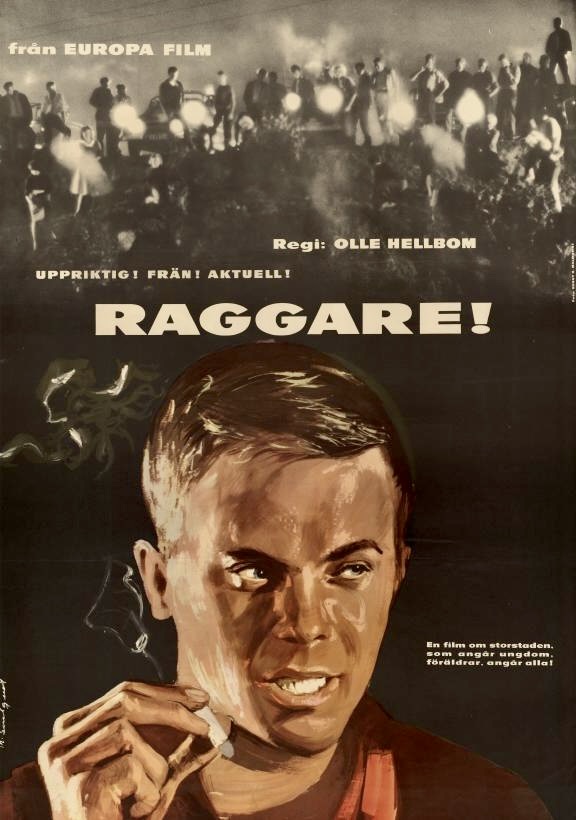
In America during the mid-1950s there was a backlash against conservatism and conformity which was fueled by the rise of rock ‘n’ roll and a pervasive mood of rebelliousness and frustration among teenagers. Much of this was reflected in the pop culture of the era, especially movies such as The Wild One (1953), Rebel Without a Cause (1956), and Blackboard Jungle (1956). Yet, this social change was not exclusive to America and was happening simultaneously all around the world. Juvenile delinquency, gang warfare, wild, alcohol-fueled parties and sexually promiscuous behavior were typical of the kinds of anti-social behavior on display in films as diverse as Die Halbstarken (English title: Teenage Wolfpack, 1956) from West Germany, Kurutta Kajitsu (English title: Crazed Fruit, 1956) from Japan, and Violent Playground (1958) from Great Britain. One of the lesser-known entries in this category is Raggare! (1959) aka Blackjackets, which stirred up considerable controversy in its native Sweden but didn’t attract much attention outside Scandinavia (It never received a theatrical release in the U.S.). There are also hardly any black leather jackets on display and most of the characters don’t share any physical similarities with the cast of Grease.
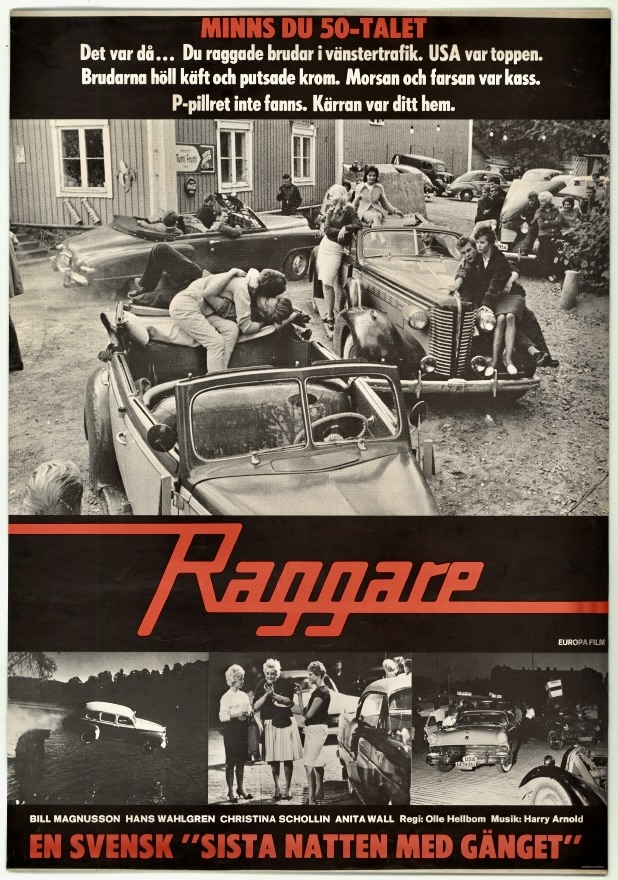
Much more nihilistic and downbeat than Rebel Without a Cause, the youngsters in Raggare! are part of a subculture in Sweden and Norway which was obsessed with cars, speeding, drinking and rock ‘n’ roll/rockabilly music imported from the U.S. Although they are refer to each other as greasers, this rowdy group of working class kids in Stockholm look more like clean cut, middle class kids compared to the motorcycle riders of The Wild One or the scruffy hoodlums of Blackboard Jungle. But their behavior is often more cruel and cold-blooded toward others, even those in their own tribe.
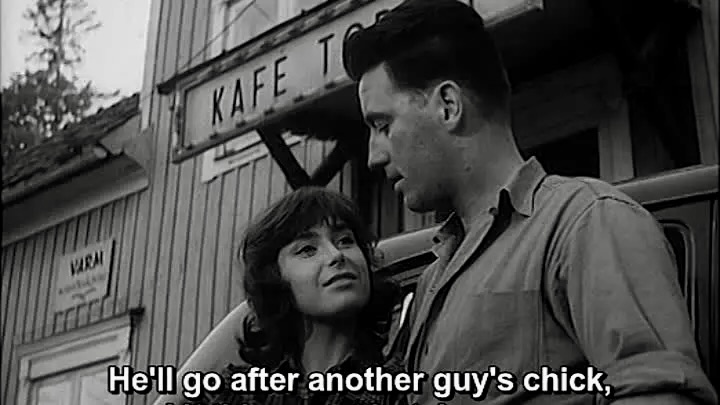
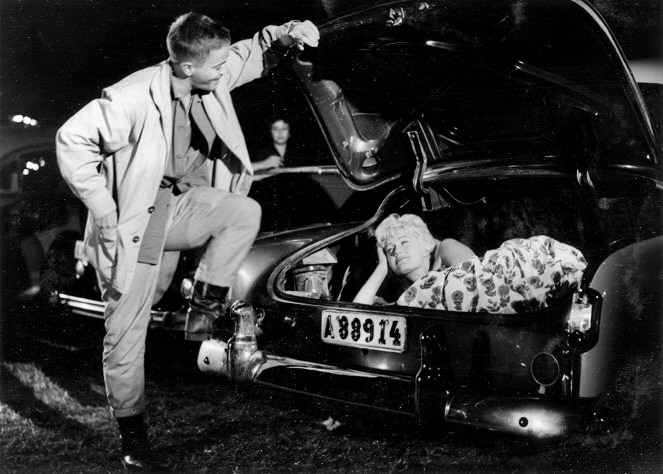
Raggare!, directed by Olle Hellbom, follows the misadventures of several characters who frequent Kafe Torpet, a popular roadhouse café where teenagers come to make out, dance to the jukebox, play pinball and occasionally pick fights. At the center of the story is Bibba (Christina Schollin), a spoiled rich girl with a weakness for boys who dominate and abuse her. She also enjoys dating and fleecing older men for money and gifts but her sexual independence is resented by Roffe (Bill Magnusson), who considers her his property. When she abandons him to go on a date with an older man at a posh bar, he decides to teach her a lesson. Rallying his followers around him, he kidnaps Bibba from the bar, locks her in the trunk of his car and drives her to a swamp on the edge of town.
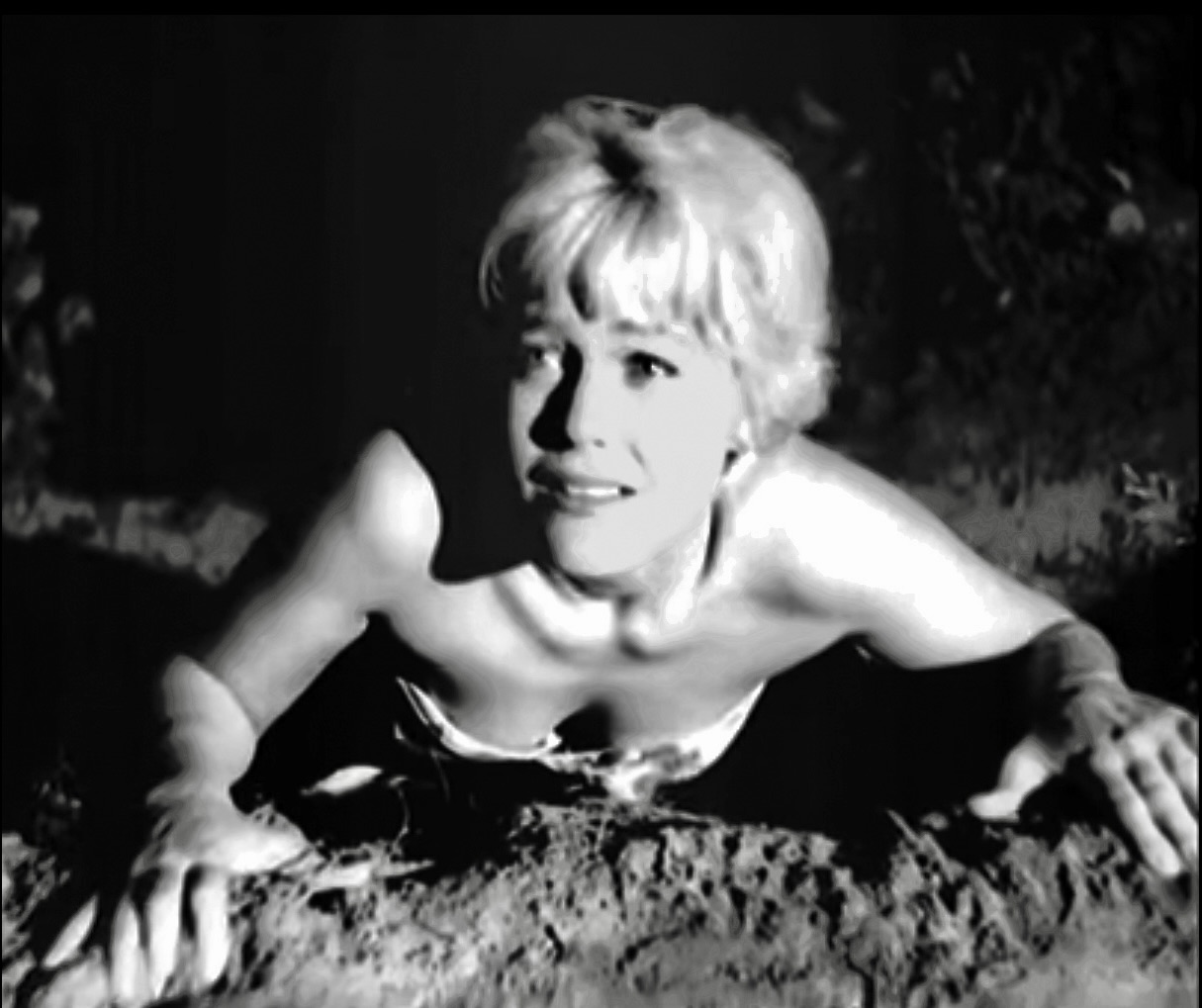
In this desolate spot, Bibba is pushed down a ravine into the brackish water, pelted with mud and rocks and abandoned in the darkness. She manages to crawl back to the main road where she is rescued by Lasse (Hans Wahlgren) and taken to a nearby lake to clean up (Schollin’s nudity during their skinny dipping scene created a sensation). Their mutual attraction is immediate but Bibba is conflicted. “You’re too nice, I can’t handle that,” she tells him and they return to Kafe Torpet, where a violent confrontation occurs between Roffe and Lasse.
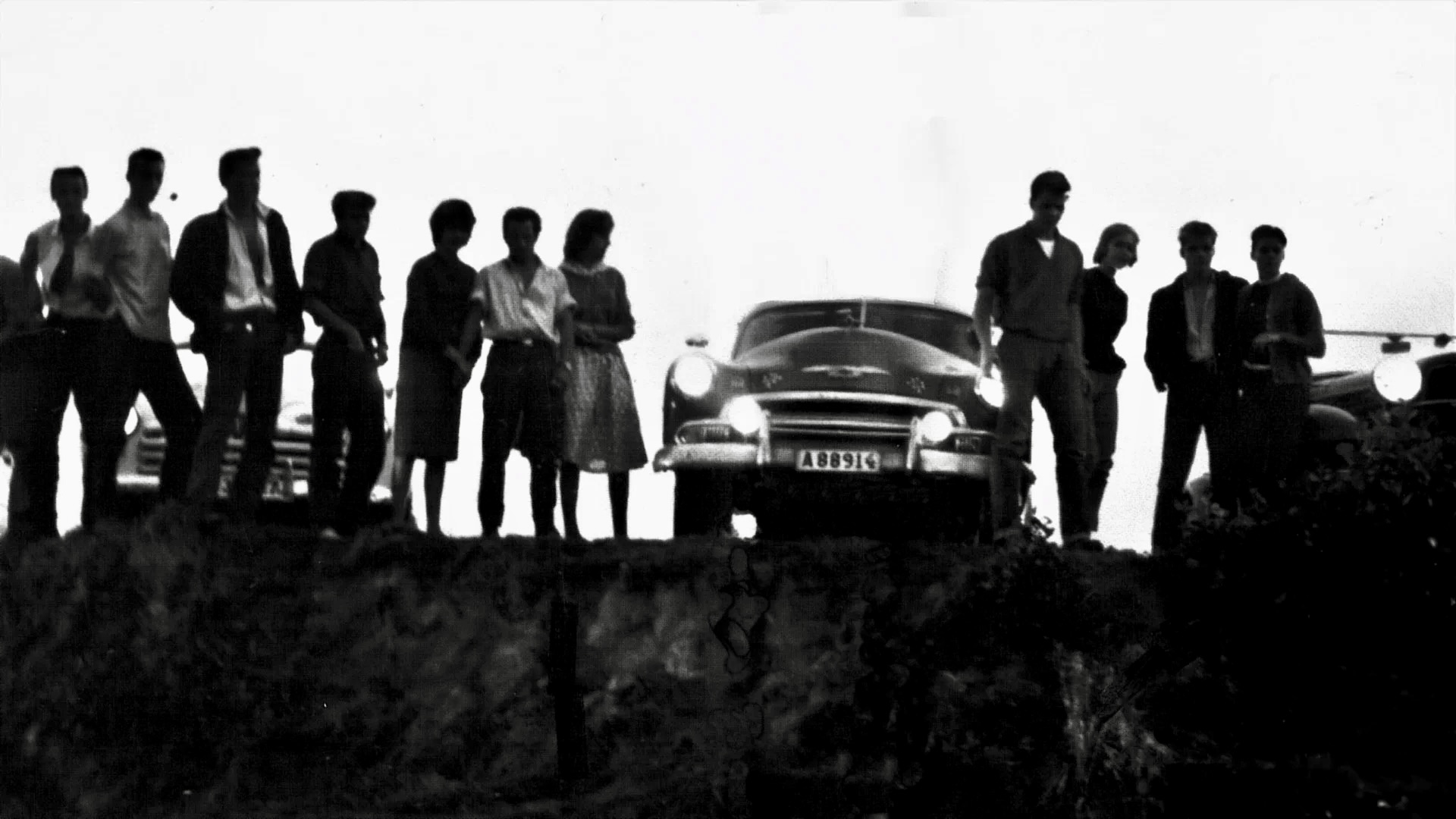
Other subplots that weave in and out of the evening’s activities with Bibba, Roffe and Lasse include two adolescent boys who attempt to steal a car and go for a joyride, a set of parents looking for their missing daughter, and Anne-Marie (Anita Wall), a teenage virgin looking for excitement and male companionship. She finds it with Lankan (Svenerik Perzon), a pill-popping sexual predator, who introduces her to drugs and sex before the night is over. The scene where she does a wild tabletop dance in the roadhouse – “If mom could see me now!” she shouts – is a highlight but so is the vicious fight between Roffe and Lasse where the latter is defeated and sliced on the neck with a switchblade.
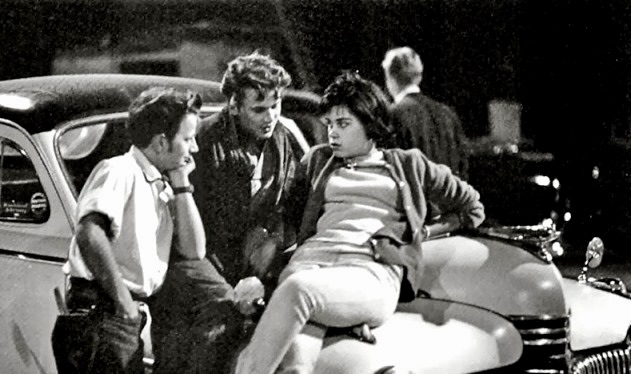
The general structure of Raggare! is episodic and rambling with Hellbom capturing the chaotic atmosphere and mood of this Stockholm subculture. The early sequences in the movie revel in the cruising/pick-up behavior of the sex addicted boys but also in the ritualistic depiction of muscle car culture – scenes with girls cleaning and polishing exteriors while their boyfriends do tune-ups and maintenance under the hood faithfully reflects the greaser zeitgeist. There is also a disturbing awareness that parents are either ineffective or to blame for their children’s cynical outlook and most of the women are depicted as willingly subservient or sexual playthings for the boys’ pleasure.
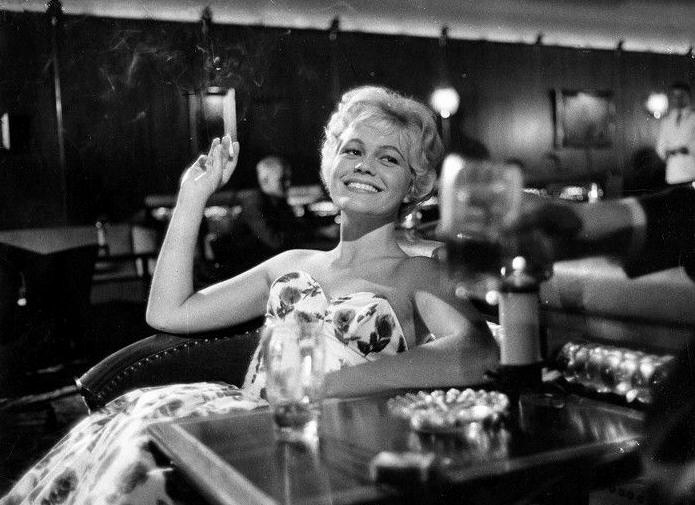
The exception to this is Bibba, who despite her tendency toward self-degrading behavior, proves to Roffe that she has the guts and recklessness to go all the way…to hell. In the finale to Raggare!, the role of master and slave switch and Bibba becomes the dominant partner. She locks Roffe in the trunk of the car and races toward “Chekhov’s Gun,” a dangerous curve in a mountain road where other speeders have died trying to navigate the course at 120 miles an hour. You know it won’t end well but does death and tragedy have any impact on these nihilistic teenagers and motivate them to change their ways? Hellbom’s portrait doesn’t provide any answers nor does the future look hopeful for the greasers of Stockholm.
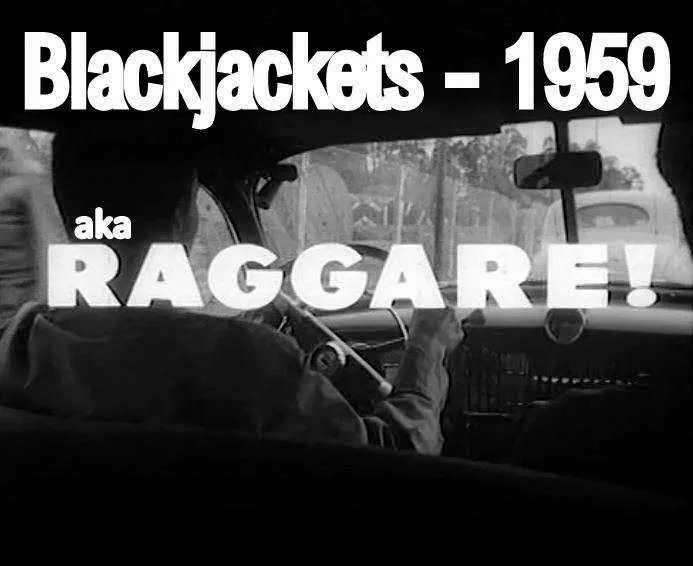
Raggare! often has the look of a film noir and takes place in a nocturnal world that is vividly captured by the crisp black and white cinematography of Frank Dalin and Bertil Palmgren. The music score by Harry Arnold, on the other hand, is surprisingly devoid of raunchy rock ‘n’ roll or rockabilly tunes. Instead, Swedish pop singer Inger Berggren, whose career was beginning to peak at that time, provides several pop ballads which are closer to the jazz vocals of someone like Anita O’Day or Cleo Laine. But listen closely to the lyrics and they reveal the apathy and cynicism of the Kafe Torpet slackers: “…Shut up with that crap about being in love…I lie back, free, for you…so laugh as you drive over me.”
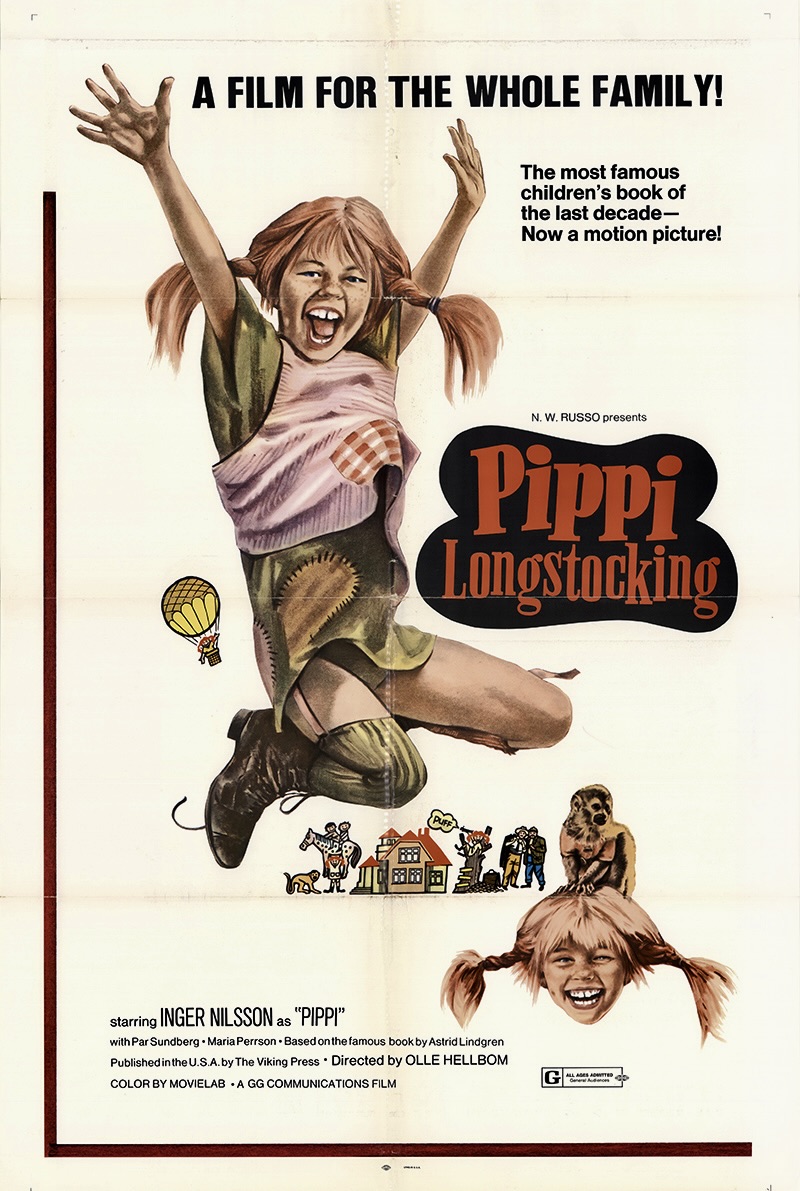
Some aspects of Raggare! are obviously dated and tame by today’s standards but the film is still surprisingly harsh and unsettling for its depiction of a distinct subculture. It has a restless, frenetic energy and pulpable decadence that makes it stand out from other exploitative films of its genre. Surprisingly, Raggare! was atypical of the kind of films Olle Hellbom would go on to make. He later became famous for his many collaborations with author Astrid Lindgren, who specialized in books for children such as The Brothers Lionheart, The Six Bullerby Children and Pippi Longstocking. Hellbom would make film versions of these and other works by Lindgren, which couldn’t be further removed from the dark world of Raggare!.
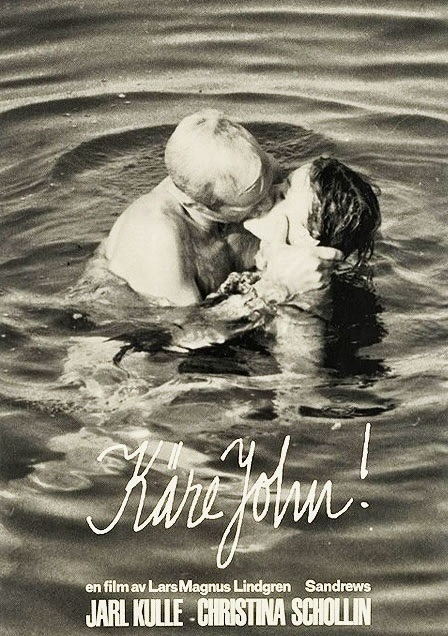
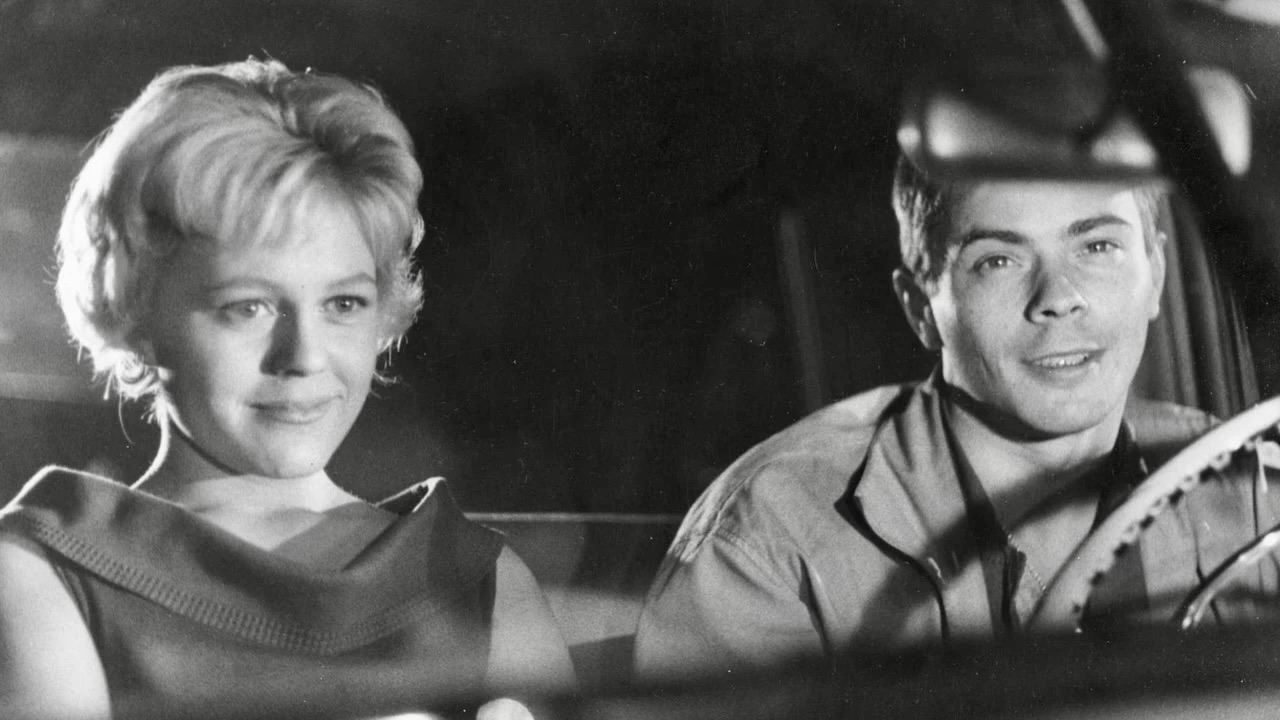
Among the cast members of Raggare!, Christina Schollin and Hans Wahlgren would become prominent Swedish stars. They became a couple in real life and eventually married in 1962, remaining together until Wahlgren’s death in 2024. Schollin would later appear in Lars-Magnus Lindgren’s art house erotic drama Kare John (English title: Dear John, 1964), an Oscar nominee for Best Foreign Language Film, plus memorable appearances in Song of Norway (1970) and Ingmar Bergman’s Fanny and Alexander (1982). Wahlgren kept busy alternating between television, stage productions and movies and was an in-demand voice talent for dubbing.
Currently Raggare! is not available on any analog format in the U.S. but you can stream a very good copy of it (with English subtitles) on the website Cave of Forgotten Films.
Other links of interest:
https://tvtropes.org/pmwiki/pmwiki.php/Film/Blackjackets
https://kids.kiddle.co/Christina_Schollin
https://skbl.se/en/article/IngerMargaretaBerggren

