Fotoromanzi Fantasy

“With Paisan, I knew that I wanted to be a film director. I thought maybe this was where my future was, not as a journalist. It was with The White Sheik that I knew I was a film director.” – Federico Fellini (from I, Fellini by Charlotte Chandler)

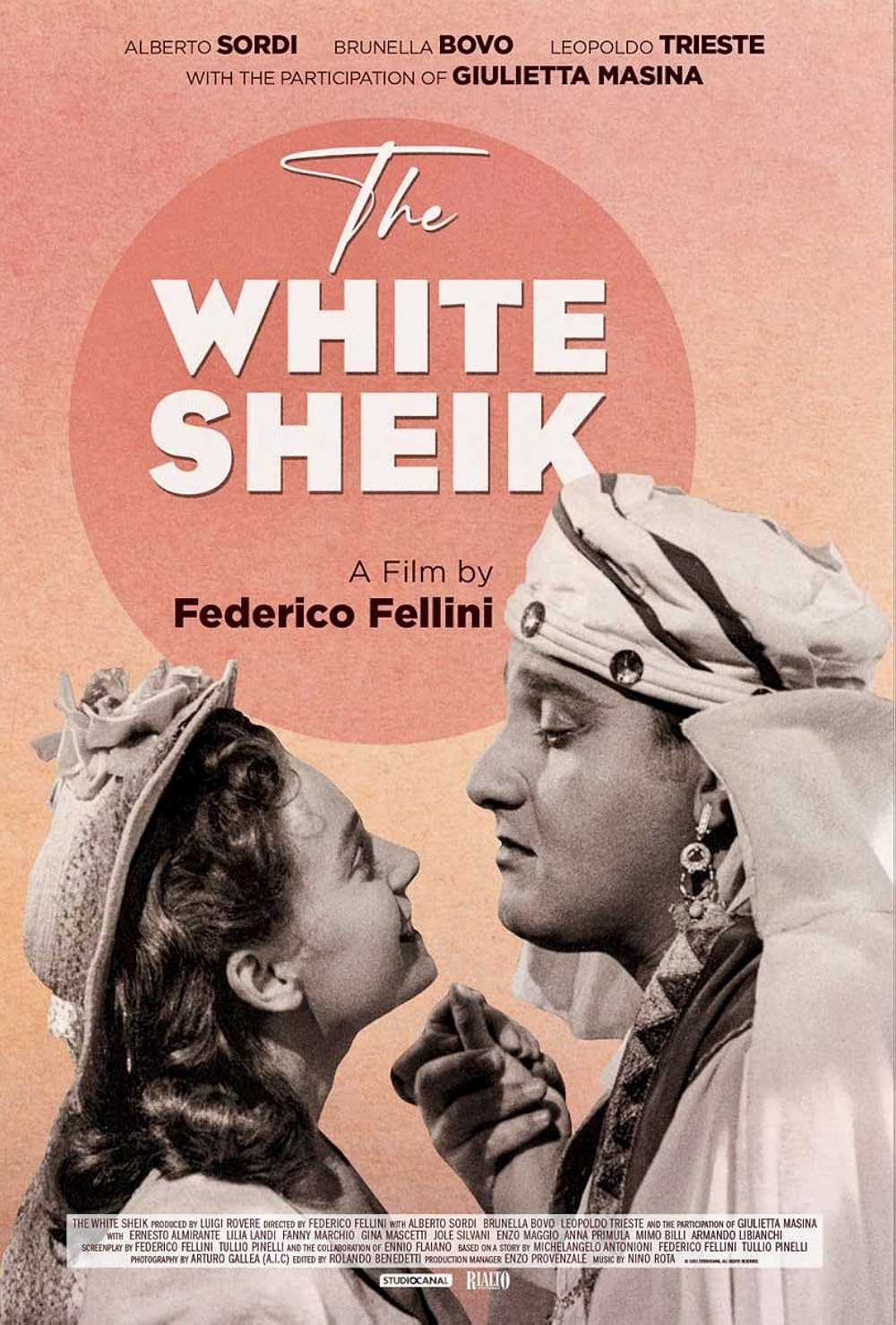
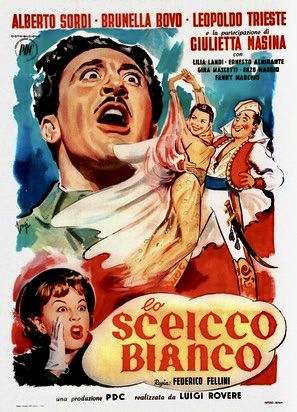
In The White Sheik (Italian title: Lo Sceicco Bianco, 1952), Fellini’s first solo directorial effort (he co-directed Variety Lights with Alberto Lattuada the previous year) he drew upon his experiences as a journalist and script writer to tell a bittersweet story about a provincial newlywed couple vacationing in Rome for their honeymoon. Wanda (Brunella Bovo), the young bride, is a naive romantic, prone to impulsive behavior and passionate fantasies. She is also an avid fan of fotoromanzi (a comic book with photo captions instead of cartoon drawings) and is secretly infatuated with “The White Sheik,” the hero of her favorite series.

Continue reading

Now You See Him, Now You Don’t

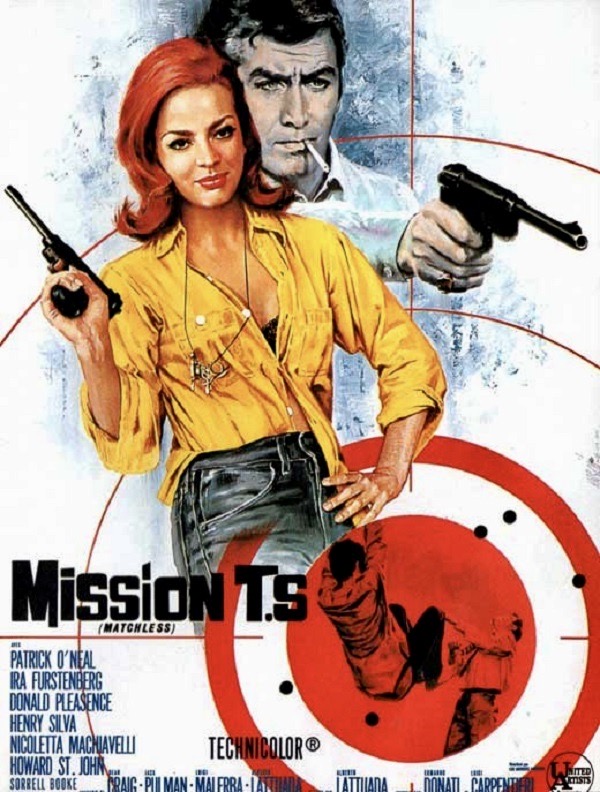
Ever notice how every secret agent in the movies seems to have a gimmick? Well, Perry Liston – code name: Matchless – has got a winner. When confronted with unavoidable capture or certain death from enemies, he can literally vanish into thin air. He’s not superhuman though. His ability to become invisible at will is completely dependent on a unique ring given to him by a fellow prisoner in a Chinese jail. And the ring’s powers are limited: it can only be used once every 10 hours and the wearer can expect his invisible state to last no more than twenty minutes. Those are the rules and Matchless (1966), a quirky genre offering from Italy, plays fast and loose with the gimmick [In some markets it was released under the title Mission TS (Top Secret)].

Continue reading

The Lost Souls of Sao Paulo

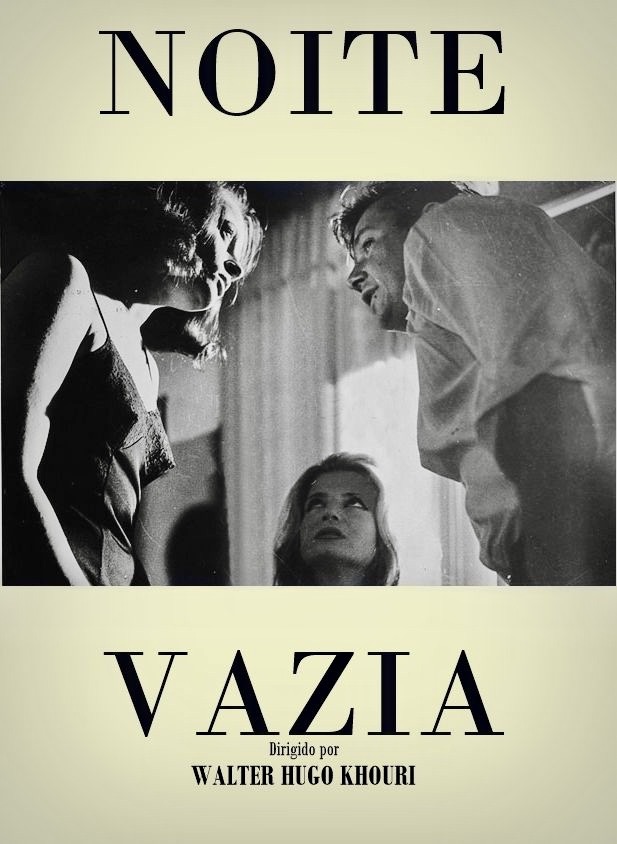
Long Day’s Journey into Night is the title of Eugene O’Neill’s Pulitzer Prize winning 1956 play but it could also serve as a succinct capsule description of numerous movies from the 1960s that were clearly influenced by Michelangelo Antonioni’s L’avventura (1960) and its themes of alienation and existential despair. Some examples include Giuseppe Patroni Griffi’s Il Mare (1962) which follows three strangers on the isle of Capri during a bleak winter season as they try to connect with each other. Jean-Luc Godard’s Alphaville (1965) depicts a dystopian futuristic society in which a detective finds himself out of place in a modernistic Paris controlled by an oppressive artificial intelligence. And Jacques Demy’s Model Shop (1969) uses the urban sprawl of Los Angeles and its smog-creating car culture as a backdrop to an unemployed architect’s search for meaning in his life. Yet, the most Antonioni-like film of all and the least known is probably Noite Vazia (1964) by Brazilian director Walter Hugo Khouri, which traces a dusk-to-down encounter between two men and two women amid the sterile cityscapes of modern Sao Paulo.

Continue reading

Life is a Carnival

The Japanese film poster for THE WIND-OF-YOUTH GROUP CROSSES THE MOUNTAIN PASS (1961).

Most Japanese film fans and cult movie buffs are certainly familiar with maverick director Seijun Suzuki for his ultra-stylish and unconventional yakuza thrillers Tokyo Drifter (1966) and Branded to Kill (1967). Not as well known are the numerous genre films he was assigned by his studio Nikkatsu in the late fifties/early sixties. One of his most atypical efforts is The Wind-of-Youth Group Crosses the Mountain Pass (Japanese title: Toge o wataru wakai kaze, 1961), which is like a more adult variation on James Otis Kaler’s Toby Tyler or Ten Weeks with a Circus except, in this case, the protagonist is not a kid but a college student majoring in economics. There is also no circus, just a traveling carnival troupe with an uncertain future. Yet, the tone is surprisingly upbeat and cheerful with moments of slapstick comedy, musical interludes, dramatic incidents and a subplot involving competitive yakuza gangs, who are closer to bumbling schoolyard bullies than menacing gangsters.

A massive lantern float lights up the nightime sky in THE WIND-OF-YOUTH GROUP CROSSES THE MOUNTAIN PASS (1961), a Japanese film about a traveling carnival troupe.
Continue reading

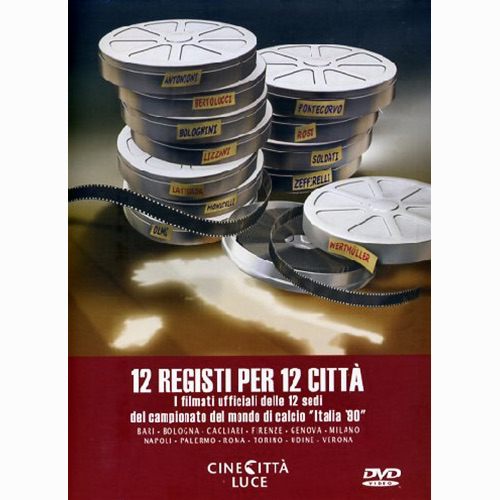
12 Italian Directors on 12 Italian Cities

In 1989 Istituto Luce, the oldest public institution devoted to film production, distribution and archival material in Italy, produced an omnibus film consisting of 12 segments entitled 12 Registi per 12 Citta (12 Directors for 12 Cities). A documentary/travelogue hybrid, the film was made as a promotional vehicle in support of the 1990 FIFA World Cup in Rome and part of its intent was to lure tourists to Italy, particularly to the cities showcased in the film.  The title is not completely accurate; thirteen directors, not twelve, contributed to the project if you count Giuseppe Bertolucci, the younger brother of Bernardo Bertolucci, who co-directed the Bologna section with Bernardo. 12 Registi per 12 Citta is also unconventional in its presentation with each director approaching his subject in his own unique way and the selected cities include some offbeat choices like Udine and Cagliari as well as some major omissions. What, no Venice?

Continue reading