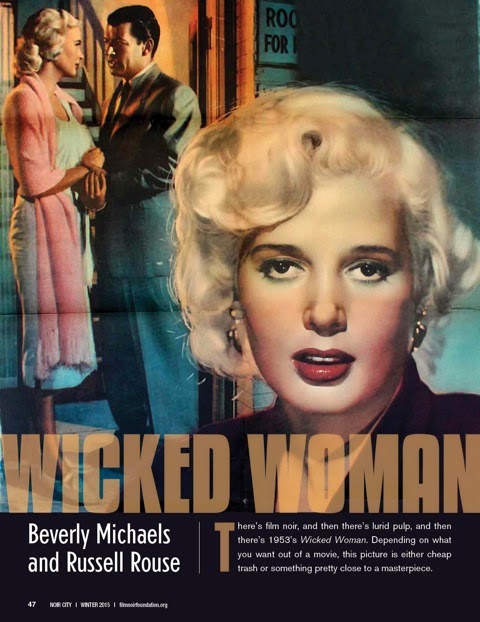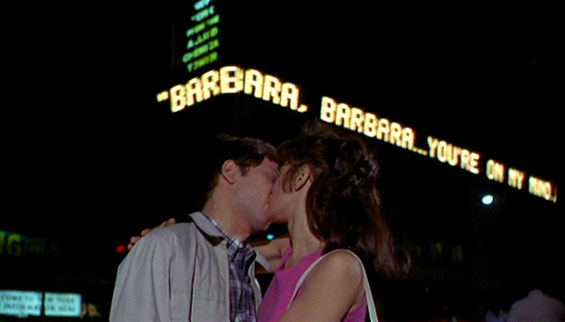
It’s hard to imagine a more unlikely prospect for a film adaptation than John Cheever’s short story, The Swimmer, which was first published in The New Yorker. Yet, it was actually adapted into a major motion picture from Columbia Pictures starring Burt Lancaster. Was it a success? Hardly. Even though a handful of critics endorsed it, the public stayed away but for some who were lucky enough to see it, the film resonated for years. Now it is available on Blu-Ray and DVD from Grindhouse Releasing and a reassessment is in order. Continue reading
Category Archives: film
Soul Survivors
Although less well known today than Stanley Kramer’s Oscar-nominated 1967 drama, Guess Who’s Coming to Dinner?, and still unavailable on DVD/Blu-Ray, One Potato, Two Potato (1964) was the first serious, non-exploitive attempt to deal with an interracial marriage as its main subject and was independently produced outside Hollywood. Set in the fictional small town of Howard (a stand-in for Painesville, Ohio, where it was actually filmed), the movie is bookended by a courtroom ruling on a child custody case and in between is the sad but all too true story of an interracial couple who become social outcasts in both the white and black communities. Continue reading
Desert Rats
Underrated by critics and ignored by audiences upon its initial release in 1969, Play Dirty, directed by Andre de Toth, has slowly but surely acquired an appreciative fan base over the years thanks to high profile advocates of the film like Martin Scorsese who included it on a long list of guilty pleasures for the May-June 1998 issue of Film Comment. Unfortunately, this World War II drama starring Michael Caine had the misfortune to follow in the wake of Robert Aldrich’s box-office hit, The Dirty Dozen (1967), to which it was often unfairly compared. But, outside of a similar assemble-the-team concept which sends a group of criminals on a suicide mission, the film has very little in common with Aldrich’s blockbuster and there is absolutely no reason to feel any guilt over liking it either. Continue reading
The Neopolitan Trinity
Often overlooked or dismissed as a minor comic trifle, Peccato che sia una canaglia (English title: Too Bad She’s Bad) has, in recent years, acquired a much more favorable reassessment from film scholars and film buffs due to occasional revivals on Turner Classic Movies and a 2004 DVD release from Ivy Video. It not only has a delightful, rakish charm and evocative on-location filming in Rome but showcases three of the most iconic names in Italian cinema directed by the legendary Alessandro Blasetti, whose career began in the silent era and spanned six decades. Also noteworthy is the fact that the film is based on the short story Il fanatico by Alberto Moravia, the celebrated Italian novelist who saw many of his novels turned into major films – la ciociara became Vittorio De Sica’s Two Women, Il disprezzo became Jean-Luc Godard’s Contempt and Il conformista became Bernardo Bertolucci’s The Conformist. Continue reading
The Many Noses of Orson Welles
“When you are down and out something always turns up – and it is usually the noses of your friends.” – Orson Welles
When you’re a film actor, it’s easy to understand how one can obsess over some less than perfect facial or physical feature that is going to be magnified by the camera on the big screen. But in most cases these fears are usually unfounded and not even something the average moviegoer would notice or care about. Claudette Colbert and Jean Arthur both insisted on being shot from the left side for profiles; Colbert called the right side of her face “the dark side of the moon.” Fred Astaire used movement and positioning to distract people from what he felt were his unusually large hands and Bing Crosby dealt with his increasing baldness by wearing hats at all times (he refused to wear toupees). Orson Welles’ insecurity over the size of his nose, however, is probably the most baffling of the actor hangups I’ve read about.
*This is a slightly revised version of my post that originally appeared on TCM’s Movie Morlocks blog Continue reading
A Train Wreck Called Poor Pretty Eddie
Sometimes a movie goes so horribly wrong in so many ways that it ends up working on an entirely different level in spite of itself. Such is the case with Poor Pretty Eddie (1975), which is also known as Black Vengeance, Heartbreak Motel and Redneck County Rape, clear indications that this is a movie with a confusing production and distribution history. A sleazy exploitation thriller with artistic pretensions, the film manages to be offensive, crude and inept in equal measure while still succeeding as a compulsive viewing experience for connoisseurs of fringe cinema who think they’ve seen everything. Continue reading
On The Road to Extinction
Ever since I first saw a description for The End of August at the Hotel Ozone in the 16mm rental catalog from New Line Films I’ve wanted to see it. But this 1967 post-apocalyptic drama from Czechoslovakia, directed by Jan Schmidt, has remained an elusive feature for many years. New Line, which was started by Robert Shaye as a film distribution company in 1967, catered to art houses and colleges and universities with its eclectic mix of independent work (Eagle Pennell, Mark Rappaport, Jack Hazan), international fare (Werner Herzog, Lina Wertmuller, Claude Chabrol) and midnight movies (The Hills Have Eyes, Pink Flamingos). Eventually the company moved into producing films as well (such as the popular Nightmare on Elm Street franchise) but in 1994 New Line was acquired by the Turner Broadcasting System, which was then acquired by Time Warner in 1996 and later merged into Warner Bros. in 2008. Continue reading
The Lost Films of Audio-Brandon
Back in the days before the VHS home video market exploded and Blockbuster became the obiquitous rental store, the 16mm film library was still a viable business in the non-theatrical college and educational markets. The decline would begin in the early eighties and by the end of the decade most 16mm distributors would be out of business. But during the peak years, this film format was affordable and easily accessible to all types of organizations (churches, schools, businesses and prisons) and also individuals who ran private film societies. Continue reading
Just for Fun
Movie titles can sometimes be deceptive but you know exactly what you’re in for with the aptly named Creature with the Atom Brain (1955). A superior B-horror film with sci-fi elements and a crime syndicate subplot, this 1955 Sam Katzman production gets right down to business before the opening credits even begin with the sound of a beating heart growing louder and an ominous looking figure lurching toward us from out of the dark. Continue reading
The White House Super-8 Posse
Another highlight among the documentary entries at the 2013 VFF (Virginia Film Festival) was Our Nixon by Penny Lane, which takes an unexpected approach to a topic which has been the covered exhaustively in books, articles and films – the presidency of Richard Nixon. The hook here is that Nixon’s core staff members – H.R. Haldeman (Chief of Staff), John Ehrlichman (Domestic Affairs Advisor) and Dwight Chapin (Special Assistant to Nixon) were all home movie enthusiasts and took lots of candid super-8 footage (over 500 reels) during their White House tenure. Lane was able to get access to their films and uses them as a way to re-examine this turbulent time in American politics. Continue reading