Pietro Germi’s Sicilian Marriage Farce

One doesn’t usually expect a film about infidelity, divorce and murder to be a comedy but that’s one reason Divorzio all’italiana (English title: Divorce, Italian Style, 1961) directed by Pietro Germi, became an unexpected international hit. A caustic satire about the Italian male – or more specifically, Sicily’s male dominated culture – the film also poked fun at Italy’s hypocritical judicial system which can forgive crimes of passion but not legally recognize divorce as a solution for failed marriages. Another factor in the movie’s success was Marcello Mastroianni’s beautifully rendered portrayal of the preening, self-absorbed protagonist, a performance which not only won him an Oscar nomination for Best Actor (the first time in Academy Award history that the lead in a foreign language film received that honor) but still ranks as one of the actor’s key films, following closely on the heels of Fellini’s La Dolce Vita (1960) and Antonioni’s La Notte (1961). 

Continue reading

A Romanian Sci-Fi Adventure

The Romanian film poster for the 1984 animated science fiction fantasy DELTA SPACE MISSION.

In recent years streaming options for entertainment – movies, TV shows, music – have increased and become more commonplace in the average U.S. household but, at the same time, physical media like Blu-rays and DVD continues to prosper among movie lovers and film collectors. Specialty distributors like Severin Films, Vinegar Syndrome and Kino Lorber are releasing new acquisitions at an astonishing rate and obscure genre films and forgotten art house fare are suddenly available on Blu-ray in presentations that look better now than they did during their original theatrical release such as The Five Days (1973, Severin), cult director Dario Argento’s rare non-horror period piece, Ulli Lommell’s witchcraft thriller The Devonsville Terror (1983, Vinegar Syndrome) and Francois Truffaut’s Mississippi Mermaid (1969, Kino Lorber). Deaf Crocodile, a distributor based in Los Angeles, stands apart from its competitors for restoring and releasing movies from around the world that many film buffs never even knew existed. Among their recent releases are Zerograd (1988), an absurdist Soviet satire, The Unknown Man of Shandigor (1967) by Swiss filmmaker Jean-Louis Roy and Solomon King, a lost Blaxploitation indie from 1974. The real surprise for me, however, is Misiunea Spatiala Delta (English title: Delta Space Mission), an animated science fiction fantasy from Romania that was released in 1984.  

Continue reading

Burning Love

The early 1960s was a turbulent time for the film industry and the Hollywood studio system was becoming a relic of the past as television and other competitors in the entertainment field lured audiences away. Some movie actors could see the writing on the wall and began to pursue film offers outside Hollywood and the U.S. Some of the more famous former studio contract players who escaped and reinvented themselves in Europe were Clint Eastwood, Charles Bronson, Lee Van Cleef, Jean Seberg and Jane Fonda. Even seasoned veterans like Edward G. Robinson, Lee J. Cobb and Bette Davis appeared in movies made overseas but one of the more unusual examples of American actors appearing in an international production is Barry Sullivan and Martha Hyer in Pyro…The Thing Without a Face (1964, aka Fuego in the European market), directed by Julio Coll and filmed in Spain. 

Continue reading

When the Ordinary Becomes Extraordinary

Simone (Cox Habbema) and Freek (Hugo Metsers) are pulled into a labyrinth of mysterious happenings in THE ARRIVAL OF JOACHIM STILLER (De Komst van Joachim Stiller), a 1976 Belgium film by Harry Kumel.

Most people have a daily routine from the time they get up in the morning to the time they go to bed at night. For many of us that would involve a considerable amount of time spent at work, whether at an office or at home, and this would also include the daily repetition of uneventful tasks like taking the trash out, opening the mail or brushing your teeth. But when the daily routine gets disrupted or something odd or peculiar occurs, it usually results in a more memorable day. It could also be just the beginning of a series of occurrences that change your life and the way you look at the world. This is what happens to Freek Groenevelt (yes, it’s a weird name), the protagonist of De Komst van Joachim Stiller (English title: The Arrival of Joachim Stiller), a magical realism fantasy based on a novel by Belgium writer Hupert Lampo and adapted to film by Harry Kumel. 

Continue reading

Scorched Earth

VIDAS SECAS aka BARREN LIVES (1963), a Brazilian film by Nelson Pereira dos Santos.

You don’t have to believe in climate change to experience and understand the devastating effects of a drought. The northeastern part of Brazil is no stranger to this condition which has plagued the region for decades yet people continue to live there. If you are a wealthy landowner, you can survive the seasonal hardships but if you are a poor migrant worker, life is a constant struggle. Vidas Secas (English title: Barren Lives, 1963), directed by Nelson Pereira dos Santos, is the portrait of a family of four and their dog as they wander the arid deserts and sun-baked landscapes of northwestern Brazil in search of work, water and food. Set in 1941 and covering a two-year period in their lives, the film is considered a landmark work in the Cinema Novo movement, which emerged in the late fifties and focused on marginalized communities and people, often using non-professional actors, real settings and black and white cinematography in the manner of Italian Neorealism. 

Continue reading

The Haunted Cornea

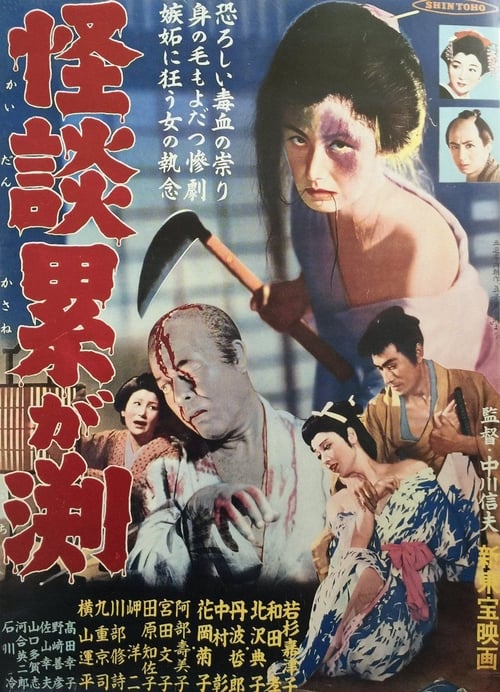
The Japanese film poster for THE VISITOR IN THE EYE aka Hitomi no naka no Houmonsha (1977), directed by Nobuhiko Obayashi.

When Nobuhiko Obayashi’s Hausu (English title: House) opened in Japan in 1977, it proved to be a surprise hit with audiences but not Japanese film critics and it didn’t attract any attention in the U.S. until it was rediscovered in 2009 as possibly the weirdest WFT cult movie since El Topo (1970), Eraserhead (1977) or Repo Man (1984). Originally intended for teenagers, particularly girls, House pits a bunch of young female schoolgirls against a demonic entity and the result is a frenzy of nightmarish images including flying decapitated heads, a cannibalistic piano, a satanic cat, and laughing watermelons to name a few. Obayashi’s subsequent film, Hitomi no naka no houmonsha (English title: The Visitor in the Eye, 1977) isn’t nearly as wild and raucous but it shares the same demented fairy tale ambiance of House and was overshadowed by its predecessor. 

Continue reading

Early Animation Shorts by Ray Harryhausen

Animator and special effects genius Ray Harryhausen is seen working on his 1951 fairy tale short, THE STORY OF HANSEL AND GRETEL.

Special effects wizardry has always been a key component in creating fantasy and futuristic worlds in the cinema and one of the greatest creators in the genre was Ray Harryhausen (1920-2013). Hardcore fans know that he worked uncredited on the 1949 fantasy adventure Mighty Joe Young before establishing himself as a stop motion animation artist in such sci-fi classics as The Beast from 20,000 Fathoms (1953), It Came from Beneath the Sea (1955), Earth vs. the Flying Saucers (1956) and 20 Million Miles to Earth (1957). Still, the best was yet to come in the second half of the 20th century when he created fantastical worlds of the imagination in The 7th Voyage of Sinbad (1958), Jason and the Argonauts (1963) and Clash of the Titans (1981) to name just a few. Before all of this, however, Harryhausen learned his craft and trade by experimenting with the short film format. 

Continue reading

A Danish Original and a Canadian Remake

The Danish film poster for THINK OF A NUMBER (1969), which was remake as THE SILENT PARTNER in 1979.

In March 1979 a small scale but offbeat and ingenious little crime drama entitled The Silent Partner slipped into U.S. theaters without any advance word. A Canadian tax shelter write-off, the movie might have passed unnoticed if it hadn’t been for a handful of U.S. film critics who championed the release such as Roger Ebert of The Chicago Sun-Times, who called it “a thriller that was not only intelligently and well acted and very scary, but also had the most audaciously clockwork plot I’ve seen in a long time…it’s worthy of Hitchcock.” And Janet Maslin of The New York Times called it “a dense, quirky, uncommonly interesting movie, this time with a high quotient of suspense.” 

Over the years The Silent Partner has built up a considerable fan base and has become a welcome Yuletide viewing alternative (it is set during the Christmas season) to the umpteenth airings of It’s a Wonderful Life and A Christmas Carol. What most American viewers don’t realize is that The Silent Partner is a remake of the 1969 Danish thriller Think of a Number (Taenk pa et tal), directed by Palle Kjaerulff-Schmidt.

Continue reading

Heart of Darkness

The Pre-Code era of Hollywood when films were much more explicit, suggestive and racy is generally believed to be that period between 1929 and 1934, the year the Production Code was officially enforced. After that the studios had to comply with a long list of restrictions imposed on motion pictures by Joseph Breen (director of the PCA aka Production Code Administration) in terms of subject matter, situations and characters if the producers wanted their films to get a commercial release. Of course, film censorship in Hollywood existed before 1934 but it was not always enforced. Complaints from moral guardian groups and religious organizations like the Catholic Legion of Decency were crucial in pressuring Hollywood to reduce the amount of sex, violence and decadence in movies. Some of their earliest targets were three films from MGM, which were a collaboration between director Tod Browning and Lon Chaney – The Unholy Trio (1925), The Unknown (1927) and West of Zanzibar (1928). All three of the films contain perverse and unsettling storylines but West of Zanzibar tops them all in terms of shock value even by today’s standards.  

Continue reading

The Man with Gunsight Eyes

Lee Van Cleef in one of his most iconic and entertaining spaghetti westerns, SABATA (1969), directed by Gianfranco Parolini.

With his lean, angular features and narrow, piercing eyes, Lee Van Cleef had the sort of presence you didn’t easily forget in supporting roles, especially villainous parts in westerns (Gunfight at the O.K. Corral, The Bravados) and crime dramas (Kansas City Confidential, The Big Combo). Unfortunately, it took more than 12 years and over 100 film and TV appearances before the actor finally moved into leading roles after a career that began in 1952 with his debut in High Noon. And like Clint Eastwood, he finally found fame in Italy when he was almost forty, opposite the former Rawhide TV star in Sergio Leone’s For a Few Dollars More (1965), the sequel to Eastwood’s star-making breakthrough in A Fistful of Dollars (1965). After The Good, the Bad and the Ugly (1966), in which he played “the ugly” Angel Eyes in the final installment of Leone’s Dollars trilogy, he carved out an impressive career in some of the best spaghetti westerns of the late sixties and early seventies such as The Big Gundown, Death Rides a Horse and Day of Anger (all 1967). Less serious than those but just as entertaining is Sabata (1969), which adds some tongue in cheek humor, gymnastic action and fancy weaponry to the spaghetti western formula. 

Continue reading