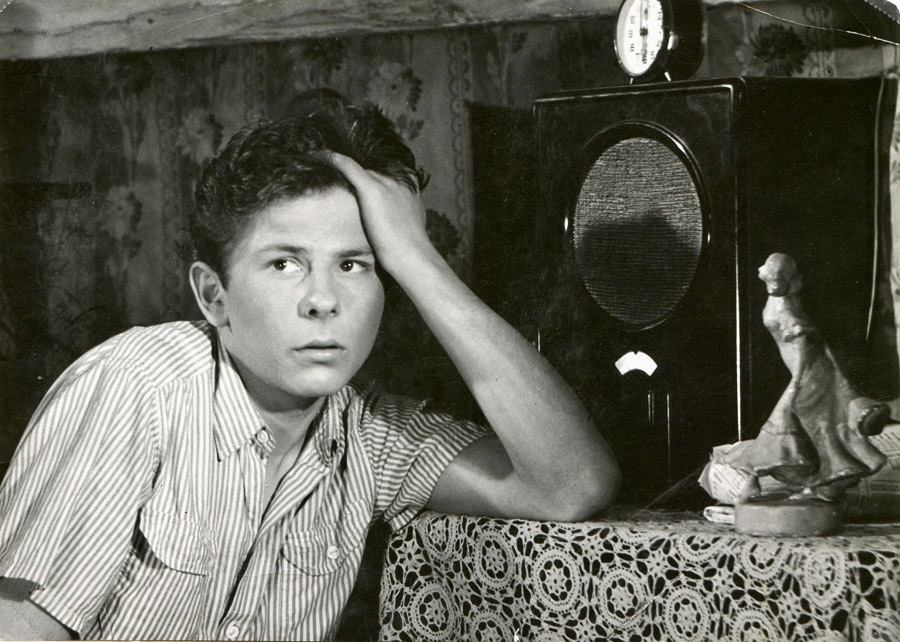
For many young people, the time period immediately after their high school graduation is a crucial phase in which their lives could take many different paths depending on the decisions they make. This is especially true for those who don’t go to college and either go to work, are drafted into the military or hang out with friends before adult responsibilities consume their lives. Falling into the latter category is 1983’s The Boys of Fengkuei (The original Taiwanese title Feng gui lai de ren roughly translates as All the Youthful Days), an evocative coming-of-age drama from internationally renowned director Hsiao-Hsien Hou.
Continue readingCategory Archives: film
Thorold Dickinson’s Secret People
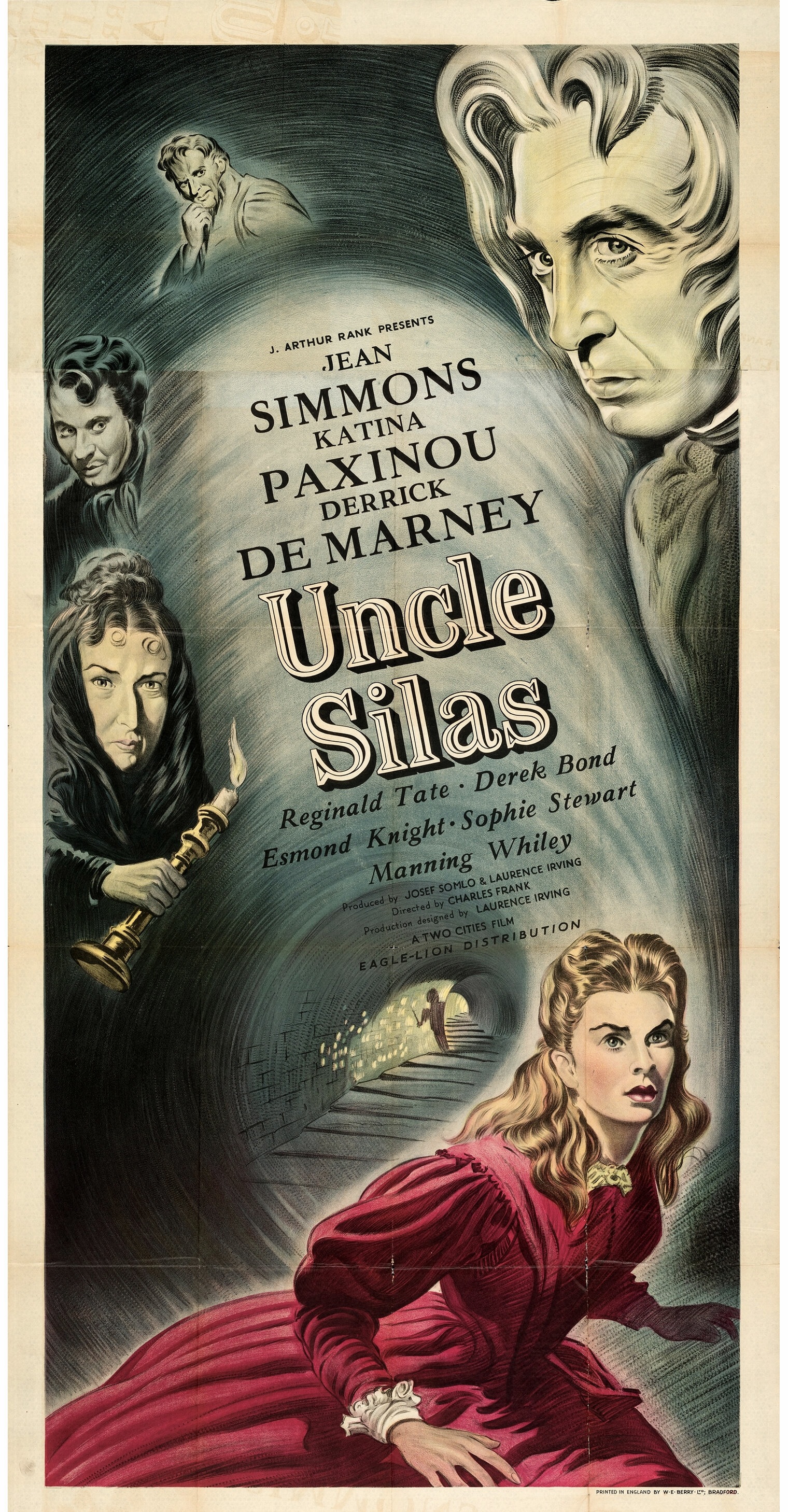
Though little known in the U.S. today except by movie buffs, Thorold Dickinson is an important figure in the development of the British film industry. A screenwriter, editor, director and producer, Dickinson wore many hats and exerted considerable influence in his various positions over the years as Coordinator of the Army Kinematograph Service’s film unit, Professor of Film at the Slade School of Fine Art and Chief of Film Services at UNESCO (United Nations Educational, Scientific and Cultural Organization). In addition to collaborating with other British filmmakers on their work and co-directing several features, he rose to prominence on the basis of a small but impressive filmography. Among them were the commercial hits, Gaslight (1940), remade in 1944 in Hollywood with Ingrid Bergman and Charles Boyer, and The Queen of Spades (1949), an adaptation of the Alexander Pushkin short story which is considered possibly the best of its many film versions. His skill as a documentarian was equally renowned and The Next of Kin, a military training film he made for the War Office in 1940, was so effective it was given a theatrical release. Men of Two Worlds (1946), a semi-documentary collaboration between the Ministry of Information and the Colonial Office, was co-scripted with novelist Joyce Cary (The Horse’s Mouth, 1958) and focused on the problem and treatment of sleeping sickness in African tribes. Yet, the most ambitious film of Dickinson’s career – and the one that almost ended it was Secret People (1952), which was an examination of the terrorist mindset and years ahead of its time.
Continue readingPachyderm Love
How many filmmakers come from a background as a game warden in an African national park as well as being a passionate advocate for wildlife protection? Simon Trevor is a unique case. After moving from England to Africa with his family in 1946, he got the filmmaking bug at 15 when he received his first 8mm film camera. After leaving his position as game warden at the Tsavo National Park in 1959, he focused solely on filmmaking that raised awareness of the plight facing Africa’s wildlife, especially elephants. He worked as cinematographer for the popular BBC series On Safari (1957-1965) featuring Armand and Michaela Denis, pioneers in the field of wildlife television documentation, and later assisted Sydney Pollack and Michael Apted as a second unit cameraman on their films Out of Africa (1985) and Gorillas in the Mist (1988). Trevor’s own work is not as well known but deserves to be and a good place to start is his 1971 debut documentary The African Elephant, which was retitled King Elephant in some markets.
Continue readingThe Feather Gatherers
There have been hardly any films about gypsies and their culture depicted in Hollywood’s golden age unless they were background figures (The Wolf Man, 1941) or treated in a broad, theatrical manner in comedies (The Bohemian Girl, 1936) or costume dramas (Hot Blood, 1956). King of the Gypsies (1978), based on the Peter Maas novel and featuring Eric Roberts in his film debut, was an attempt to offer an insider look at this often demonized group but seemed more like an unintentional parody than a serious drama. It wasn’t until filmmakers outside the U.S. began to focus on gypsy culture that a number of influential movies on the subject began to appear later in the 20th century such as Aleksandar Petrovic’s Skupljaci Perja (1967), which was released in the U.S. as I Even Met Happy Gypsies.
Continue readingKiddie Matinees That Weren’t for Kids
Back in the fifties and sixties it wasn’t uncommon for neighborhood theatres – at least in the South – to run a series of kiddie matinees on Saturday mornings, usually during the early part of summer when school ended. The neighborhood kids would pile into a car and some parent would drop them off at the theatre and come pick them up two hours later, after which you’d go to the pool or play softball or hang out at a friend’s house. Some of my earliest movie memories are from this time. Of course, the ones that really stand out are the ones that weren’t actually for kiddies.
Continue readingThe Mighty Mountain Will Punish the Bad
Many people believe they are masters of their own fates but occasionally mother nature steps in to remind them that there are outside forces they cannot control such as a mountain wilderness or a blizzard or an avalanche. Such is the case in Snow Trail (Japanese title: Ginrei no hate, 1947), an engaging B-movie crime drama in which three bank robbers flee to the snow-covered slopes of Mount Hakuba, located in the northern alps of Nagano Prefecture. With the law in close pursuit, the trio soon find themselves in dire straits with no experience in mountain climbing or dealing with extreme weather conditions. Nature is simply indifference in such matters.
Continue readingThe Perfect Yuletide Mix of Schmaltz, Schmerz and Schmutz

That was how Preston Sturges described his screenplay for Remember the Night (1940), directed by Mitchell Leisen. Overlooked and underrated for years, this small scale but intimate romantic drama has become a Christmas favorite in recent years thanks to frequent airings on TCM and its availability on DVD.
Continue readingA Double Dose of Santo and Blue Demon
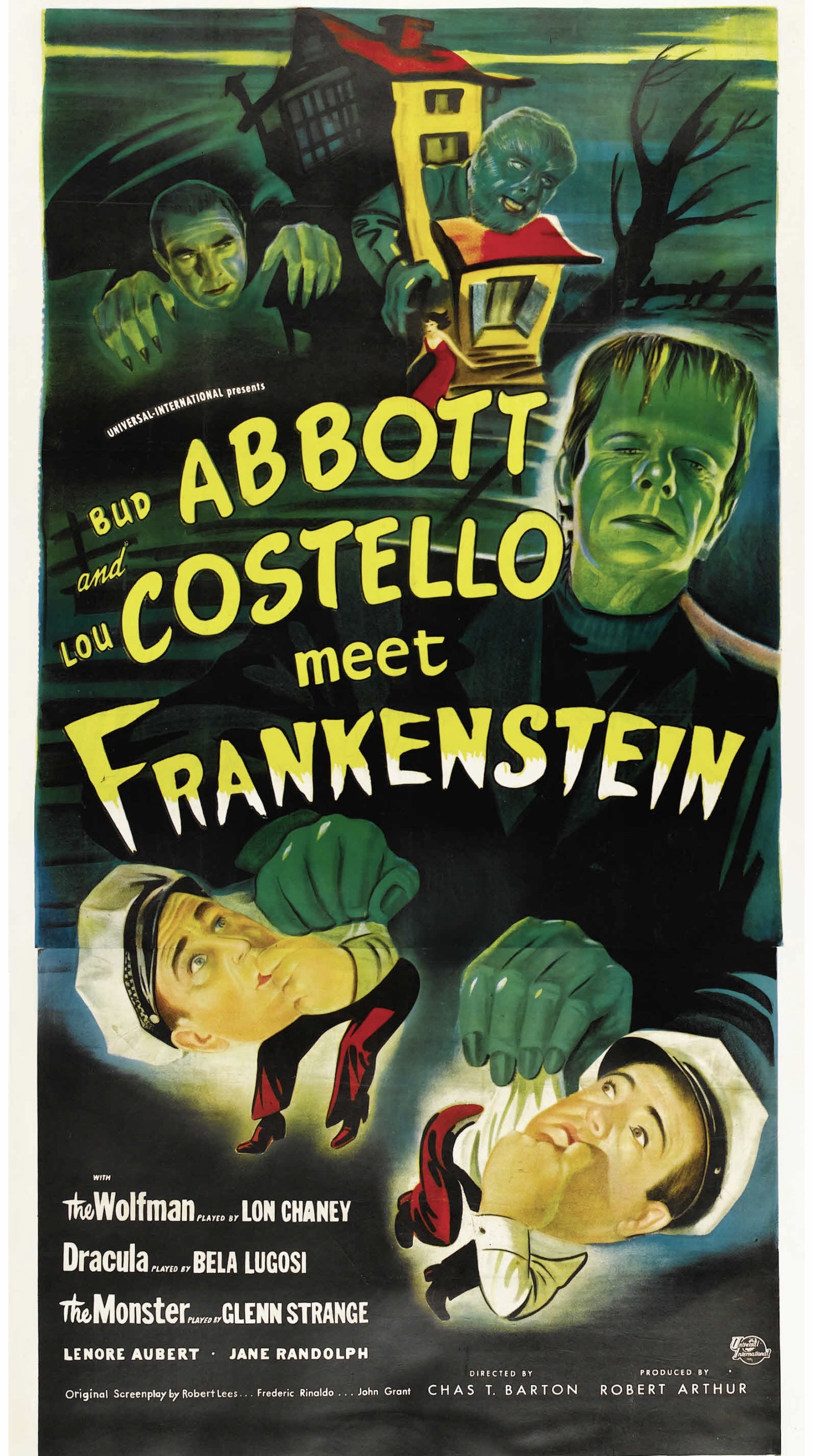
For American moviegoers weaned on comic books and superheroes like Superman, Batman and The Hulk, the names El Santo and Blue Demon might not be as familiar. But in Mexico, they are major cultural icons. They were the main attractions in a popular film genre known as the lucho libre (wrestling hero movies) but had first established themselves as bona-fide professional wrestlers. In real life, Santo and Blue Demon were often rivals in the ring but they teamed up on the screen nine times and two of their most representative features together are Santo y Blue Demon vs. Dracula y el Hombre Lobo (Santo and Blue Demon vs. Dracula and the Wolf Man, 1973) and Santo y Blue Demon contra el Doctor Frankenstein (Santo and Blue Demon vs. Dr. Frankenstein, 1974), which are good entry points for beginners.
Continue readingJohn Wayne in 3-D
Out of distribution for years, Hondo (1953), one of the key Westerns starring “The Duke,” was finally restored by the John Wayne Society in 1995 and made available for viewings again. It was said to be Wayne’s personal favorite of all of his Westerns and the storyline has a classic simplicity which captures the true spirit of the frontier: a cavalry scout (Wayne) comes to the aid of a homesteader (Geraldine Page) and her son (Lee Aaker) when the Apaches go on a rampage. Based on a novel by Louis L’Amour, Hondo was also surprisingly liberal in its attitude toward Native-Americans for its time and subtly addressed racial issues through the romance between the half-breed scout and the white heroine.
Continue readingThe Lost Souls of Sao Paulo
Long Day’s Journey into Night is the title of Eugene O’Neill’s Pulitzer Prize winning 1956 play but it could also serve as a succinct capsule description of numerous movies from the 1960s that were clearly influenced by Michelangelo Antonioni’s L’avventura (1960) and its themes of alienation and existential despair. Some examples include Giuseppe Patroni Griffi’s Il Mare (1962) which follows three strangers on the isle of Capri during a bleak winter season as they try to connect with each other. Jean-Luc Godard’s Alphaville (1965) depicts a dystopian futuristic society in which a detective finds himself out of place in a modernistic Paris controlled by an oppressive artificial intelligence. And Jacques Demy’s Model Shop (1969) uses the urban sprawl of Los Angeles and its smog-creating car culture as a backdrop to an unemployed architect’s search for meaning in his life. Yet, the most Antonioni-like film of all and the least known is probably Noite Vazia (1964) by Brazilian director Walter Hugo Khouri, which traces a dusk-to-down encounter between two men and two women amid the sterile cityscapes of modern Sao Paulo.
Continue reading