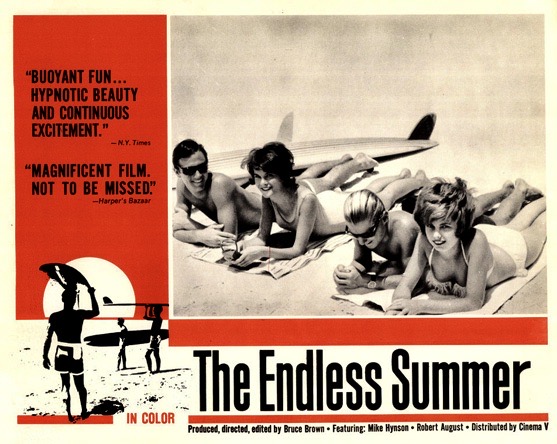
West Coast surfers in the late fifties knew Bruce Brown as a fellow surfer who started filming his surfing exploits with his buddies before Gidget became a best-selling novel in 1957. Hollywood bought the rights and turned it into a hit movie in 1959 starring Sandra Dee. For most movie audiences, it was their first exposure to the popular sport of surfing but Brown was already well known among California surfers before that due to his own surfing movies. He would shoot them without sound and travel around showing them to fellow surfers while narrating the footage in person; occasionally a yet-to-be-famous band called The Beach Boys provided musical accompaniment.. His first documentary effort Slippery When Wet appeared in 1958 and he followed it up with six more surfing features over the next seven years. It was in 1965 when Brown became a household name after the release of The Endless Summer, a surprise box office hit that inspired a whole new generation of surfers and ended up on the top ten list of many major film critics. In 2010 it was selected for preservation in the National Film Registry by the Library of Congress which solidified its reputation as the holy grail of surfing documentaries.
Continue readingAuthor Archives: JStafford
The Sociopath’s Playbook
According to the Oxford Dictionary, a sociopath is a person who has a personality disorder which causes them to behave in an aggressive, violent or unpleasant way towards other people. The general opinion among psychiatrists is that sociopaths are not born that way, which is usually the case with psychopaths. Instead, sociopaths are shaped by their environment and experiences. A classic example of this is profiled in Eizo Sugawa’s Yaju Shisubeshi (English title: The Beast Shall Die). The protagonist of this 1959 psychological thriller is Date Kunihiko (Tatsuya Nakadai), a quiet, well-mannered graduate student who is exceptionally gifted as a writer and athlete. Behind his benign façade, however, is a cunning sociopath with a plan that slowly reveals itself as the film unfolds. As portrayed by Nakadai, Date is a truly chilling figure and one of his least known but most potent early performances. It deserves to be included with his more celebrated work in such Japanese masterpieces as Masaki Kobayashi’s The Human Condition (1959-1961), Kihachi Okamoto’s The Sword of Doom (1966) and numerous collaborations with Akira Kurosawa such as Sanjuro (1962), High and Low (1963) and Kagemusha (1980).
Continue readingHomeward Bound
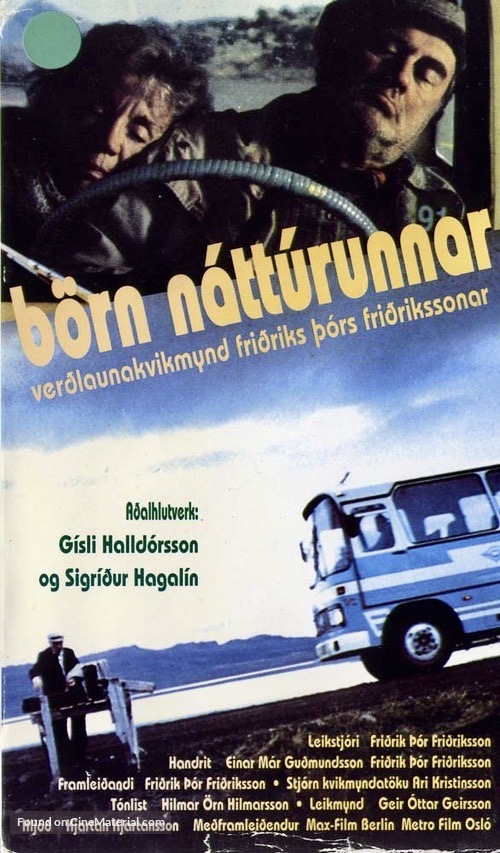
Films about aging and the elderly are not that prevalent in Hollywood’s yearly production schedule of new films for obvious reasons. It is not a subject that most moviegoers seeking escapism, especially younger viewers, want to contemplate. It is also a risky commercial proposition unless the film is a heartwarming drama with broad appeal (Driving Miss Daisy, 1989) or a feel-good comedy like Harold and Maude (1970), which was a box office flop on its initial release before it went on to become a profitable cult hit. Of course, some of the undisputed masterpieces of 20th century cinema have focused on senior citizens like Vittorio De Sica’s Umberto D (1952), Yasujiro Ozu’s Tokyo Story (1953), and Ingmar Bergman’s Wild Strawberries (1957) but these are not mass appeal attractions but the favorites of a niche art house audience. Fridrik Thor Fridriksson’s Children of Paradise aka Born Natturunnar (1991) is certainly a film that belongs in this latter grouping but is distinctly different in tone, combining social realism with deadpan humor and a touch of magical realism.
Continue readingAnts in Your Pants and Worse!
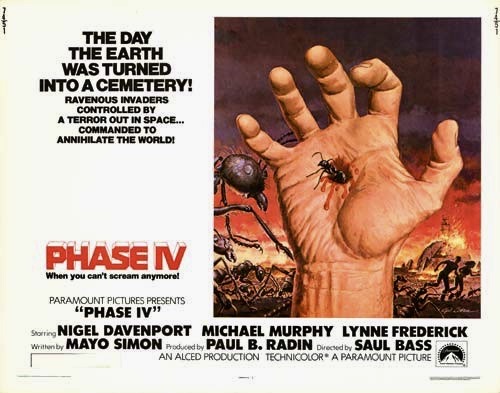
There have been killer ant movies before – Them! (1954), The Naked Jungle (1954), and Empire of the Ants (1977) come to mind – but Phase IV, released in 1974, may be the first and only killer ant art film. With its abstract, almost experimental approach to narrative and character development, it’s a much closer cousin to something like…say, Last Year at Marienbad (1961) than Them! While it was marketed as a science fiction film and clearly belongs in that genre, the film was both puzzling and disappointing to a certain sector of that audience that expected a killer ant movie to deliver thrills, chills and a satisfying ending. Yet, once you accept the fact that Phase IV is not a conventional sci-fi film and will not conform to the genre conventions that you expect, you may find it absolutely chilling and brilliant.
Continue readingThe Great Tube Caper
The name Wolf Rilla might sound like a pseudonym for some superstar wrestling champion but movie buffs know him for Village of the Damned (1960), a superb adaptation of The Midwich Cuckoos, a classic sci-fi novel by John Wyndham. Although he primarily specialized in B-movie genre films, his work was usually much better than the competition and he made some memorable comedies like Bachelor of Hearts (1958) as well as first-rate crime dramas like Witness in the Dark (1959). One of his lesser-known movies that was mostly overlooked or underrated at the time is Piccadilly Third Stop (1960) and it looks even better now, offering a time capsule look at London in the early sixties plus an exceptional ensemble of actors playing would-be crooks plotting a major heist.
Continue readingMilanese Malaise
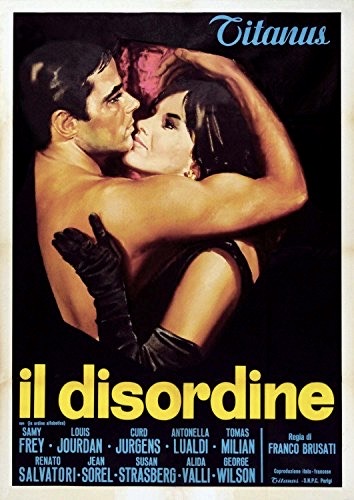
Any art house patron in the early sixties must have thought modern society was headed toward a complete collapse as witnessed by the emptiness of life and the bored, amoral behavior of characters in films like Federico Fellini’s La Dolce Vita (1960). That film was mostly a portrait of wealthy, jaded Romans and ambitious social climbers that was probably the most famous in a wave of films that viewed Italian society as a lost and alienated culture. Michelangelo Antonioni’s L’Avventura (1960), La Notte (1961) and L’Eclisse (1962) offered similar views of a world where modern progress and technology had a dehumanizing effect on relationships while Antonio Pietrangeli’s I Knew Her Well (Italian title, Lo la conoscevo bene, 1965) focused on a naïve working class woman who seeks an acting career in Rome but finds herself exploited and eventually discarded by the people that profession attracts. Less well known, Franco Brusati’s Il Disordine (Disorder, 1962) differs from the above films in that it depicts both upper class and economically strapped folks in Milan who share the same sense of disillusionment and despair over their lot in life. Also, it is almost epic in scale and more tragic and heartfelt than the aforementioned titles.
Continue readingJohn Frankenheimer’s Service Comedy
I’m a big admirer of John Frankenheimer’s early work from such live TV dramas as The Comedian (1956) and Days of Wine and Roses (1957) to his peak achievements of the sixties: All Fall Down (1962), Birdman of Alcatraz (1962), The Manchurian Candidate (1962) and Seconds (1966). I’ve also enjoyed several of the more commercial projects he helmed throughout his career such as Seven Days in May (1964), Black Sunday (1977) and Ronin (1998). Unfortunately, his reputation has suffered over the years due to several box office bombs and critically maligned movies – The Horsemen (1971), Story of a Love Story aka Impossible Object (1973), 99 and 44/100% Dead (1974), Prophecy (1979), Dead Bang (1989), and especially The Island of Dr. Moreau (1996), which had a highly publicized and chaotic production history. Yet the most notoriously panned film of his career is easily The Extraordinary Seaman (1969) and in Frankenheimer’s own words, “It was the only movie I’ve made which I would say was a total disaster.” So, I finally decided to see for myself if the movie lives up to its notoriety.
Continue readingThe Year of the Hare

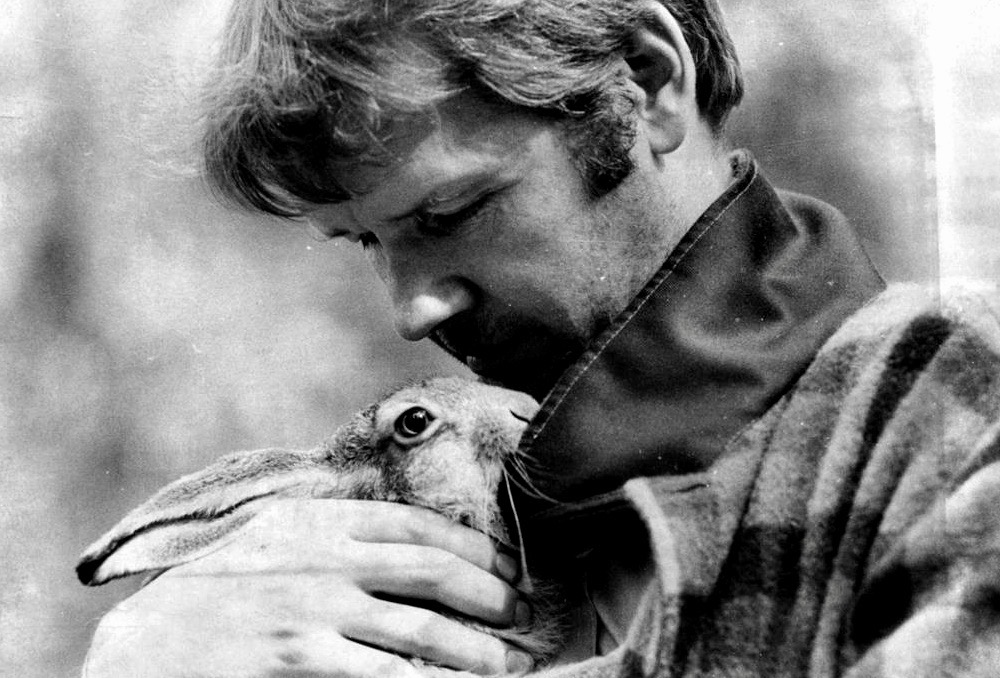
Road trip movies in which the main character goes on a journey with his pet is not that unusual in the annuals of cinema although the pet is usually a dog (Kelly Reichardt’s Wendy and Lucy, 2008) or a cat (Paul Mazursky’s Harry and Tonto, 1974). What makes Janiksen Vuosi (English title, The Year of the Hare, 1977) decidedly offbeat is that the protagonist Kaarlo Vatanen (Antti Litja) bonds with a hare that his car has hit and nurses it back to health as they wander into the wilderness. Vatanen, a marketing executive, has become completely disillusioned with modern life and tries to abandon everything – his career, his wife, his possessions – and get back to nature, living off the land and the kindness of strangers. In the process, he discovers a new best friend in the wounded hare, which is never given a name.
Continue readingSex Trafficking in Marseilles
Human trafficking is recognized as a form of modern day slavery today but it has been around for decades. In the early 20th century the white slave trade in Europe became a major crime phenomenon in which hundreds of young women went missing only to end up enslaved in prostitution rings. This criminal activity provided the basis for countless melodramas and sexploitation films but one of the most entertaining and accomplished efforts is the French feature Des Femmes Disparaissent (1959), which was released in the U.S. in 1962 as Road to Shame. Women Disappear is a more accurate translation for the original title but the movie is a tautly directed thriller which has the look of a vintage noir with moody black and white cinematography by Robert Juillard (Forbidden Games, Gervaise).
Continue readingThe Jimmy Piersall Story

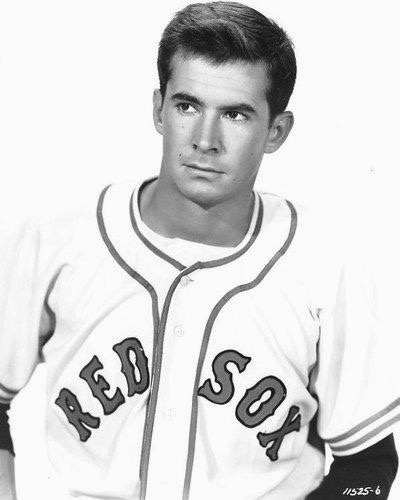
There are enough films about baseball and famous ballplayers in the American cinema to constitute its own subgenre but Fear Strikes Out (1957) is a special case that stands alone. Based on the autobiography by James A. Piersall, the former outfielder and shortstop for the Boston Red Sox, and Albert S. Hirshberg, the film is less about Jimmy Piersall’s brilliant though erratic career and more about his struggle against bipolar disorder (also known as manic-depressive illness).
Continue reading