Unknown's avatar

About JStafford

I am a writer for The Travel Channel, ArtsATL.com, Burnaway.org and other publications. I am also a film researcher for Turner Classic Movies and a member of the Atlanta Film Critics Circle. This blog is dedicated to overlooked, obscure or underrated movies and other cinema topics that I want to share.

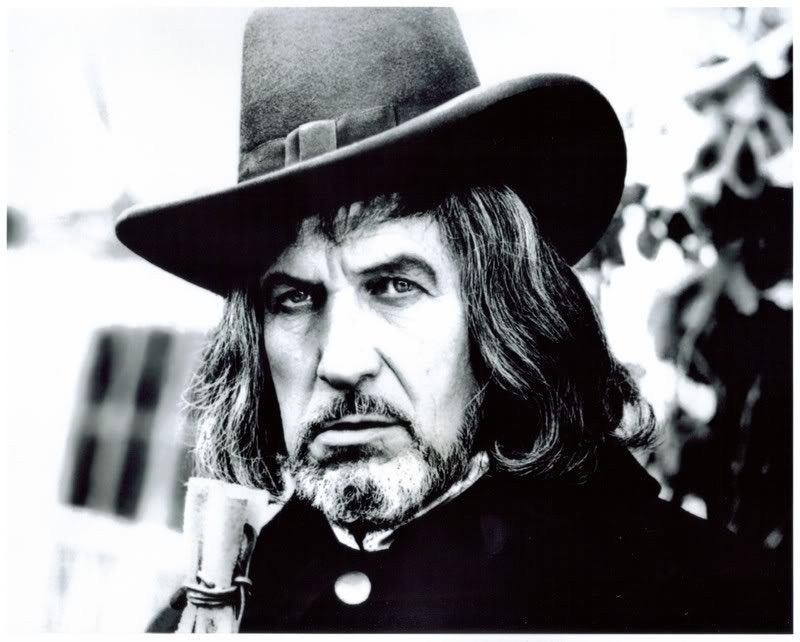
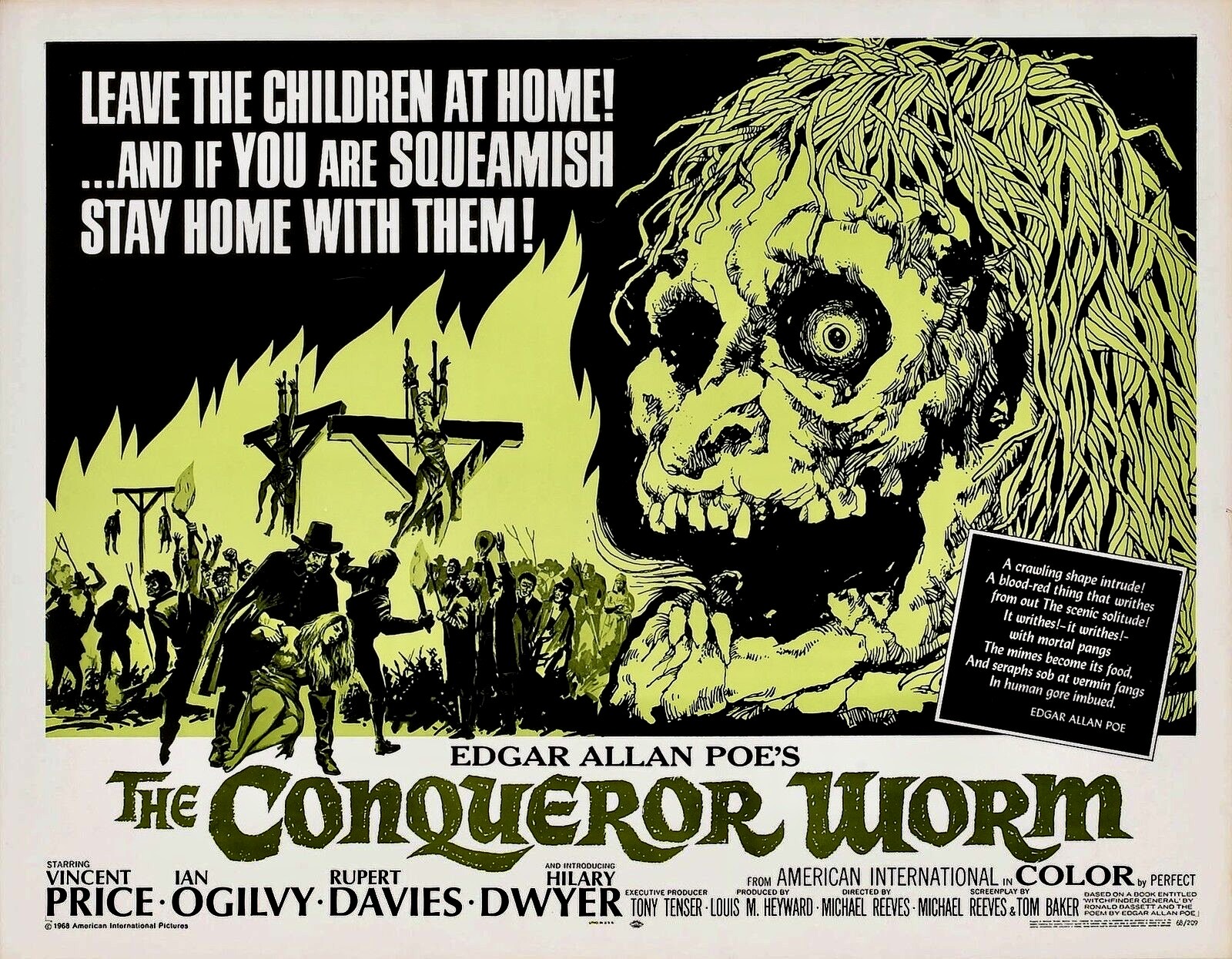
Vincent Price is Matthew Hopkins

Vincent Price as the infamous, real life witch hunter Matthew Hopkins in THE CONQUEROR WORM (1968), released in the U.K. as WITCHFINDER GENERAL.

Vincent Price has always been associated with the horror genre even though he appeared in all kinds of other films during his career such as film noir (Laura), comedy (Champagne for Caesar), westerns (The Baron of Arizona), historical drama (The Private Lives of Elizabeth and Essex), science fiction (The Invisible Man Returns) and more. But his particular brand of villainy in horror films tend to be almost tongue-in-cheek with a macabre sense of humor and campy flourishes as in House on Haunted Hill (1959), The Tingler (1959), Diary of a Madman (1963) or Theater of Blood (1973), to name a few. His performance as infamous witch hunter Matthew Hopkins in The Conqueror Worm, however, was something else entirely – a genuinely chilling portrayal that was like nothing else he had ever done or would ever do again. Even today the intensity of his evil is the stuff of nightmares and he seems to be channeling the malevolent spirit of Hopkins in what is still a timely snapshot of political and religious persecution in the 17th century.
Continue reading

Queen of Karate

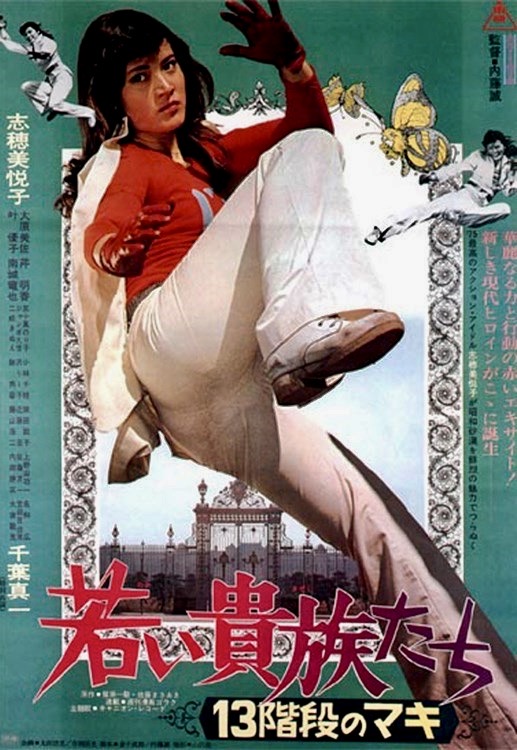
The Japanese poster for the 1975 film 13 STEPS OF MAKI: THE YOUNG ARISTOCRATS.
The Japanese poster for the 1975 film 13 STEPS OF MAKI: THE YOUNG ARISTOCRATS starring Etsuko Shihomi.

Most of the famous icons of Japanese action cinema of the 1970s are usually male stars but there are a few exceptions. The best known is easily Meiko Kaji, who enjoyed a double career as a popular singer and film actress whose most famous movies inspired Quentin Tarantino’s Kill Bill Vol. 1 (2003) and Vol. 2 (2004). She built up a cult following with a quintet of girl gang features – the Stray Cat Rock franchise (1970-71) – and then moved on to greater success in the Female Prisoner Scorpion series (1972-73) and two genre classics, Lady Snowblood (1973) and Lady Snowblood 2: Love Song of Vengeance (1974).

The Japanese poster for the 1970 film STRAY CAT ROCK: DELINQUENT GIRL BOSS starring Meiko Kaji.

The only other Japanese actress from the same period to rival Kaji’s track record is probably Etsuko Shihomi, who first attracted attention in a supporting role in The Street Fighter (1974) opposite martial arts legend Shin’ichi Chiba aka Sonny Chiba. Shihomi followed this up with her breakthrough feature Sister Street Fighter (1974), which proved to be such a hit that she made four sequels to it while appearing in other action flicks with her mentor Chiba. But probably Shihomi’s wildest and least seen movie is Wakai Kizoku-tachi: 13-Kaidan no Maki (English title: 13 Steps of Maki: The Young Aristocrats, 1975), which should have spawned a series but also feels like a homage to Kaji’s Stray Cat Rock series.

Continue reading

You Don’t Know What You’ve Got Till It’s Gone: Filmhouse in Edinburgh

One of the theaters housed inside Filmhouse, a 3-screen art house complex in Edinburgh, Scotland that was recently closed (photo by Ian Grundy).

Friday, October 7, 2022 was a black day for film lovers in Edinburgh and for anyone who has ever visited Filmhouse, a fantastic three-screen movie venue that also hosted the annual Edinburgh International Film Festival for years. Without warning, the Centre for the Moving Image (CMI), a charity which receives annual grants for the operation, abruptly closed its doors and laid off more than 100 employees. The shutdown also includes the Belmont Filmhouse in Aberdeen and the annual Edinburgh International Film Festival (EIFF), which was launched in 1947. The financial difficulties that led to this decision are only part of the problem. The impact of COVID on moviegoing in recent years plus the proliferation of so many entertainment streaming choices for the family household has taken a toll on attendance at movie chains but especially independent venues like Filmhouse. In the U.S., we have already seen the closure of the Cinerama Dome and the 14-screen ArcLight Hollywood in Los Angeles, the Lincoln Plaza Cinemas and Landmark’s Sunshine Cinema in New York City and so many others are in danger of vanishing like Facets in Chicago. If you care about the communal experience of a big screen movie experience, then please support your favorite film venue or risk losing it. The Filmhouse was certainly a world renowned shrine to cinema and here are my own memories of the venue from over twelve years ago.

Continue reading

From Socialite to Streetwalker

There have been some terrific Pre-Code dramas that were set in the Depression and were actually playing in movie theaters at the time but, for obvious reasons, were not box office hits because audiences wanted escapism, not a reminder of their problems. Still, several of these social problem dramas like William Wellman’s Heroes for Sale (1933) and Wild Boys of the Road (1933) were championed by film critics and today provide an invaluable window into that era. Faithless (1932), directed by Harry Beaumont (Dance, Fools, Dance) and based on the novel Tinfoil by Mildred Cram, also belongs in that category, even if it was poorly received at the time, and deserves a revival for its unusual mixture of soap opera, social issues and adult themes like prostitution.

Continue reading

The Night of Counting the Years

Wanis (Ahmed Marei) wants his tribe to stop looting their heritage in the 1969 Egyptian drama THE NIGHT OF COUNTING THE YEARS aka Al-mummia (The Mummy).

It is not that common to encounter films from Egypt in the U.S. and only a handful have managed to enjoy theatrical distribution here in either film festival or art house screenings over the years. Youssef Chahine from Alexandria, Egypt is probably the best known director with more than 40 feature films to his credit including The Blazing Sun (1954) featuring Omar Sharif in his film debut and Bab el Hadid (Cairo Station, 1958), which brought him international attention. Other than Chahine, you might recognize Moshi Mizrahi although his best-known films were made in other countries; The House on Chelouche Street (1973), an Oscar nominee for Best Foreign Language Film was made in Israel, and Madame Rosa (1977) and I Sent a Letter to My Love (1980), both starring Simone Signoret, were filmed in France. A more contemporary Egyptian director is Atom Egoyan, although he was raised in Western Canada where most of his movies have been made including Exotica (1994) and The Sweet Hereafter (1997).

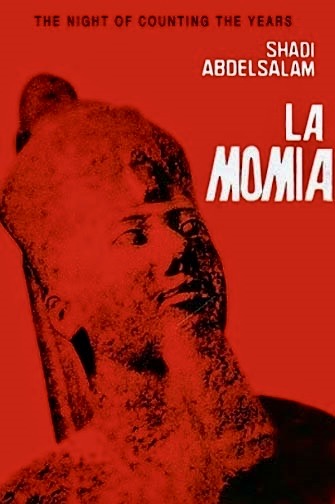
The Spanish film poster for The Mummy (Al-mommia, 1969) aka THE NIGHT OF COUNTING THE YEARS from Egyptian director Chadi Abdel Salam.

Many film historians and critics, however, often list Chadi Abdel Salam as one of the greatest Egyptian directors of all time on the basis of his solo feature film from 1969, Al-mummia (The Mummy aka The Night of Counting the Years), which has slowly acquired the status of a classic in its own country and around the world, thanks to the efforts of Martin Scorsese and The Film Foundation, which restored the film in 2009 in association with the Cineteca di Bologna and the Egyptian Film Center.  

Continue reading

Beneath the Mediterranean, the Red Sea and the Indian Ocean

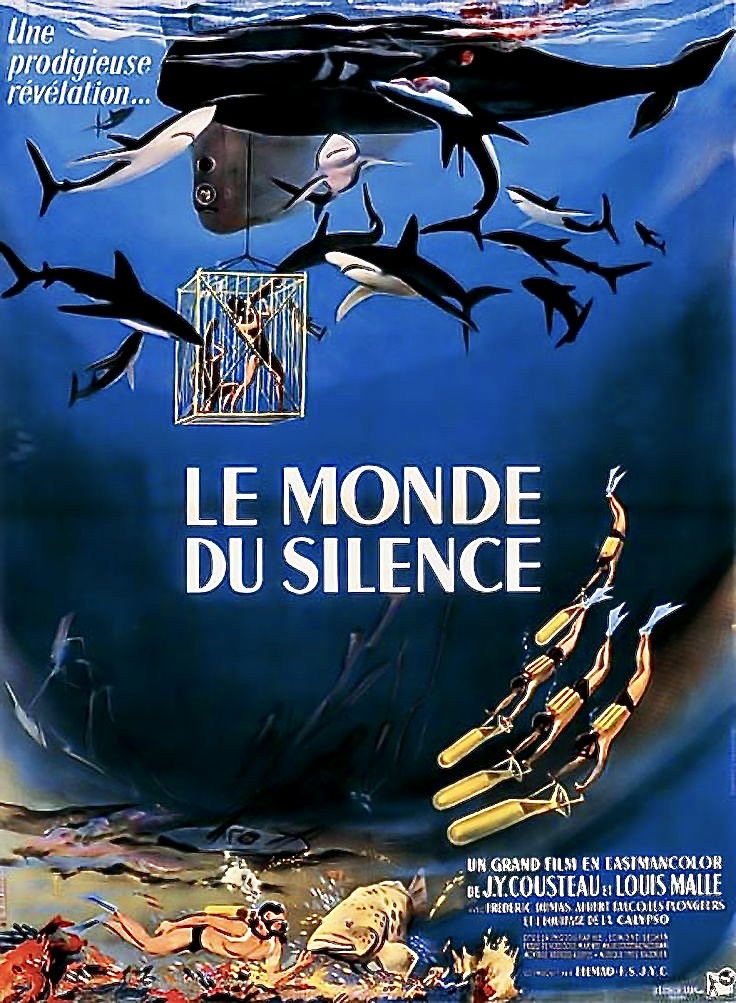
The French film poster for THE SILENT WORLD (1956), Jacques Cousteau’s first feature length documentary.

Jacques-Yves Cousteau was undoubtedly one of the greatest explorers of the 20th century but what he discovered was a world most people had never seen before and it was hiding in plain sight under the ocean. His scientific innovations to deep sea diving and his never-before-seen underwater cinematography introduced most people to marine life, behavior and landscapes that were just as strange, beautiful and mysterious as life on another planet. Although he had made numerous short documentaries on the sea throughout the forties starting with Par Dix-huit Metres de Fond in 1943, it was feature length non-fiction film debut, The Silent Sea (Le Monde du Silence, 1956), co-directed with Louis Malle, that first attracted international attention and inspired school kids to want to become explorers, photographers and oceanographers. Seen today, the film is still a fascinating introduction to Cousteau’s world but, like some nature documentaries, it presents images of unearthly beauty mixed with cruelty and violence that wouldn’t be out of place in a Mondo Cane-like exploitation expose. It also presents a more pristine world under the sea before oil spills, global warming and overfishing helped reduce marine life as well as eradicating entire species of fish. 

Continue reading

Little Demons

DON”T BE AFRAID OF THE DARK 1973 starring Kim Darby & Jim Hutton

“We Want You Sally….We Want You….Come to Us!” 

For those who first saw Don’t Be Afraid of the Dark at a young impressionable age when it originally aired on ABC in 1973, those maniacal, whispering voices of the little demons have probably stayed with you and so has this creepy little made-for-TV movie that has one of the more memorable endings of any haunted house genre picture. 

Continue reading

The Outsider and His Art

The image of the starving artist, living in poverty and misunderstood by everyone during his own lifetime, is an age-old cliché but is often based on true accounts. One of the more famous examples is Niko Pirosmanashvili, a self-taught artist from Mirzaani, Georgia, who was not motivated by money or fame but often used his paintings as barter for bed and board. He was born in 1862 and died in Tbilisi, Georgia in 1918 of alcoholism and starvation but his work is now considered part of the Russian avant-garde movement which flourished between 1890 and 1930. Pirosmani, the 1969 film biography by Russian director Giorgi Shengelaia, is an attempt to capture the spirit of the artist’s work without resorting to the usual biopic structure of dramatizing key events or providing any psychological insight into the subject. Instead, Shengelaia presents Pirosmani’s life as a string of episodes that are closer in style to an ethnographic documentary while duplicating some of the artist’s most famous paintings as part of the narrative landscape.

Continue reading

Trance State

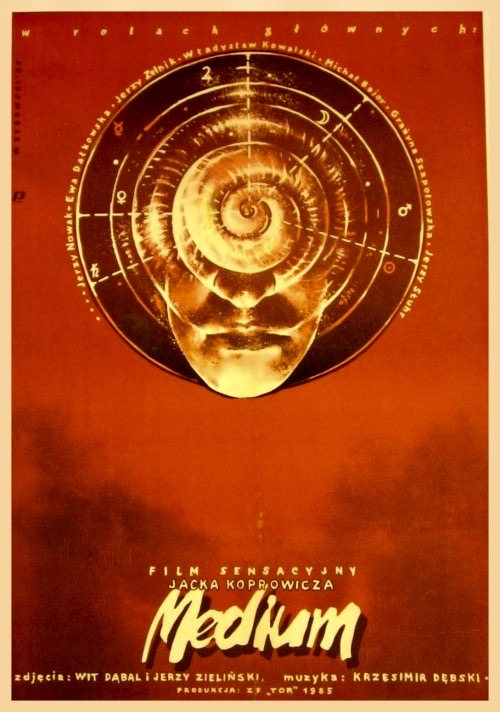
The Polish film industry is not exactly famous for its contributions to the science fiction genre but there have been a few novel exceptions over the years. Piotr Szulkin’s O-Bi, O-Ba: The End of Civilization (1985) and Andrzej Zulawski’s On the Silver Globe (1988) are among the more renowned titles although they are much closer to art house/avant-garde cinema than accessible commercial entertainments for the movie-going public. Much more audience friendly but even more obscure is Medium, a fascinating blend of science fiction, murder mystery and the occult, which has slowly developed a cult following since its original release in 1985 (It can be streamed on Youtube with English subtitles).

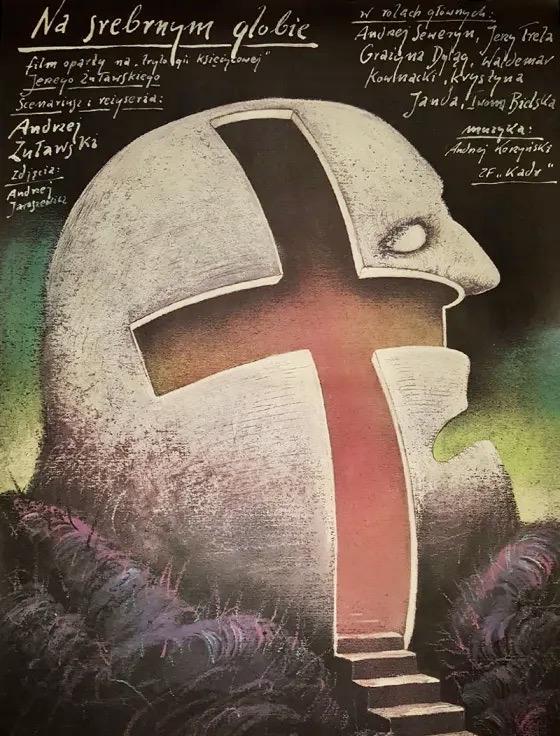
The Polish film poster for Andrzej Zulawski’s ON THE SILVER GLOBE (1988)
Continue reading

Georges Franju & Jean Cocteau: Thomas the Impostor

World War I has been the subject of some of the most powerful and prestigious films in cinema from King Vidor’s The Big Parade (1925) and Lewis Milestone’s All Quiet on the Western Front (1930) to Stanley Kubrick’s Paths of Glory (1957) and more recently, Sam Mendes’ 1917 (2019), nominated for ten Oscars including Best Picture. All of those films captured the grim horrors of the battlefield, the demoralization and death toll of the troops and the often reckless or unnecessary military strategies of commanding officers. Going against the grain is Thomas l’imposteur (Thomas the Impostor), based on Jean Cocteau’s 1923 novel which was inspired by his own experiences during WW1 as an ambulance driver for the Red Cross. Directed by Georges Franju from a screenplay by himself, Cocteau and Michel Worms, the 1965 film views war through the experiences of two idealistic dreamers, one an aristocrat, the Princess de Bormes (Emmanuelle Riva), the other an orphan (Fabrice Rouleau), who lies about his age and invents a fake backstory for himself so he can enlist. The result is a unique take on the Great War which combines the ambiance of a dark fairy tale with a realistic but emotionally detached approach to the events as they affect the two main protagonists.

Continue reading