The Cinema Art House Visionary

When did movie theaters specializing in repertory cinema, foreign language films and alternatives to Hollywood mass-produced entertainments become an option for movie lovers in the U.S.? Some might think it all began with the Landmark Theater chain, founded in 1974, which eventually expanded into a network of 46 cinemas in 26 markets. No, the concept of the art house cinema can be traced back to 1952 when the Beekman Theater on Manhattan’s East Side opened and turned movie-going into an event. The man behind the venue was Donald Rugoff and his entrance into the world of film exhibition was due to his father Edward’s partnership with Herman Becker; the two men had built up a small empire of theaters across New York City during the days of the nickelodeon and vaudeville. Rugoff would soon have a major impact on movie-going, film distribution and film culture in the 1960s and 1970s but he is virtually forgotten today. Ira Deutchman, a former employee of Cinema V, Rugoff’s trail-blazing film distribution company, is bound to correct that situation with his fascinating, warts-and-all homage, Searching for Mr. Rugoff (The documentary was completed in 2019 and is finally screening and streaming at various venues).

Continue reading
Vanishing Act

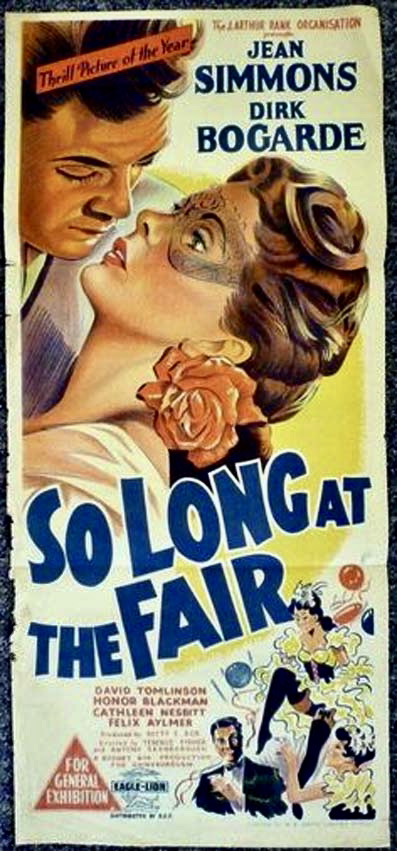
People who disappear without a trace always make the most compelling cold case mysteries, mainly because they baffle even the most intrepid investigators. The famous urban legend of “The Vanishing Lady” also known as “The Vanishing Hotel Room” may very well have been based on a real person but the true facts are lost to time. No matter. The strange tale, which first emerged in the early 1900s, has been appropriated by various writers and filmmakers in some form over the years such as the 1913 novel The End of Her Honeymoon by Marie Belloc-Lowndes (author of The Lodger), Sir Basil Thomson’s 1925 novel The Vanishing of Mrs. Fraser and the 1932 film The Midnight Warning. My favorite variation on this theme is the Victorian era mystery, So Long at the Fair (1950), produced by the British film studio, Gainsborough Pictures. The title comes from the English folk tune “Oh Dear! What Can the Matter Be?,” which contains the line, “Johnny’s so long at the fair.”

Continue reading

No Exit

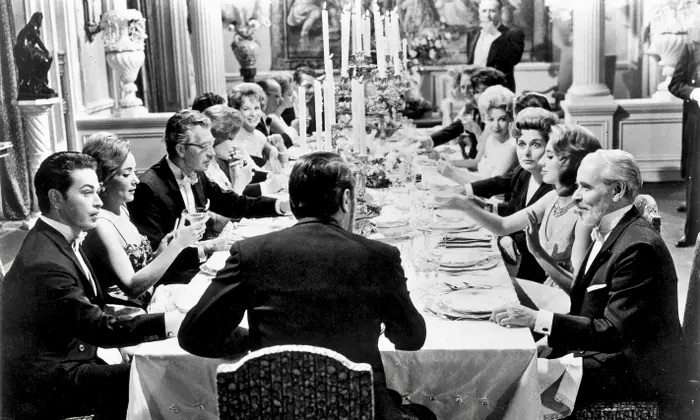
The dinner guests in Luis Bunuel’s THE EXTERMINATING ANGEL (1962) are in for an unpleasant surprise in this strange mixture of surrealism and black comedy.

Almost everyone has attended a dinner party at some point in their lives that was mandatory as well as a memorably bad experience. Maybe it was a communal meal with the boss and co-workers or a formal affair with an annoying in-law or relative. Just be glad you were able to leave the event when it became convenient. The assembled guests in Luis Bunuel’s surreal satire, The Exterminating Angel (1962), don’t have that option but the reasons for their entrapment are never clear.

Continue reading

Introducing The Ramones

There was a time in the 1970s when film distributors were able to test-market their more offbeat offerings as “Midnight Movies” for adventurous moviegoers. Sometimes these developed into cult phenomenas like El Topo (1971), The Rocky Horror Picture Show (1975), or Eraserhead (1976). Sometimes they failed to find any audience at all like Pelvis (aka All Dressed Up in Rubber with No Place to Go, 1977) or Elevator Girls in Bondage (1972). Arriving at the tail end of the Midnight Movie craze, Rock ‘n’ Roll High School (1979) fell somewhere between these two extremes.

Continue reading

Mondo Man

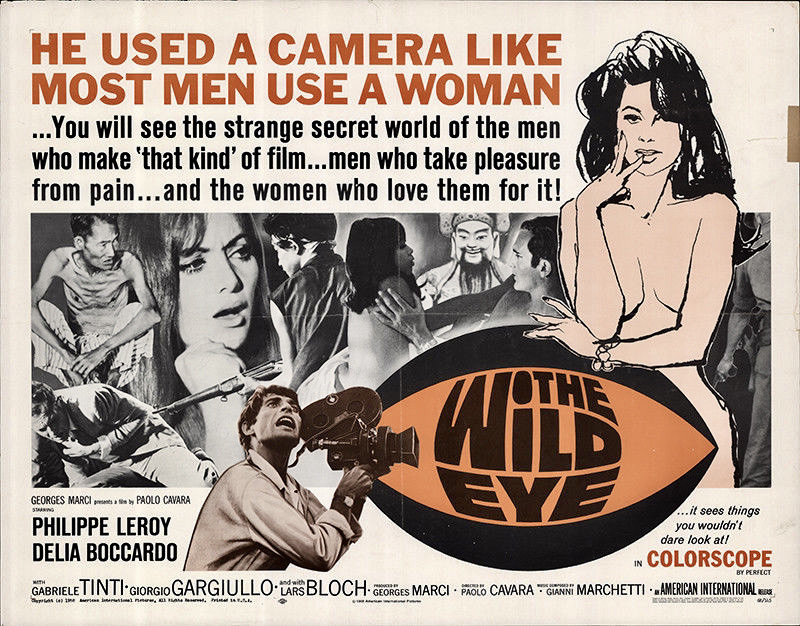
Gualtiero Jacopetti and Franco Prosperi are generally acknowledged as the “Godfathers of Mondo” and took a sensationalist approach to documentaries that revelled in bizarre and shocking cultural practices around the world. Mondo Cane (A Dog’s Life, 1962) was their wildly popular debut film and it spawned a new genre that included their later work Women of the World (1963), Mondo Cane 2 (1963), Africa Addio aka Africa: Blood and Guts (1966) and Goodbye Uncle Tom (1971), a critically reviled and polarizing account of the origins of the American slave trade that was filmed as a you-are-there dramatization. What is usually left out of the Jacopetti-Prosperi backstory are the contributions of Paolo Cavara, who co-directed and co-wrote Mondo Cane and Women of the World with Jacopetti. He broke off his association with the other two filmmakers after their second collaboration and went solo with two more Mondo films (Malamondo [1964], Witchdoctor in Tails [1966]) before turning his camera on a fictionalized version of himself in The Wild Eye (L’occhio Selvaggio, 1967), an unforgiving portrait of a ruthless Mondo filmmaker that should be better known today.

Continue reading

Face Time

Edie Sedgwick in one of the famous Andy Warhol Screen Tests

For most people the films of Andy Warhol were more fun to read about then to actually watch. In the case of films such as the 485-minute Empire (1964) or Sleep (1963), at 321 minutes, it’s hard to imagine someone watching these in their entirety in one sitting. I don’t even think Warhol expected viewers to watch these in real time but to wander in and out of the screenings like you would at a video installation. But even at revivals of the most popular and infamous Warhol titles such as The Chelsea Girls (1966) and Lonesome Cowboys (1968), you can bet on numerous walkouts during the screenings, not from outrage but boredom or disinterest. At the other end of the scale, however, are the short, silent black and white films he made when he was first experimenting with the medium and his Screen Test series shows a brilliance of concept and execution that could easily turn naysayers into converts.

Predator on the Prowl

Hammer Studios, home to vampires, werewolves, mummies, Quatermass Xperiments, pirates….and child molesters? In 1960, the British film production company (originally founded in 1934), ventured into decidedly new territory from their usual formulaic mix of horror films, suspense thrillers and costume adventures. Never Take Candy from a Stranger (known as Never Take Sweets from a Stranger in the the U.K.) was Hammer’s attempt at a serious adult drama that addressed a controversial topic most major studios wouldn’t touch at that time.      

Continue reading

Fritz Lang’s Two-Part Indian Epic

The film industry is rife with tales about directors who struggled and failed to bring their dream projects to the screen and the subject would make a fascinating, behind-the-scenes non-fiction book about the precarious nature of moviemaking. Among the more famous examples are Orson Welles, who pitched a film version of Joseph Conrad’s Heart of Darkness to RKO executives, who instead chose Welles’ second idea, Citizen Kane,  Josef von Sternberg’s ambitious 1937 production of I, Claudius, which was started but never completed due to disagreements between the director and Charles Laughton plus the injury of leading lady Merle Oberon in a car accident, and Robert Altman, who wanted to make a film version of the 1997 documentary Hands on a Hard Body and had even cast it but died before production could begin. Yet, for all the films-that-might-have-been, there are many examples of directors who finally succeeded in making their passion projects and one of them is Fritz Lang. His lifelong desire to make a film of the 1917 novel, The Indian Tomb, written by his former wife Thea Von Harbou, was finally realized in the late 1950s when he started production on a lavish movie adaptation that would be released in two parts as The Tiger of Eschnapur and The Indian Tomb, both 1959.

Continue reading

Mister Total Irreverence

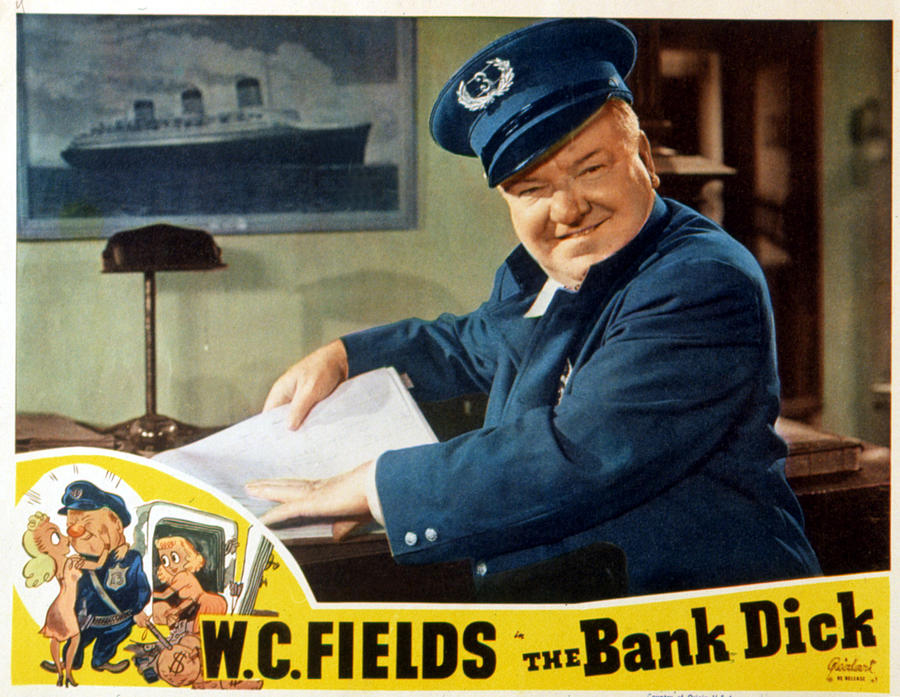
Among most Fields’ enthusiasts, The Bank Dick is considered one of his best films, right up there with It’s a Gift (1934). It’s also the only film in which Fields enjoyed full creative control and it would be his last. His final starring role in Never Give a Sucker an Even Break (1941) was an unhappy experience and turned into one long battle with the Universal top brass over scripting and censorship issues. 

Continue reading

French Twists

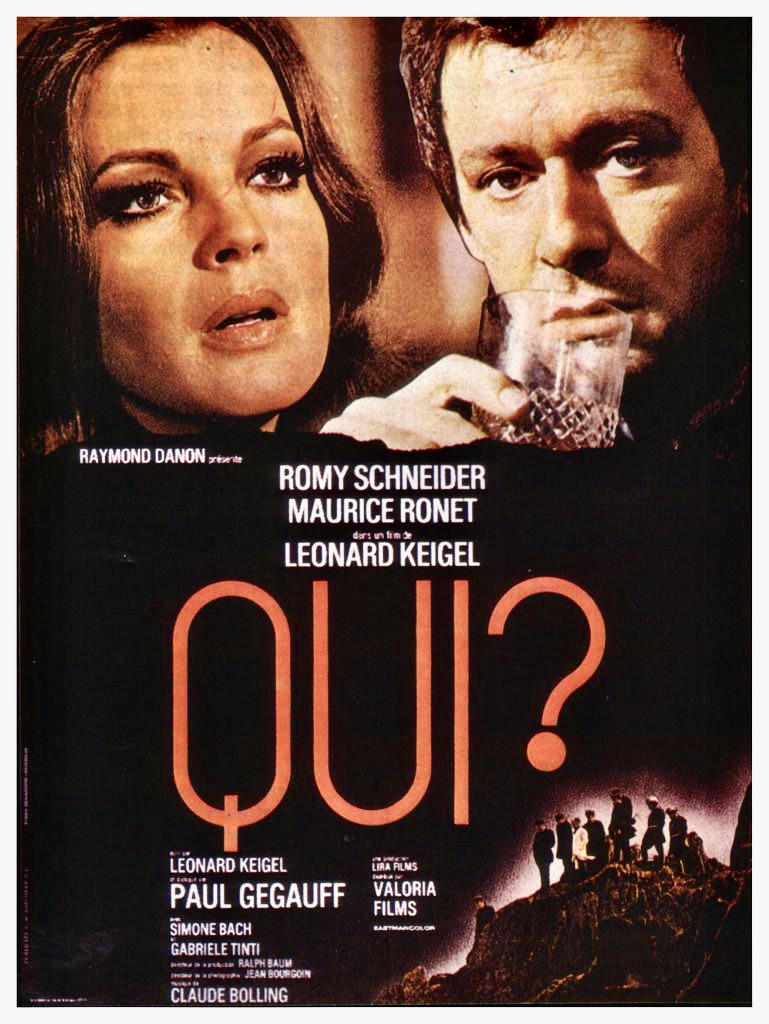
Marina (Romy Schneider) and Claude (Gabriele Tinti) have a violent argument after leaving an inn in the French countryside. A pistol is fired, Claude roughs up his girlfriend and the couple speed off in a convertible. The car leaves the main road and races along the cliffs of the Brittany coastline until it plunges over a ledge into the sea below with Claude at the wheel. Among the hillside rocks, we see Marina, who miraculously escaped from the car and is the only witness at the scene. All of this unfolds under the opening credits of Qui? (1970), a rarely seen French film which offers some odd twists and turns in its brisk 73-minute running time (In some regions it was released under the title The Sensuous Assassin, which is completely misleading in regards to the actual storyline).

Continue reading