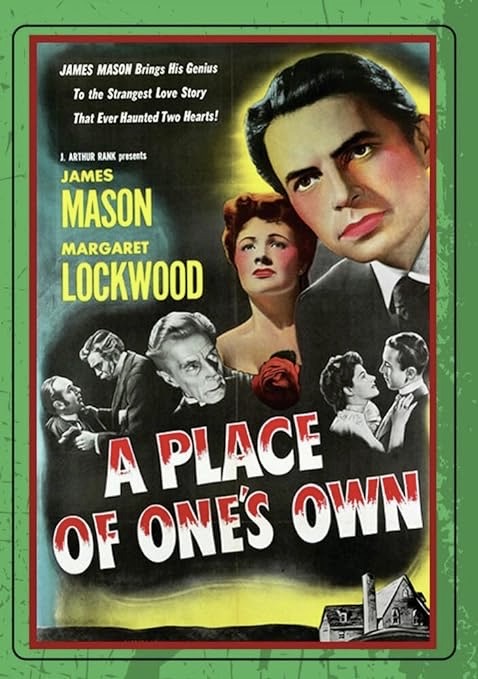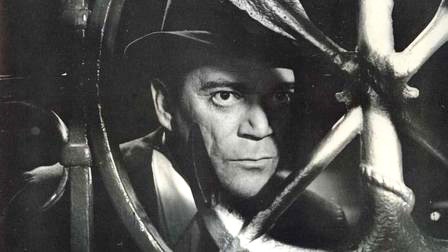
There are not that many British films from the 1930s and 1940s about ghosts and haunted houses and the ones that do stand out are primarily comedies like The Ghost Goes West (1935), The Ghost Train (1941), Blithe Spirit (1945) and Things Happen at Night (1948). Still, there have been a few U.K. features that took a more serious approach to the genre and A Place of One’s Own (1945) is a good example, even though it is largely overlooked and forgotten today.
Continue readingTag Archives: Sinister Cinema
The Unknown Man of Shandigor

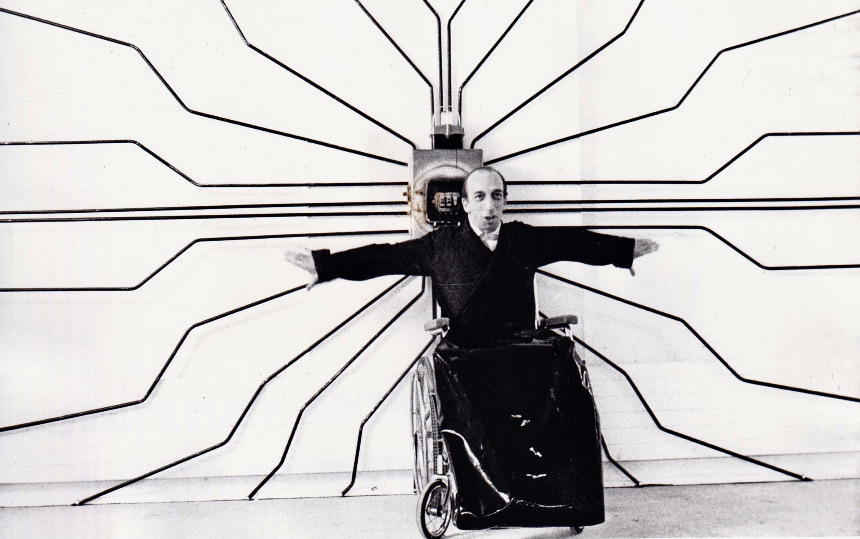
Swiss filmmaker Jean-Louis Roy only made two feature films and two made-for-TV movies during his lifetime but, on the basis of his debut feature L’inconnu de Shandigor (English title: The Unknown Man of Shandigor, 1967), he should be famous among cinephiles. The reason you probably haven’t heard of him is because The Unknown Man of Shandigor vanished after its premiere at Cannes in 1967 and never received a theatrical release in the U.S. Only in the past few years has the film resurfaced as a DVD-R from Sinister Cinema and most of those who have seen it have been delighted and amazed by this pop-art curio from the sixties.
Continue readingCosa Nostra Bromance

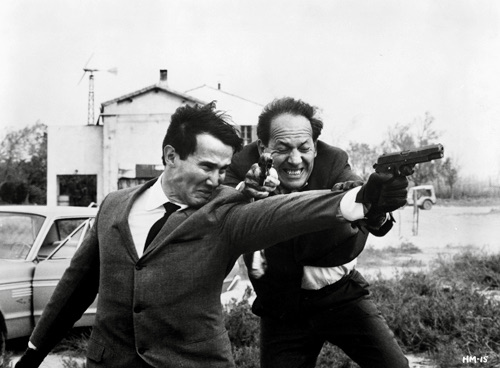
Do hit men have a code of ethics? It might seem like a bit of an oxymoron to have hit men and ethics in the same sentence but in most movies about organized crime like The Godfather, The Public Enemy or Scarface, there does seem to be some sort of moral code observed among the rank and file of thugdom, regardless of how hypocritical it may seem. Rarely though do we see crime thrillers where hit men have philosophical discussions about their work and Hail, Mafia (1965) is not only fascinating for this reason but it’s also a criminally overlooked little B-movie. Taut, suspenseful, oddly funny at times and a road movie of sorts, the European produced movie stars Henry Silva and Jack Klugman as ill-matched assassins on a journey to silence their target, an expatriate American (Eddie Constantine) living in France.
Jess Franco’s Attack of the Robots
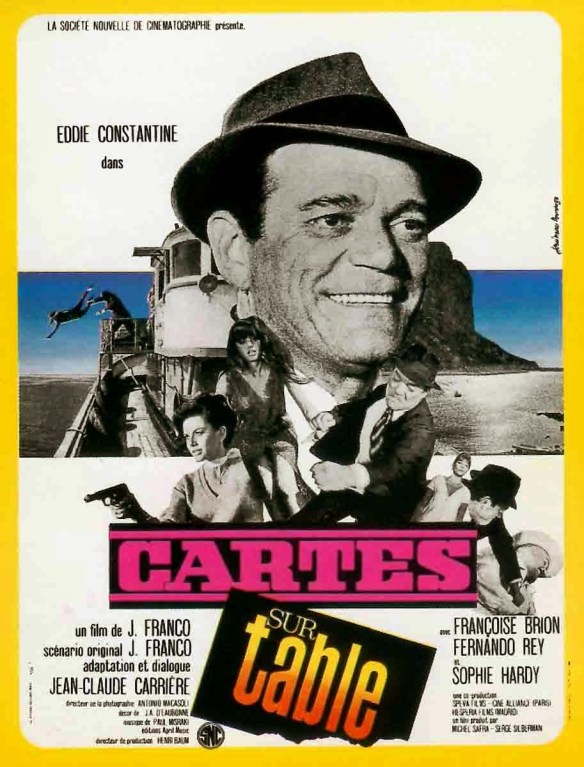
Imagine a science-fiction influenced spy thriller about humanoid assassins directed by Jess Franco with a screenplay adaptation by Jean-Claude Carrière (a frequent collaborator with Luis Bunuel), a cool jazz score by Paul Misraki (Alphaville, Le Doulos, Les Cousins) and an international cast featuring Eddie Constantine, Fernando Rey and Francoise Brion. It sounds like a film buff’s fever dream but it actually exists. Released in 1966 during the height of the James Bond craze, Cartes sur table aka Attack of the Robots is a stylish and amusing entertainment that takes a standard world domination-by-madman scenario and infuses it with a cheeky sense of humor. The film will come as a surprise to those who only associate Jess Franco with Eurotrash favorites like 99 Women (1969), Vampyros Lesbos (1971) and Wanda, the Wicked Warden (1977).
A Different Kind of Horror Film from Lucio Fulci
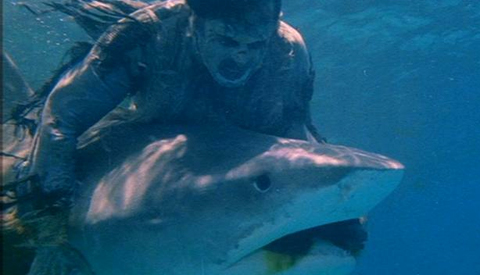
If Lucio Fulci had only directed the 1979 cult splatterfest Zombie, he would still warrant more than a footnote in any film history of the horror genre. Obviously inspired by the success of George Romero’s Night of the Living Dead and Dawn of the Dead, Fulci’s cult favorite pushed the zombie film into over-the-top excess with the famous eyeball-splinter scene and an underwater grudge match between a shark and one of the undead.
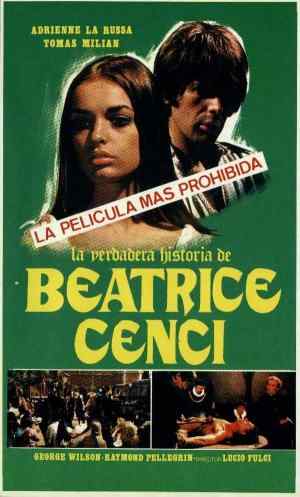
It also launched a whole new genre in the Italian film industry which included such imitators as Cannibal Apocalypse, Nightmare City and Erotic Nights of the Living Dead (all released in 1980). Fulci went on to further heights (or depths according to his detractors) with such supernatural thriller gross-outs as City of the Living Dead (1980), The Beyond (1981) and The House by the Cemetery (1981). But what most Fulci fans and film buffs tend to overlook is the fact that he was once a director who could occasionally turn out a thought-provoking and artful work of cinema such as his 1969 historical drama, Beatrice Cenci. Continue reading