Robot Riot

The Russian film poster for Gibel Sensatsii (English title: LOSS OF FEELING aka LOSS OF SENSATION, 1935).

When I hear the word robot, I immediately think of Robby, the delightful and super intelligent creation of Dr. Morbius in Forbidden Planet (1956), one of the landmark sci-fi movies of the fifties. His barrel-shaped torso and high-tech design were so popular that he inspired countless toy collectibles for kids but he was a benign example of the form. For the most part, robots in science fiction films are generally viewed as a threat (see 1954’s Target Earth, 1957’s Kronos or 1958’s The Colossus of New York for examples). That was certainly the case in one of the first and most famous depictions of a robot – Fritz Lang’s silent sci-fi masterpiece, Metropolis (1927). Designed as a doppelganger for Maria, a revered female leader of factory workers, the false Maria preaches revolution to the working class, resulting in the sort of chaos that threatens to topple civilization (The False Maria’s robotic metal frame is disguised beneath her human façade).
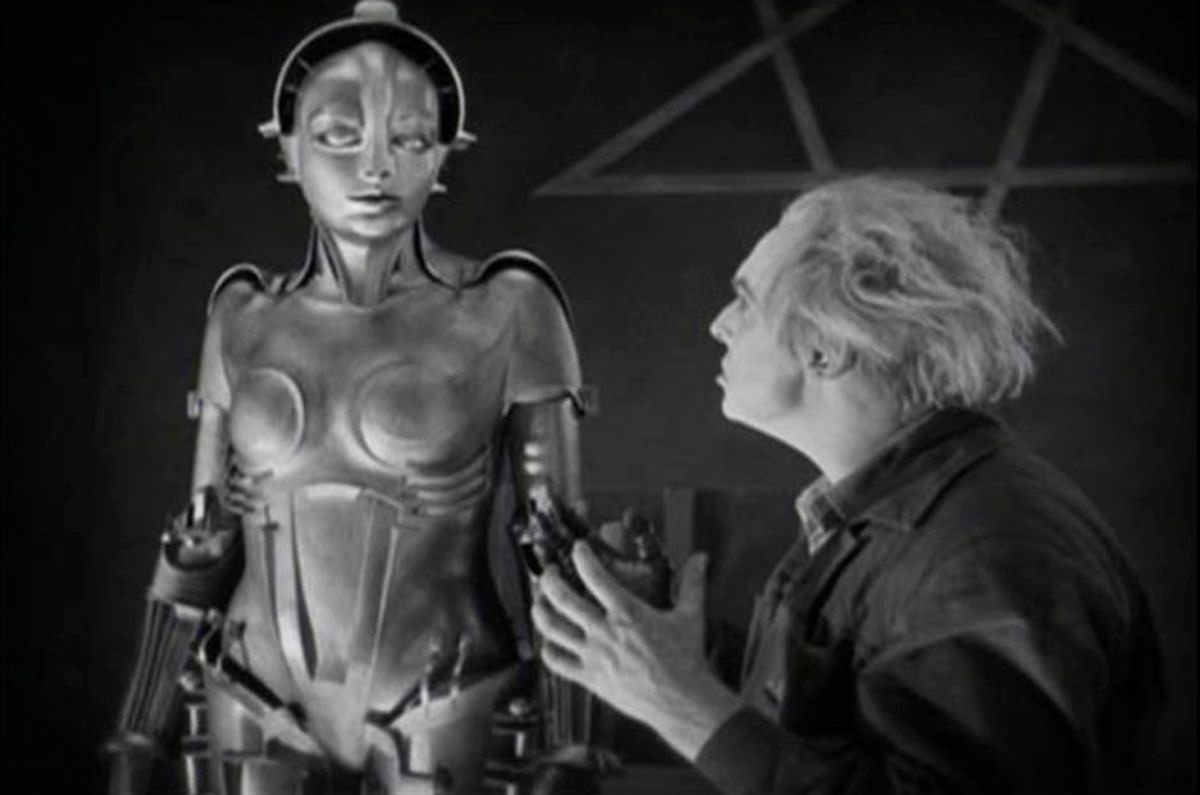
The mad scientist Rotwing (Rudolf Klein-Rogge) and his robotic creation Maria before he gives her a human form in Fritz Lang’s METROPOLIS (1927).

Eight years later, robots were again viewed as a danger to the human race in the Russian film, Gibel Sensatsii (English title: Loss of Feeling aka Loss of Sensation aka Robots of Ripl, 1935) although these looked more like early prototypes of the walking oil can-shaped automatons seen in later serials like The Phantom Empire (1936) and The Mysterious Doctor Satan (1940).

Continue reading
True Love Transcends Everything

Marina (Hildegard Knef) and Alexander (Gustav Frohlich) make a final toast to their eternal love for each other in Die Sunderin (English title: THE SINNER, 1951), a West German romantic tragedy directed by Willi Forst.

Sometimes an offscreen scandal can kill or severely hamper a career (Fatty Arbuckle, Ingrid Bergman, Rose McGowan, etc.) or help bolster it as in the case of Mary Astor, Hedy LaMarr or Elizabeth Taylor. But what if the scandal is the film itself as in The Moon is Blue (1953), Baby Doll (1956) or Last Tango in Paris (1972)? That kind of notoriety can play out in different ways affecting the careers of the featured stars in a negative or positive way. A famous example of the latter is Die Sunderin (English title: The Sinner, 1951), a West German melodrama from Viennese director Willi Forst in which two social outcasts embark on a love affair which brings them true happiness and spiritual redemption after years of misery. The film created a public outcry in Germany due to a nude scene featuring the popular female star, Hildegard Knef. It might seem much ado about nothing today but at the time the typically conservative German moviegoer was offended. More importantly, it didn’t hurt Ms. Knef’s career at all and may have helped launch her international career. She was invited back to Hollywood the same year (where she had previously been under contract), made a few high profile films, and then returned to Germany where she not only resumed her film career but also became a renowned chanson-singer in the style of Marlene Dietrich, a mentor and friend.

Continue reading

A City or a Labyrinth?

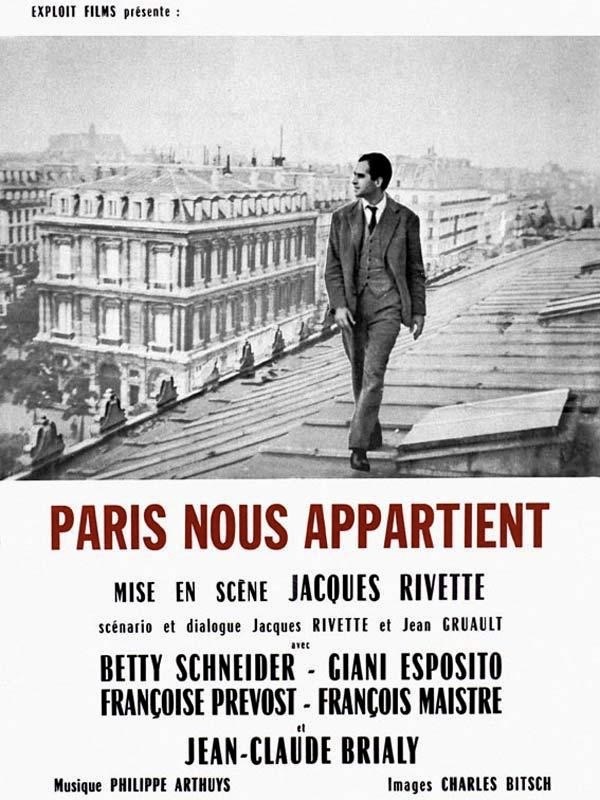
Whether by accident or design, French filmmaker Jacques Rivette is probably the least known member of the influential Nouvelle Vague movement of the late fifties though, like Jean-Luc Godard, Francois Truffaut, Eric Rohmer, and Claude Chabrol, he too was a former writer and film critic for Cashiers du Cinema. He even started production on his first feature length film, Paris Belongs to Us (French title: Paris Nous Appartient), in 1957, before Chabrol, Truffaut and Godard began work on what would become their universally acclaimed debuts of, respectively, Le Beau Serge (1958), The 400 Blows (1959) and Breathless (1960). Yet, despite the artistic and liberating impact the latter three films had on world cinema, Paris Belongs to Us might be the most ambitious, challenging and intellectually provocative film of the whole movement. It is also the darkest, waltzing toward an imagined or possibly real oblivion. The Homeland Security System would give it a code orange classification.       

Continue reading

The Hula Hoop King

By the time the Coen Brothers released their fourth feature film, Barton Fink (1991), they were quickly becoming the toast of Hollywood, winning various awards and prizes as well as a rapidly growing fan base thanks to the cult appeal of previous films like Blood Simple (1980) and Raising Arizona (1984). Their follow-up feature to Barton Fink was much anticipated but the Coens surprised everyone when their fifth movie turned out to be The Hudsucker Proxy (1994), which was drastically different from anything they had made before.

Continue reading

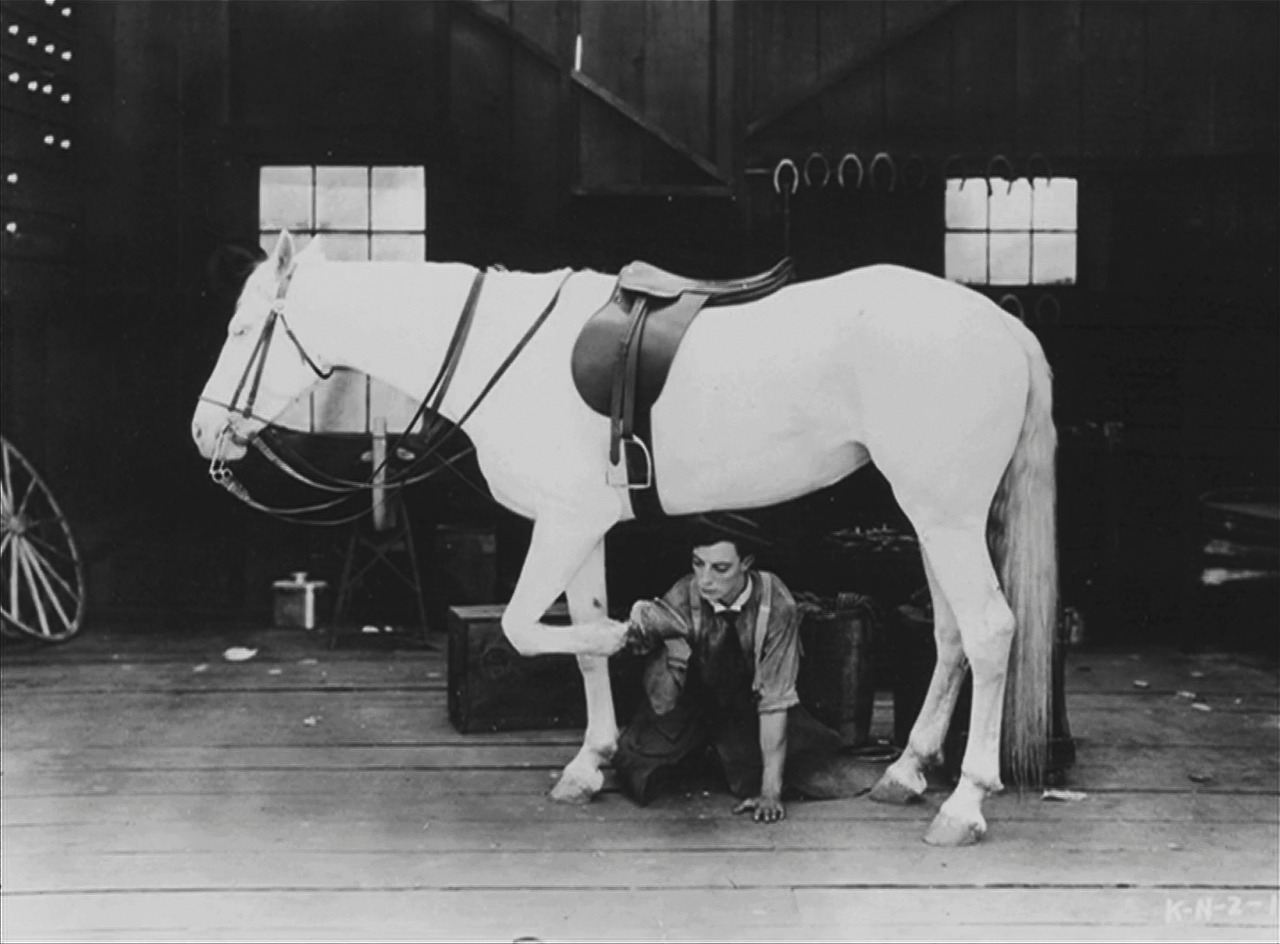
A Lost Version of Buster Keaton’s The Blacksmith is Discovered

Buster Keaton in the two-reeler The Blacksmith (1922)

Buster Keaton in the two-reeler The Blacksmith (1922)

Often ranked by silent film historians as one of Buster Keaton’s lesser efforts when compared to his other two-reel shorts such as One Week (1920) or Cops (1922), The Blacksmith (1922) is now enjoying a major critical reassessment because of a remarkable turn of events. Film collector Fernando Peña who, in 2008, uncovered the original, uncut version of Fritz Lang’s Metropolis (1927) in the archives of the Museo del Cine in Argentina, discovered a remarkably different version of The Blacksmith that same year through fellow collector Fabio Manes who purchased a 9.5mm print of it online. Released by the Pathé company in France in 1922 with French intertitles, this previously undiscovered version includes missing material totaling more than four minutes of sight gags, settings, and characters not featured in what was considered the original American version of The Blacksmith.     Continue reading

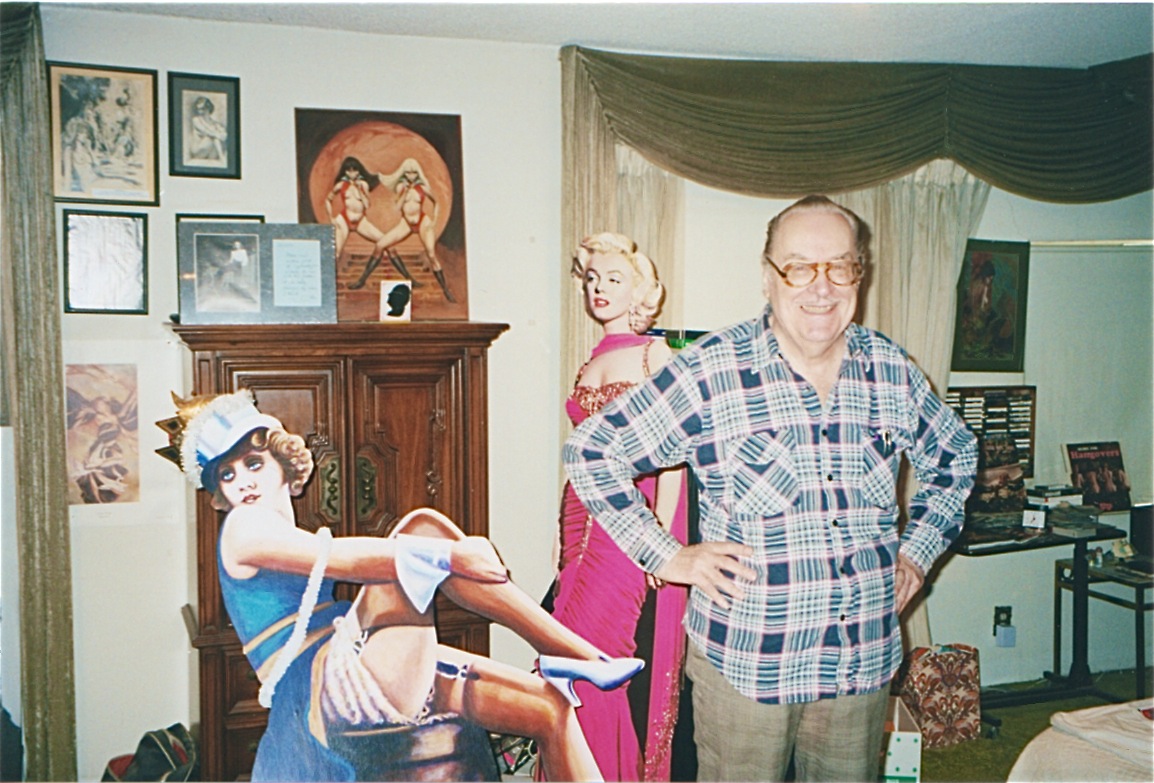
My Visit to Forry’s Ackermansion

Forry Ackerman in his guest room at the Ackermansion (1998) photo by J.Stafford

Forry Ackerman in his guest room at the Ackermansion (1998) photo by J.Stafford

I never would have imagined when I was a geeky eleven year old kid hooked on Famous Monsters of Filmland magazine that I would one day meet the brainiac behind it – Forrest J. Ackerman – and be invited inside the world famous Ackermansion. It happened while I was visiting friends in Los Angeles in February 1998.    Continue reading