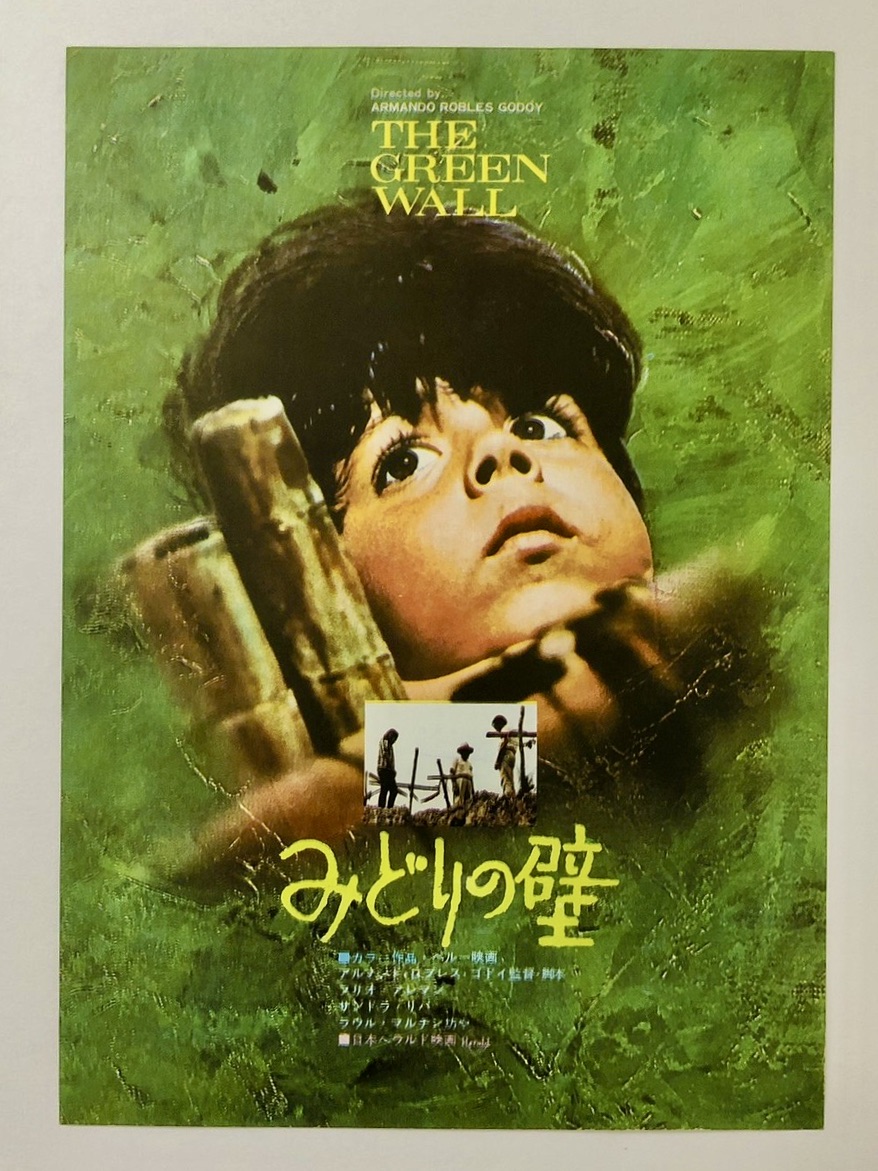
Remember the back-to-the-land movement of the mid-1960s, which lasted well into the late 1970s? It was a counterculture response to urban living with its many problems – traffic, pollution, crime, political turmoil, etc.. Young people, in particular, were looking for healthier, more sustainable lifestyles such as growing their own food and living off the land. Although this cultural phenomenon mostly occurred in North America, the idea was co-opted by young idealists around the world, even in such far away places as Tingo Maria, Peru. That is the setting of the 1969 film La Muralla Verde (English title, The Green Wall), the story of Mario (Julio Aleman), a recently married businessman, who becomes fed up with city living in Lima and convinces his wife Delba (Sandra Riva) to start a new life on the land he has purchased in the Peruvian jungle. Along with their newborn son Romulo, the couple set off on a new chapter in their lives with high hopes.
Continue readingTag Archives: Judith Crist
The Price of Fame
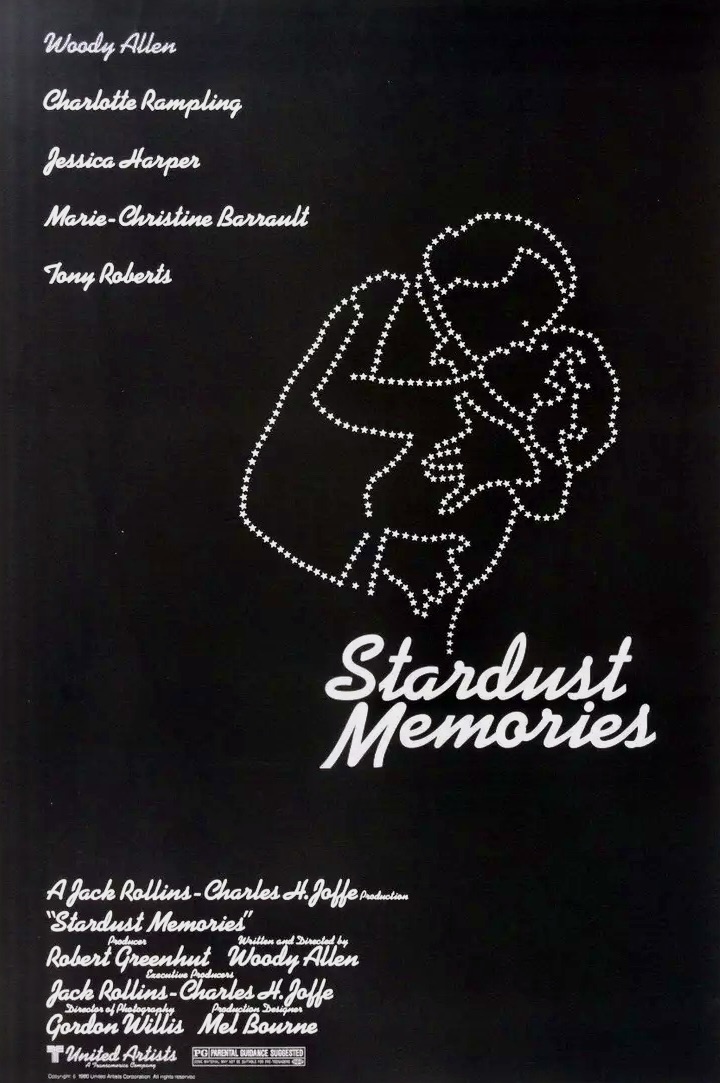
After directing more than fifty feature films including the three-part New York Stories (1989) with contributions from Francis Ford Coppola and Martin Scorsese and the re-edited/re-dubbed version of a Japanese spy thriller retitled, What’s Up, Tiger Lily? (1966), Woody Allen has one of the most impressive filmographies of any living director in Hollywood. Regardless of what you think about him as a person due to the controversy that surrounded his marriage to adopted stepdaughter Soon-Yi Previn, one can’t deny all of the critical acclaim he has amassed over the years, which includes 24 Oscar nominations, three of which won the Academy Award for Best Screenplay (Annie Hall, Hannah and Her Sisters and Midnight in Paris). Not all of his films have been box office hits and some have been minor efforts or polarizing like September (1987) or Deconstructing Harry (1997), but the true acid test for any fan or critic who loves Woody Allen movies is Stardust Memories (1980), his most misunderstood and generally maligned tenth feature about the downside of being famous.
Continue readingThe Secret World of Cenci and Leonora

Pretentious art house bomb, neglected masterpiece or inscrutable personal project for Joseph Losey? Secret Ceremony (1968) had the misfortune to follow Boom! (1968), the director’s notoriously lambasted film adaptation of Tennessee Williams’ The Milk Train Doesn’t Stop Here Anymore starring the world’s most famous celebrity couple at the time, Richard Burton and Elizabeth Taylor. Equally challenging for mainstream audiences, Secret Ceremony was promoted as a kinky psychodrama with lesbian overtones and such tag lines as “It’s time to speak of unspoken things” and “No one admitted the last 12 minutes.” Yet, despite the presence of Elizabeth Taylor, Robert Mitchum and Mia Farrow, who had just appeared in the as-yet-unreleased Rosemary’s Baby the same year, the movie was too strange, decadent and moody to hold the attention of moviegoers and critics expecting a more traditional genre film.
Continue readingSiren of the Danube
One of the most important Czech films to emerge during the Czech New Wave of the 1960s was The Shop on Main Street (Czech title: Obchod na Korze, 1965), which was awarded the Oscar for Best Foreign Language Film of 1966 and snagged a Best Actress nomination for Ida Kaminska the following year. The important thing to note is that The Shop on Main Street was not really a part of the Czech New Wave. The film’s directors, Jan Kadar and Elmar Klos, were more than a generation older than the young upstarts of that movement that included Milos Forman (Loves of a Blonde), Ivan Passer (Intimate Lighting) and Jan Nemec (Diamonds of the Night), among others. And even though The Shop on Main Street made Kadar and Klos internationally famous, their other films are not as well known to most American filmgoers. That is a shame because their final collaboration, Adrift (1971), is one of their most fascinating features but the troubled production behind it is possibly one of the reasons it is almost unknown today.
Continue readingTwo Cats and a Mouse
When a movie is released under various titles it usually means there are problems. It could be confusion over how to market it or a simple case of a movie that doesn’t fit clearly into any designated genre or maybe it’s a star-driven, major studio release that’s too quirky for the average moviegoer but yields enough curiosity value to inspire various promotional approaches to finding the right audience. All of these could apply to Joy House (1964), an international production based on a pulp fiction paperback by American author Day Keene and filmed on the Riviera near Nice. It stars English-speaking (Lola Albright, Jane Fonda, Sorrell Booke, George Gaynes of Tootsie fame) and French-speaking actors (Alain Delon, Andre Oumansky, Annette Poivre, Marc Mazza) and is also known as The Love Cage and Les Felins (the original French title). Joy House was not a popular success at the time (most critics were unkind in their coverage) but it is a favorite film of mine, flaws and all. Continue reading
Working Without a Safety Net

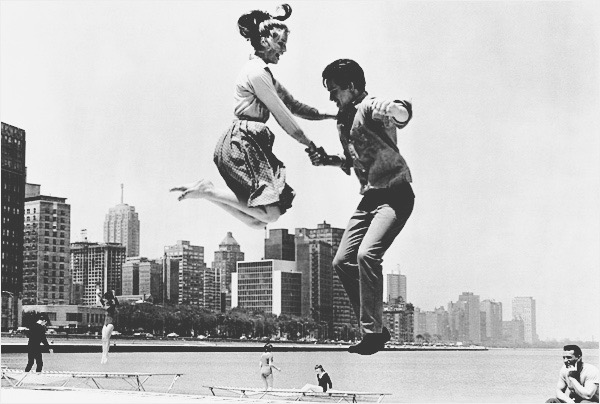
Alexandra Stewart & Warren Beatty defy gravity in Arthur Penn’s existential noir, Mickey One (1965).
Every actor or director probably has at least one movie in their filmography unlike anything else they’ve ever done before or since and for Warren Beatty and Arthur Penn that film would be Mickey One (1965). Allegedly inspired by the French New Wave films of the early sixties, Penn’s film is an enigmatic and existential tale of a nightclub stand-up comic who goes on the lam from the mob because of a huge financial debt he can’t repay. Continue reading