Gas, Food, Lodging…and Murder

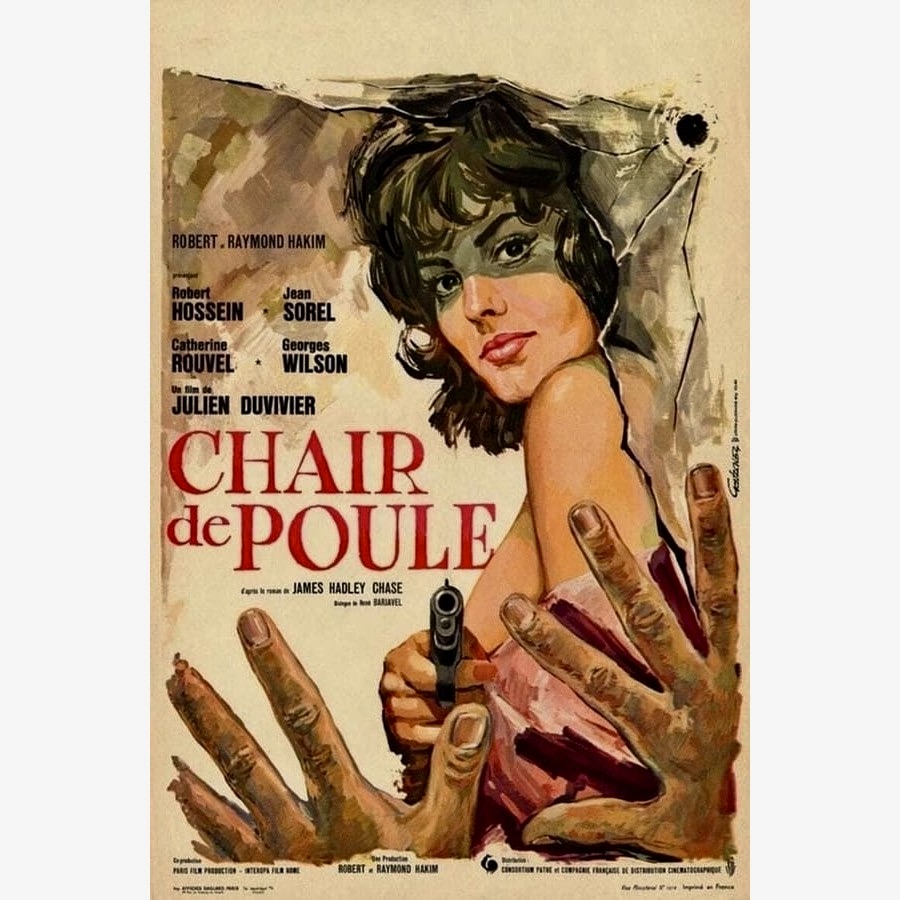
The French film poster for HIGHWAY PICK-UP (1963), a French crime drama directed by Julien Duvivier.

Daniel and Paul are professional locksmiths and good friends who work for the same company. When they mastermind the robbery of a client by breaking into a safe Daniel had previously repaired, the theft goes awry, with the client dying from a blow to the head. Paul escapes but Daniel is shot and injured by the police in the ensuing chase and sentenced to 20 years in prison. After a year in the stir, Daniel escapes by picking the jail cell lock (of course) and tries to elude the authorities in a desert-like region of Alpes-Maritimes in southeastern France. Under an assumed name, he manages to get hired on as an attendant at an isolated gas station run by Thomas and his sexy young wife Maria but Daniel soon realizes he has created a new prison for himself.
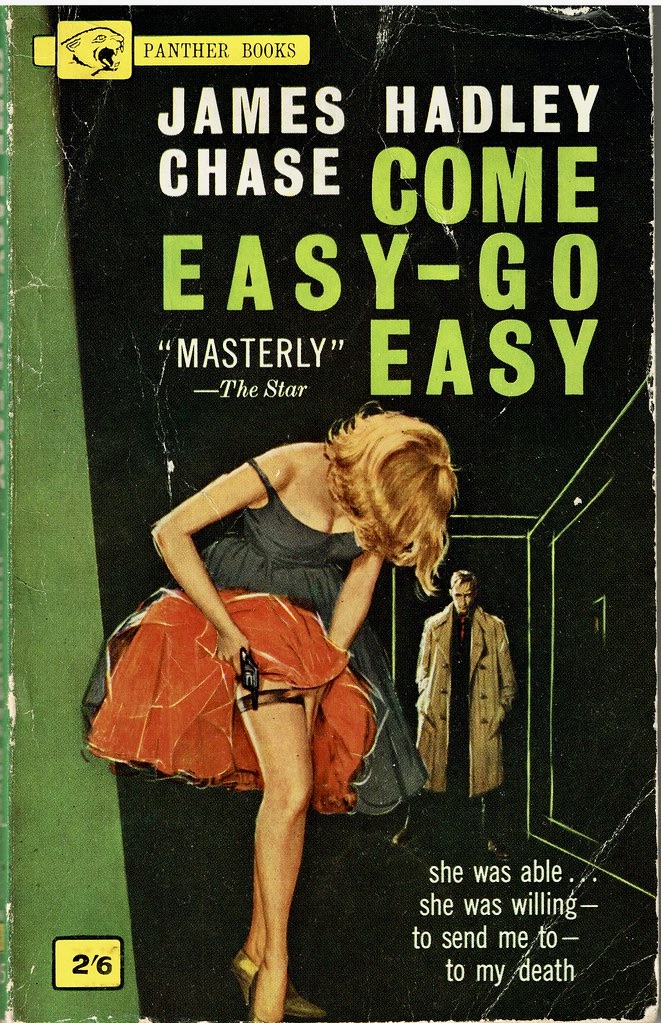
Based on the 1960 crime noir Easy Come, Easy Go by British author James Hadley Chase, Chair de Poule (English title: Highway Pick-Up, 1963) is the penultimate film of the legendary French director Julien Duvivier. If the basic premise sounds like it was inspired by The Postman Always Rings Twice, you wouldn’t be completely wrong. Chase (1906-1985), who used many pseudonyms during his career such as Raymond Marshall and Ambrose Grant, was actually motivated to become a writer after reading James M. Cain’s 1934 novel. Chase’s first novel, No Orchids for Miss Blandish (1939), was an overnight best seller and was adapted into a stage play and two film versions, one in 1948 and one in 1971, under the title The Grissom Gang, which was directed by Robert Aldrich.

Continue reading
Expect the Unexpected

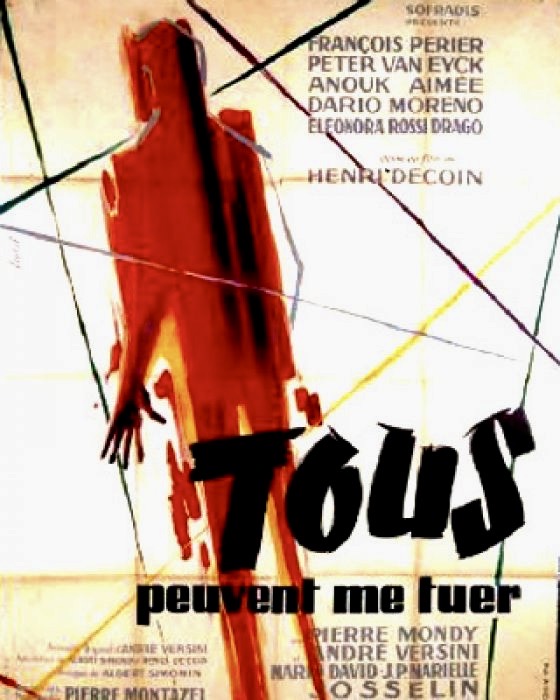
The French film poster for EVERYONE WANTS TO KILL ME (1957), directed by Henri Decoin.

When a movie refuses to fit snugly into a specific genre, that could be a sign that the filmmakers were either unable to capture the desired approach and tone or that the story/screenplay dictated a less conventional approach to the narrative. I suspect that the latter reason is why Tous Peuvent Me Tuer (English title, Everyone Wants to Kill Me, 1957), directed by Henri Decoin, is hard to place into any specific film category. If you were to watch the movie with the sound turned off, you would probably classify it as a brooding French noir. Yet, if you add in the music score and the animated performances, it comes across as an almost lighthearted crime caper flick. Add to this a segue into prison melodrama which soon becomes a whodunit murder mystery. And just to keep things off balance, stir in a romance, some comic relief and a wrap-up that positions the entire affair as a morality play. 

Continue reading

The Next Wonder of the World

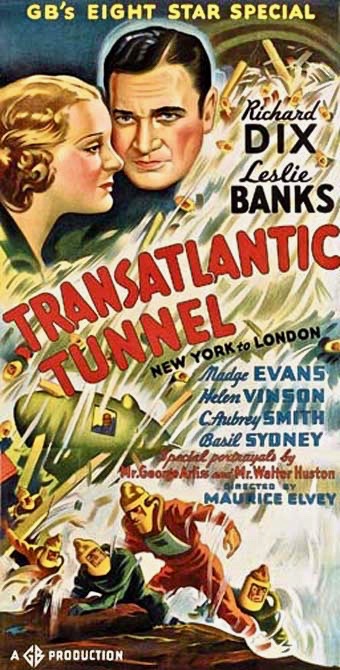
Imagine a tunnel under the Atlantic that connected the United States with Europe and provided a high speed form of transportation between the two points. It’s certainly not an unrealistic expectation for the near future when you consider that the undersea rail known as the Channel Tunnel (aka the Chunnel) that currently connects Folkestone, Kent in England to Coquelles, France has been in operation since 1994. But that remarkable feat of engineering is only 50.5 km. compared to the 5,000 km. that would be the more likely distance of an undersea rail that connected New York City with London. Still, proposed plans for under-the-sea travel connectors between countries separated by water continue to surface in news reports and may happen in the near future. What’s most remarkable is the fact that Transatlantic Tunnel (aka The Tunnel), a 1935 British film, envisioned the same thing and some of that movie’s futuristic art direction and design is not that far removed from some of the models you can view on the interest today (just do a search for undersea rail systems).       Continue reading

In the Shadows of the OAS

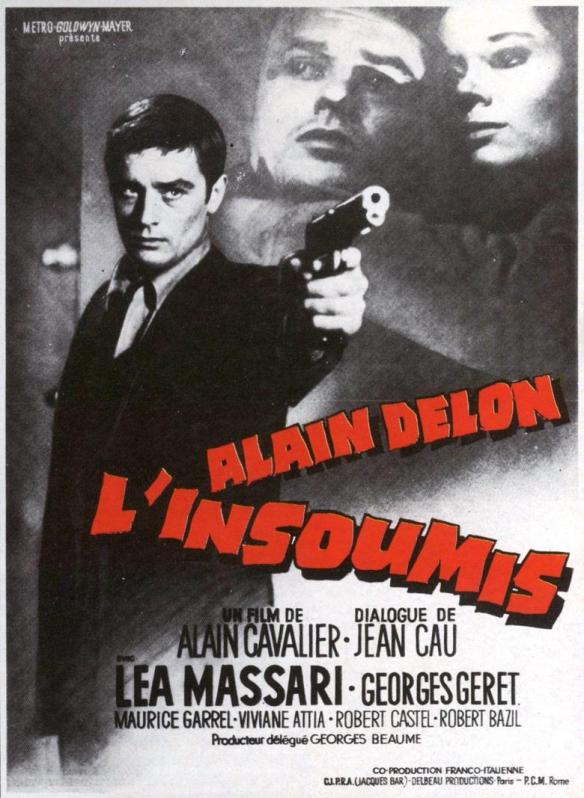
L'Insoumis (1964)L’insoumis (1964) aka The Unvanquished is a relatively unknown but deeply compelling and haunting French film from director Alain Cavalier that aired several years ago on TCM in an English language version titled Have I the Right to Kill? (It was originally distributed by MGM in the U.S.) Shot in glorious black and white by master cinematographer Claude Renoir, the film plays like a politically-charged film noir and it could easily be the best of Alain Delon’s early performances. In the other key role, Lea Massari, the beautiful Italian actress who is best known as the warm, charismatic mother in Louis Malle’s Murmur of the Heart (1971), has rarely been more appealing.  Continue reading

Truckin’ With Jean Gabin

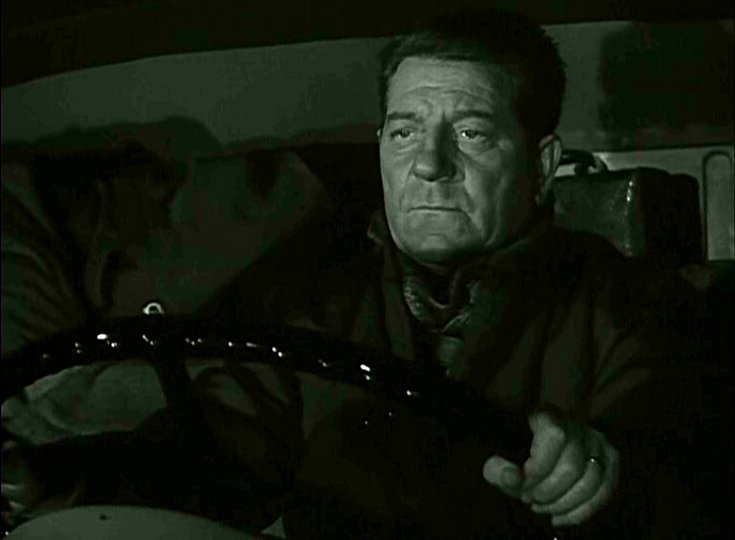
Jean Gabin plays a world weary trunk driver in Henri Verneuil's Des gens sans importance (1956, aka People of No Importance).

Jean Gabin plays a world weary trunk driver in Henri Verneuil’s Des gens sans importance (1956, aka People of No Importance).

One of the great stars of French cinema, Jean Gabin was also an unofficial film culture ambassador for his country whose career can be divided into five distinct phases; the first would be a brief stint in silent films and playing secondary roles in the first French “talkies” and the second would be as a ruggedly handsome, melancholy anti-hero and acclaimed actor who reached a career peak in the late thirties with Port of Shadows (1938), La Bete Humaine (1938), and Le Jour se Leve (1939). The third phase, the years between 1939 and 1953, are generally considered a fallow period in which he attempted an unsuccessful bid for Hollywood stardom and experienced equal disappointments in the French film industry.   Continue reading