
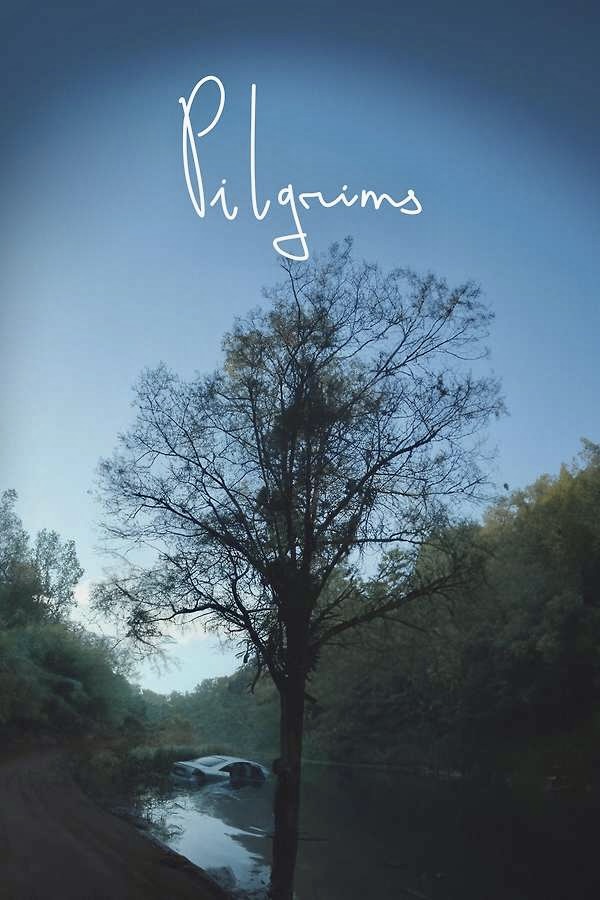
Have you seen any good Lithuanian films lately? I have to admit that I know nothing about the cinema of Lithuania and not that much about the country which borders Latvia at the north, Belarus on the southeast and Russia and Poland to the southwest. I only know that Lithuania was an independent country for centuries until it was occupied by the Soviet Union from 1944 to 1990, the year its independence was restored. The country does have a rapidly growing film industry and studios like HBO and Netflix have utilized the region for film locations as in the 4th season of Stranger Things and the 2019 mini-series Chernobyl. But the only Lithuanian filmmakers I can name are Jonas and Adolfas Mekas, brothers who immigrated to the U.S. in 1949 and became major figures in New York’s experimental film scene along with fellow peers like Ken Jacobs, Hollis Frampton, Jack Smith and Andy Warhol. Piligrimal (English title: Pilgrims, 2021) is the first Lithuanian movie I can recall seeing but it presents a refreshing and rarely used approach to the storytelling process that requires the viewer to play detective as the story begins four years after a terrible crime has been committed and details about the case emerge slowly in bits and pieces.

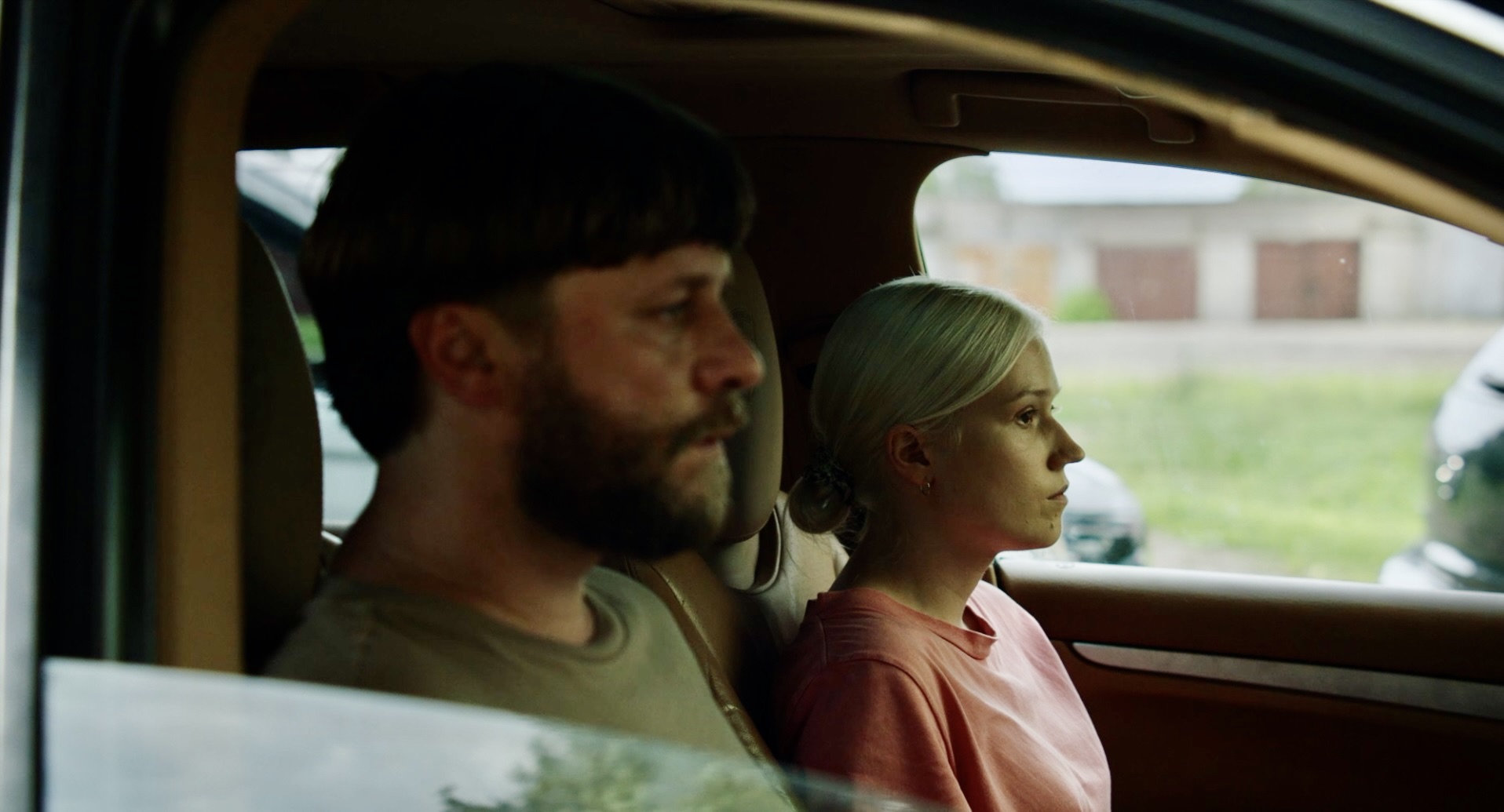
The film opens with a reunion between Paulius (Giedrius Kiela) and Indre (Gabija Bargailaite). Are they related or friends or former lovers? The nature of their relationship and why they have returned to the town of Vilnius after a long absence is slowly revealed. You could say that Pilgrims resembles a crime procedural drama except that it takes place after the crime has been solved and the perpetuator prosecuted and jailed. The investigators are also not authorized officials but two people who knew the victim and are looking for personal closure on a case that had too many unresolved aspects to satisfy them.

It is impossible to talk about Pilgrims without spoiling the central mystery at the core of the movie so I will only provide the basic outline. Paulius and Indre take a road trip to Kaunas, a town where they both used to live. Their purpose is to revisit all of the places where Matas, Paulius’s younger brother and the former boyfriend of Indre, spent his final hours before being raped, tortured and murdered by Vytenis, a sociopathic thug who was well known by the locals. The investigating couple are looking for details that were omitted or overlooked during the murder trial but it is also a way to honor the memory of Matas and feel close to him as they retrace the route of his last day alive. Their process yields some disturbing truths and previously unknown secrets along the way but also provides them with a much needed closure on the past.
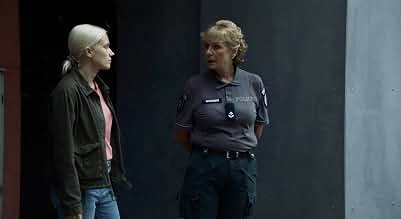
Pilgrims may be slow and methodical in its pacing and development but director Laurynas Bareisa, in his feature film debut, generates a constant tension and sense of suspense as Paulius and Indre encounter a number of witnesses and former acquaintances in their former hometown. A few of these meetings are helpful but many are also hostile or indifferent to their inquiries. What becomes obvious as the couple’s road trip comes to a close is how the community of Kaunas seems as complicit in Matas’s death as the actual murderer. It might look like a pleasant, upper middle class community on the surface but there is a moral rot at the center.

There is nothing flashy or slick about the look of Pilgrims. It is almost intentionally sparse and incidental like a lo-fi documentary or the sort of home movie Paulius and Indre would make if they were filming their investigation (the cinematography is by Narvydas Naujalis). There is also no music score, just natural sound. This austere approach sometimes mirrors the bleak amoral tone of the film but it also results in some offbeat macabre humor as well. This is particularly evident in a scene where Paulius visits the seller of the car that was used in his brother’s kidnapping; he even climbs inside the trunk and closes the lid to experience the sense of entrapment and fear Matas must have felt.

The other aspect of Pilgrims that is impressive is Bareisa’s refusal to show flashbacks to the crime. If anything, Matas’s final hours are more horrible to think about or imagine than to see an explicit re-enactment of the events. And despite a refusal to create melodramatic situations or build to an emotional climax, the director achieves moments of power and intensity through subtler means. For example, there is a scene where Indre is driven at night down a rural dirt road by Marynas (Paulius Markevicius), a former high school acquaintance. When first introduced Marynas seems like an innocuous townie but alone with Indre in the dark he seems more ominous and threatening as he points out places along the road where violent crimes occurred or bodies were found. “What’s your point?” she asks him when he describes a mass grave in the forest where local villagers were slaughtered by the Nazis during WW2. “I don’t know,” he says, adding “We live here,” as if to explain why so many residents of Kaunas seem numb to death and suffering. In the end, Pilgrims generates a palpable sense of sorrow and anger shared by Paulius and Indre that grounds the film in a believable reality and transforms their quest for justice into a weary acceptance of the past.

In an interview with Scott Roxborough for The Hollywood Reporter, Bareisa stated that he didn’t want Pilgrims to unfold like a typical TV crime procedural case: “What I think is the problem sometimes [with true-crime stories] is this fascination with the perpetrator, because by building a psychological portrait of the killer you most of the time humanize him and can end up victim blaming…I wanted to push this other narrative as a kind of counterbalance. [I’m] less interested in the crime itself than in what happens around it and what happens to the victims. How we deal with trauma and the difference between individual trauma and public trauma.”

Bareisa also addressed the way the movie combines warm and cool colors in the same frame and its naturalistic lighting in an interview with Patrick Dahl for Screen Slate. “I really was aware…of this Nordic noir kind of feel that I didn’t want. For example, a cool palette or using a lot of blue light which gives this notion that this is going to be like a detective story, or this is going to be a revenge story. I wanted to have all the shades because thematically the story has all these shades you…You have all the coolness and the tragedy of a crime but also we have scenes with little kids that have all these human relationships. I wanted to avoid this tradition of showing this provincial life as kind of dangerous. This suburb is quiet, it’s quite well off, they have an airport and they work and own houses.”
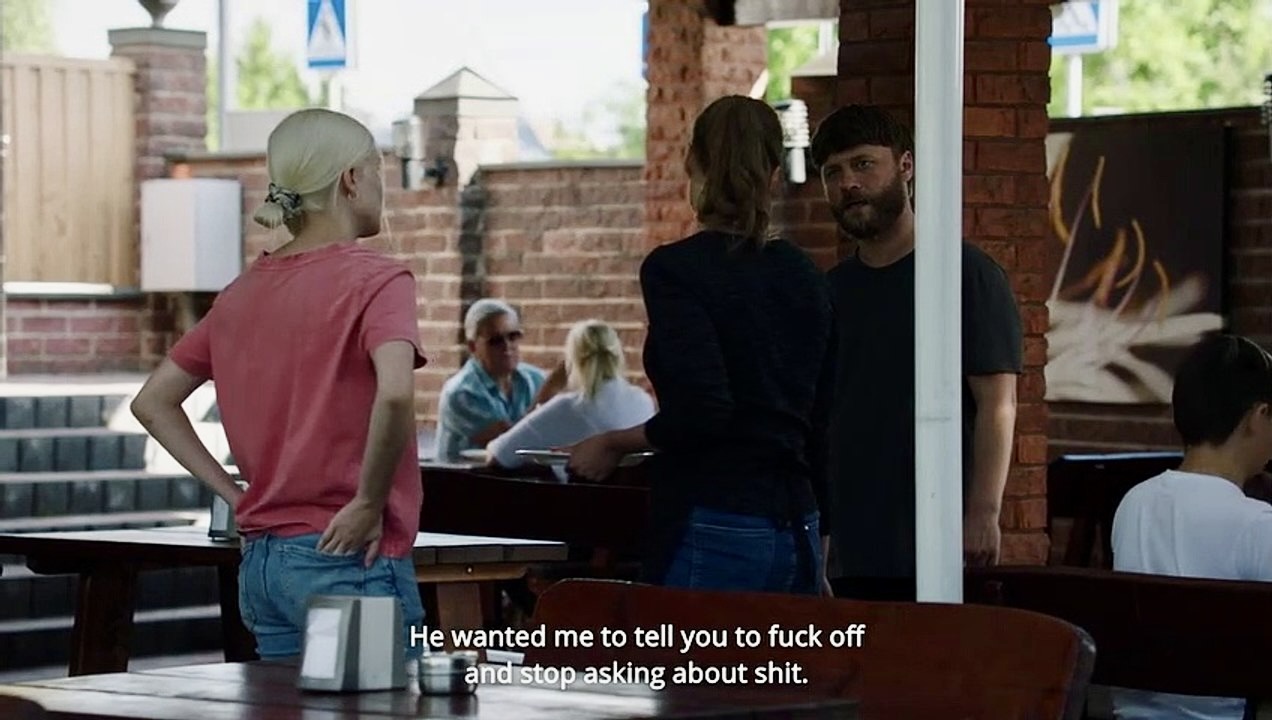
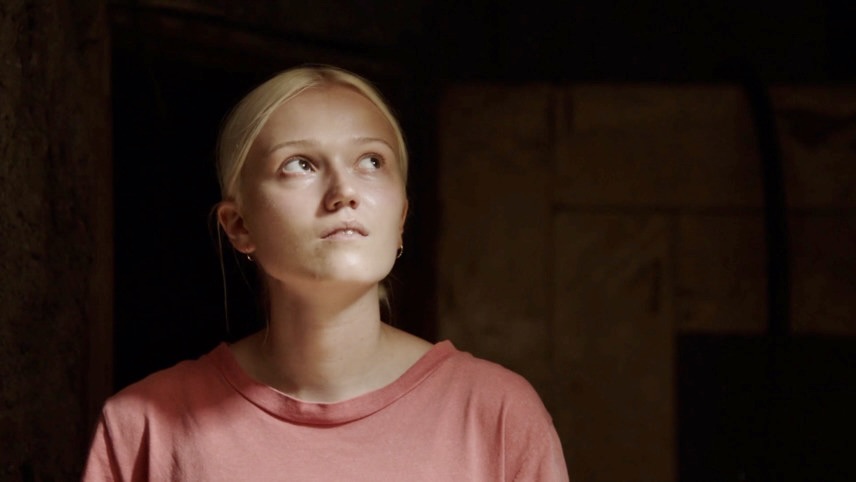
Both Giedrius Kiela and Gabija Bargailaite are both outstanding in the roles of Paulius and Indre, alternating between toughness, bravado and a wounded vulnerability. Paulius drives the narrative for the first half of the movie but then Indre becomes the central focus for the remainder of the story. The rest of the ensemble cast are equally impressive, all of them non-actor like but as convincingly real as people depicted in a documentary or news report.
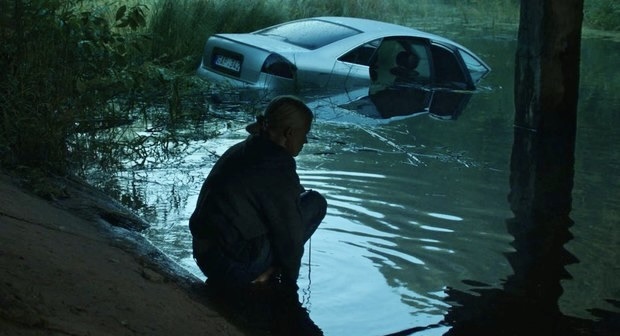
Pilgrims was well received on the film festival circuit and ended up being awarded the Horizons Award for Best Film at the 2021 Venice Film Festival. It was also Lithuania’s official entry for Best International Film in the 2021 Oscar race but didn’t make it to the final five on the ballot (The winner that year was Ryusuke Hamaguchi’s Drive My Car).
Reviews of Pilgrims have been mostly positive although a few dissenters found Bareisa’s approach ponderous and undramatized. One of the best assessments is by Alexandra Heller-Nicholas from the Alliance of Women Film Journalists who wrote, “Filmmaker Laurynas Bareisa brings a soft, almost ambivalent touch to his treatment of the subject in a matter-of-fact way that has a devastating impact precisely because of the low-key treatment of the material…What remains instead is something deeply sad and meandering as two people who loved someone who died in a horrible way work through their own emotions regarding the loss, and face the fact that there is nothing much they can do about it. There’s something so fundamentally true and humane about Pilgrims that is difficult to articulate, and that slipperiness is precisely what makes it so effective.”
Pilgrims premiered at the New Directors/New Films Showcase at New York’s Lincoln Center in the fall of 2022 but it has yet to receive a theatrical release in the U.S. The good news is that you can stream the film in an English-subtitled print on various platforms like Prime, Tubi, Ovid or Apple TV. Laurynas Bareisa would return to the subject of trauma and how people process it in his follow-up feature, Seses (English title: Drowning Dry).

Other links of interest:
https://pro.festivalscope.com/director/laurynas-bareisa
https://www.screenslate.com/articles/ndnf-interview-laurynas-bareisas-pilgrims
https://www.hammertonail.com/interviews/laurynas-bareisa

