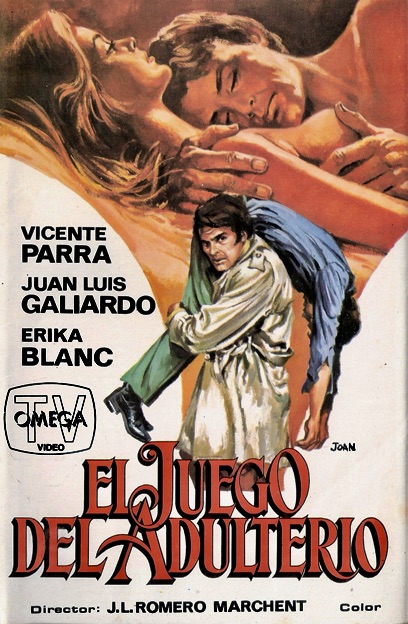
Giallo thrillers and spaghetti westerns are generally considered genres created by the Italian film industry but producers and filmmakers in other European countries also created their own versions in these categories, especially in Spain. Director/Screenwriter Joaquin Luis Romero Marchent, a native of Madrid, is best known for his Spanish take on wild west oaters but he did make a film that could be classified as a giallo. El Juego del Adulterio (English title: The Game of Adultery aka The Deadly Triangle, 1973) is blessed with a title that sounds like an erotic melodrama or maybe a softcore soap opera for the grindhouse crowd. It definitely has elements of that but is actually a psychological thriller crossed with a murder mystery.
Continue readingTag Archives: giallo
There’s No Place Like Home
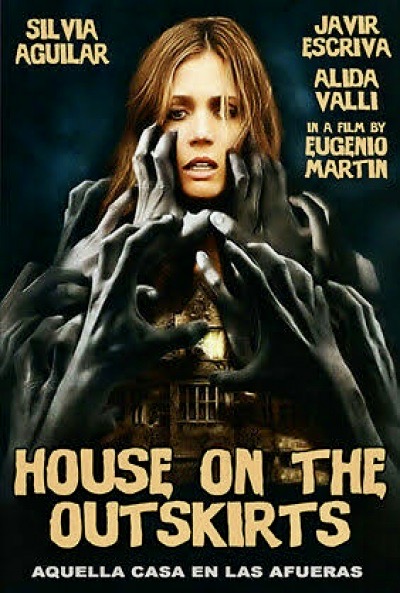
Spanish director Eugenio Martin is not a name familiar to the average American moviegoer but for fans of European genre films, he has developed a cult following over the years, thanks to the release on DVD and Blu-ray of some of his better known titles. Among these are the fast-paced, enormously entertaining sci-fi/horror/train disaster hybrid Horror Express (1970) with Christopher Lee, Peter Cushing and Telly Savalas, the giallo The Fourth Victim (1971) starring Carroll Baker, and A Candle for the Devil aka It Happened at Nightmare Inn (1973) in which two religious fanatic sisters are behind a series of murders. Martin also helmed several entrees in the Spaghetti Western genre such as The Ugly Ones (1966), Requiem for a Gringo (1968) and Bad Man’s River (1971) featuring Lee Van Cleef, James Mason and Gina Lollobrigida but some of his efforts defy easy categorization like Aquella Casa en las Afueras (English title: The House on the Outskirts, 1980), which is like a woman-in-peril melodrama crossed with an “old dark house” thriller. Throw in some unspoken but implied social commentary on women’s birthrights and you have a rather unique film from post-Franco Spain.
Continue readingHead Hunter at Large
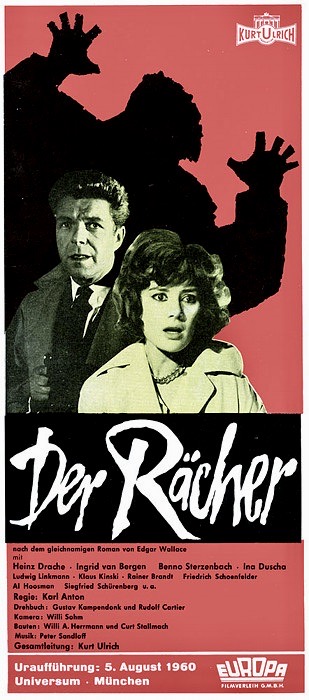
A speeding sedan races down a deserted road at night. Suddenly a package is thrown from the vehicle as it speeds away. The next morning two matronly women on bicycles notice the package on the side of the road and decide to investigate in case there is something of value inside. Eagerly opening the crudely tied box, they look inside and scream at the sight of a severed head. Thus begins the 1960 German mystery thriller, Der Rasher (English title: The Avenger), one of the earliest but almost forgotten entries among the cinematic adaptations of Edgar Wallace crime novels that enjoyed a revival in Germany in the late 1950s.
Continue readingStrangers on a Gondola
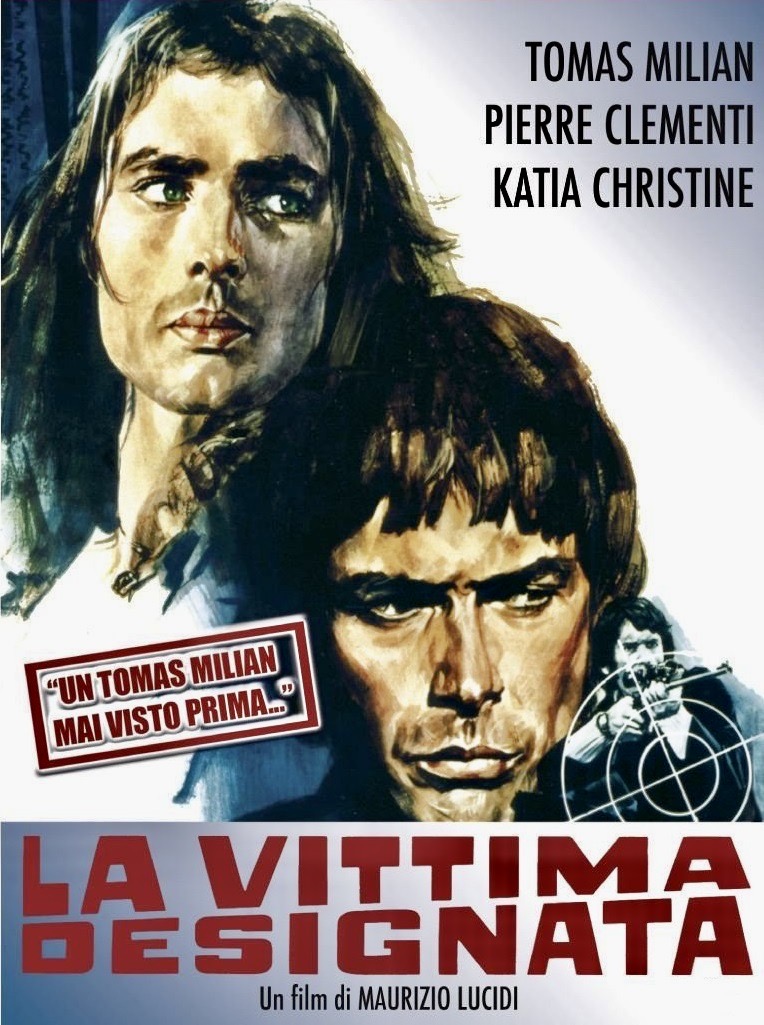
The first Patricia Highsmith novel to be adapted to film was the author’s first book, published in 1950, Strangers on a Train, which Alfred Hitchcock made into a movie the next year. Yet, with the exception of U.S. television which adapted some of Highsmith’s stories for the small screen (The Talented Mr. Ripley for Studio One in Hollywood in 1956, The Perfect Alibi for Jane Wyman Presents The Fireside Theatre in 1957, Annabel for The Alfred Hitchcock Hour in 1962), no American film director would attempt another Highsmith screen adaptation for many years. European filmmakers, however, have returned again and again to her perversely fascinating thrillers which are marked by their disturbing psychological detail and macabre humor. Among these are René Clément’s visually stunning Purple Noon (1960), an adaptation of The Talented Mr. Ripley, Claude Autant-Lara’s Enough Rope (1963), based on the novel The Blunderer, Wim Wenders’ hallucinatory noir The American Friend (1977), adapted from Ripley’s Game, This Sweet Sickness (1977) by French director Claude Miller, and most famously Anthony Minghella’s The Talented Mr. Ripley (1999). Yet, one of the least known – and uncredited – adaptations is La Vittima Designata (English title: The Designated Victim, 1971), which is a very loose, revisionist version of Strangers on a Train with colorful Italian location shooting in Venice, Milan and Lake Como.
Continue readingToo Chicken to Watch This Giallo?

Maybe giallo is too specific a film genre for this movie because it is in a class of its own and works as a violent crime thriller but also as an erotic melodrama, black comedy and a satire on scientific experimentation and marketing. If you tried to describe the movie to friends they’d probably swear you dreamed it or are running a high fever but no, this bizarre, fascinating and once obscure giallo actually exists in various titled versions. The original Italian release title was La Morte Ha Fatto L’uovo (1968), but it has been distributed under such monikers as Plucked!, A Curious Way to Love and Death Laid an Egg, which is the more common title. So what’s with the chickens? The film is set, for the most part, in a poultry factory where a new breed of chicken is being produced in an experimental lab. The opening credits, featuring science classroom footage of egg fertilization, embryos and microscopic life forms prepare you for this strange new world.
Continue readingTarot Cards, Talismans, Seances and Telekinesis
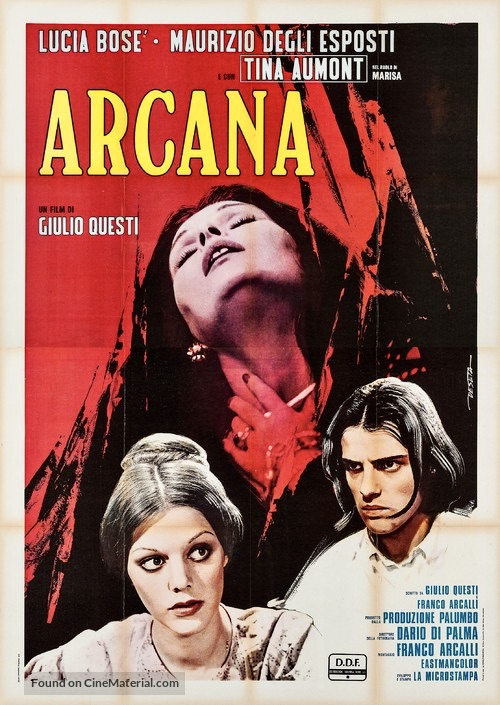
People usually have certain expectations when they invest the time to watch a movie, especially if it has been advertised as a genre film like a western, sci-fi or horror thriller. This must have been a perplexing problem for the distributors of Arcana (1972), Guilio Questi’s mysterious tale of a widow and her brooding son who use fortune telling, tarot cards and seances to con a gullible clientele. The film dabbles in the supernatural but it also flirts with other topics like voyeurism, incest, Macedonian rituals, neglected children, middle class despair and inept bureaucracies. Some critics have pigeonholed Arcana as a horror film and it is certainly horrific in tone and attitude but don’t expect the movie to conform to genre conventions. The director even issues a disclaimer at the beginning: “To the watchers: This movie is not a story but a game of cards. For this reason both its start and the epilogue are not believable. You are the players. Play smartly and you’ll win.” Make of that what you will, I think Arcana works best as a puzzle, even if it is an often inscrutable and unsolvable one that is presented in two acts. Continue reading
Voyeur Villa

Sometimes a film poster doesn’t offer enough information to let you know what kind of movie to expect. Take, for example, Eyes Behind the Wall (Italian title: L’occhio dietro la parete, 1977). The Italian poster suggests it might be an erotic drama with its image of an older man touching the exposed thigh of a younger woman. The background paraphernalia and laboratory setting could also indicate a sci-fi or horror premise. The American poster for the film displays a demented face, an oversize bloody knife and a topless female victim in the style of a trashy giallo. The simple truth is that Eyes Behind the Wall is hard to classify and doesn’t easily fit into any specific genre although you could file it under Eurotrash. While the film is problematic in many regards, it still manages to be consistently intriguing and unpredictable.
Continue readingVampire Machine
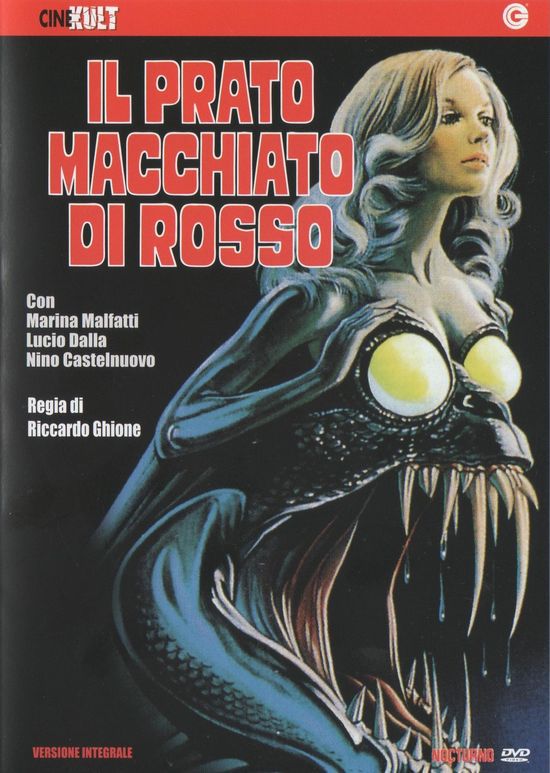
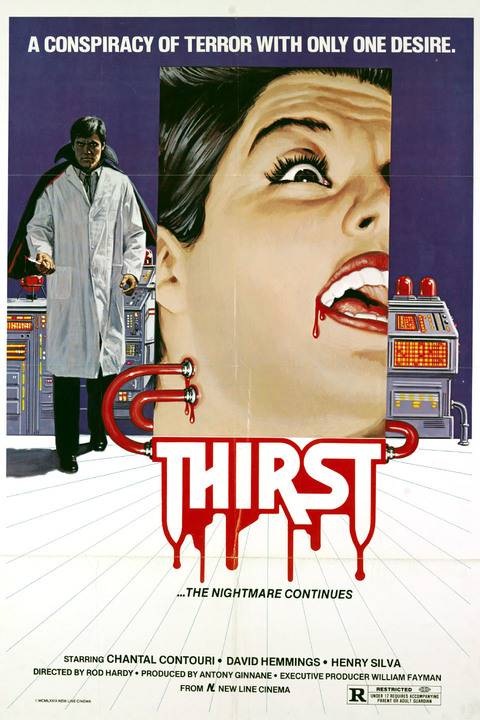
First, let me get this out of the way. The Bloodstained Lawn (Italian title: Il Prato macchiato di Rosso, 1973) is a haphazard mash-up of a genre film, but an entertaining one for Eurotrash completists. The English language title suggests it might be a giallo or a horror film or even a poliziotteschi (crime drama). Actually, it has some elements of those with some sci-fi flavoring added. The central premise involves a form of vampirism which is a complete departure from the old school mythology of Bram Stoker’s Dracula and much closer to the metaphorical horrors of Alain Jessua’s Shock Treatment (French title: Traitement de Choc, 1973) and Rod Hardy’s Thirst (1979). Oddly enough, director Riccardo Ghione seems much less interested in playing up the horrific aspects of the story than depicting bourgeois decadence and the exploitation of the disenfranchised as a quasi-political fantasy.
Continue reading
Elio Petri’s Portrait of the Artist as Mental Patient
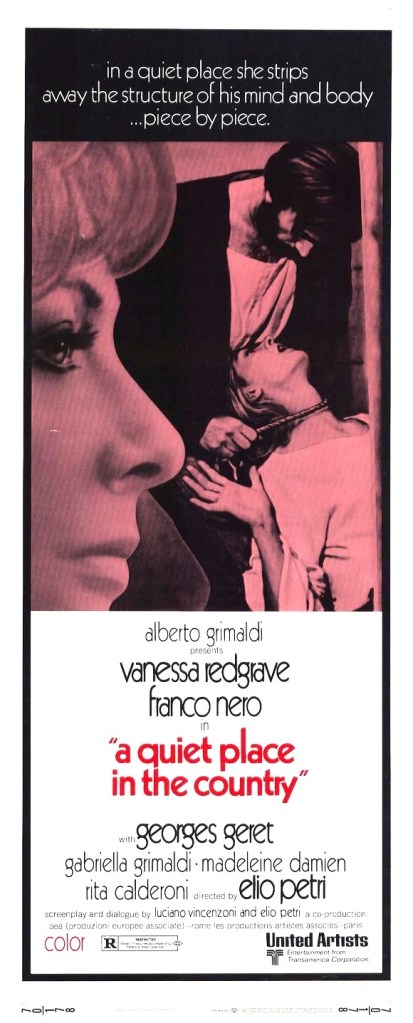
Italian director Elio Petri is probably best known for Investigation of a Citizen Above Suspicion (1970), which won the Oscar for Best Screenplay (by Petri and Ugo Pirro) in 1972. Yet, most of his other work, with the possible exception of the cult sci-fi satire The 10th Victim (1965), remains overlooked or forgotten when film historians write about the great Italian directors of the sixties and seventies. And 1968’s A Quiet Place in the Country (Un Tranquillo Posto di Campagna) is easily one of his most intriguing and visually compelling films.
Cult of the Arachnids
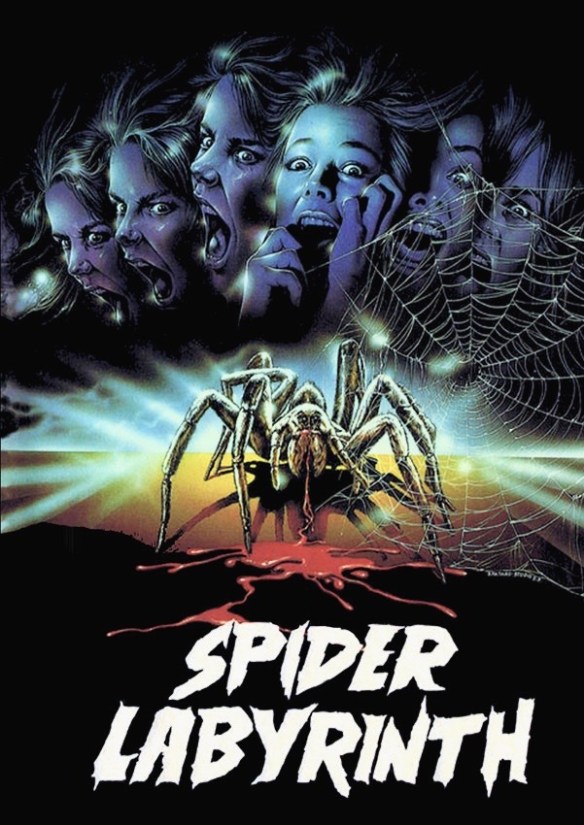
By the mid-1980s the Italian film industry was in a state of major decline. The glory years of the fifties and sixties were now fondly remembered footnotes in the history of world cinema and even the popular film genres – giallo, poliziotteschi, spaghetti western and horror – were near the end of their heyday. There were still a few determined stragglers such as Tinto Brass with his fetish based erotica (The Key, Miranda, Snack Bar Budapest) and Enzo G. Castellari, who soldiered on with formulaic hybrids like 1990: The Bronx Warriors, Tuareg: The Desert Warrior and Striker. But the horror genre, in particular, was suffering with masters of the macabre Lucio Fulci and Dario Argento trying but failing to top past high water marks like The Beyond (1981) and Suspiria (1977). It was during this downward trend that Gianfranco Giagni made his directorial debut with The Spider Labyrinth (Italian title: Il Nido del Ragno, 1988). Continue reading