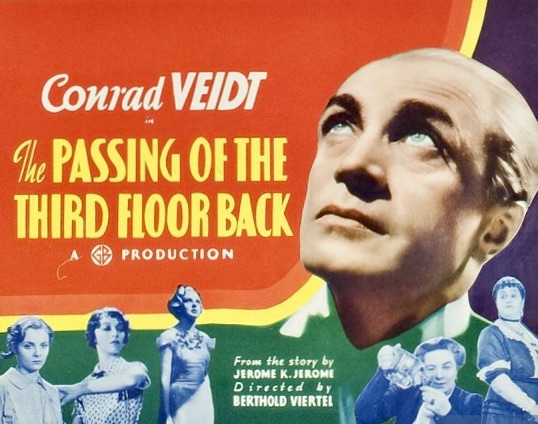
A mysterious stranger arrives at a boarding house in London and inquires about the advertised room to let. The landlady has some reservations about him but his good manners, personal charisma and willingness to pay his rent in advance convinces her he will be a respectable lodger. How many times have we seen movies that open with the same scenario where the new boarder turns out to be a suspicious character and possibly mentally unhinged? Alfred Hitchcock’s The Lodger (1927), Man in the Attic (1953), Roman Polanski’s The Tenant (1976) and The Minus Man (1999) are some of the more famous examples of this. The 1935 British film, The Passing of the Third Floor Back, however, gives us a protagonist who could be some kind of savior in disguise, a spiritual being who has come to help the unhappy and misanthropic boarders. Is he an angel, a Christ figure or maybe a figment of someone’s imagination?
Continue readingTag Archives: Fritz Lang
True Love Transcends Everything

Sometimes an offscreen scandal can kill or severely hamper a career (Fatty Arbuckle, Ingrid Bergman, Rose McGowan, etc.) or help bolster it as in the case of Mary Astor, Hedy LaMarr or Elizabeth Taylor. But what if the scandal is the film itself as in The Moon is Blue (1953), Baby Doll (1956) or Last Tango in Paris (1972)? That kind of notoriety can play out in different ways affecting the careers of the featured stars in a negative or positive way. A famous example of the latter is Die Sunderin (English title: The Sinner, 1951), a West German melodrama from Viennese director Willi Forst in which two social outcasts embark on a love affair which brings them true happiness and spiritual redemption after years of misery. The film created a public outcry in Germany due to a nude scene featuring the popular female star, Hildegard Knef. It might seem much ado about nothing today but at the time the typically conservative German moviegoer was offended. More importantly, it didn’t hurt Ms. Knef’s career at all and may have helped launch her international career. She was invited back to Hollywood the same year (where she had previously been under contract), made a few high profile films, and then returned to Germany where she not only resumed her film career but also became a renowned chanson-singer in the style of Marlene Dietrich, a mentor and friend.
Continue readingThe American Dream Gone Wrong

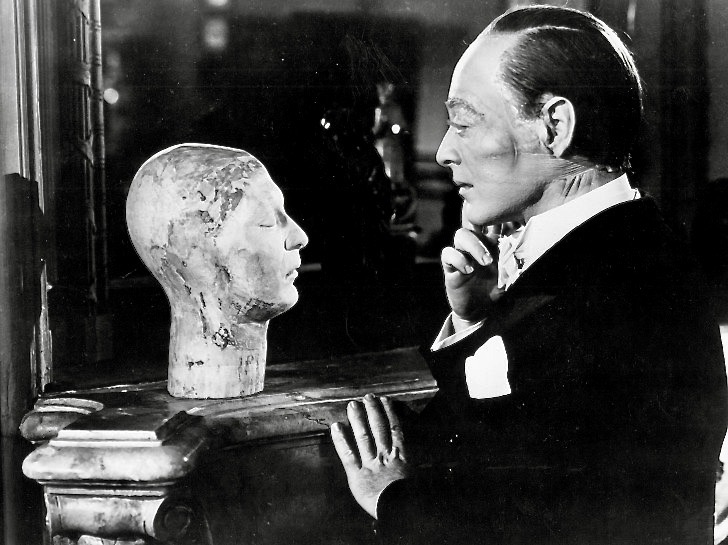
Films about the immigrant experience in the United States often run the gamut from comedy (Coming to America, Moscow on the Hudson) to historical depictions (Hester Street, The New Land) to autobiographical dramas (Elia Kazan’s America, America) and even horror films such as Netflix’s 2021 thriller, No One Gets Out Alive. Still, one of my favorite movies about a foreigner’s adventures on these shores is The Face Behind the Mask (1941), which stars Peter Lorre as an Eastern European refugee looking to start a new life in New York City.
Continue readingUdo Kier’s First Feature Film

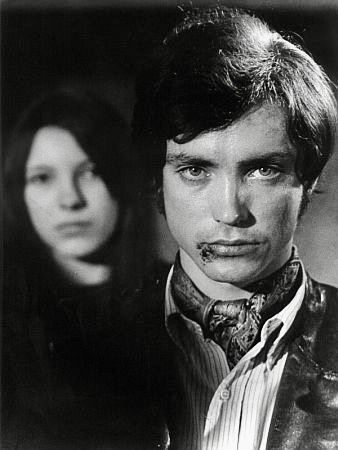
Long before Udo Kier became the go-to eclectic supporting actor who stole his scenes in films such as Gus Van Sant’s My Own Private Idaho (1991), the sci-fi fantasy Johnny Mnemonic (1995), Wim Wenders’ The End of Violence (1997) and numerous films by Lars von Trier, the German actor was already firmly established as a cult film icon from the 1970s. In addition to playing the lead in two Andy Warhol productions, Flesh for Frankenstein (1973) and Blood for Dracula (1974), he starred in the sadistic period piece The Mark of the Devil (1970), Just Jaeckin’s S&M erotica The Story of O (1975), Dario Argento’s Suspiria (1977) and R.W. Fassbinder’s The Third Generation (1979). Kier, who was born in 1944, is still going strong today at age 78 with more than 250 film and TV series in his filmography and a rare leading role in Swan Song (2021), in which he plays a retired hairdresser who agrees to perform one last makeover on a deceased client. But if you want to see him at the beginning of his career, look no further than his debut feature film Shameless (German title, Schamlos, 1968), in which he plays a ruthless young gangster who tries to muscle in on his rival’s business operations in Vienna, Austria.
Continue readingA City or a Labyrinth?
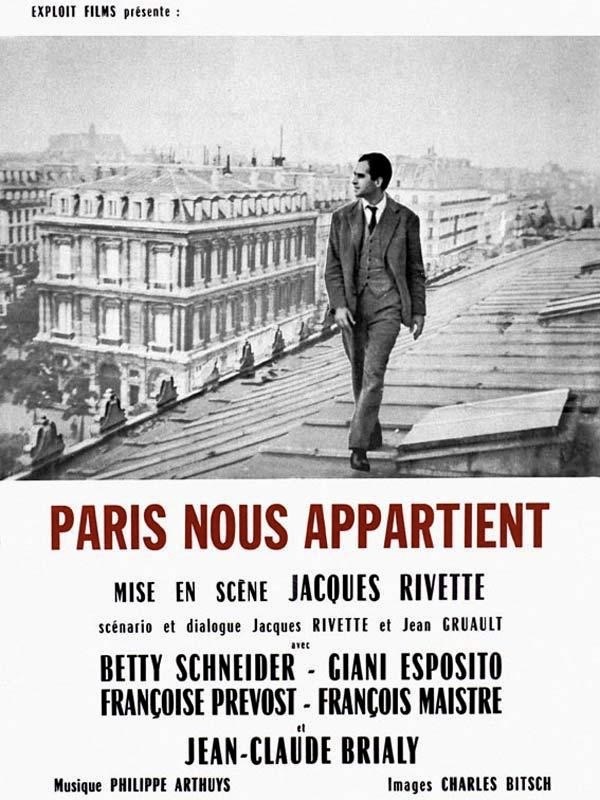
Whether by accident or design, French filmmaker Jacques Rivette is probably the least known member of the influential Nouvelle Vague movement of the late fifties though, like Jean-Luc Godard, Francois Truffaut, Eric Rohmer, and Claude Chabrol, he too was a former writer and film critic for Cashiers du Cinema. He even started production on his first feature length film, Paris Belongs to Us (French title: Paris Nous Appartient), in 1957, before Chabrol, Truffaut and Godard began work on what would become their universally acclaimed debuts of, respectively, Le Beau Serge (1958), The 400 Blows (1959) and Breathless (1960). Yet, despite the artistic and liberating impact the latter three films had on world cinema, Paris Belongs to Us might be the most ambitious, challenging and intellectually provocative film of the whole movement. It is also the darkest, waltzing toward an imagined or possibly real oblivion. The Homeland Security System would give it a code orange classification.
Continue readingFritz Lang’s Two-Part Indian Epic
The film industry is rife with tales about directors who struggled and failed to bring their dream projects to the screen and the subject would make a fascinating, behind-the-scenes non-fiction book about the precarious nature of moviemaking. Among the more famous examples are Orson Welles, who pitched a film version of Joseph Conrad’s Heart of Darkness to RKO executives, who instead chose Welles’ second idea, Citizen Kane, Josef von Sternberg’s ambitious 1937 production of I, Claudius, which was started but never completed due to disagreements between the director and Charles Laughton plus the injury of leading lady Merle Oberon in a car accident, and Robert Altman, who wanted to make a film version of the 1997 documentary Hands on a Hard Body and had even cast it but died before production could begin. Yet, for all the films-that-might-have-been, there are many examples of directors who finally succeeded in making their passion projects and one of them is Fritz Lang. His lifelong desire to make a film of the 1917 novel, The Indian Tomb, written by his former wife Thea Von Harbou, was finally realized in the late 1950s when he started production on a lavish movie adaptation that would be released in two parts as The Tiger of Eschnapur and The Indian Tomb, both 1959.
Continue readingClaude Chabrol: The Eye of Evil
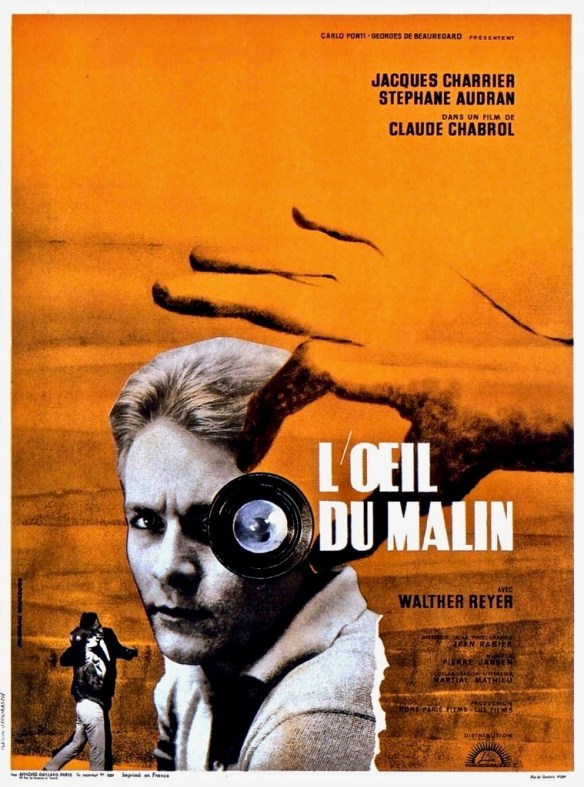
Among the French New Wave directors, Claude Chabrol was the most prolific filmmaker after Jean-Luc Godard but his work was always divided between personal projects and commercial vehicles which he felt obligated to make so he could finance the former. Unfortunately, most of his “for hire” projects like Code Name: Tiger (1964) and Who’s Got the Black Box? (1967) were not successful with the public and ended up adversely affecting his reputation among film critics after his acclaimed film debut, Le Beau Serge (1958). Although he enjoyed a major comeback in the late sixties-early seventies with such well-received efforts as Les Biches (1969), La Femme Infidele (1969) and Le Boucher (1970), the films he made between 1959 and 1967 were mostly regarded as minor or flawed works by French critics, which hurt their distribution chances outside of France. One title that fell through the cracks and is now being reassessed as one of his most important early works is The Third Lover (1962), which was released on Blu-Ray in late February of 2020. Continue reading
Himansu Rai’s 1929 Indian Epic
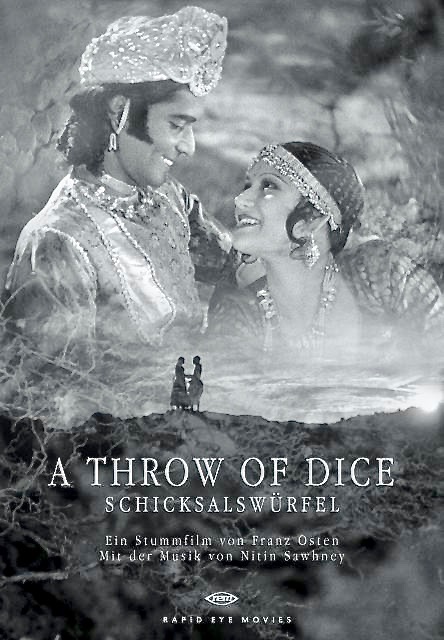
At the 23rd San Francisco Silent Film Festival (May 30-June 3, 2018), the Castro Theater played host to a diverse program of silent era masterpieces accompanied by live music, performed by either solo musicians, small ensembles or orchestras. Some of the new restorations screened included Ernst Lubitsch’s Rosita (1923) starring Mary Pickford, Buster Keaton’s Battling Butler (1926), the 1928 version of The Man Who Laughs with Conrad Veidt and a 1929 German version of The Hound of the Baskervilles, directed by Richard Oswald. As always, the festival also unveils several lesser known titles and rarities such as a magnificent new restoration of Prapancha Pash (aka A Throw of Dice), a 1929 Indian epic produced by Himansu Rai and directed by German filmmaker Franz Osten. A key pioneer effort from the early silent years of Indian cinema, A Throw of Dice holds up beautifully after almost ninety years with its exotic mix of adventure, romance, pageantry and sensuality. And it is an excellent entry point for any silent film beginner. Continue reading