
A Poor Man’s Grand Prix

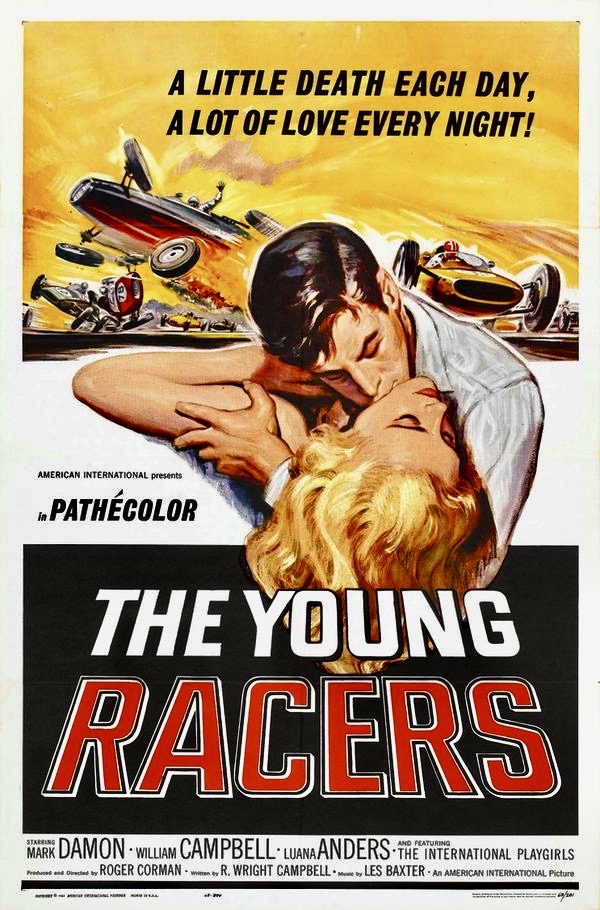
In 1966 director John Frankenheimer, a race car enthusiast, was able to realize a long-cherished dream: to make a film about the Grand Prix racing circuit focusing on several drivers and their personal lives off the track. The result, Grand Prix, is still considered the ultimate racing film, due to its spectacular cinematography that puts the viewer in the driver’s seat with its Cinerama format, split-screen technique and immersive audio. According to the director, it cost about $10.5 million to make, was a box office hit and garnered three Oscars for Best Sound, Best Film Editing and Best Sound Effects. What many people failed to notice was that director Roger Corman had already made a film about the Grand Prix racing circuit three years earlier entitled The Young Racers (1963), which was made on location in Europe like Frankenheimer’s epic with exciting racing footage from Monte Carlo, Monaco, Rome, Rouen (France) and Spa (Belgium) and it cost less than half a million to make. Sure, it was a B-movie from American International Pictures (AIP) but it had a glossy, big budget look to it unlike the typical AIP product and it added some invocative twists to a formulaic genre film that often seemed influenced by the aesthetics of the French New Wave (Corman has always been a fan of European art cinema).

Continue reading
The Way of All Flesh

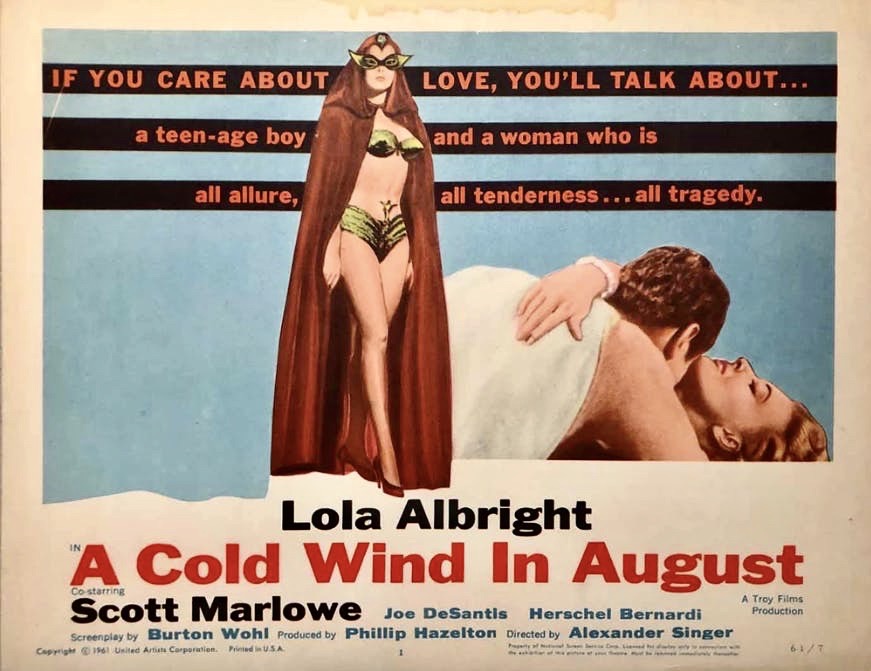
Every once in a while a low-budget independent film with a no-name cast will come along and captivate critics and audiences alike with its audaciousness, honesty and ability to transcend easy categorization. In the film industry, they sometimes call this a “sleeper” and, while this kind of movie rarely becomes a box office hit, it can acquire a cult status or insider buzz that saves it from falling off the radar and vanishing into obscurity. Such is the case with A Cold Wind in August (1961), a steamy little adult drama that was targeted for grindhouses and the drive-in trade with the tagline: “If you care about love, you’ll talk about a teenage boy and a woman who is all allure, all tenderness…all tragedy.” The poster depicted two lovers in a torrid horizontal embrace while the figure of an exotic stripper, dressed in an open cape and eye mask, towers over them, revealing her shapely, half-naked body.
Continue reading

Commies at the Greasy Spoon Diner

The Psychotronic Video Guide calls it “One of the oddest movies of the fifties,” Leonard Maltin’s Movie Guide deems it a “trash classic,” and any movie buff who has ever seen it will probably concur that Shack Out on 101 (1955) is easily the nuttiest B-movie to emerge in the Cold War era when paranoia over communist infiltration provided Hollywood with a new type of villain.   Continue reading