Johnny Rotten’s Alter Ego

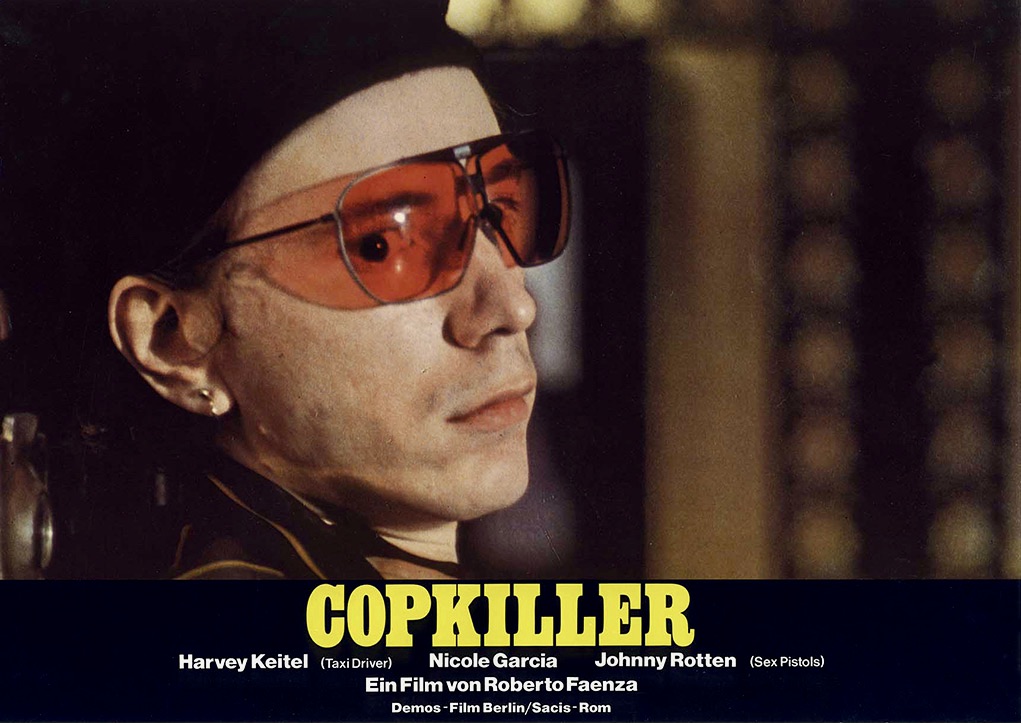
Some movies fall through the cracks and then are rediscovered years later by movie geeks who are amazed that such formerly “lost films” even exist. Such is the case with Corrupt (1983), which was also released in some markets as Copkiller and Order of Death, the title of the psychological thriller by novelist Hugh Fleetwood which was adapted for this film. An international production with Italian and French financing, the movie marked the dramatic film debut of John Lydon aka Johnny Rotten of The Sex Pistols fame (he had previously played a version of himself in Julien Temple’s The Great Rock ‘n’ Roll Swindle [1980], which was a semi-autobiographical/fantasy account of Malcolm McLaren and his promotion/management of The Sex Pistols). Corrupt also featured Harvey Keitel in the other major role and the music score was composed by Ennio Morricone.  Due to poor distribution and marketing (those alternate titles didn’t help), the film quickly vanished from theaters but it holds up today as a fascinating precursor to Abel Ferrara’s Bad Lieutenant (1992) while channeling some of the yin-yang duality of Donald Cammel & Nicolas Roeg’s Performance (1976).

Continue reading
Pressbooks: Classic Movie Marketing Promotion

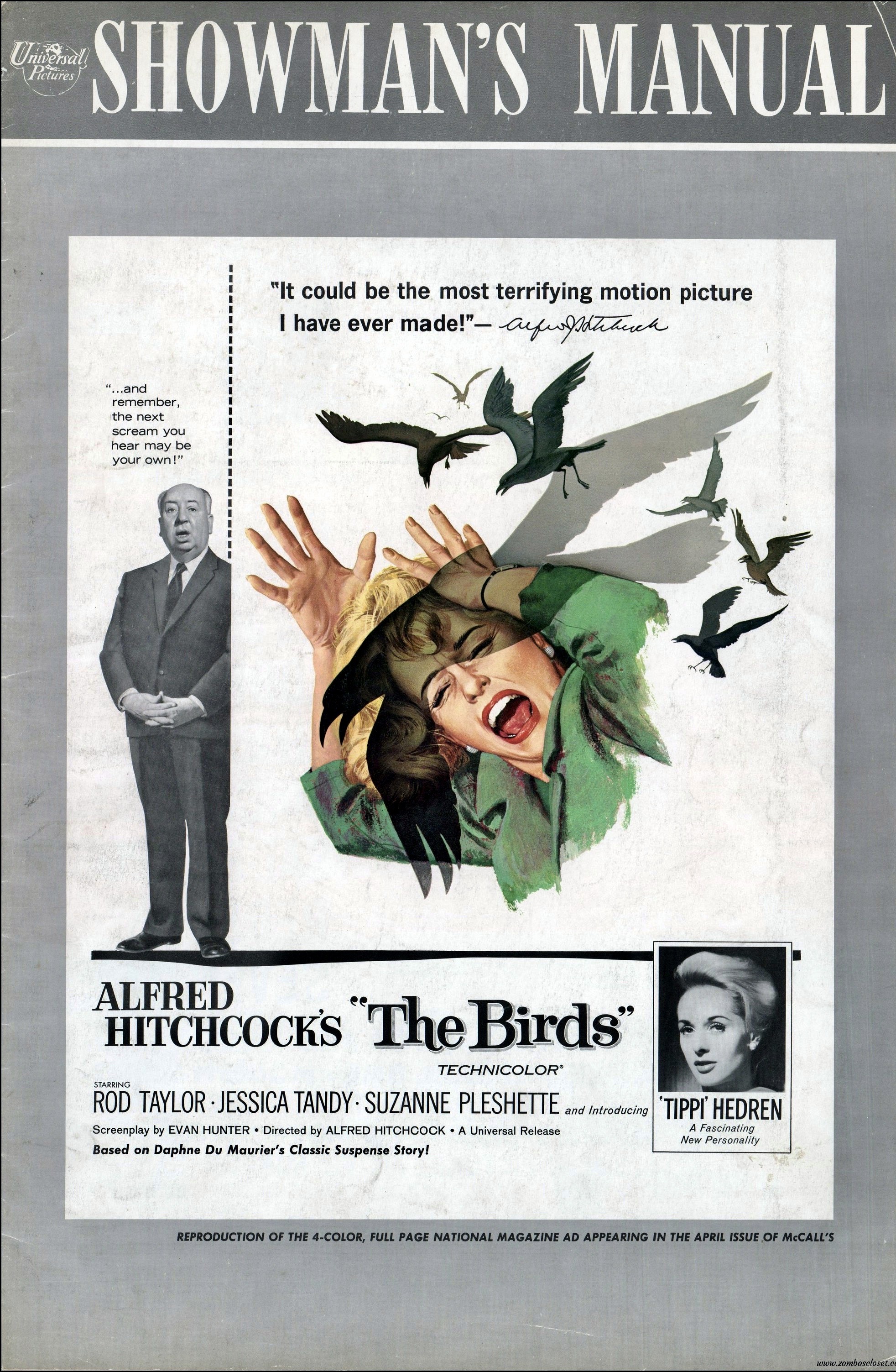
Among the many movie collectibles on the marketplace, pressbooks were studio publicity tools that were created for the theatre exhibitors. Though rarely seen by the public except by film collectors, these specialized publications were chock full of alternate poster art for their specific film as well as behind-the-scenes stories on the production, cast and crew. Best of all were the promotional tips for theatre managers on how to pack their theatres with excited fans. Some of these tips could probably get you arrested and sometimes you had to wonder if the pressbook writers were drunk or just testing the gullibility of the exhibitors.

Continue reading

The Ballad of Hank McCain

John Cassavetes stars in the title role of MACHINE GUN MCCAIN (1969) aka Gli Intoccabili, an Italian crime drama directed by Giuliano Montaldo.

Lean, mean and paranoid, convict Hank McCain (John Cassavetes) is sprung from prison by West Coast mobster Charlie Adamo (Peter Falk) to rob a Las Vegas casino that is owned by an East Coast Mafia boss in the same syndicate. Adamo’s underhanded attempt to muscle in on his fellow gangster’s territory ignites a gangland war between factions with McCain caught in the middle and running for his life after he successfully pulls off a $2 million dollar heist. Along the way, McCain is double-crossed by his own son, hooks up with Irene (Britt Ekland), a bar hostess, is briefly reunited with his former mistress Rosemary (Gena Rowlands) and goes down fighting in a genuine noir finale. Although it didn’t get any respect from the critics or even much notice from film reviewers at the time, Machine Gun McCain (Italian title: Gli Intoccabili, 1968) is a remarkably taut, fast-paced B-movie crime thriller that is as feral and cagey as its title hero. Cassavetes imbues his role with a pent-up intensity that threatens to explode at any moment and often does. It’s one of his best performances and demonstrates why he was more in-demand as an actor in Hollywood instead of a director.

Continue reading

Now You See Him, Now You Don’t

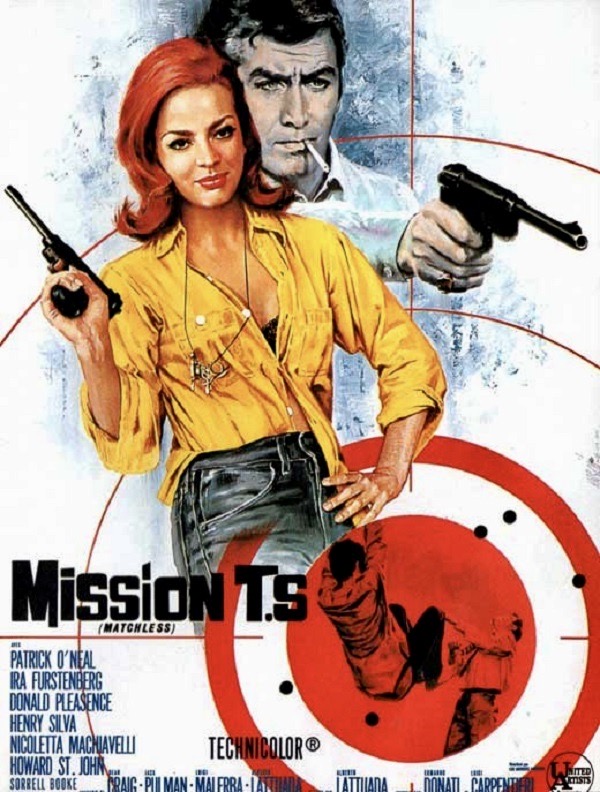
Ever notice how every secret agent in the movies seems to have a gimmick? Well, Perry Liston – code name: Matchless – has got a winner. When confronted with unavoidable capture or certain death from enemies, he can literally vanish into thin air. He’s not superhuman though. His ability to become invisible at will is completely dependent on a unique ring given to him by a fellow prisoner in a Chinese jail. And the ring’s powers are limited: it can only be used once every 10 hours and the wearer can expect his invisible state to last no more than twenty minutes. Those are the rules and Matchless (1966), a quirky genre offering from Italy, plays fast and loose with the gimmick [In some markets it was released under the title Mission TS (Top Secret)].

Continue reading

Salvatore Samperi’s Cuore di Mamma

The late sixties were a time of social and political upheaval on an almost global scale but Italy, in particular, seemed to be coming apart at the seams. Bloody clashes between the police and student demonstrators, bombings and factory worker strikes were on the rise as rival political parties like the DC (Christian Democrats), PRI (Republican party) and PCI (communist party) vied for power. This turbulent time was reflected in some of the edgier, more troubling movies of that period by such major filmmakers as Gillo Pontecorvo (The Battle of Algiers, 1966), Bernardo Bertolucci (Partner, 1968), Pier Paolo Pasolini (Teorema [1968], Porcile [1969]), and Michelangelo Antonioni (Zabriskie Point, 1970). Even more polarizing but less well-known is Cuore di Mamma (Mother’s Heart, 1969) by director Salvatore Samperi, which is much more of an avant-garde provocation than anything else. It was based on a story by Samperi and Sergio Bazzini (Dillinger is Dead) and fashioned into a screenplay by Dacia Maraini (The Future is Woman).

Continue reading

Mondo Man

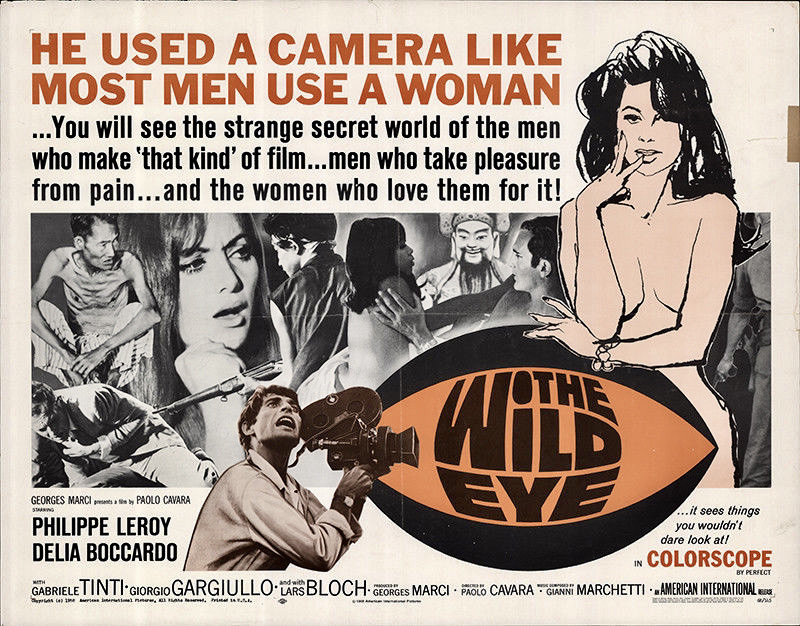
Gualtiero Jacopetti and Franco Prosperi are generally acknowledged as the “Godfathers of Mondo” and took a sensationalist approach to documentaries that revelled in bizarre and shocking cultural practices around the world. Mondo Cane (A Dog’s Life, 1962) was their wildly popular debut film and it spawned a new genre that included their later work Women of the World (1963), Mondo Cane 2 (1963), Africa Addio aka Africa: Blood and Guts (1966) and Goodbye Uncle Tom (1971), a critically reviled and polarizing account of the origins of the American slave trade that was filmed as a you-are-there dramatization. What is usually left out of the Jacopetti-Prosperi backstory are the contributions of Paolo Cavara, who co-directed and co-wrote Mondo Cane and Women of the World with Jacopetti. He broke off his association with the other two filmmakers after their second collaboration and went solo with two more Mondo films (Malamondo [1964], Witchdoctor in Tails [1966]) before turning his camera on a fictionalized version of himself in The Wild Eye (L’occhio Selvaggio, 1967), an unforgiving portrait of a ruthless Mondo filmmaker that should be better known today.

Continue reading

12 Italian Directors on 12 Italian Cities

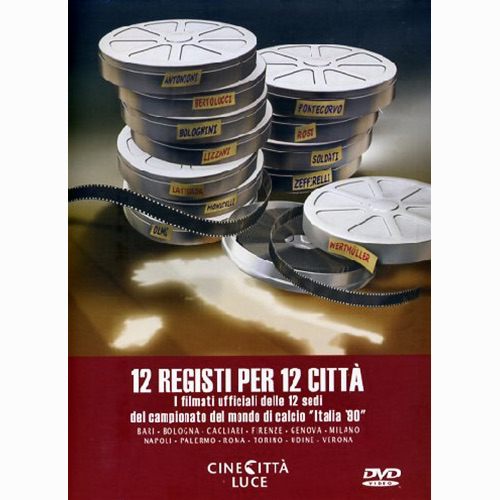
In 1989 Istituto Luce, the oldest public institution devoted to film production, distribution and archival material in Italy, produced an omnibus film consisting of 12 segments entitled 12 Registi per 12 Citta (12 Directors for 12 Cities). A documentary/travelogue hybrid, the film was made as a promotional vehicle in support of the 1990 FIFA World Cup in Rome and part of its intent was to lure tourists to Italy, particularly to the cities showcased in the film.  The title is not completely accurate; thirteen directors, not twelve, contributed to the project if you count Giuseppe Bertolucci, the younger brother of Bernardo Bertolucci, who co-directed the Bologna section with Bernardo. 12 Registi per 12 Citta is also unconventional in its presentation with each director approaching his subject in his own unique way and the selected cities include some offbeat choices like Udine and Cagliari as well as some major omissions. What, no Venice?

Continue reading

The Harmonious Sounds of Franco De Gemini

You might not know the name but you have probably heard his music and the unmistakable sound of his harmonica on countless Italian film scores. The plaintive wail of his instrument on Once Upon a Time in the West (1968) was used as a musical motif for Charles Bronson’s avenging angel, who was identified simply as “the man with the harmonica” in Sergio Leone’s landmark film. Yet that nickname really belongs to Franco De Gemini who has brought his distinctive sound from the background to the foreground in more than 800 movie scores in his lifetime.  His talent for expressing conflicting emotions through his music in both minimalist and operatic arrangements is this composer’s secret weapon.

Continue reading

The Legend of Black Tiger

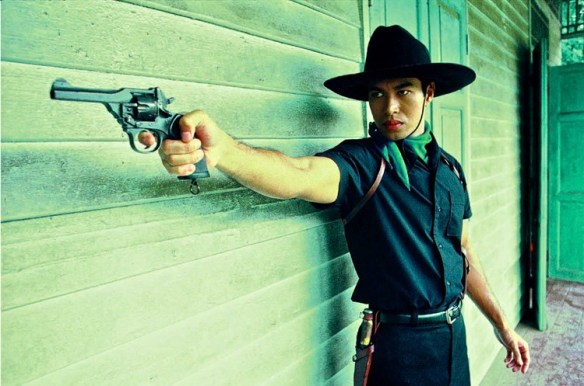
Chartchai Ngamsan stars as Thailand gunslinger Dum aka Black Tiger in the 2000 cult film, Tears of the Black Tiger.

When it first appeared in 2000, Tears of the Black Tiger (aka Fah Talai Jone), became an instant sensation at almost every film festival that programmed the directorial debut of Wisit Sasanatieng. One of the most ambitious productions to ever emerge from the Thai film industry, Tears of the Black Tiger seemed poised for international success upon its original release but got tangled up in distribution troubles and didn’t receive a U.S. theatrical release until seven years later, despite a great reception at the 2001 Seattle International Film Festival.    Continue reading

Elio Petri’s Portrait of the Artist as Mental Patient

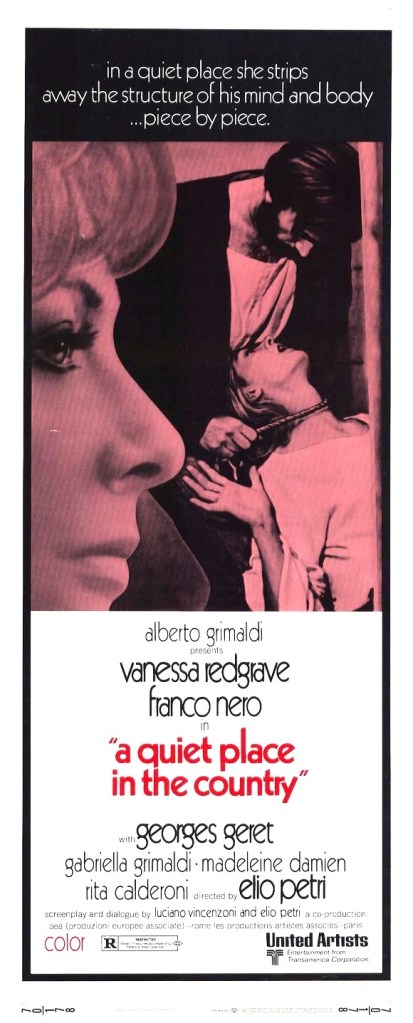
Italian director Elio Petri is probably best known for Investigation of a Citizen Above Suspicion (1970), which won the Oscar for Best Screenplay (by Petri and Ugo Pirro) in 1972. Yet, most of his other work, with the possible exception of the cult sci-fi satire The 10th Victim (1965), remains overlooked or forgotten when film historians write about the great Italian directors of the sixties and seventies. And 1968’s A Quiet Place in the Country (Un Tranquillo Posto di Campagna) is easily one of his most intriguing and visually compelling films.

Continue reading