The Japanese film poster for THIS TRANSIENT LIFE (1970).
Some people believe in heaven and the afterlife while others are convinced that human life is temporal and when it ends nothing remains but a corpse. A dramatization of those opposing views in a film would be a challenging task for any director but Japanese director Akio Jissoji confronts a number of philosophical and religious matters by exploring Buddhist thought and practices versus human desire in Mujo (English title: This Transient Life, 1970). The result is a fascinating and visually innovative character study that manages to balance the sacred and the profane in one of the most overlooked Japanese films of the 70s which is finally starting to receive its due thanks to resurfacing on Blu-ray in recent years.
An eerie promotional image from the 1968 film SECRET CEREMONY starring Mia Farrow and Elizabeth Taylor, directed by Joseph Losey.
Pretentious art house bomb, neglected masterpiece or inscrutable personal project for Joseph Losey? Secret Ceremony (1968) had the misfortune to follow Boom! (1968), the director’s notoriously lambasted film adaptation of Tennessee Williams’ The Milk Train Doesn’t Stop Here Anymore starring the world’s most famous celebrity couple at the time, Richard Burton and Elizabeth Taylor. Equally challenging for mainstream audiences, Secret Ceremony was promoted as a kinky psychodrama with lesbian overtones and such tag lines as “It’s time to speak of unspoken things” and “No one admitted the last 12 minutes.” Yet, despite the presence of Elizabeth Taylor, Robert Mitchum and Mia Farrow, who had just appeared in the as-yet-unreleased Rosemary’s Baby the same year, the movie was too strange, decadent and moody to hold the attention of moviegoers and critics expecting a more traditional genre film.
The Hungarian film poster for DAMNATION (1988), directed by Bela Tarr.
What would it be like to live under a totalitarian regime in a godforsaken rural area where society has collapsed under economically depressed circumstances? In a place where there is no work or even a social structure, people turn to alcohol, violence, suicide, madness or a combination of the four. Capturing the psychological state of mind and physical reality of such an existence is a specialty of Hungarian director Bela Tarr, who became a filmmaker in Soviet controlled Hungary in 1978. He has since become a world-renowned artist who is best known for Satantango (1994), his seven hour and 19 minute epic about the disintegration of a collective farming community. Many Tarr aficionados believe a more accessible starting point for a beginner is Werckmeister Harmonies (2000), a weird, dreamlike fable about a village that descends into chaos after the arrival of a mysterious carnival attraction. I consider both of those masterworks but a better entry point to his brand of cinema might be Karhozat (English title: Damnation) from 1988. It is shorter (a mere two hours) than his two better known works but also the film that launched his international career and a visually fascinating example of his slow cinema aesthetic which favors long, uninterrupted camera shots that can often last from six to eleven minutes in length. It is also occasionally lumped into that genre known as cinema miserablism by some critics but feels more like a deep dive into a dense but atmospheric novel.
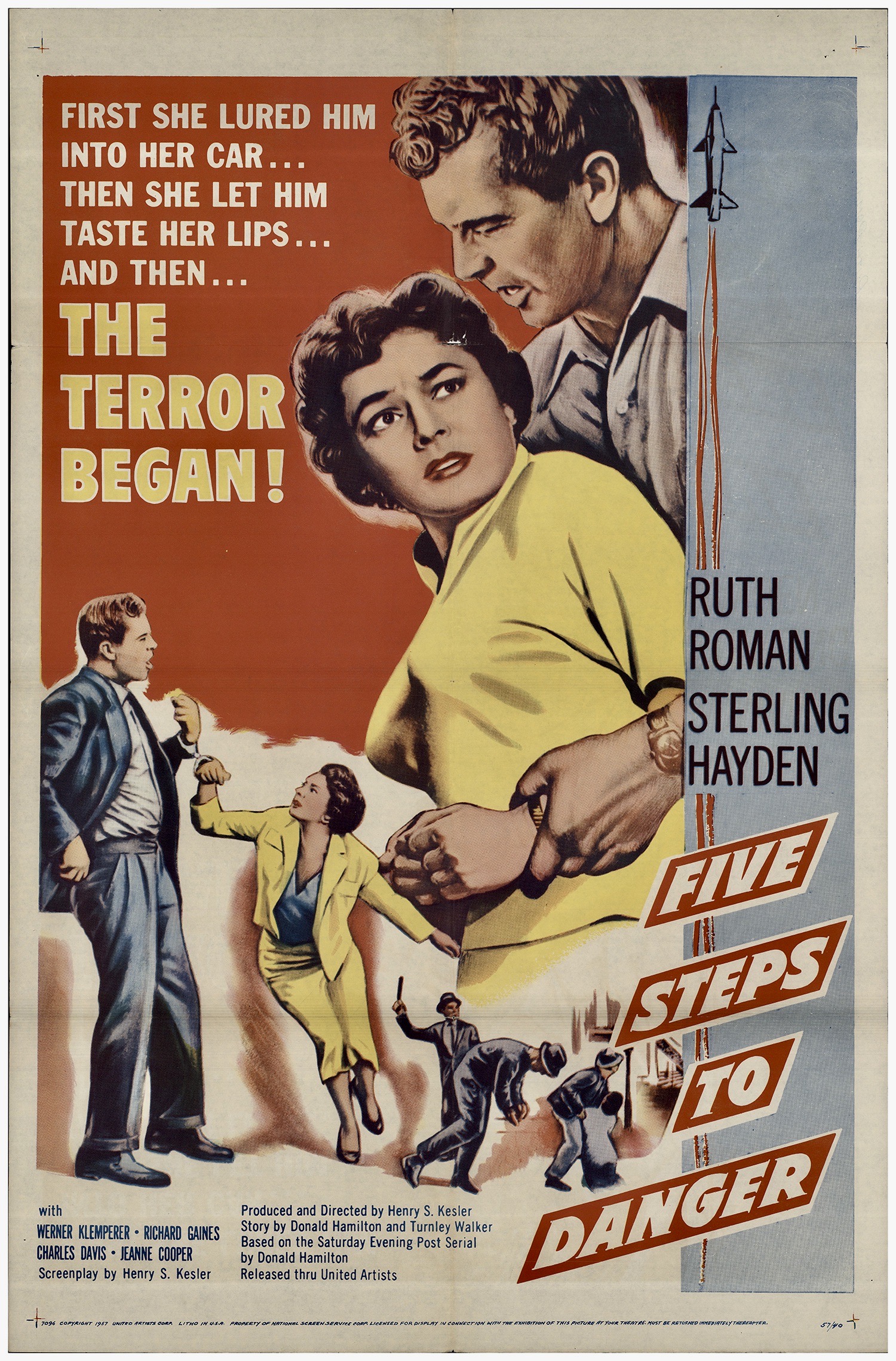
Only two years after WW2 officially ended on September 2, 1945, relations between the United States and the USSR cooled and became frosty, ushering in The Cold War era, which lasted until the dissolution of the Soviet Union on December 26, 1991. Hollywood was quick to capitalize on this disturbing new reality by producing and releasing a string of anti-communist dramas, adventures and spy thrillers, many of them grade A productions with major stars from the top studios. One of the earliest releases was The Iron Curtain (1948) from 20th-Century-Fox, which was directed by William A. Wellman and reunited Dana Andrews and Gene Tierney from Laura in a true life story about a Soviet defector in Canada. Many others followed such as The Red Danube (1949) and Conspirator (1949) from MGM, Diplomatic Courier (1952) with Tyrone Power battling Soviet agents in post-war Europe and Leo McCarey’s infamous red scare melodrama, My Son John (1952). Even John Wayne got on the patriotic bandwagon and sounded off against the commies in Big Jim McLain (1952) from United Artists, Blood Alley (1955) from Warner Brothers, and Jet Pilot (1957) from RKO. All of these, however, were high profile releases compared to 5 Steps to Danger (1957), a modest but highly entertaining indie feature from Grand Productions (distributed by United Artists), which teamed up Sterling Hayden and Ruth Roman.
One doesn’t usually expect a film about infidelity, divorce and murder to be a comedy but that’s one reason Divorzio all’italiana (English title: Divorce, Italian Style, 1961) directed by Pietro Germi, became an unexpected international hit. A caustic satire about the Italian male – or more specifically, Sicily’s male dominated culture – the film also poked fun at Italy’s hypocritical judicial system which can forgive crimes of passion but not legally recognize divorce as a solution for failed marriages. Another factor in the movie’s success was Marcello Mastroianni’s beautifully rendered portrayal of the preening, self-absorbed protagonist, a performance which not only won him an Oscar nomination for Best Actor (the first time in Academy Award history that the lead in a foreign language film received that honor) but still ranks as one of the actor’s key films, following closely on the heels of Fellini’s La Dolce Vita (1960) and Antonioni’s La Notte (1961).
The Romanian film poster for the 1984 animated science fiction fantasy DELTA SPACE MISSION.
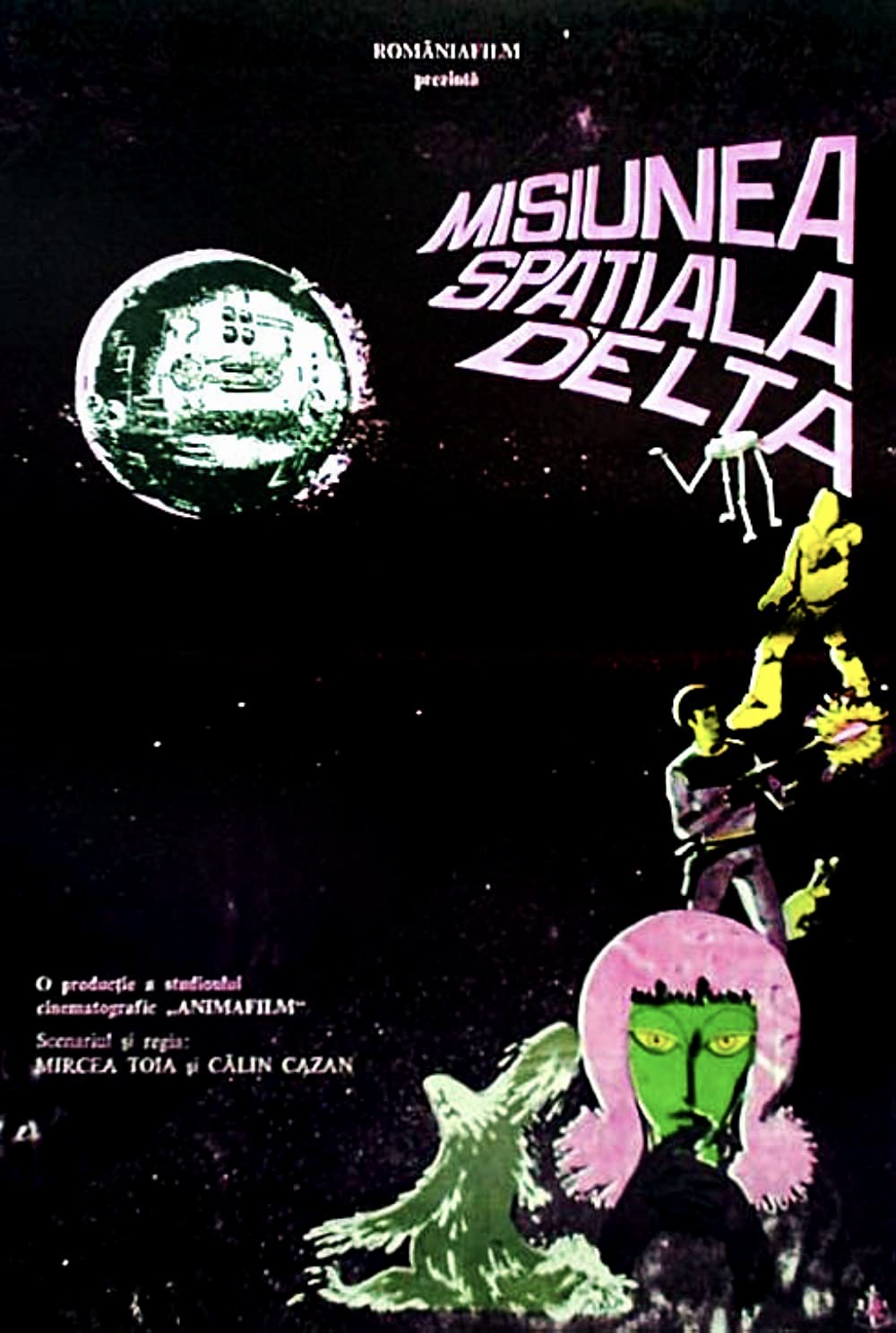
In recent years streaming options for entertainment – movies, TV shows, music – have increased and become more commonplace in the average U.S. household but, at the same time, physical media like Blu-rays and DVD continues to prosper among movie lovers and film collectors. Specialty distributors like Severin Films, Vinegar Syndrome and Kino Lorber are releasing new acquisitions at an astonishing rate and obscure genre films and forgotten art house fare are suddenly available on Blu-ray in presentations that look better now than they did during their original theatrical release such as The Five Days (1973, Severin), cult director Dario Argento’s rare non-horror period piece, Ulli Lommell’s witchcraft thriller The Devonsville Terror (1983, Vinegar Syndrome) and Francois Truffaut’s Mississippi Mermaid (1969, Kino Lorber). Deaf Crocodile, a distributor based in Los Angeles, stands apart from its competitors for restoring and releasing movies from around the world that many film buffs never even knew existed. Among their recent releases are Zerograd (1988), an absurdist Soviet satire, The Unknown Man of Shandigor (1967) by Swiss filmmaker Jean-Louis Roy and Solomon King, a lost Blaxploitation indie from 1974. The real surprise for me, however, is Misiunea Spatiala Delta (English title: Delta Space Mission), an animated science fiction fantasy from Romania that was released in 1984.
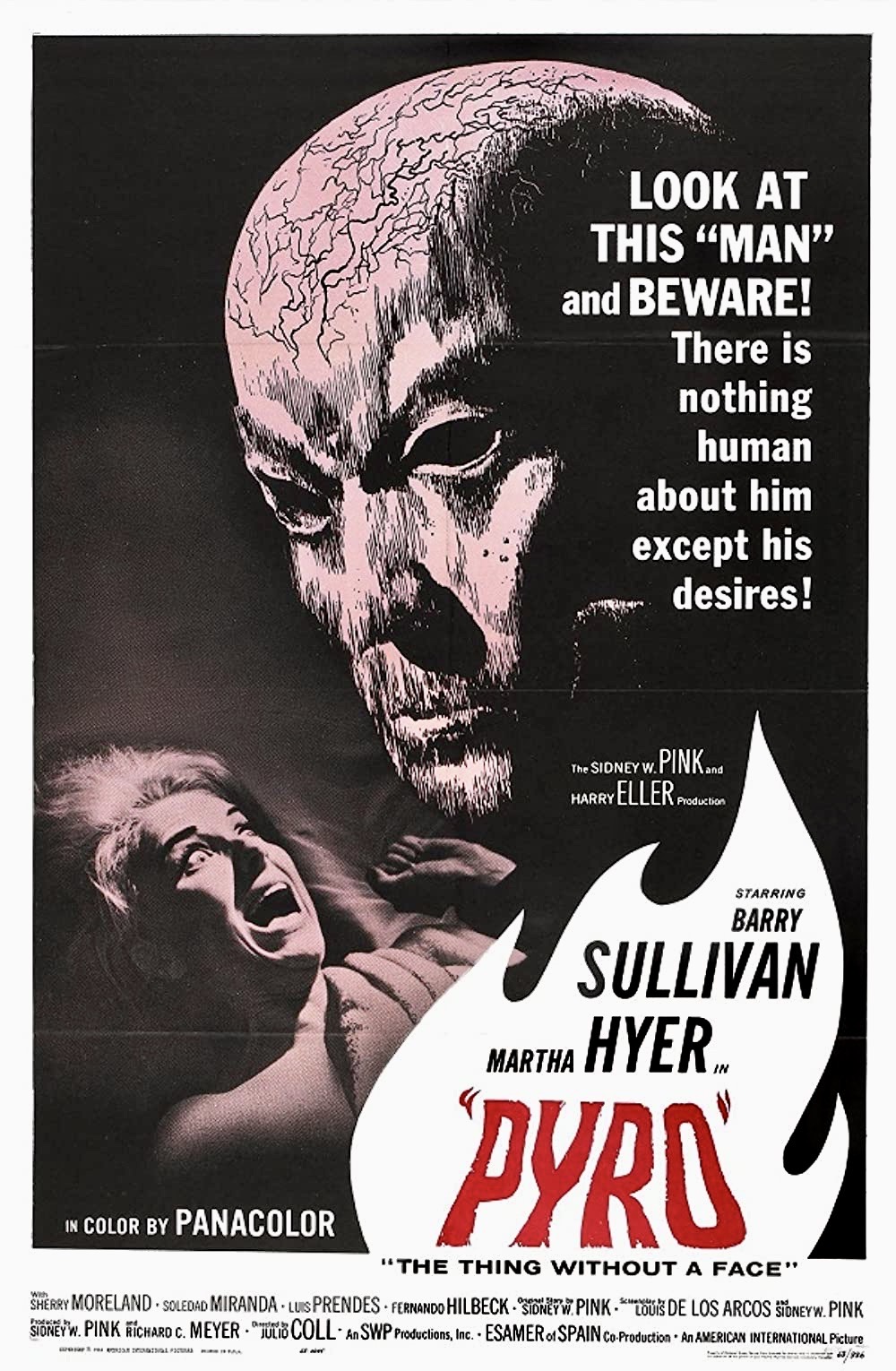
The early 1960s was a turbulent time for the film industry and the Hollywood studio system was becoming a relic of the past as television and other competitors in the entertainment field lured audiences away. Some movie actors could see the writing on the wall and began to pursue film offers outside Hollywood and the U.S. Some of the more famous former studio contract players who escaped and reinvented themselves in Europe were Clint Eastwood, Charles Bronson, Lee Van Cleef, Jean Seberg and Jane Fonda. Even seasoned veterans like Edward G. Robinson, Lee J. Cobb and Bette Davis appeared in movies made overseas but one of the more unusual examples of American actors appearing in an international production is Barry Sullivan and Martha Hyer in Pyro…The Thing Without a Face (1964, aka Fuego in the European market), directed by Julio Coll and filmed in Spain.
Simone (Cox Habbema) and Freek (Hugo Metsers) are pulled into a labyrinth of mysterious happenings in THE ARRIVAL OF JOACHIM STILLER (De Komst van Joachim Stiller), a 1976 Belgium film by Harry Kumel.
Most people have a daily routine from the time they get up in the morning to the time they go to bed at night. For many of us that would involve a considerable amount of time spent at work, whether at an office or at home, and this would also include the daily repetition of uneventful tasks like taking the trash out, opening the mail or brushing your teeth. But when the daily routine gets disrupted or something odd or peculiar occurs, it usually results in a more memorable day. It could also be just the beginning of a series of occurrences that change your life and the way you look at the world. This is what happens to Freek Groenevelt (yes, it’s a weird name), the protagonist of De Komst van Joachim Stiller (English title: The Arrival of Joachim Stiller), a magical realism fantasy based on a novel by Belgium writer Hupert Lampo and adapted to film by Harry Kumel.
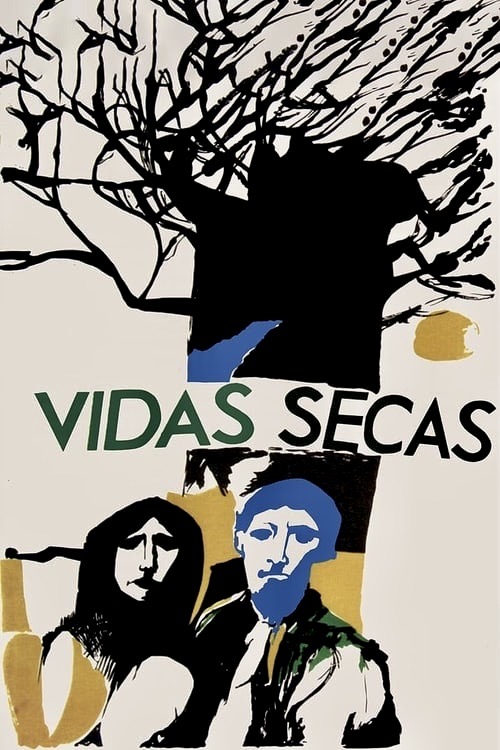
VIDAS SECAS aka BARREN LIVES (1963), a Brazilian film by Nelson Pereira dos Santos.
You don’t have to believe in climate change to experience and understand the devastating effects of a drought. The northeastern part of Brazil is no stranger to this condition which has plagued the region for decades yet people continue to live there. If you are a wealthy landowner, you can survive the seasonal hardships but if you are a poor migrant worker, life is a constant struggle. Vidas Secas (English title: Barren Lives, 1963), directed by Nelson Pereira dos Santos, is the portrait of a family of four and their dog as they wander the arid deserts and sun-baked landscapes of northwestern Brazil in search of work, water and food. Set in 1941 and covering a two-year period in their lives, the film is considered a landmark work in the Cinema Novo movement, which emerged in the late fifties and focused on marginalized communities and people, often using non-professional actors, real settings and black and white cinematography in the manner of Italian Neorealism.
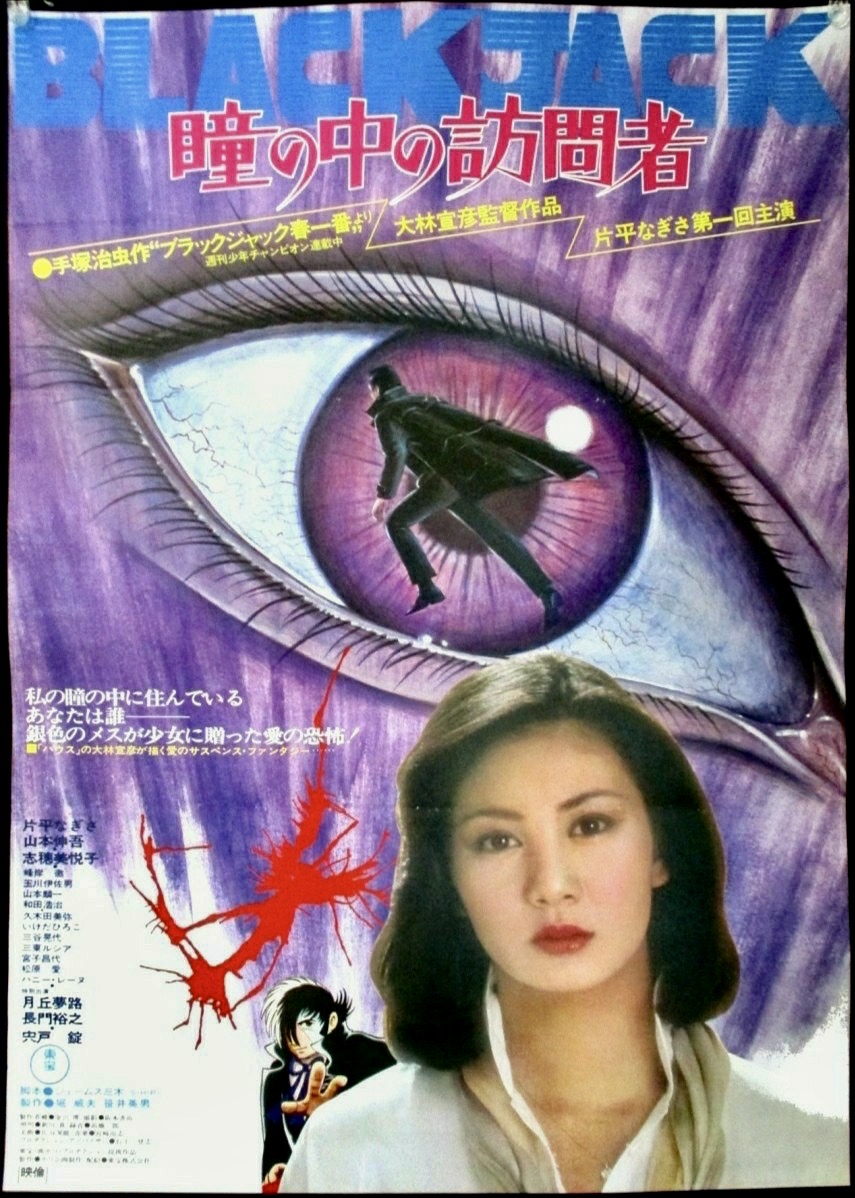
The Japanese film poster for THE VISITOR IN THE EYE aka Hitomi no naka no Houmonsha (1977), directed by Nobuhiko Obayashi.
When Nobuhiko Obayashi’s Hausu (English title: House) opened in Japan in 1977, it proved to be a surprise hit with audiences but not Japanese film critics and it didn’t attract any attention in the U.S. until it was rediscovered in 2009 as possibly the weirdest WFT cult movie since El Topo (1970), Eraserhead (1977) or Repo Man (1984). Originally intended for teenagers, particularly girls, House pits a bunch of young female schoolgirls against a demonic entity and the result is a frenzy of nightmarish images including flying decapitated heads, a cannibalistic piano, a satanic cat, and laughing watermelons to name a few. Obayashi’s subsequent film, Hitomi no naka no houmonsha (English title: The Visitor in the Eye, 1977) isn’t nearly as wild and raucous but it shares the same demented fairy tale ambiance of House and was overshadowed by its predecessor.