Unknown's avatar

About JStafford

I am a writer for The Travel Channel, ArtsATL.com, Burnaway.org and other publications. I am also a film researcher for Turner Classic Movies and a member of the Atlanta Film Critics Circle. This blog is dedicated to overlooked, obscure or underrated movies and other cinema topics that I want to share.

The Eternal Search for Paradise

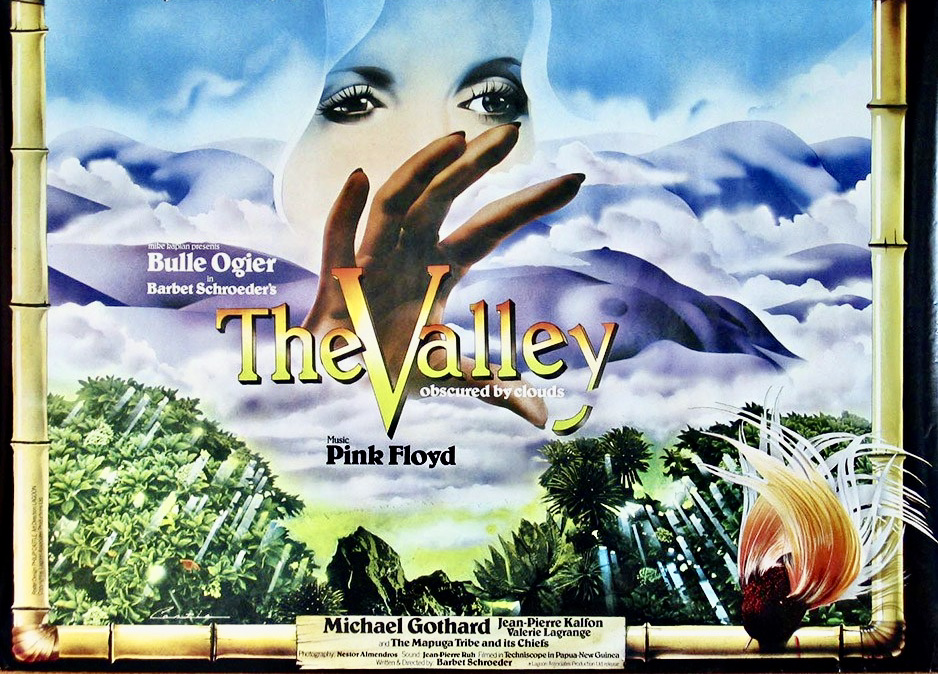
What is it about human nature that makes men want to climb the highest mountains, explore unknown regions in search of a rumored paradise or challenge their perceptions of the world in the name of self-discovery? It is this eternal quest that drives the narrative of  La Vallée (English title: The Valley, 1972), Barbet Schroeder’s second feature film after More (1969), a drug addiction drama that explores a similar theme of people who go too far in seeking ultimate experiences and sensations. Both films were made at a time when the youth culture of the late sixties was becoming more pessimistic and cynical about the hippie lifestyle. While More is a deep dive into hedonism that has the structure of a traditional drama, The Valley is a stranger affair. It combines ethnographic documentary elements with a loose storyline about a small group of hipster explorers who are intent on discovering an unexplored area on a map of Papua, New Guinea that is marked as a valley obscured by clouds.  

Continue reading
The Dirty Little Coward Roadshow

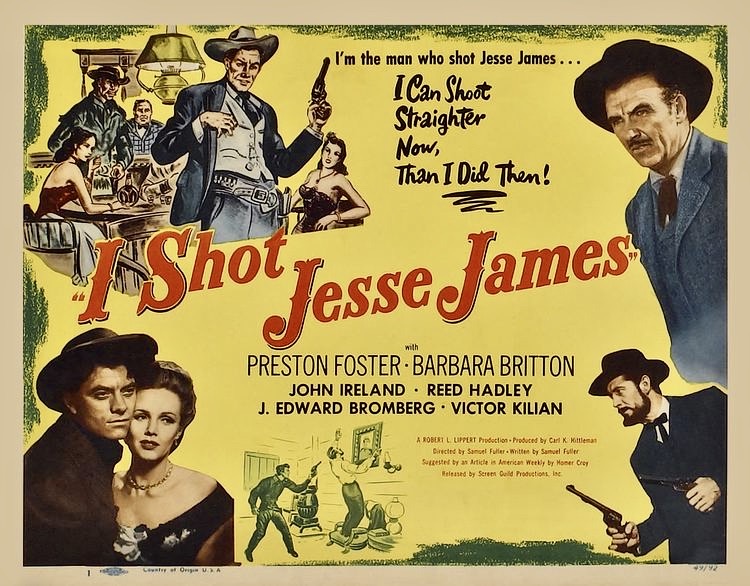
After recently rewatching I Shot Jesse James on DVD from Criterion’s Eclipse label, I couldn’t get a certain scene out of my head. As you may know, this 1949 film is Samuel Fuller’s directorial debut about Robert Ford, the “dirty little coward” who assassinated the frontier legend in 1882 and the scene that pops out occurs not long after Jesse (played by Reed Hadley) is dead and buried. Ford (John Ireland) begins performing re-enactments of the event on stages for money as he travels around capitalizing on his notoriety. At first, I thought this was just a fantasy from Fuller’s fevered, pulp fiction imagination but after doing some research it appears to be true. Robert Ford really did take his act on the road, billing it as “Outlaws of Missouri,” and, night after night before paying audiences, he would act out that fateful day when he shot Jesse James. 

Continue reading

Pool Days

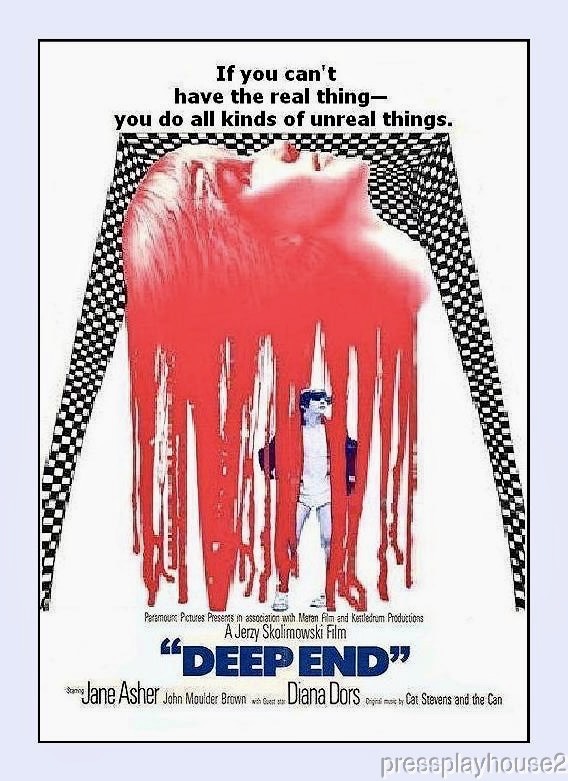
Sometimes a film comes along that no marketing department can get a handle on and as a result it just gets tossed out there to fend for itself and to find an audience on its own. That was the case with Deep End, made in 1970 but released in 1971 by Paramount Pictures to selected art houses and whatever theaters were willing to book it. I saw the film at the Westhampton Theatre in Richmond, Virginia, which was obviously run by an Anglophile because almost any new British film would play there. Of course, Deep End is only British on the surface. It is set in London but the cast includes British, Germany actors and Polish actors and much of the film was shot in Munich, Germany by Polish director Jerzy Skolimowski.

Continue reading

The Pogue Mahone Prodigy

Singer/songwriter Shane MacGowan of the Irish band The Pogues is the subject of Julien Temple’s 2020 documentary, Crock of Gold.

When it comes to world famous Irish rock bands, you’d probably be hard pressed to come up with ten. U2 from Dublin is certainly at the top of the heap but who else comes close? Thin Lizzy, The Boomtown Rats, The Cranberries, The Undertones and maybe a few other cult fringe favorites might make the list but the only other contender for the number one spot would have to be The Pogues and they really can’t be classified as simply a rock ‘n’ roll band. Some music critics have classified their music as celtic punk for the way it reinvigorated Irish folk music with an anarchic rebelliousness and politically tinged songs usually performed using traditional instruments like the mandolin, accordion and the tin whistle. Certainly Shane MacGowan, the hellraising singer/songwriter of the group, is as beloved as U2’s Bono and director Julien Temple has put MacGowan front and center in the enthralling documentary portrait, Crock of Gold: A Few Rounds with Shane MacGowan (2020).

Continue reading

The Naked Muse

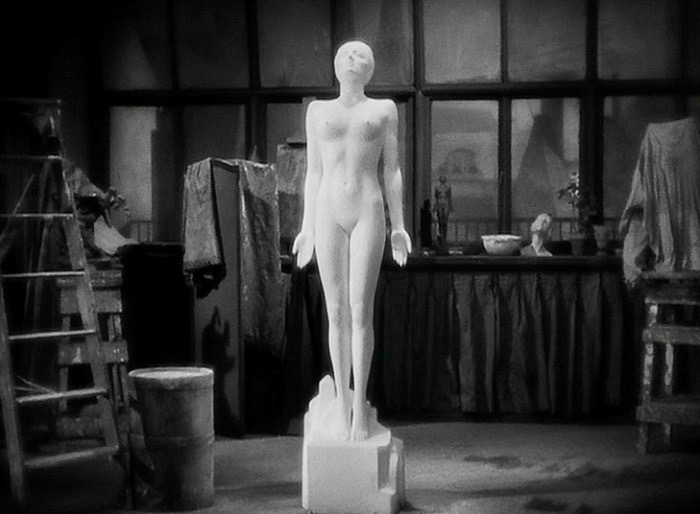
Sculptor Richard Waldow (Brian Aherne) creates a work of art inspired by his model Lily Czepanek (Marlene Dietrich) in The Song of Songs (1933), a Pre-Code drama.

Here’s a rarely seen Pre-Code curiosity made during the early period of Marlene Dietrich’s career at Paramount, The Song of Songs (1933). It is usually overlooked amid the Josef von Sternberg collaborations that made her famous such as The Blue Angel (1930), Morocco (1930) and Shanghai Express (1932), yet, it provides a fascinating look at Dietrich under a different director (Rouben Mamoulian) as well as a departure from her usual persona as a vamp or prostitute (at least in the beginning). The film is also generously seasoned with romance, decadence, melodrama, earthy humor, some musical numbers and a disaster – there is a fire in the final act.

Continue reading

Don’t Act Cool, Just Be Cool

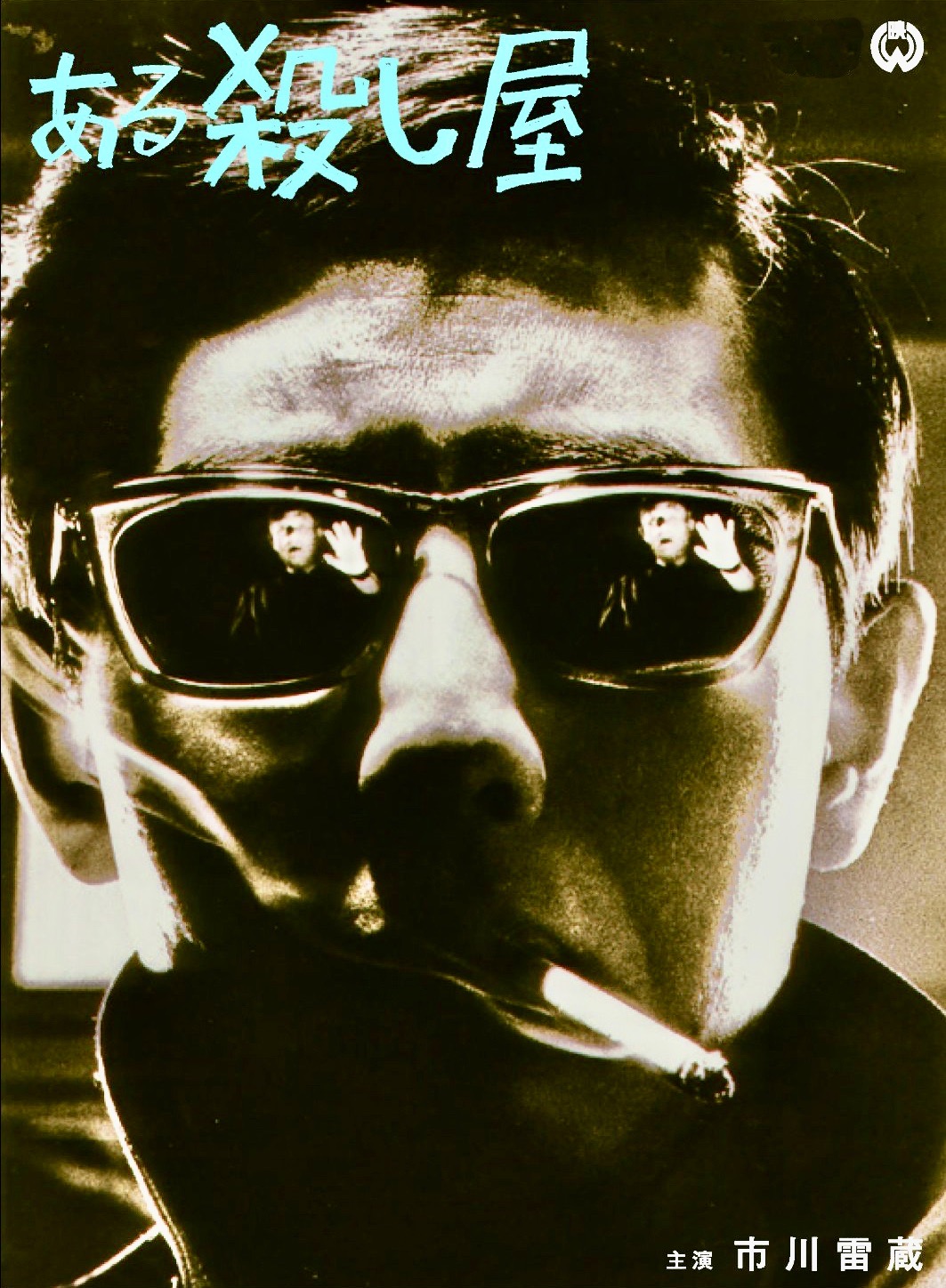
The Japanese film poster for A Certain Killer (1967) aka Aru Koroshi Ya starring Raizo Ichikawa.

The yakuza thriller has been a prominent genre in Japanese cinema since the silent era when soon to be celebrated directors like Yasujiro Ozu dabbled in gangster melodramas like Walk Cheerfully (1930) and Dragnet Girl (1933). Once conceived as B-movies with low-budgets and rushed production schedules, the yakuza film graduated to A-picture productions in the 1970s but the genre really hit its stride in the 1960s with such stellar examples as Masahiro Shinoda’s Pale Flower (1964), Seijun Suzuki’s Tokyo Drifter (1966) and his more wildly stylized follow-up, Branded to Kill (1967). Still, there are so many superb yakuza films from this period waiting to be discovered by American audiences and one of my favorites is A Certain Killer (1967, Japanese title: Aru Koroshi Ya) from director Kazuo Mori.

Continue reading

SoCal Culture Bashing

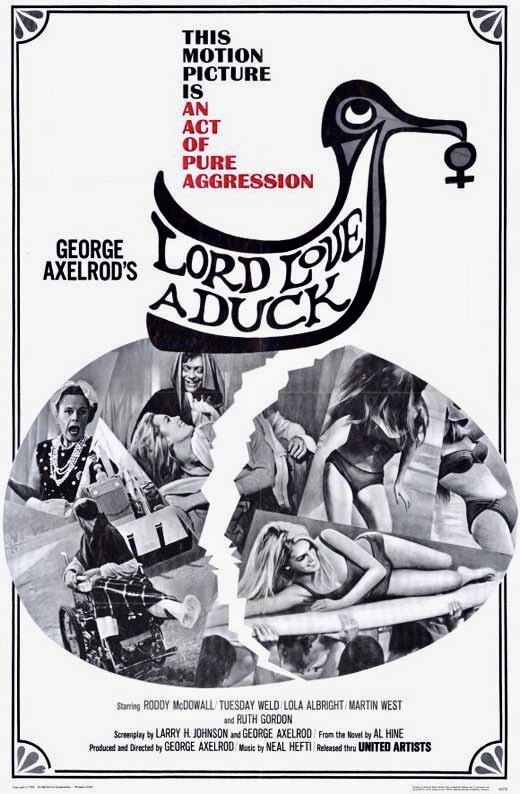
An immensely talented playwright, screenwriter, and satirist, George Axelrod has rarely received the recognition he deserves within the Hollywood industry yet he was the man behind some of the wittiest screenplays of the fifties and early sixties. Foremost among them are two of Marilyn Monroe’s best films (The Seven Year Itch (1955) and Bus Stop, 1956), Breakfast at Tiffany’s (1961) starring Audrey Hepburn in her signature role, and The Manchurian Candidate (1962), a highly paranoid thriller about a political conspiracy which prefigured President Kennedy’s assassination by a year. Less well known but equally audacious is his go-for-broke directorial debut, Lord Love a Duck (1966), a wicked lampoon of the movie business that nourished him and a satire of Southern California culture with its drive-in chapels, fast food restaurants, and self-improvement seminars.

Continue reading

Woody’s Benediction

His name was Woodrow Wilson Woolwine Strode and he was a football star, a professional wrestler, a WWII veteran and a famous Hollywood character actor who should have become a star. But the closest Woody Strode ever got to playing the leading role in an American film was Sergeant Rutledge (1960), in which he portrayed the title character but was fourth billed after Jeffrey Hunter, Constance Tower and Billie Burke. In an ironic twist that makes sense in a Pre-Civil Rights Hollywood, Strode had to travel to Italy to finally receive top billing and the only genuine leading role of his career in Black Jesus (1968) aka Seated at his Right (the Italian title is Seduto alla sua Destra). It is probably one of his least known films but easily his biggest role and possibly his best performance.      

Continue reading

A Quarantine Calamity in the Making

The Covid-19 epidemic of 2020 will always be remembered as the medical crisis that abruptly changed daily life for everyone in the 21st century. It also sparked a renewed interest in movies dealing with deadly pandemics. Steven Soderbergh’s Contagion (2011) starring Matt Damon and Outbreak (1995) with Dustin Hoffman were both box office successes during their initial releases but they suddenly began trending as highly popular titles again on streaming services everywhere. Terry Gilliam’s Oscar-nominated 12 Monkeys (1995) and The Andromeda Strain (1971), based on Michael Crichton’s novel, were also attracting first time and repeat viewers while other, equally worthy movies in the same genre have been forgotten or overlooked. One of these is 80,000 Suspects (1963), a compelling thriller from Val Guest, an often underrated British director.  

Continue reading

Elmer Gantry’s Little Sister

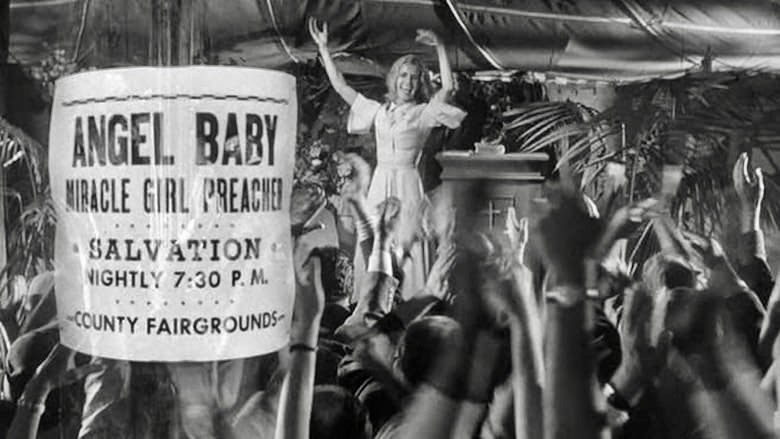
Salome Jens (center) plays a mute girl who regains her voice and becomes a faith healer in the 1961 drama, Angel Baby, directed by Paul Wendkos.

After the critical and box office success of Elmer Gantry in 1960, another film, much smaller in scale and budget, came along that mirrored the latter film both thematically and in some of the plot details. It might have been merely a coincidence that Angel Baby (1961) appeared shortly after the release of Elmer Gantry, but it certainly beats the Burt Lancaster Oscar winner when it comes to oddball casting and camp value.   

Continue reading