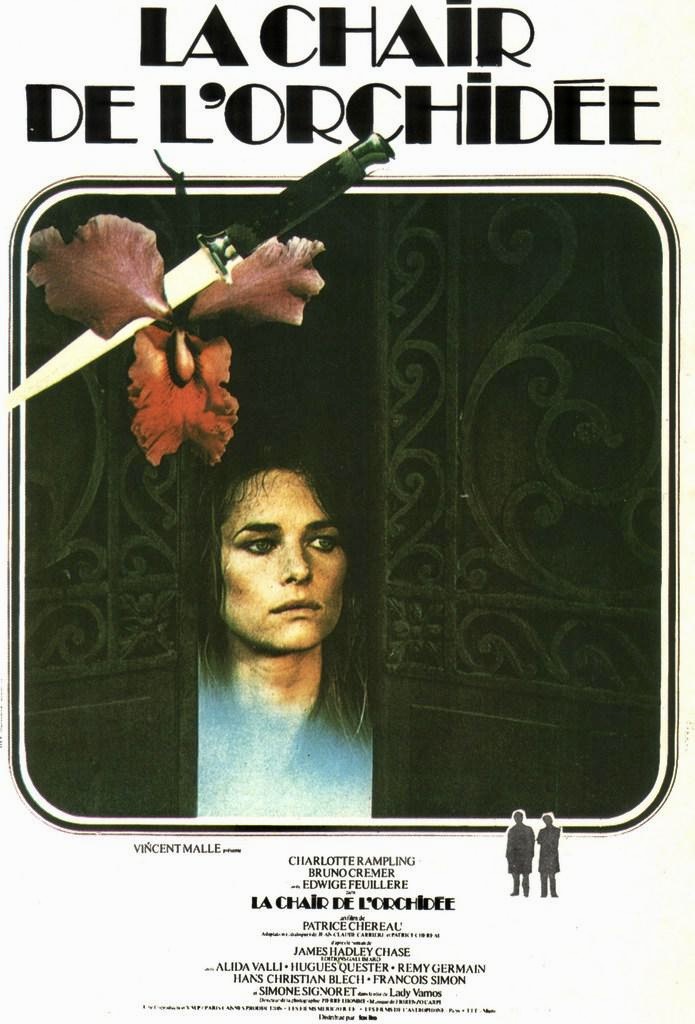
Charlotte Rampling has been an international star since the mid-1970s when she appeared in Zardoz (1974), The Night Porter (1974) and Farewell, My Lovely (1975), but during her early career, critics were more likely to comment on her beauty and sex appeal over her acting talent. It wasn’t until she began appearing in the films of Francois Ozon (Under the Sand [2000], Swimming Pool [2003]) and other independent, cutting-edge directors like Dominik Moll (Lemming, 2005) and Laurent Cantet (Heading South, 2005) that Rampling finally came into her own as a critically acclaimed actress and cult favorite. She has rarely steered clear of edgy material or doing nude scenes or choosing unconventional roles over more audience friendly fare and her movies from the late sixties through the mid-nineties reflect this. Some were pretentious misfires like The Ski Bum (1971) or eccentric one-offs (Yuppi du, 1975) or mainstream showcases for her talent such as Woody Allen’s Stardust Memories (1980) and Sidney Lumet’s The Verdict (1982). Yet, even her lesser known work from this period is often worth seeking out and La Chair de I’orchidee (English title, The Flesh of the Orchid, 1975), the debut film of French director Patrice Chereau, is certainly a wild card. A psychological thriller that seems to take place in an alternate universe where everyone is misanthropic, corrupt, greedy or violent, Chereau’s first film is based on a 1948 pulp fiction novel by James Hadley Chase.
Continue readingTag Archives: The Night Porter
Swinging Down the Street So Fancy Free
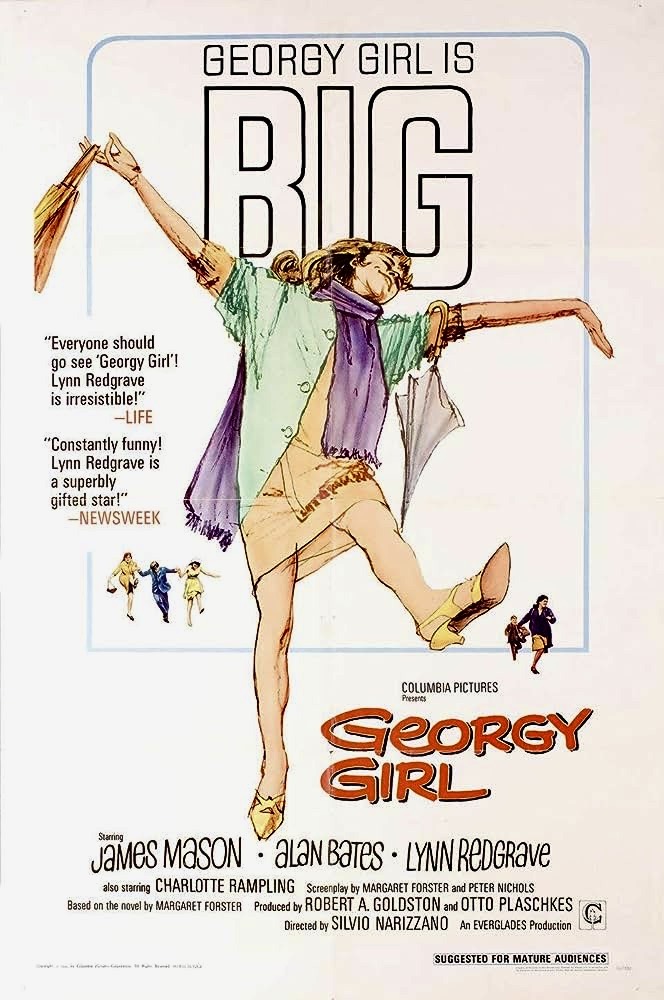
A frumpy woman in her early twenties dreams of being loved but despite her continual attempts to have a romance finds herself observing life from the sidelines, barely noticed by those around her. Reduced to a one sentence description, Georgy Girl (1966) sounds dreary and depressing but on-screen this tale of a desperately lonely woman unfolds as a madcap, often irreverent farce which at times is cruelly indifferent to the sad-sack characters it parades before us. This is a film where tone is everything and Georgy Girl, directed by Silvio Narizzano, is distinctively different in this respect, standing out from countless other cinematic tearjerkers about ugly ducklings and lonely spinsters. The film also captures London at the height of the Swingin’ Sixties when everything seemed like a put-on or a come-on.
Continue readingTinto Brass Directs a Spaghetti Western
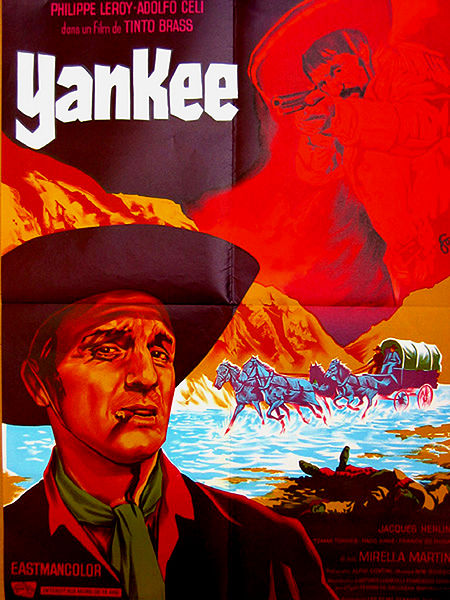
If U.S. moviegoers are familiar with the name Tinto Brass at all, it is probably due to the infamous 1979 epic Caligula which featured world renowned actors (Peter O’Toole, Helen Mirren, John Gielgud, Malcolm McDowell, etc.) and hardcore sex scenes (which were later added by producer/Penthouse tycoon Bob Guccione against the wishes of Brass who disowned the film). Brass had already established himself as a master of art house erotica/perversity with 1976’s Salon Kitty about a brothel in WWII Berlin where the prostitutes were undercover spies. But after Caligula, Brass seemed much happier directing more modestly budgeted, softcore adaptations of literary works like The Key (1983, based on the novel by Jun’ichiro Tanizaki) and Paprika (1991, inspired by the novel Fanny Hill), which showcased his increasing obsession with shapely female bottoms.
In retrospect, his early career is a contemplation of the paths not taken: documentary (Ca ira, il fiume della rivolta aka Thermidor, 1964), avant-garde cinema (L’urlo aka The Howl, 1970) and eccentric genre offerings such as Col cuore in gola aka Deadly Sweet, 1967). Of the latter, Yankee (1966), the only spaghetti western ever directed by Brass, is definitely worth a look. Continue reading
The Games People Play According to Eloy de la Iglesia
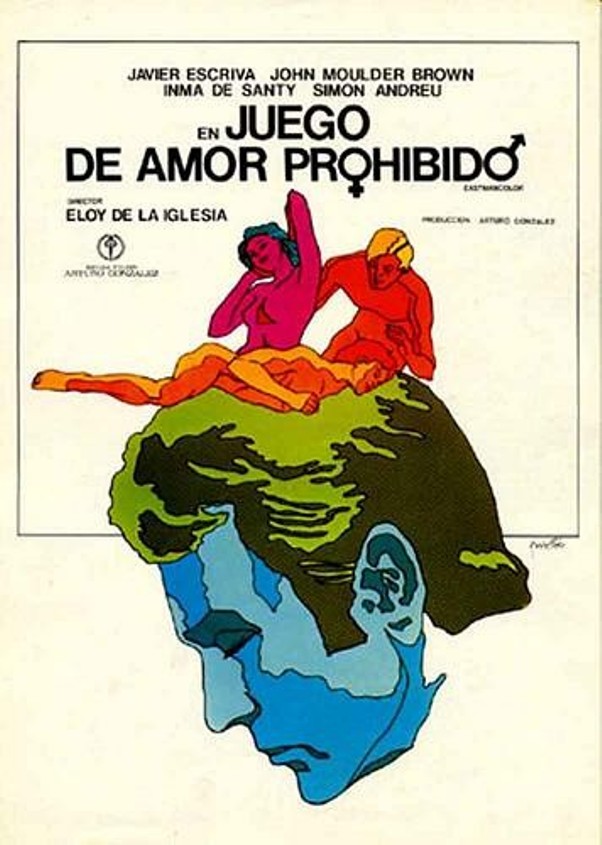
Two college students, Miguel (John Moulder-Brown) and Julia (Inma de Santis), take advantage of a school holiday to run off together for parts unknown. Their plan is to shack up somewhere where their parents can’t find them but their impromptu road trip takes an unexpected detour. The young lovers soon find themselves prisoners at a sequestered mansion and estate under the control of Don Luis (Javier Escrivá), an aristocrat with a passionate love of fine arts and the music of Richard Wagner. He also happens to be one of their professors at college and the one who picked up the hitchhikers while he was blasting “Ride of the Valkyries” from his car stereo. This is the set-up for Eloy de la Iglesia’s Forbidden Love Game (Spanish title: Juego de amor prohibido, 1975) but if you think you know what’s coming, you’re probably mistaken. Continue reading