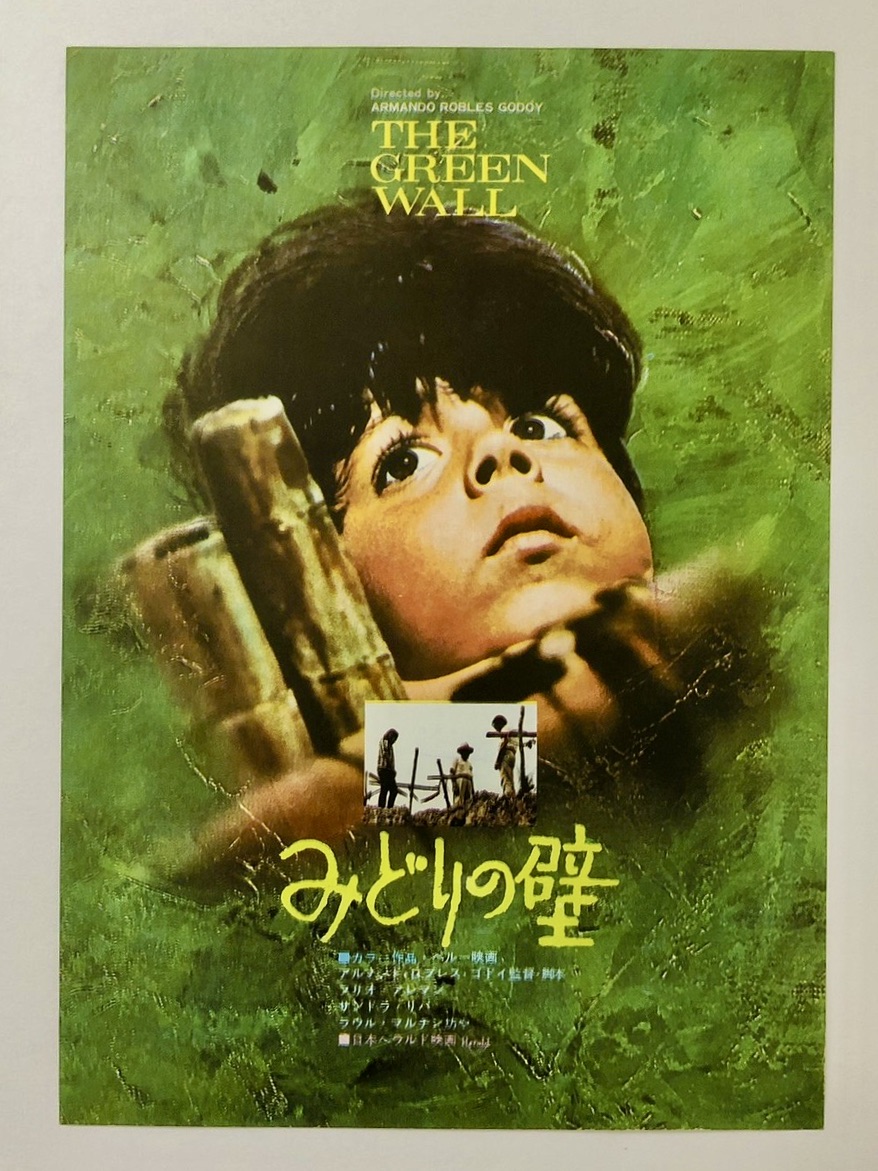
Armando Robles Godoy’s The Green Wall

The Japanese film poster for the 1969 Peruvian film LA MURALLA VERDE aka THE GREEN WALL

Remember the back-to-the-land movement of the mid-1960s, which lasted well into the late 1970s? It was a counterculture response to urban living with its many problems – traffic, pollution, crime, political turmoil, etc.. Young people, in particular, were looking for healthier, more sustainable lifestyles such as growing their own food and living off the land. Although this cultural phenomenon mostly occurred in North America, the idea was co-opted by young idealists around the world, even in such far away places as Tingo Maria, Peru. That is the setting of the 1969 film La Muralla Verde (English title, The Green Wall), the story of Mario (Julio Aleman), a recently married businessman, who becomes fed up with city living in Lima and convinces his wife Delba (Sandra Riva) to start a new life on the land he has purchased in the Peruvian jungle. Along with their newborn son Romulo, the couple set off on a new chapter in their lives with high hopes.

Continue reading
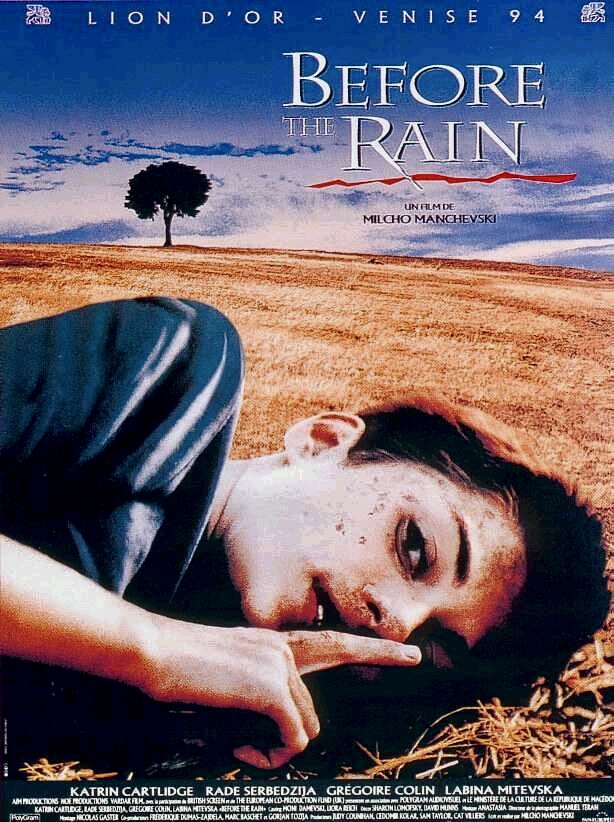
Tales from the Balkans

When Yugoslavia ceased to exist as a country in 1991, the six republics within that nation – Croatia, Montenegro, Serbia, Bosnia & Herzegovina, Slovenia and Macedonia – split up into individual countries but several of them experienced ethnic conflicts and internal strife that erupted into war. Some of the worse infighting and loss of human life took place in the Bosnia, Serbia and Croatia regions between 1991 and 1995 but chaotic conditions continued to affect the six republics up to 2001. Macedonia was spared from most of the war but people in that country lived under the constant threat of impending chaos and some individual feuds could easily have led to a full blown revolution such as the situation depicted in Milcho Manchevski’s Pred Dozhdot (English title: Before the Rain, 1994). The first Macedonian film to receive international recognition and acclaim, Manchevski’s feature debut, however, is not an attempt to delve into the social and political issues that resulted in the Yugoslav Wars or a docu-drama that puts the ethnic conflicts into a contextual frame. Instead, he takes a poetic but accessible approach that creates empathy for the victims and their families in a way that makes it just as timely and relevant today as it was in 1994.

Continue reading

Man of Mystery

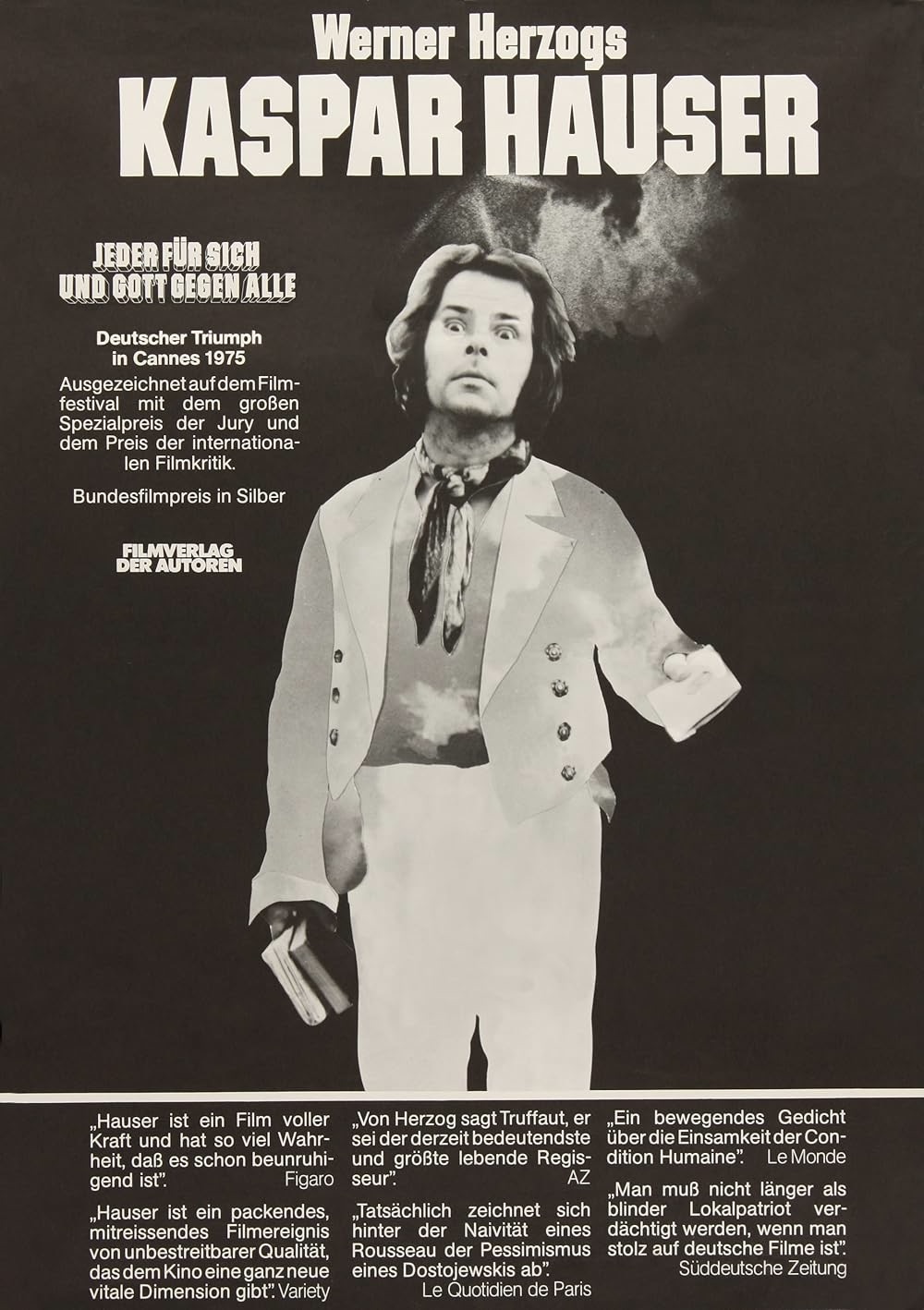
The German film poster for THE ENIGMA OF KASPAR HAUSER aka Every Man for Himself and God Against All (1974).

In May 1828 a young man appeared in a town square in Nuremberg, Germany carrying a prayer book and two letters written by his former caretaker. He spoke very little and was unable to answer any questions about his identity, where he came from or why he was there. One of the letters stated that he had come to the city to meet the captain of the 6th cavalry regiment with the hope of becoming a cavalryman. The other letter claimed he had been born in 1812 and had been raised in complete isolation from other people although he had been taught rudimentary reading and writing skills. His name was Kaspar Hauser but his mysterious nature and childlike presence baffled the townspeople and he was housed as a vagabond at the local prison until he was made a ward of the city and put under the protective care of Lord Stanhope, a wealthy aristocrat. Stanhope devoted himself to Hauser’s further education and re-entry into society and the young man’s bizarre demeanor aroused the curiosity of the public as well as doctors, professors and members of the clergy. Unfortunately, Hauser’s life came to an abrupt end in April 1833 when the mysterious man who first brought him to Nuremberg returned and stabbed him to death, escaping without a trace. The case has been a source of fascination for years in Germany and numerous films, television series and made-for-TV movies have been made about him but The Enigma of Kaspar Hauser aka The Mystery of Kaspar Hauser aka Every Man for Himself and God Against All (German title: Jeder fur Sich und Gott Gegen Alle, 1974), directed by Werner Herzog, is probably the most famous and critically acclaimed of all the versions made to date.

Continue reading

Mathematical Riddles

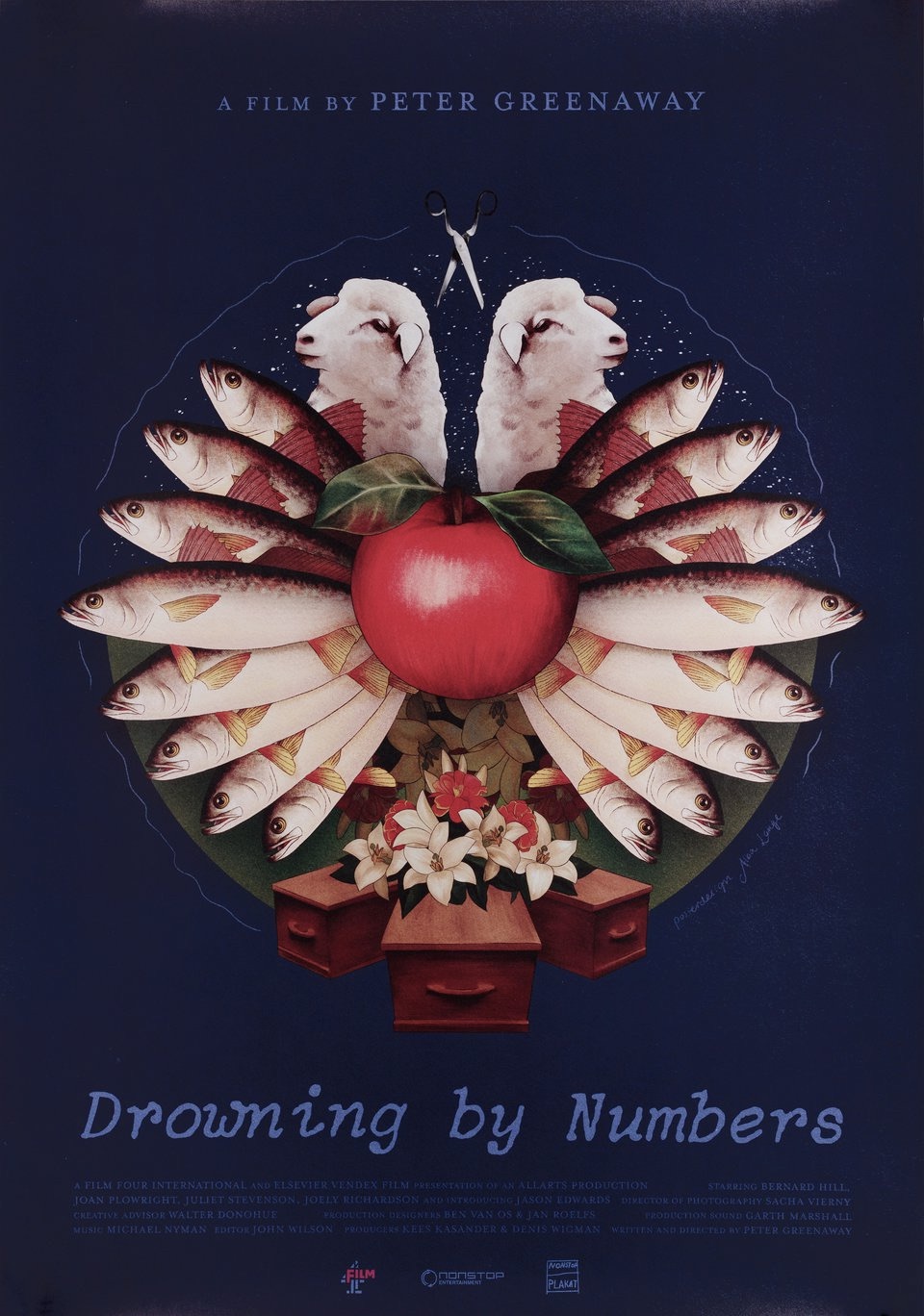
Peter Greenaway is not the sort of director who has ever tried to appeal to the average moviegoer or make a mainstream film but that doesn’t mean he hasn’t enjoyed a long and successful career in the cinema. In fact, his 1989 film The Cook, the Thief, His Wife & Her Lover was a surprise box office hit, grossing more than 7.7 million dollars in the U.S., which was highly impressive for an art house flick. Still, his filmography might seem intimidating or of little interest to most American viewers but several of Greenaway’s feature films from the 1980s are quite accessible, if only curious movie lovers would give them a chance. The Draughtsman’s Contract (1982) and The Belly of an Architect (1987) are good places to begin but my personal favorite is Drowning by Nights (1988), which is a subversive black comedy involving murder, game playing, and a fascination with numbers.

Continue reading

Rupert Pupkin’s Stand-Up Act

Some movies are prescient or ahead of their time but audiences and film critics often don’t notice until many years after the original release. Sidney Lumet’s Network (1976), written by Paddy Chayefsky, is one example, but so is The King of Comedy (1983), which unlike Network, was a major box office bomb for director Martin Scorsese and received mixed reviews from the critics. Yet, it seems more relevant than ever about the cult of celebrity and the public’s obsession with the rich and famous. Although The King of Comedy was promoted as a comedy, some critics and moviegoers found the film too dark and disturbing and felt Rupert Pupkin, the title character, was just as delusional and dangerous in his own way as Travis Bickle, the anti-hero of Scorsese’s Taxi Driver (1976).

Continue reading

Anything for a Laugh

How many movie spoofs can you name which poke fun at World War II espionage dramas AND rock ‘n’ roll musicals? There’s only one and it’s also notable as Val Kilmer’s screen debut – Top Secret! (1984). The follow-up film to Airplane! (1980), their enormously successful parody of disaster flicks, Top Secret! was the third collaboration between Jim Abrahams, David Zucker and his brother Jerry and employs the same anything goes style of that previous hit and their first film, The Kentucky Fried Movie (1977), which the trio co-wrote but John Landis directed. In other words, outrageous sight gags, terrible puns, anachronisms, broad slapstick, politically incorrect humor and silly pop culture parodies.

Continue reading

A Danish Original and a Canadian Remake

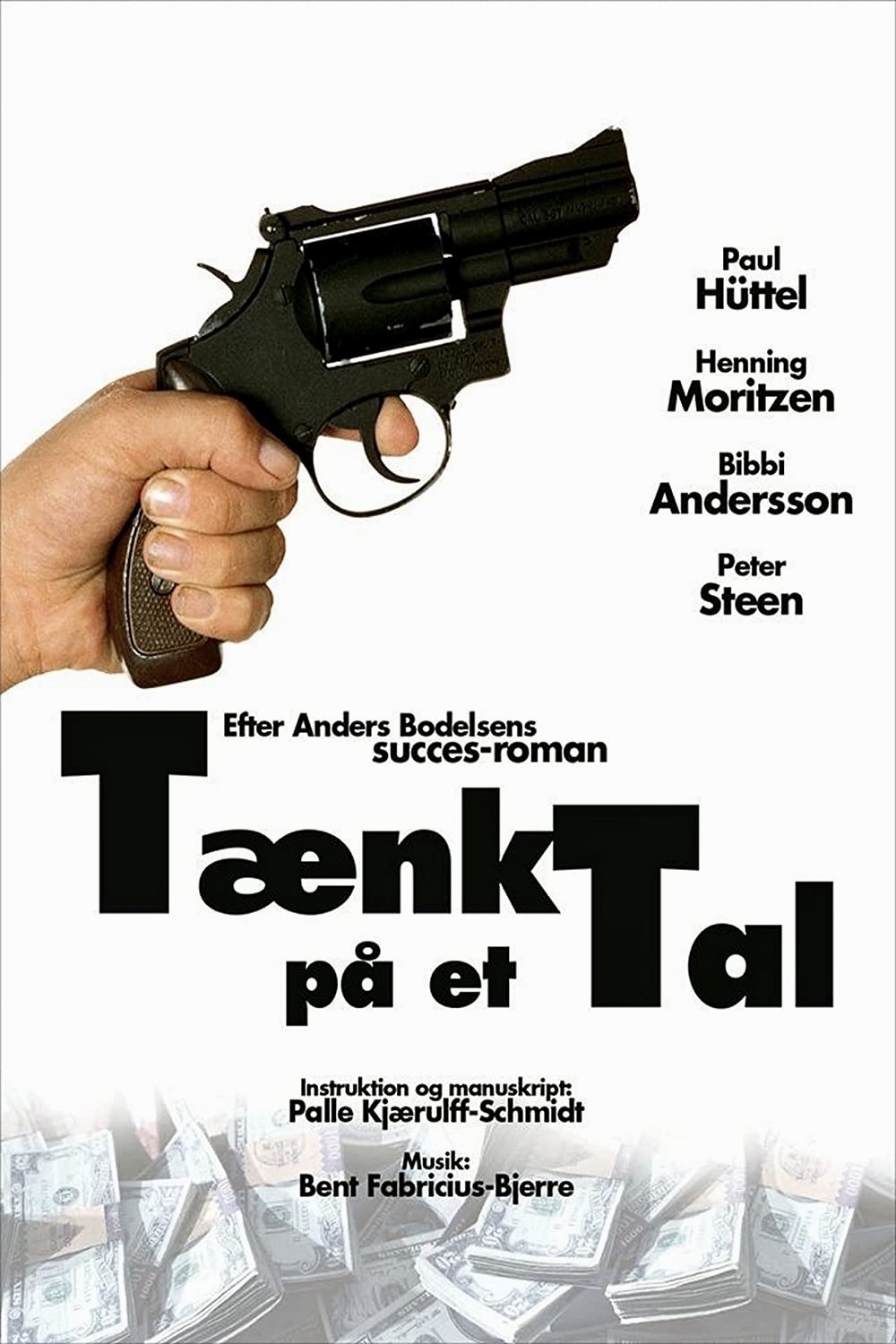
The Danish film poster for THINK OF A NUMBER (1969), which was remake as THE SILENT PARTNER in 1979.

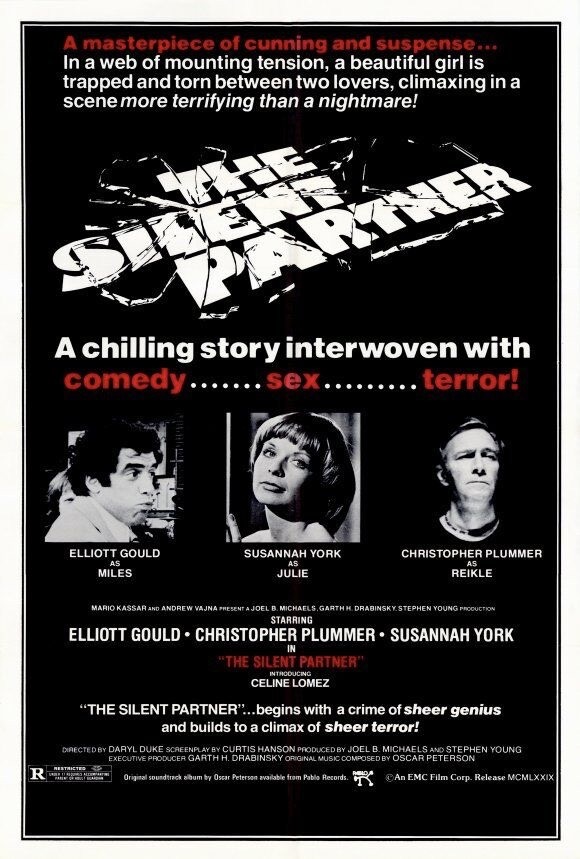
In March 1979 a small scale but offbeat and ingenious little crime drama entitled The Silent Partner slipped into U.S. theaters without any advance word. A Canadian tax shelter write-off, the movie might have passed unnoticed if it hadn’t been for a handful of U.S. film critics who championed the release such as Roger Ebert of The Chicago Sun-Times, who called it “a thriller that was not only intelligently and well acted and very scary, but also had the most audaciously clockwork plot I’ve seen in a long time…it’s worthy of Hitchcock.” And Janet Maslin of The New York Times called it “a dense, quirky, uncommonly interesting movie, this time with a high quotient of suspense.” 

Over the years The Silent Partner has built up a considerable fan base and has become a welcome Yuletide viewing alternative (it is set during the Christmas season) to the umpteenth airings of It’s a Wonderful Life and A Christmas Carol. What most American viewers don’t realize is that The Silent Partner is a remake of the 1969 Danish thriller Think of a Number (Taenk pa et tal), directed by Palle Kjaerulff-Schmidt.

Continue reading

Lip-Syncing to a Different Tune

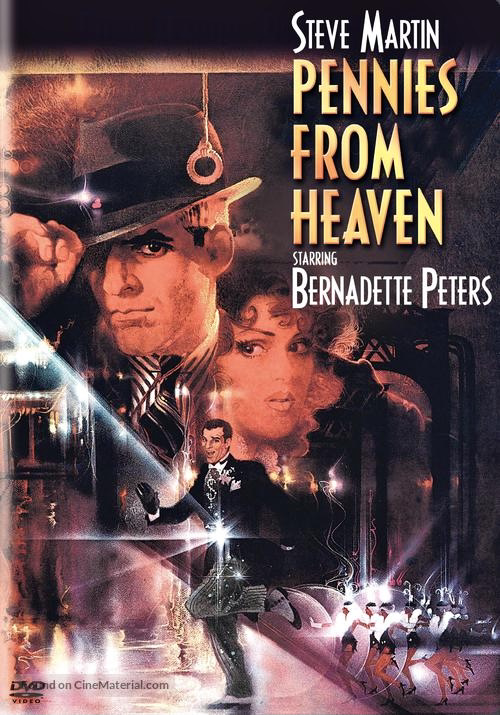
In the wake of Heaven’s Gate (1980), the $38 million dollar epic by director Michael Cimino that become one of the most expensive box office disasters in movie history, every studio in Hollywood began to carefully monitor their production costs. This was especially true at MGM, which had recently acquired United Artists, the producer and distributor of Heaven’s Gate. You would think in this financially conservative new climate, created by near-bankruptcy conditions, MGM would have steered clear of producing a risky commercial venture like Pennies From Heaven (1981), based on the critically acclaimed six-part British TV mini-series by Dennis Potter. Yet, despite the odds, the studio took a chance on this dark and disturbing tale of a traveling sheet music salesman who escapes the daily drudgeries of his job and miserable married life through fantastic daydreams set to popular songs.

Continue reading

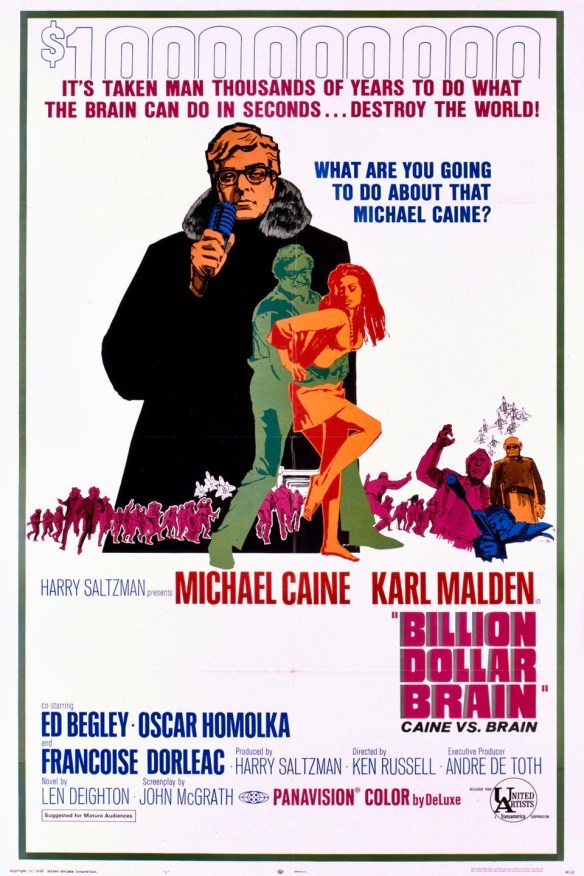
The First Anti-American Spy Film?

That was how director Ken Russell described his production of Billion Dollar Brain (1967). Whether that claim is true or not, Russell maintained it was the main reason the third entry in the Harry Palmer spy series failed at the box office. To be totally honest, none of the competing rivals in the film – Russia, the U.K., Latvia and the U.S. – are preferable over the other and come across as cynical, opportunistic entities that are only focused on their own agendas and self interests. Seen today, Billion Dollar Brain is easily most entertaining film in the five-movie franchise and deserves a reappraisal.   Continue reading

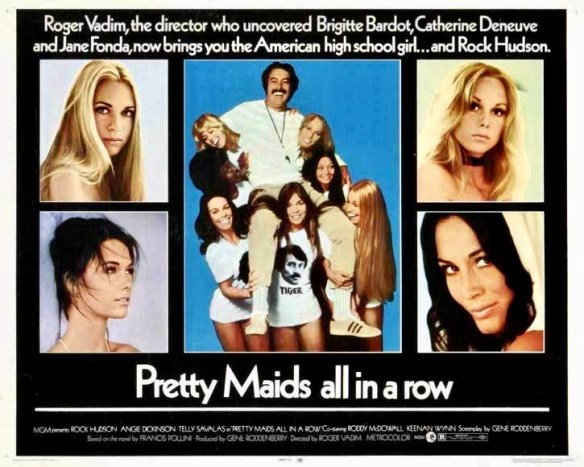
High School Was Never Like This!

Among the many peculiar assemblages of cast and crew in Hollywood history, Pretty Maids All in a Row (1971) is in a class by itself. A black comedy set in a California high school where someone is murdering female students, the film marked the U.S. film debut of French director Roger Vadim (Barbarella, 1968) with Star Trek creator Gene Roddenberry producing and writing the screenplay. Mix in a number of seasoned Hollywood professionals (Rock Hudson, Angie Dickinson, Roddy McDowall, Keenan Wynn, William Campbell) with a hip, younger cast of aspiring actors and starlets. Top it off with a music score by Lalo Schifrin (Mission: Impossible, 1996) and a theme song co-written by Christian music mogul Mike Curb and sung by The Osmonds. And the result is a delicious guilty pleasure for some and a cringe-inducing embarrassment for others. There is no middle ground here unless you choose to view the film as a sociology experiment.   Continue reading