In Their Own Words: Actors on Film Flops and Disappointments

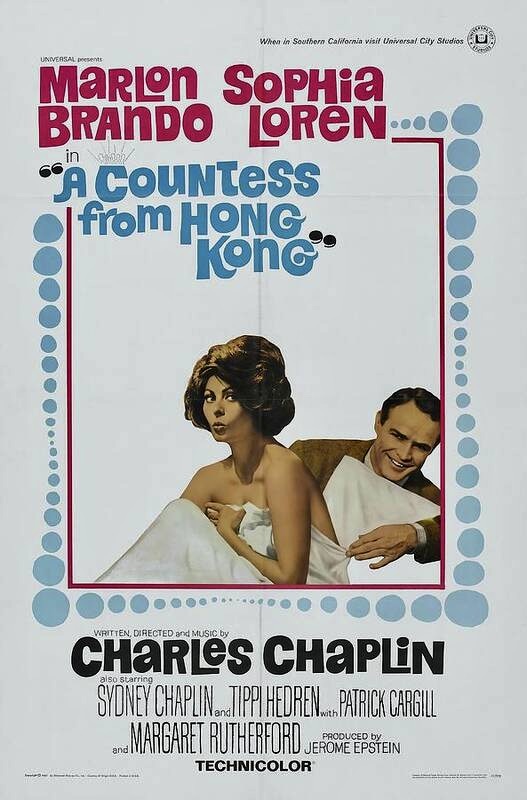
Nobody sets out to make a bad movie. Why would they? Not only is it a colossal waste of money but it will remain on the permanent record of everyone associated with it. Still, there are factors that no one can control and sometimes an actor makes a movie with the best intentions that the critics hate, audiences avoid like the plague or conflicts during production doom it to failure.  Here are 15 well documented examples including Marlon Brando (A Countess from Hong Kong), Shelley Winters (Knickerbocker Holiday), Richard Widmark (Slattery’s Hurricane), Beverly Garland (Swamp Women and Stark Fear), Bruce Dern (The Incredible 2-Headed Transplant), Ava Gardner (The Bible…In the Beginning), Christopher Plummer (The Royal Hunt of the Sun), Ida Lupino (The Hard Way), Tony Curtis (Son of Ali Baba), Sally Kellerman (Reform School Girl), Ernest Borgnine (The Devil’s Rain), Raquel Welch (Myra Breckinridge), Warren Oates (Chandler), Joan Shawlee (Prehistoric Women) and Vincent Price (Green Hell).

Continue reading
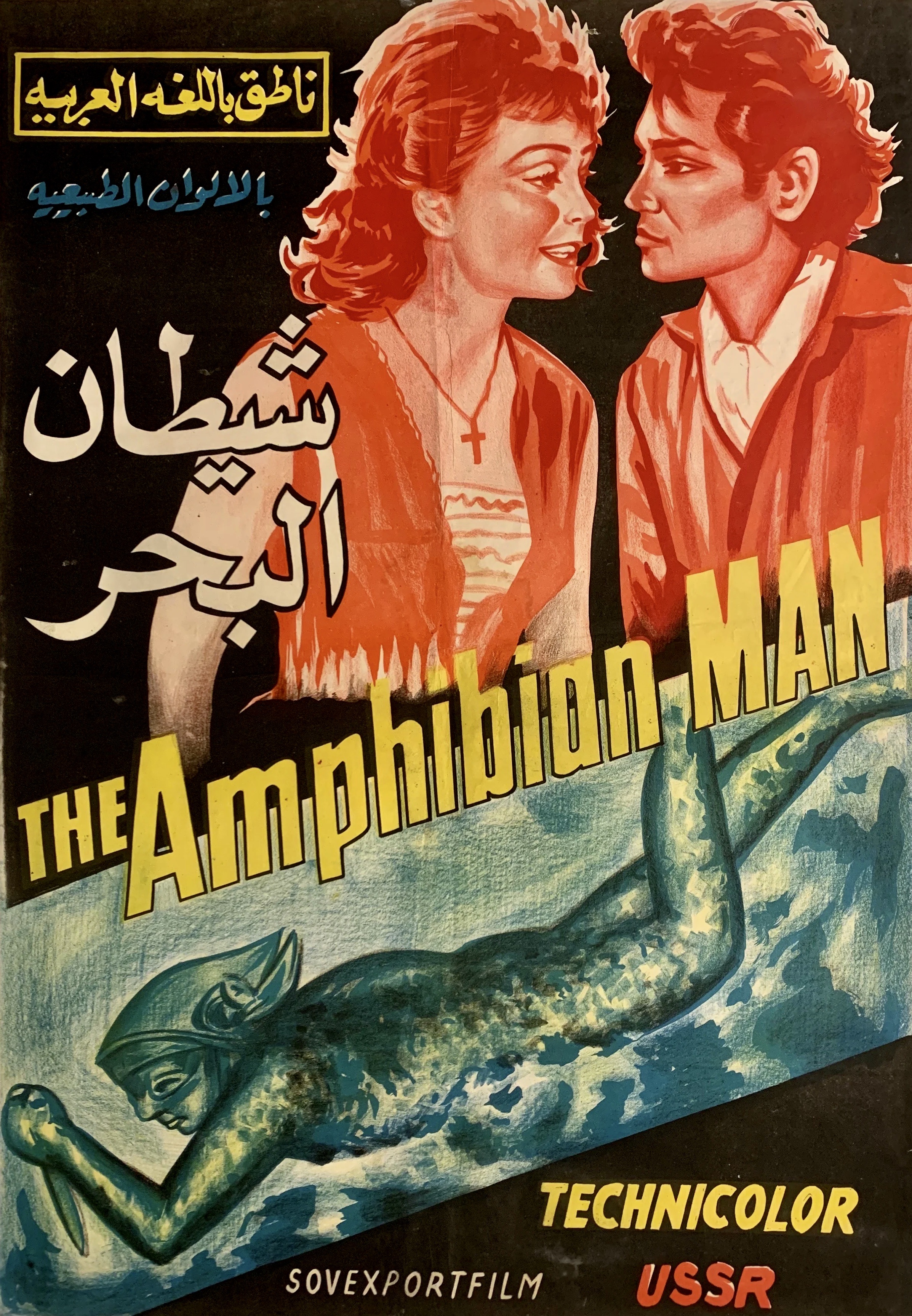
Beauty and the Sea Devil

The Russian film poster for the 1961 fantasy THE AMPHIBIAN MAN.

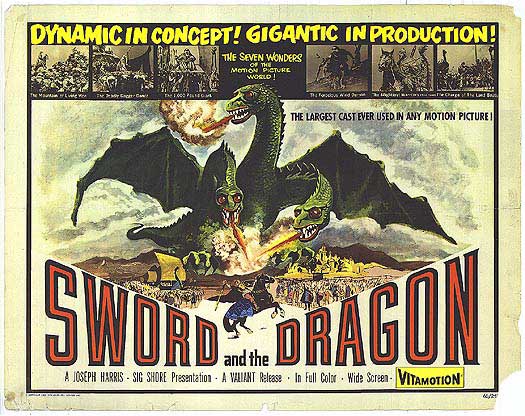
Science fiction and fantasy films have always been a popular staple of Russian cinema but, during the first half of the 20th century, very few of these genre films found theatrical distribution in the U.S. Among the handful that did make to American screens are Yakow Protazanov’s Aelita, the Queen of Mars (1924), Vasily Zhuravlyou’s Cosmic Journey (1936), Planeta Bur aka Planet of Storms (1962), which producer/director Roger Corman raided twice, using footage from it for Voyage to the Prehistoric Planet (1965) and Voyage to the Planet of Prehistoric Women (1968), and Ilya Muromets (1956), an epic fairy tale adventure from director Aleksandr Ptushko that was released in an edited, English-dubbed version entitled The Sword and the Dragon. Some Russian fantasy titles later popped up on American television and second-run houses in poor quality English language dubs like Sampo aka The Day the Earth Froze (1959) but my all-time favorite from this period is Chelovek-Ambibiya (English title: Amphibian Man, 1961), co-directed by Vladimir Chebotaryov and Gennadiy Kazqanskiy.

Continue reading

Nazi Zombies, White Slave Traders, Cannibal Cults and More from Eurocine

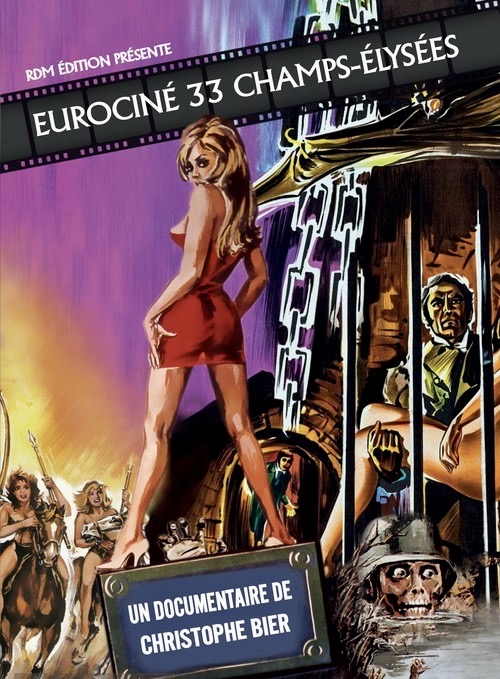
Exploitation films in every imaginable genre from the late fifties to the mid-eighties attracted a specific kind of viewer that enabled U.S. companies like American International Pictures (AIP) and Crown International Pictures to become profitable enterprises through drive-in and grindhouse saturation and later the VHS market. By spicing up their low-budget productions with more sex, violence and subject matter Hollywood avoided, these minor players provided a wildly diverse alternative to mainstream commercial cinema but it wasn’t unique to America alone. Europe also got into the act and the French company Eurocine went from obscurity to cult status for some of its more infamous hits like The Awful Dr. Orlof (1962), Red Hot Zorro (1972), White Cannibal Queen (1980) and Zombie Lake (1982). A behind-the-scenes look at the company’s history and Marius Lesoeur, the man who made it an international brand, is the focus of Eurocine 33 Champs-Elysees (2013), an entertaining and often amusing French documentary which is named after the company’s address in Paris.

Continue reading

A Poor Man’s Grand Prix

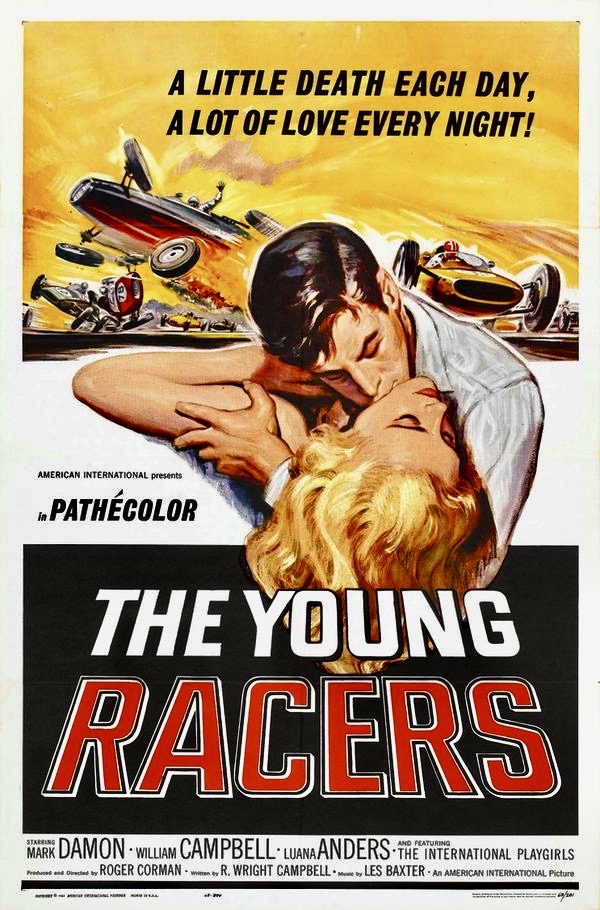
In 1966 director John Frankenheimer, a race car enthusiast, was able to realize a long-cherished dream: to make a film about the Grand Prix racing circuit focusing on several drivers and their personal lives off the track. The result, Grand Prix, is still considered the ultimate racing film, due to its spectacular cinematography that puts the viewer in the driver’s seat with its Cinerama format, split-screen technique and immersive audio. According to the director, it cost about $10.5 million to make, was a box office hit and garnered three Oscars for Best Sound, Best Film Editing and Best Sound Effects. What many people failed to notice was that director Roger Corman had already made a film about the Grand Prix racing circuit three years earlier entitled The Young Racers (1963), which was made on location in Europe like Frankenheimer’s epic with exciting racing footage from Monte Carlo, Monaco, Rome, Rouen (France) and Spa (Belgium) and it cost less than half a million to make. Sure, it was a B-movie from American International Pictures (AIP) but it had a glossy, big budget look to it unlike the typical AIP product and it added some invocative twists to a formulaic genre film that often seemed influenced by the aesthetics of the French New Wave (Corman has always been a fan of European art cinema).

Continue reading

Pistol Packin’ Femme Fatales

Mara Corday is Vera, the mastermind behind a gang of female bandits, in GIRLS ON THE LOOSE (1958), directed by Paul Henreid.

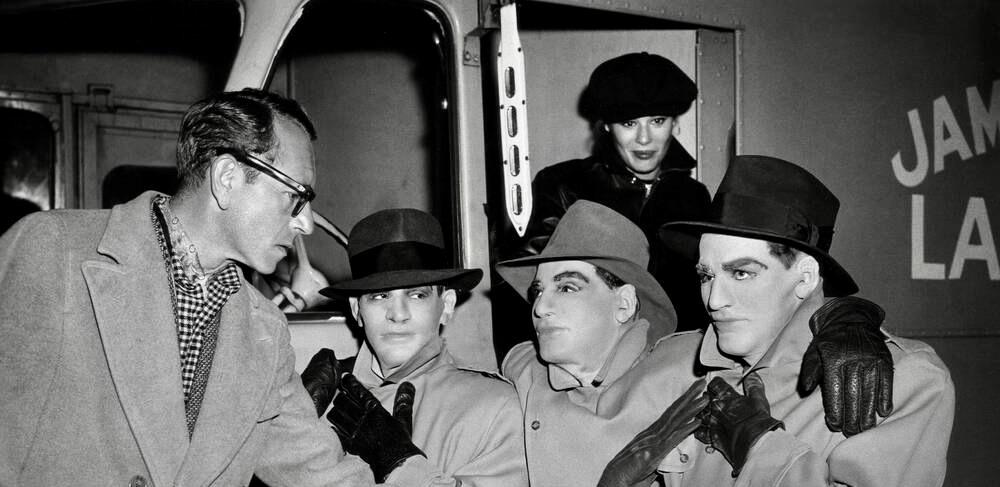
Juvenile delinquent films in the 1950s were so plentiful that they became a major B-movie subgenre and the surprisingly thing about that was the number of movies featuring female hooligans. Among some of the more famous titles are Reform School Girl (1957), Runaway Daughters (1956) and Teenage Devil Dolls aka One Way Ticket to Hell (1955) but Girls on the Loose stands out from the pack as a little known and ingenious B-movie delight. For one thing, these aren’t gum-chewing high school delinquents but a quartet of hardened professionals and damaged goods. Equally surprising is the tough, no nonsense story arc which makes the most of its low budget sets and noir lighting schemes in a compact 77-minute programmer directed by Paul Henreid. Yes, THAT Paul Henreid, the former Warner Bros. heartthrob from Austria-Hungary who performed that romantic cigarette seduction of Bette Davis in Now, Voyager (1942). Here he is below, directing his incognito cast of Girls on the Loose.    

GIRLS ON THE LOOSE, director Paul Henreid on set with masked robbery gang Mara Corday, Joyce Barker, Lita Milan and getaway driver Abby Dalton at rear, 1958 Courtesy Everett Collection.
Continue reading

Introducing The Ramones

There was a time in the 1970s when film distributors were able to test-market their more offbeat offerings as “Midnight Movies” for adventurous moviegoers. Sometimes these developed into cult phenomenas like El Topo (1971), The Rocky Horror Picture Show (1975), or Eraserhead (1976). Sometimes they failed to find any audience at all like Pelvis (aka All Dressed Up in Rubber with No Place to Go, 1977) or Elevator Girls in Bondage (1972). Arriving at the tail end of the Midnight Movie craze, Rock ‘n’ Roll High School (1979) fell somewhere between these two extremes.

Continue reading

Ilya Muromets vs. the Dragon

The Sword and the DragonThere is no doubt that my love of all things bizarre, unusual, and other-worldly was influenced to some degree by viewing at an early age Forbidden Planet, This Island Earth, The Wolf Man, I Married a Witch, The Wizard of Oz and Walt Disney animated films such as Pinocchio and Fantasia. But Hollywood films weren’t the only ones to fire my imagination and, thanks to some adventurous distributors in the fifties and sixties, I was exposed to a number of offbeat international features that were circulated in English-dubbed versions for kiddie matinees. Some were completely re-edited for American audiences but still cast a strange spell, regardless of their quality.    Continue reading