Balancing Act

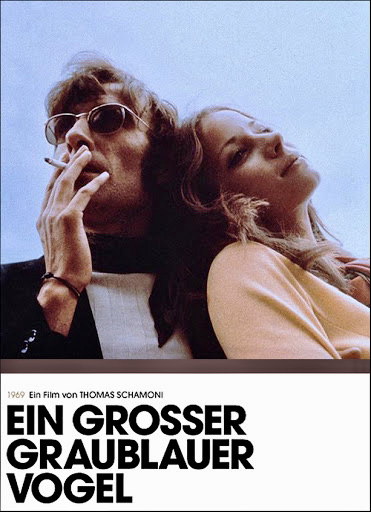
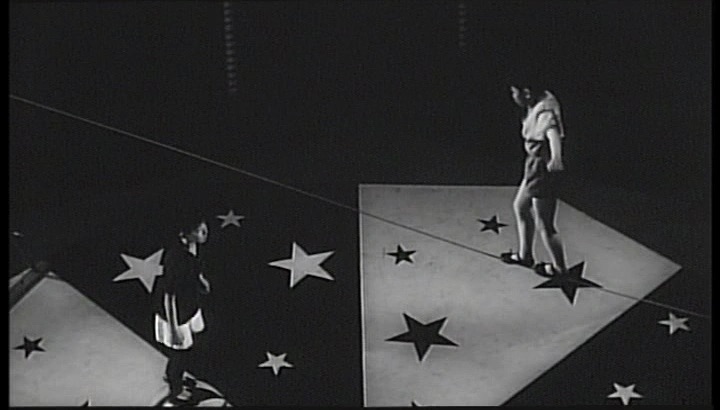
When was the last time you went to the circus? For most people, that form of popular entertainment has changed drastically over the years and is now more likely to be a showcase for human acts like Cirque de Soleil than one featuring performing animals (dancing elephants, lion taming, horses leaping through hoops of fire, etc). But there was a time from the late 19th to the middle of the 20th century when circuses were the ultimate family entertainment. Movies, in particular, captured the golden age of the circus in a variety of genres that ranged from big screen spectacles (The Greatest Show on Earth [1952], Circus World [1964]) to slapstick comedies (The Circus [1928], At the Circus [1939]) to Walt Disney fare (Dumbo [1941], Toby Tyler or Ten Weeks with a Circus [1960]) to horrific murder mysteries (Circus of Horrors [1960, Berserk [1967]). Yet, there are few, if any, that merge fantasy and reality in the style of Japanese director Kaizo Hayashi’s Nijisseiki Shonen Dokuhon (English title: Circus Boys, 1989). This balancing act is also matched metaphorically through the two main protagonists who must learn to come to terms with gravity, whether it is riding an elephant, walking a tightrope or finding stability in their lives.

Continue reading
A Nouvelle Vague Musical?

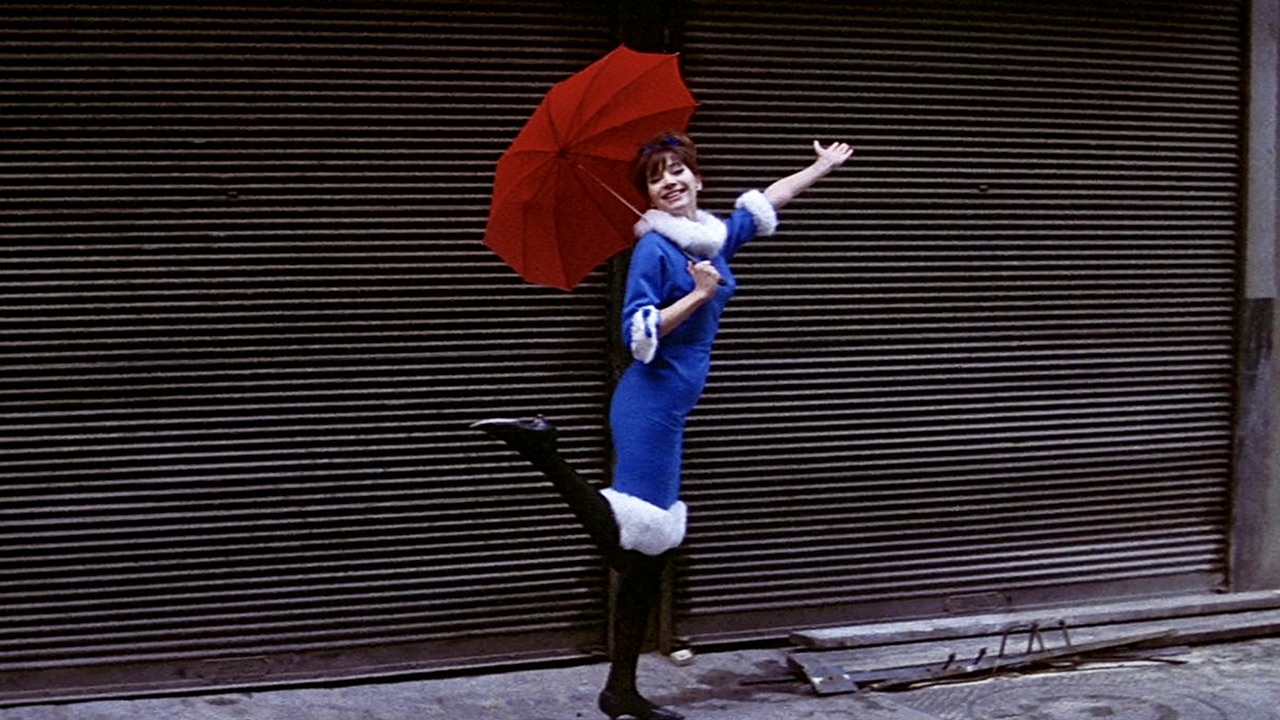
Angela (Anna Karina) imagines she is in a movie musical choreographed by Bob Fosse in A WOMAN IS A WOMAN (1961), directed by Jean-Luc Godard.

Of the more than 120 movies and short films in director Jean-Luc Godard’s oeuvre, there is really nothing like Un Femme est une Femme (English title: A Woman is a Woman, 1961). What other Godard creation could you describe as joyful, lighthearted and consistently playful? A homage to MGM musicals, romantic comedies a la Ernst Lubitsch and Hollywood productions shot in Cinemascope and Eastmancolor, A Woman is a Woman is essentially a valentine to Godard’s muse at the time, Anna Karina. It is also unlike any other musical ever made or even a Nouvelle Vague confection like Jacques Demy’s The Umbrellas of Cherbourg (1964).  Yet, for someone who has never seen a Godard film, it is an accessible entry point to his work and an example of why he was considered so innovative, daring and controversial for his time.

Continue reading

The Mysterious Language of Twins

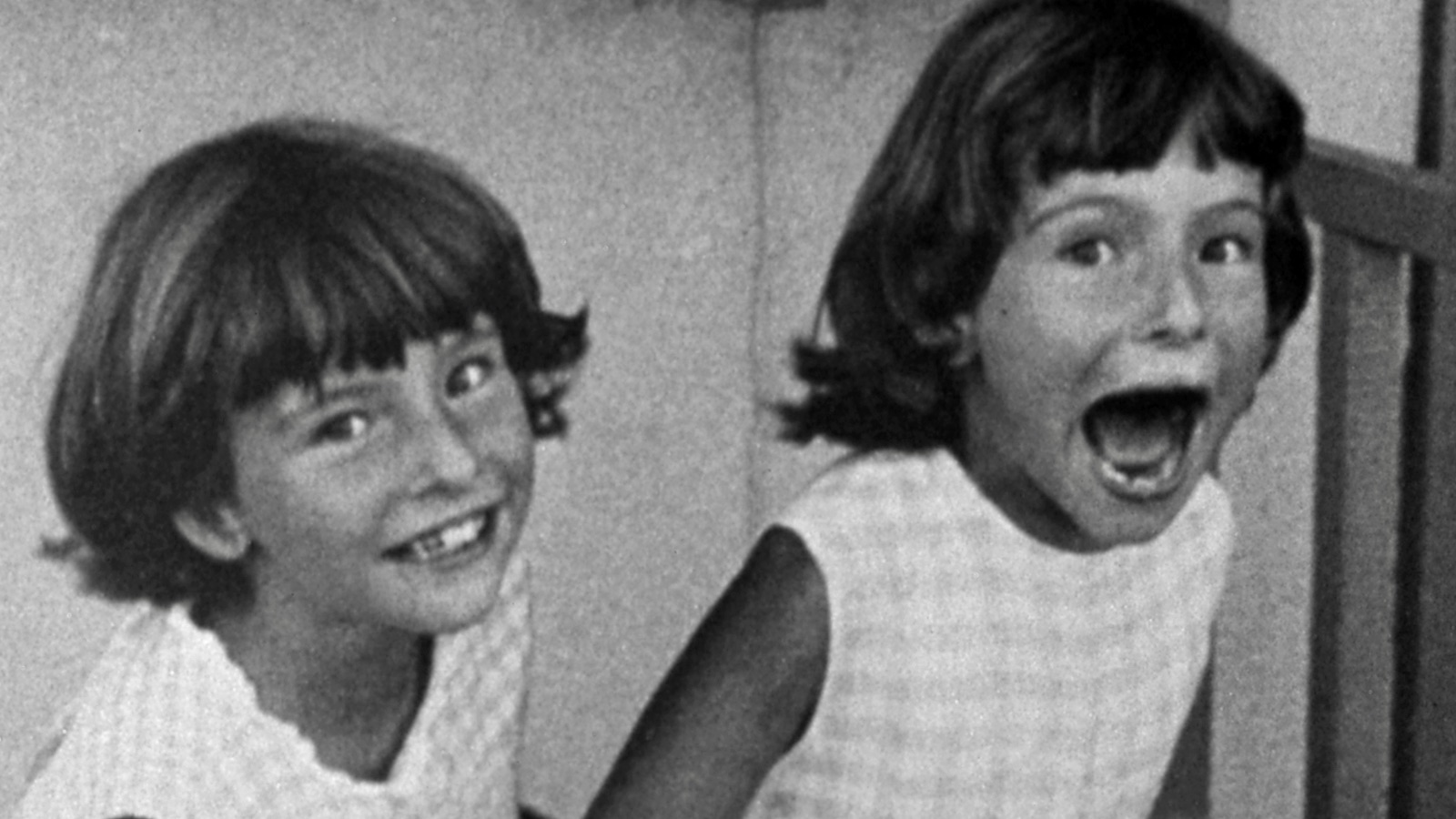
Twin sisters Gracie and Ginny Kennedy created a secret language only they could understand in the 1979 film POTO AND CABENGO, the names they called themselves instead of their English names.

In 1977 journalists became fascinated with a story about six-year-old twin sisters in San Diego who spoke in a language no one could understand but was the sole means of communication between the two girls. Their names were Gracie and Ginny Kennedy but they called themselves Poto and Cabengo in their nonsensical form of speaking. Had they actually created a secret language for themselves or was it just meaningless blather? The girls became a media sensation and speech therapists at the Children’s Hospital in San Diego studied their language in hopes of determining whether the girls’ interaction was a case of arrested idioglossia, a phenomenon in which twins (or individuals) create a private language with a unique vocabulary and syntax (most children grow out of it at age 3 but the twins were a rare exception). French filmmaker Jean-Pierre Gorin had recently moved from Paris to the University of California at San Diego for a faculty position when he first heard about the twins. He immediately decided that Gracie and Ginny would be ideal subject matter for his first solo directorial effort but the result entitled Poto and Cabengo (1979) could not really be classified as a documentary. Instead, it is a highly personal non-fiction portrait that is closer to an experimental film than anything else and Gorin’s involvement with the twins and their family become just one aspect of the movie’s multi-layered narrative interests.

Continue reading

Gas, Food, Lodging…and Murder

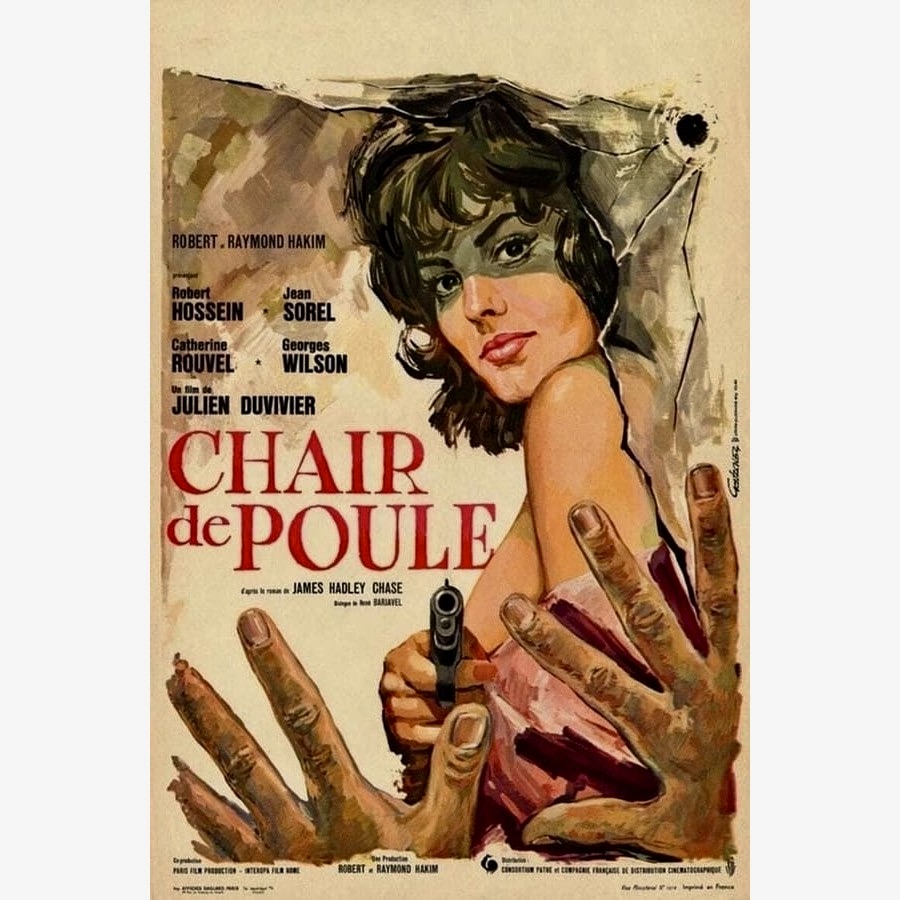
The French film poster for HIGHWAY PICK-UP (1963), a French crime drama directed by Julien Duvivier.

Daniel and Paul are professional locksmiths and good friends who work for the same company. When they mastermind the robbery of a client by breaking into a safe Daniel had previously repaired, the theft goes awry, with the client dying from a blow to the head. Paul escapes but Daniel is shot and injured by the police in the ensuing chase and sentenced to 20 years in prison. After a year in the stir, Daniel escapes by picking the jail cell lock (of course) and tries to elude the authorities in a desert-like region of Alpes-Maritimes in southeastern France. Under an assumed name, he manages to get hired on as an attendant at an isolated gas station run by Thomas and his sexy young wife Maria but Daniel soon realizes he has created a new prison for himself.

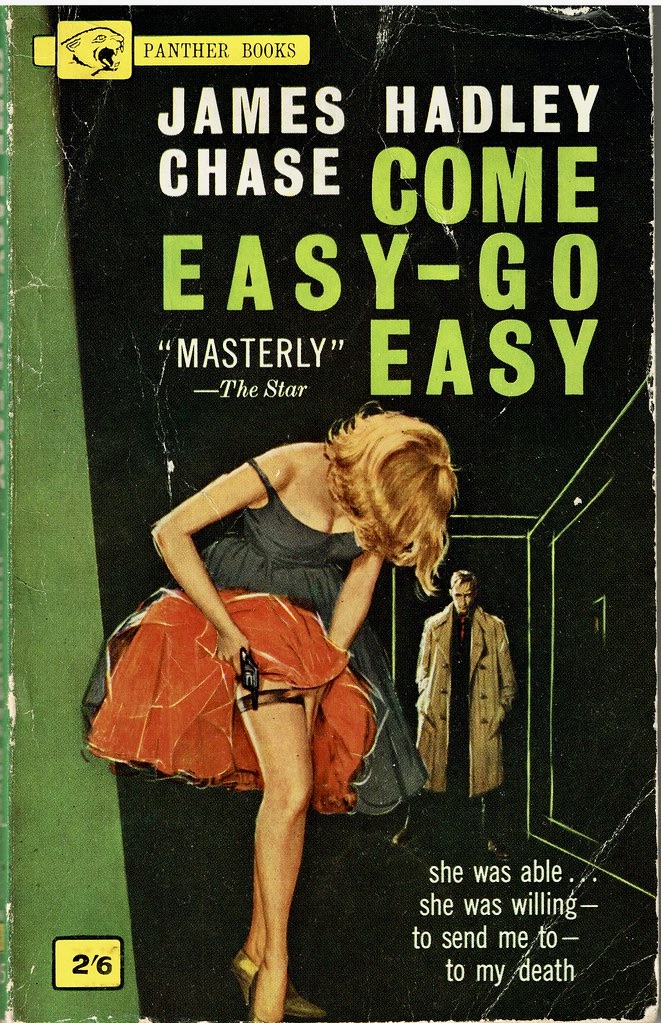
Based on the 1960 crime noir Easy Come, Easy Go by British author James Hadley Chase, Chair de Poule (English title: Highway Pick-Up, 1963) is the penultimate film of the legendary French director Julien Duvivier. If the basic premise sounds like it was inspired by The Postman Always Rings Twice, you wouldn’t be completely wrong. Chase (1906-1985), who used many pseudonyms during his career such as Raymond Marshall and Ambrose Grant, was actually motivated to become a writer after reading James M. Cain’s 1934 novel. Chase’s first novel, No Orchids for Miss Blandish (1939), was an overnight best seller and was adapted into a stage play and two film versions, one in 1948 and one in 1971, under the title The Grissom Gang, which was directed by Robert Aldrich.

Continue reading

Like a Bull in a China Shop

In 2016 the Cohen Media Group released My Journey Through French Cinema, written and directed by Bertrand Tavernier. It was not a traditional survey of French Cinema but a much more idiosyncratic and personal look at favorite films and directors from France in the eyes of Tavernier. In this way, it seemed inspired by Martin Scorsese’s 1999 documentary on Italian cinema, My Voyage to Italy, which shined a light on forgotten and underrated movies that deserved re-evaluation. Tavernier certainly covered some landmarks of French cinema in his overview but he also devoted time to specific directors like Jacques Becker and Jean-Pierre Melville while including favorite film composers and cinematographers as well. Some of Tavernier’s choice were fascinating obscurities and others were grade-B genre films that were so stylish and well-made that they served as superior examples of their craft such as Edmond T. Greville’s Le Diable Souffle aka Woman of Evil (1947) and Gilles Grangier’s Hi-Jack Highway aka Gas-Oil (1955). I was especially intrigued by film clips from the crime thriller Ca Va Barder (1955), which was directed by blacklisted American director John Berry (it was his first credited feature in France) and starred expatriate American actor Eddie Constantine as two-fisted itinerant adventurer Johnny Jordan. His rough and tumble character is as disruptive as a bull in a china shop.

Continue reading

Billy Wilder’s Directorial Debut

The French film poster for MAUVAISE GRAINE (1934) aka Bad Seed, co-directed by Billy Wilder

Sometimes you hear a famous actor or actress state in an interview that they never watch their own movies. If they are that self-conscious, how did they ever become actors? Don’t you improve your craft by watching your films so you can see what works and what doesn’t? But some directors are guilty of this too such as Billy Wilder, who has often stated he doesn’t like watching his completed films because he always sees things he wants to change and it’s too late. Wilder has even admitted that he never watched the first movie he ever directed, Mauvaise Graine aka Bad Seed (1934), and never wanted to see it. Despite his disregard for the film, which he co-directed with Alexander Esway, Mauvaise Graine is nothing to be ashamed of and, for most Billy Wilder fans, it is an unexpected treat.

Continue reading

The Lost Souls of Sao Paulo

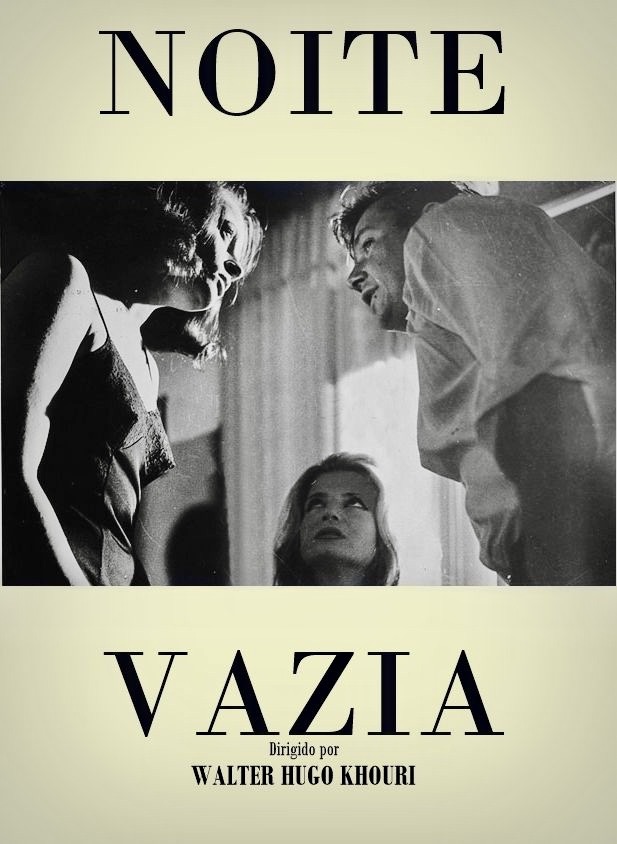
Long Day’s Journey into Night is the title of Eugene O’Neill’s Pulitzer Prize winning 1956 play but it could also serve as a succinct capsule description of numerous movies from the 1960s that were clearly influenced by Michelangelo Antonioni’s L’avventura (1960) and its themes of alienation and existential despair. Some examples include Giuseppe Patroni Griffi’s Il Mare (1962) which follows three strangers on the isle of Capri during a bleak winter season as they try to connect with each other. Jean-Luc Godard’s Alphaville (1965) depicts a dystopian futuristic society in which a detective finds himself out of place in a modernistic Paris controlled by an oppressive artificial intelligence. And Jacques Demy’s Model Shop (1969) uses the urban sprawl of Los Angeles and its smog-creating car culture as a backdrop to an unemployed architect’s search for meaning in his life. Yet, the most Antonioni-like film of all and the least known is probably Noite Vazia (1964) by Brazilian director Walter Hugo Khouri, which traces a dusk-to-down encounter between two men and two women amid the sterile cityscapes of modern Sao Paulo.

Continue reading

A City or a Labyrinth?

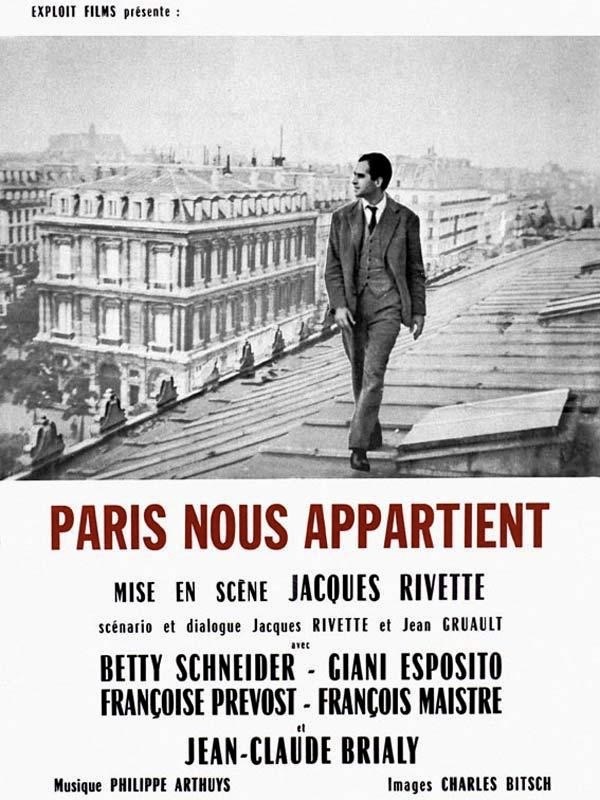
Whether by accident or design, French filmmaker Jacques Rivette is probably the least known member of the influential Nouvelle Vague movement of the late fifties though, like Jean-Luc Godard, Francois Truffaut, Eric Rohmer, and Claude Chabrol, he too was a former writer and film critic for Cashiers du Cinema. He even started production on his first feature length film, Paris Belongs to Us (French title: Paris Nous Appartient), in 1957, before Chabrol, Truffaut and Godard began work on what would become their universally acclaimed debuts of, respectively, Le Beau Serge (1958), The 400 Blows (1959) and Breathless (1960). Yet, despite the artistic and liberating impact the latter three films had on world cinema, Paris Belongs to Us might be the most ambitious, challenging and intellectually provocative film of the whole movement. It is also the darkest, waltzing toward an imagined or possibly real oblivion. The Homeland Security System would give it a code orange classification.       

Continue reading

A Madcap Chase Across Brazil

On September 6, 2021, France lost one of their biggest cinema icons of the 20th century with the death of Jean-Paul Belmondo at age 88. The actor attained international fame in 1960 for his charismatic performance in Jean-Luc Godard’s Breathless as an amoral car thief on the lam. He was the epitome of bad boy cool in that film and would enhance that screen persona in other crime dramas like Claude Sautet’s Classe Tous Risques (1960) and Jean-Pierre Melville’s Le Doulos (1962). Then, Belmondo reached an even wider international audience with the cross-over commercial hit, That Man from Rio (1964), which was even more accessible to the average moviegoer than Breathless, especially in America.

Continue reading

Thomas Schamoni’s Almost Forgotten 1970 Experiment from the New German Cinema Movement

The New German Cinema of the late sixties-early seventies introduced the world to some of the most original and provocative filmmakers of the 20th century such as Rainer Werner Fassbinder, Wim Wenders, Werner Herzog and Volker Schlondorff, but some of pioneers never attracted much attention outside their own country and their films are in danger of being forgotten. Among them are Helma Sanders-Brahms, Peter Lilienthal, Hans W. Geissendorfer and Thomas Schamoni, who is probably the most obscure of them all. Schamoni worked for most of his career in television, turning out documentaries and made-for-TV movies, but in 1970 he directed his only feature film, A Big Grey-Blue Bird (German title: Ein grober graublauer Vogel). A lo-fi mashup of sci-fi and spy genre elements reminiscent of Jean-Luc Godard’s Alphaville (1965), it is a playful and surprisingly entertaining cinematic “experiment” that should have found a wider audience.

Continue reading