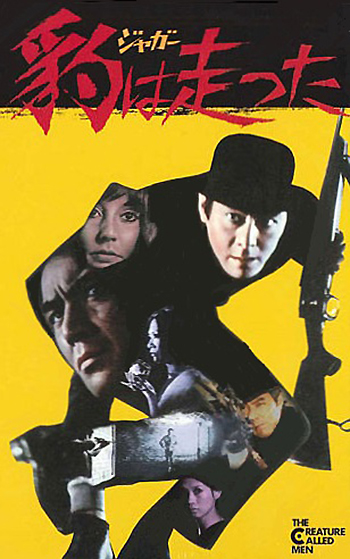
The film poster for JAGA WA HASHITTA (1970), a Japanese film that is also known as THE CREATURE CALLED MAN.
In the late 1960s and early 1970s Toho Studios began toying with some of its genre offerings by slipping some social or political references into the narratives while adding additional cinematic influences. A prime example of this is the 1970 Japanese film Jaga Wa Hashitta (English title: The Creature Called Man), an offbeat actioner about rival hit men with obvious references to the James Bond spy series as well as American crime thrillers.
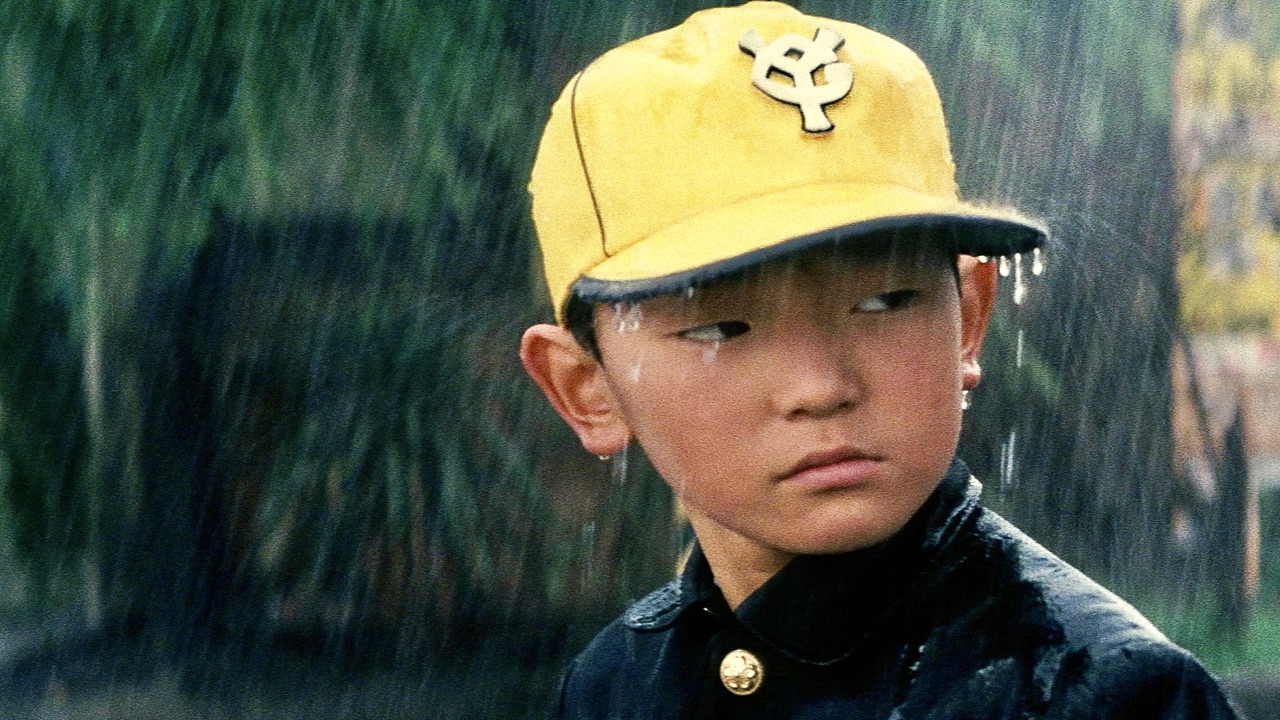
Tetsuo Abe in his only film role plays a ten-year-old boy who is used by his parents in a dangerous extortion scheme in Nagisa Oshima’s Shonen aka BOY (1969).
Not everyone has an idyllic childhood and some unfortunates don’t even have a childhood at all. That is certainly the case with Toshio (Tetsuo Abe), a ten-year-old who is being used by his father Takeo (Fumio Watanabe) and stepmother Takeko (Akiko Koyama) in an ongoing scam which entraps car drivers. The ploy involves stepping out into traffic, pretending to be hit by a car, and falling to the ground and feigning an injury. If the driver doesn’t offer to settle the incident on the spot with a cash payment, the fake victim threatens to call the police to settle the matter. In many cases, the drivers are only too happy to pay the scammers a cash settlement to avoid a lawsuit or court case. Toshio and his family of three (including a tiny tot named Peewee) have been on the move across Japan, enacting this scenario for some time with Takeko playing the fake accident victim. But the time has come for the parents’ ten-year-old to take on this role and he has little choice in the matter. So begins Nagisa Oshima’s Shonen (English title: Boy, 1969), a harrowing portrait of parental abuse and negligence, which was based on a true case that made national news in Japan in 1966.
The Japanese poster for THE BOXER (1977) aka Bokusa.
Movies about boxers often seem to break down into four categories; the most popular are the ones where the underdog fighter overcomes all odds to become a champion (Rocky [1976], Million Dollar Baby [2004], Cinderella Man [2005]). Then there are true-life biopics like Somebody Up There Likes Me (1956), Raging Bull (1980) and Ali (2001), downbeat character portraits of boxers past their prime (Requiem for a Heavyweight [1962], Fat City [1972]) and noir dramas that highlight the corrupt aspects of the profession like The Set-Up (1949) or The Harder They Fall (1956). Bokusa (English title: The Boxer (1977), a Japanese film directed by Shuji Terayama, has elements of some of the above but it is decidedly different from any American film in the boxing genre.
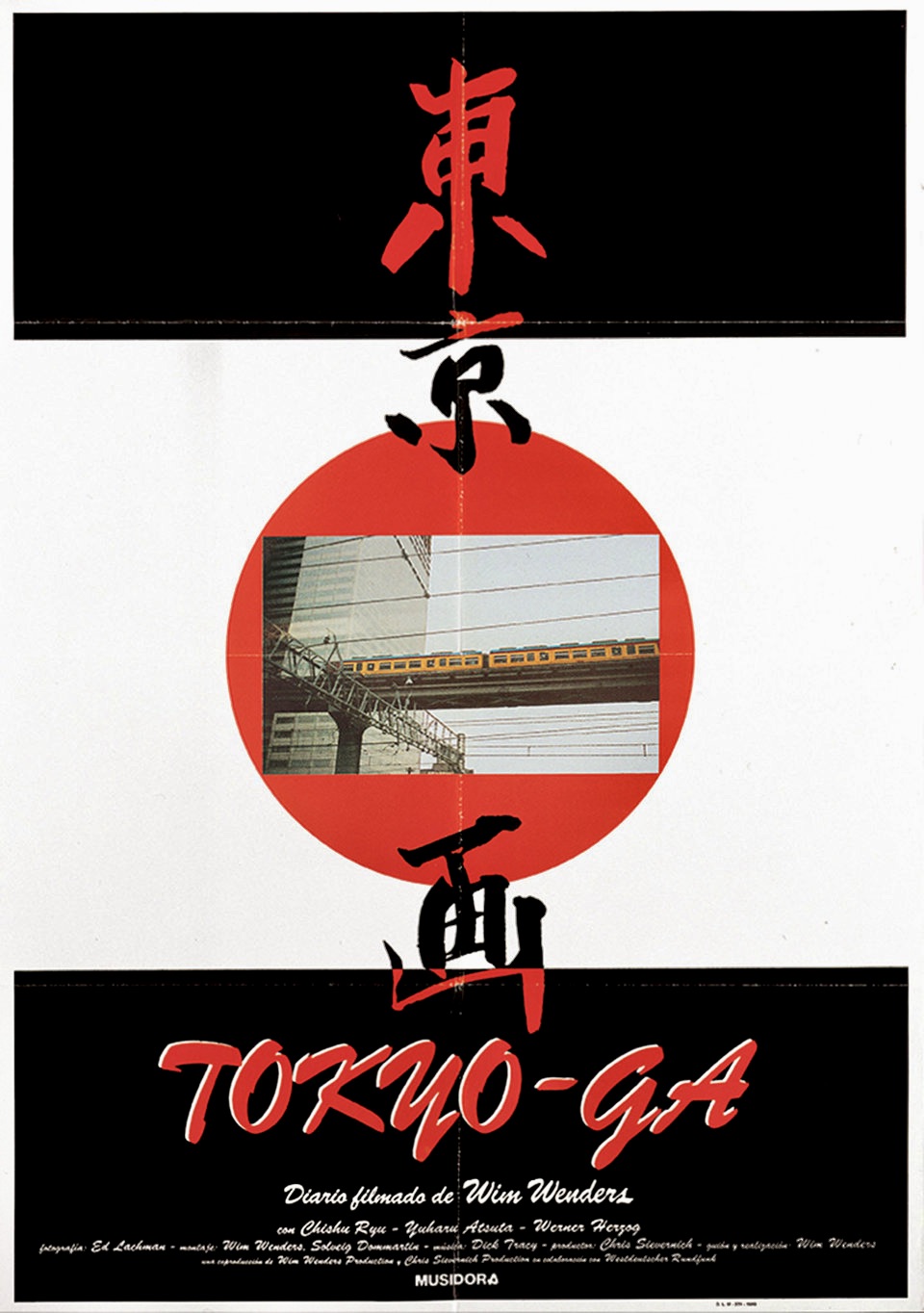
By the time Wim Wenders won the Palme d’Or at Cannes for Paris, Texas in 1984, he was well established as an internationally renowned director. He made his first big splash on the world stage in the early 1970s along with other New German Cinema directors (Werner Herzog, R.W. Fassbinder, etc.) with films such as The Goalie’s Anxiety at the Penalty Kick (1972) and Alice in the Cities (1974). Wenders had also dabbled with non-fiction-like formats in early experimental shorts, music videos and the Cannes-focused TV documentary of various film directors in Chambre 666 (1982). Yet, it was Tokyo-Ga 1985), the feature length portrait he made directly after Paris, Texas, that really triggered Wenders’s interest in not just non-fiction filmmaking but in Japan cinema and culture, especially the works of Yasujiro Ozu.
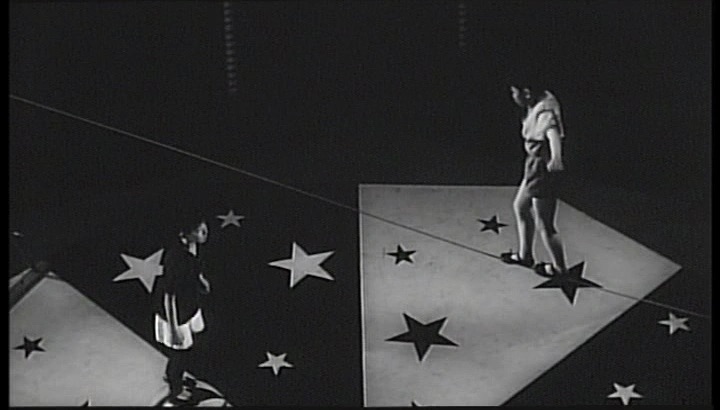
When was the last time you went to the circus? For most people, that form of popular entertainment has changed drastically over the years and is now more likely to be a showcase for human acts like Cirque de Soleil than one featuring performing animals (dancing elephants, lion taming, horses leaping through hoops of fire, etc). But there was a time from the late 19th to the middle of the 20th century when circuses were the ultimate family entertainment. Movies, in particular, captured the golden age of the circus in a variety of genres that ranged from big screen spectacles (The Greatest Show on Earth [1952], Circus World [1964]) to slapstick comedies (The Circus [1928], At the Circus [1939]) to Walt Disney fare (Dumbo [1941], Toby Tyler or Ten Weeks with a Circus [1960]) to horrific murder mysteries (Circus of Horrors [1960, Berserk [1967]). Yet, there are few, if any, that merge fantasy and reality in the style of Japanese director Kaizo Hayashi’s Nijisseiki Shonen Dokuhon (English title: Circus Boys, 1989). This balancing act is also matched metaphorically through the two main protagonists who must learn to come to terms with gravity, whether it is riding an elephant, walking a tightrope or finding stability in their lives.
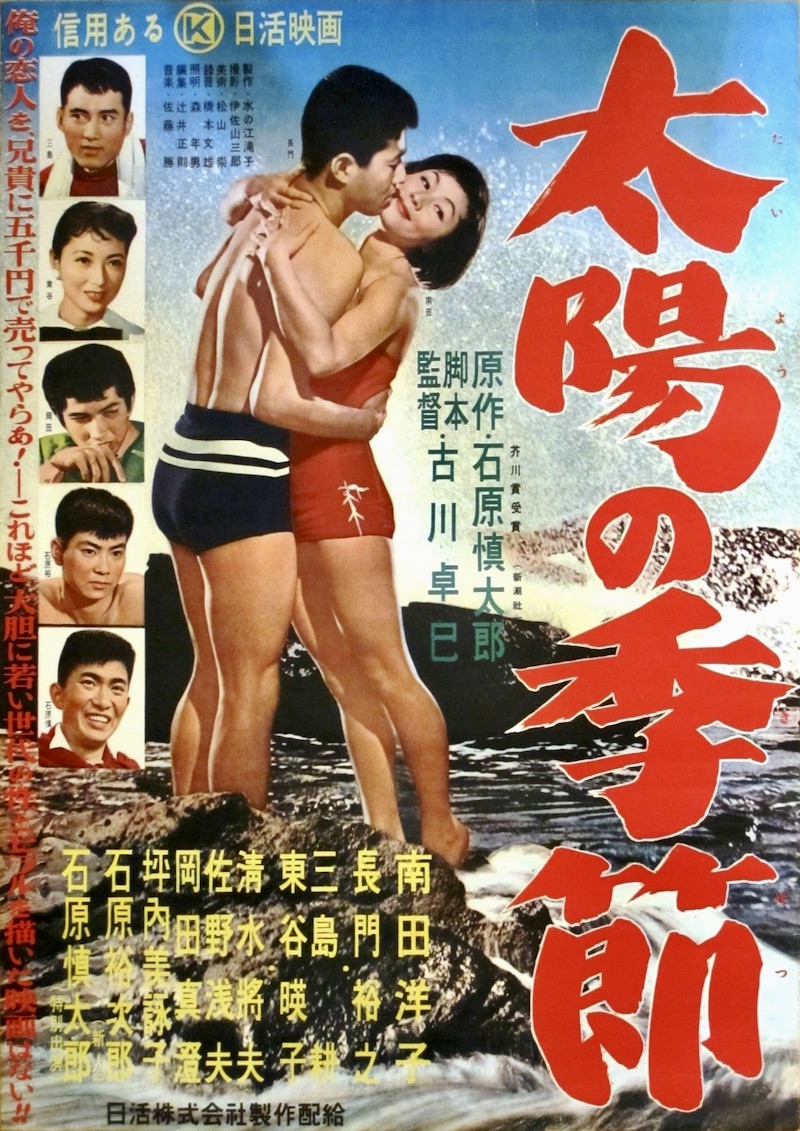
The Japanese film poster for SEASON IN THE SUN (1956) aka Taiyo no Kisetsu.
When Ishihara Shintaro died on February 1, 2022 at age 89, most obituaries focused on his career as a politician in Japan. He first served as a member of the House of Councillors (1968 to 1972) and then as a member of the House of Representatives (1972-1995) before becoming the Governor of Tokyo from 1999 to 2012. A controversial figure in his own country, Shintaro was famous for his ultra-nationalist stance on Japan and extreme right-wing views such as discriminating against Japanese-Koreans, the disabled, women, LGBT and other social minorities. He is now considered an early proponent of “hate speech” and often denied historical accounts of atrocities committed by the Japanese against the Chinese in the infamous Nanjing Massacre of 1937, which in Japan is the same as being a Holocaust denier. What is most surprising about Shintaro, however, is his earlier career as an author and highly successful screenwriter for movie studios like Nikkatsu, Daiei and Shochiku. His critically acclaimed first novella, Taiyo no Kisetsu (English title: Season of the Sun), was published in 1955 and he adapted it into a film for director Takumi Furukawa. It became a box office sensation and inspired several successors in a film movement that became known as the “Sun Tribe” (aka Taiyozoku) movies.
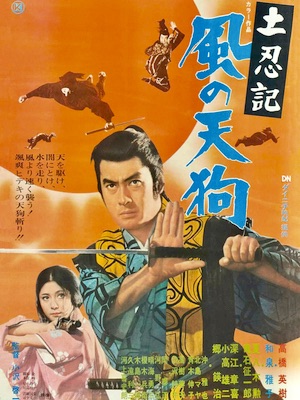
The Japanese film poster for HAUNTED SAMURAI (1970)
The samurai film in Japanese cinema was often classified as a chanbara, a sub-category of the jidai-geki (period drama) which was more action oriented. The chanbara was at the peak of its popularity in Japan from the early 50s to the early 70s with occasional revivals of the form up through the present and some of the most famous examples of the genre are Teinosuke Kinugasa’s Gate of Hell (1954), Hiroshi Inagaki’s Samurai Trilogy (1954-1956), and Akira Kurosawa’s Seven Samurai (1954) and Yojimbo (1961). One aspect of the samurai film that always struck me was that it seemed like a period variation on the American western and the fact that Kurosawa was a huge fan of director John Ford seems obvious when you look at Seven Samurai and Yojimbo, whose main protagonists are samurai-for-hire, not unlike professional gunfighters or bounty hunters in the wild west. Both of Kurosawa’s films went on to inspire two popular westerns respectively – John Sturges’s The Magnificent Seven (1960) and Sergio Leone’s A Fistful of Dollars (1964). Reminiscent of Kurosawa’s chanbara efforts is Haunted Samurai (Japan title: Kaze no Tengu, 1970), an often overlooked samurai action-adventure from director Keiichi Ozawa that came toward the tail end of the genre’s peak period but also seems custom made for an American western remake.
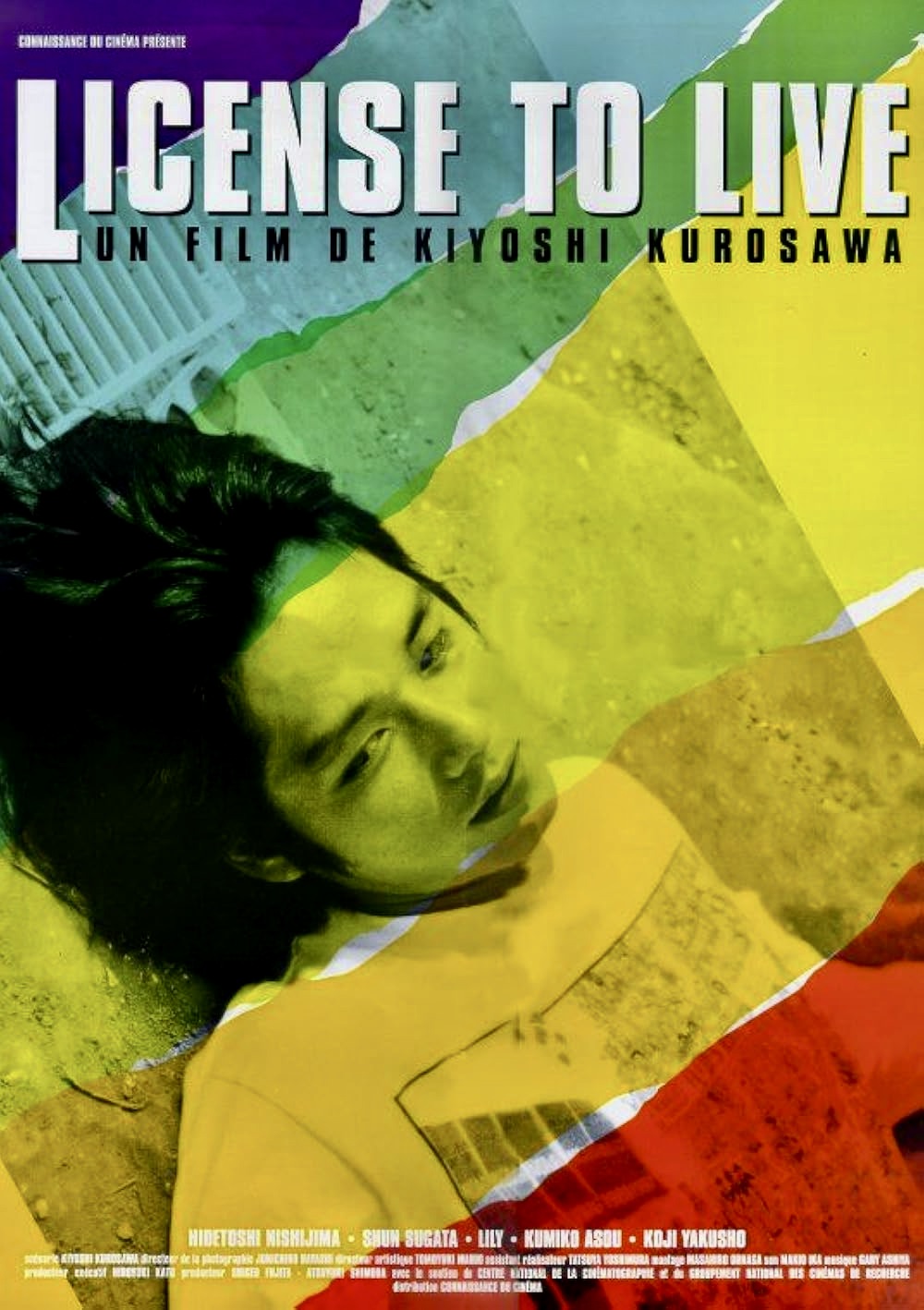
Yutaka Yoshii (Hidetoshi Nishijima) is a twenty-four-year-old man who suddenly wakes up from a coma after ten years and has to readjust to a new world. This is the basic set-up of Ningen Gokaku (English title: License to Live, 1998), a decidedly change-of-pace effort from Japanese director Kiyoshi Kurosawa, who is better known for creepy occult/psychological thrillers like Sweet Home (1989), Cure (1997) and Pulse (2001). You can only imagine what an American film studio would do with this simple concept – it would either become a rom-com like While You Were Sleeping (1995) or a horror flick such as The Dead Zone (1983) – but Kurosawa takes an approach that probably surprised even his most fervid fans. License to Live turns out to be a low-key, observational series of vignettes that slowly culminate in a moving meditation on the things that make the life of a human being worth living.
A Japanese film poster for the 1952 film DOBU aka The Ditch aka Gutter.
One of the most famous Japanese directors of his generation (1912-2012) to emerge from the post-WW2 years was Kaneto Shindo but, outside of a handful of films, most of his work remains largely unseen in the U.S. That is a shame because much of his filmography provides a fascinating glimpse into the lives and mindsets of Japanese people, especially the working class, in the difficult years following the country’s defeat in the war. One of his earliest and most provocative depictions is Dobu (1954), which is also known as The Ditch, but is more accurately translated as The Gutter. And the main protagonist of the film is Tsuru (Nobuko Otowa), who could easily claim to be the most memorable guttersnipe of all time. When the film opens, she is a filthy, wandering beggar on the verge of starvation who collapses in a shantytown known as Kappunuma and here she will remain for the rest of her brief life.
The Japanese film poster for YOKOHAMA BJ BLUES (1981).
BJ is not a typical private detective by anyone’s standards. He doesn’t own a car and walks or jogs everywhere. Nor does he carry a gun (although he might steal one from any thug that threatens him) or play the tough guy in the brutal manner of Mike Hammer (Ralph Meeker in Kiss Me Deadly). In fact, when he is first introduced in Yokohoma BJ Blues, directed by Eiichi Kudo, he seems like some eccentric drifter who occasionally moonlights as a singer in an after-hours club, where he works for tips. But working as a private detective is his main gig and this 1981 feature is certainly one of the most offbeat and low-key detective dramas you will probably ever see and, even for Japanese viewers, it could be an endurance test or a fascinating hybrid.




 Cinema Sojourns