A Nouvelle Vague Musical?

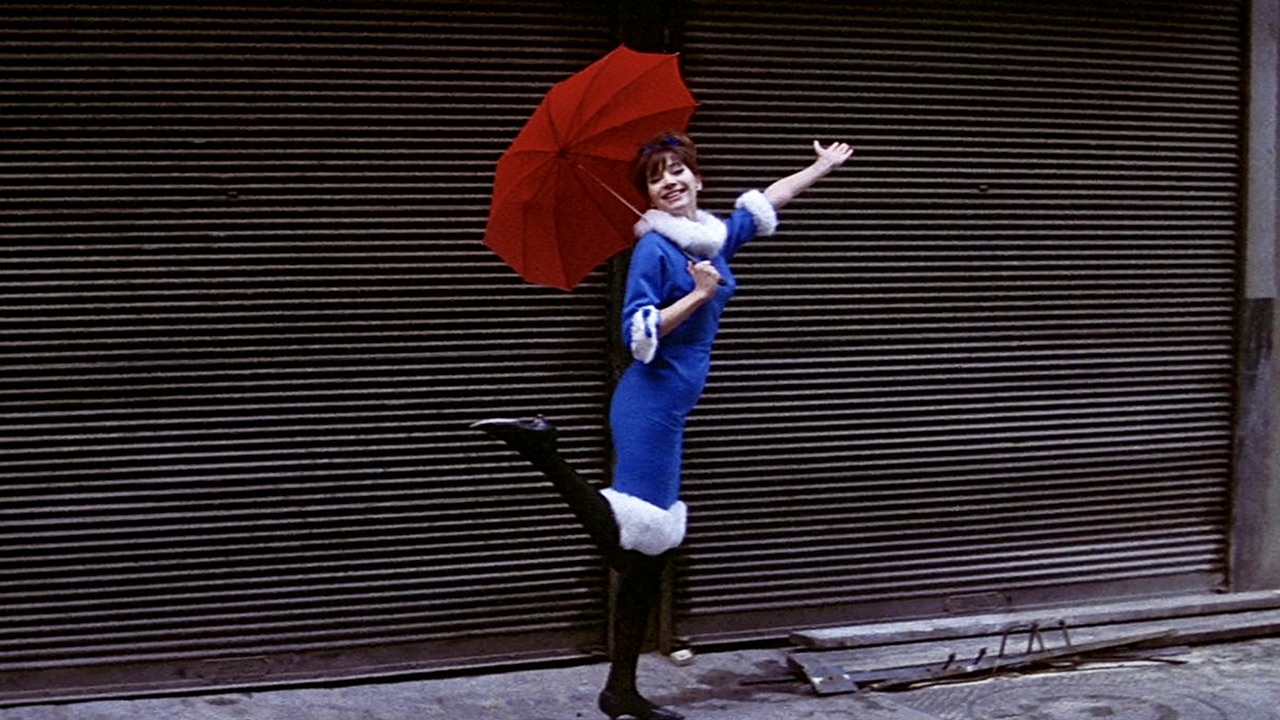
Angela (Anna Karina) imagines she is in a movie musical choreographed by Bob Fosse in A WOMAN IS A WOMAN (1961), directed by Jean-Luc Godard.

Of the more than 120 movies and short films in director Jean-Luc Godard’s oeuvre, there is really nothing like Un Femme est une Femme (English title: A Woman is a Woman, 1961). What other Godard creation could you describe as joyful, lighthearted and consistently playful? A homage to MGM musicals, romantic comedies a la Ernst Lubitsch and Hollywood productions shot in Cinemascope and Eastmancolor, A Woman is a Woman is essentially a valentine to Godard’s muse at the time, Anna Karina. It is also unlike any other musical ever made or even a Nouvelle Vague confection like Jacques Demy’s The Umbrellas of Cherbourg (1964).  Yet, for someone who has never seen a Godard film, it is an accessible entry point to his work and an example of why he was considered so innovative, daring and controversial for his time.

Continue reading

Roll the Credits

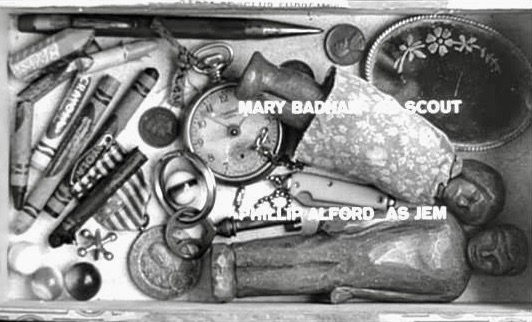
An example of Stephen Frankfurt’s iconic title treatment for the 1962 film TO KILL A MOCKINGBIRD.

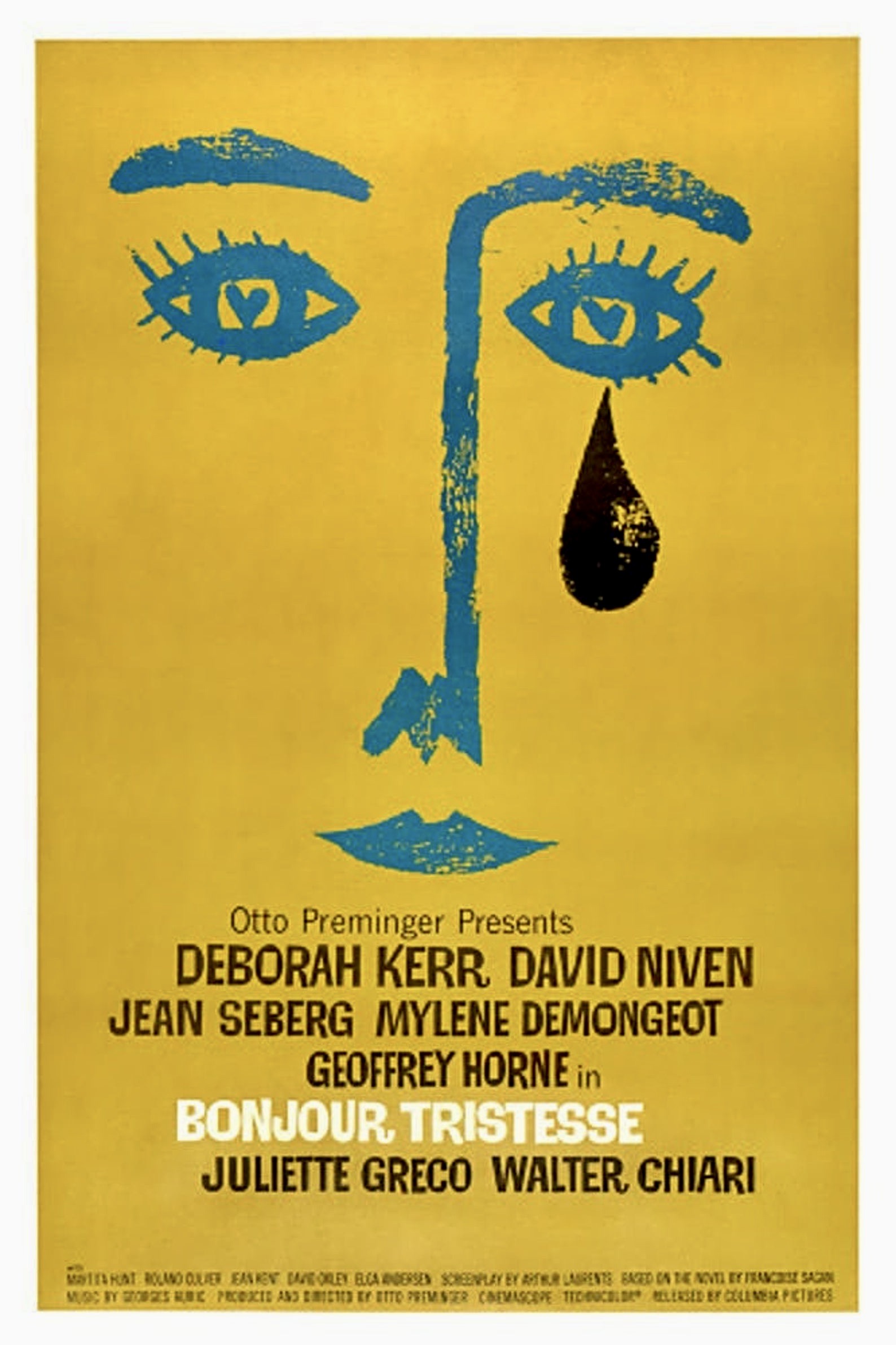
In their increasing eagerness to capture a wider viewing audience for their annual awards ceremony, you would think the Academy of Motion Picture Arts & Sciences would create a few more categories that could generate some genuine interest with the average moviegoer. How about Best Title Credits? It’s an art form in its own right. Graphic designer Saul Bass certainly proved that years ago with his innovative opens for the films of Otto Preminger (Carmen Jones, The Man With the Golden Arm, Saint Joan, Bonjour Tristesse, Anatomy of a Murder, Advise and Consent, Exodus, The Cardinal and several more) and Alfred Hitchcock (Vertigo, North by Northwest, Psycho). Other title designers you might recognize are Stephen Frankfurt (To Kill a Mockingbird, Rosemary’s Baby), Pablo Ferro (Dr. Strangelove, Being There) and Maurice Binder (Dr. No, Charade). Even before them, opening title credits were a key component of the film, often setting the tone and even encapsulating the movie’s theme or storyline into a compact visual nugget.

Continue reading

A Village Memoir

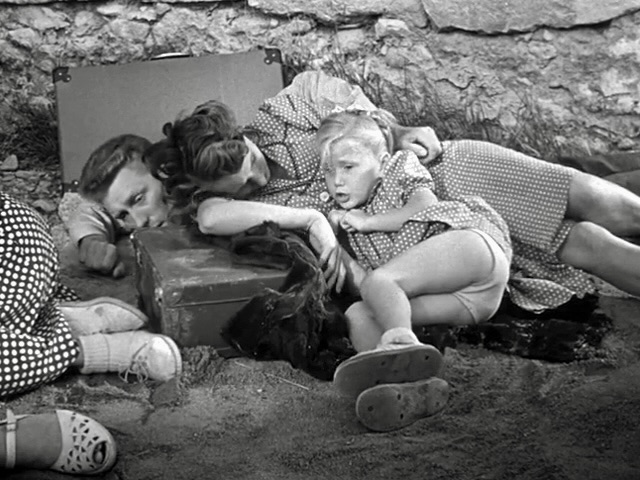
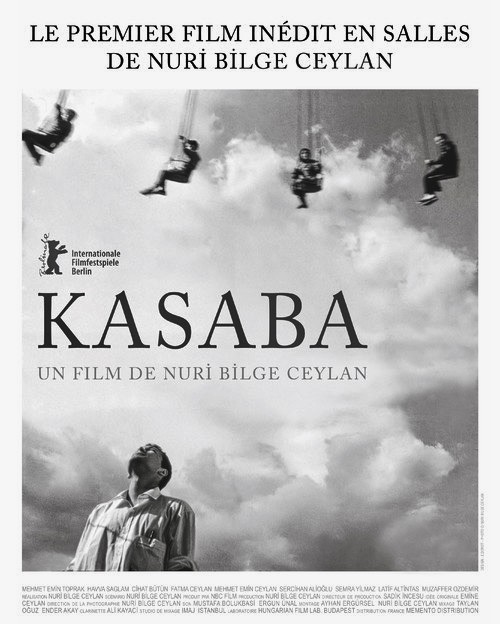
Some of the world’s most famous directors have made autobiographical features at some point in their careers with their childhood, family life or home town as the central focus. We have seen this in Federico Fellini’s Amarcord (1973), Ingmar Bergman’s Fanny and Alexander (1982), Richard Linklater’s Dazed and Confused (1993), Spike Lee’s Crooklyn (1994) and Steven Spielberg’s The Fabelmans (2022). Some directors even made their film debut with an autobiographical feature such as Francois Truffaut with The 400 Blows (1959) and Turkish director Nuri Bilge Ceylan can lay claim to this as well with Kasaba (English title: The Small Town, 1997), which is based on a short story by his sister Emin Ceyland entitled Cornfield. The movie depicts family life in a rural village in Turkey as seen through the eyes of a girl, Asiye, and her younger brother, Ali.  

Continue reading

Behind the Scenes on Bonjour Tristesse

When Otto Preminger announced in 1957 that his next project would be Bonjour Tristesse, based on the best-selling novel by Francoise Sagan, and that it would star Jean Seberg, colleagues and fellow members of the film industry were astonished. After all, his previous film, Saint Joan (1957), which featured Seberg in her film debut, was probably the biggest critical and commercial disaster of Preminger’s career with most of the negative reviews focusing on the inexperienced newcomer whom Preminger had “discovered.” Was Bonjour Tristesse (1958) his attempt to prove to everyone that he was not wrong about Seberg and that her performance in his new movie would validate all the time and effort he had poured into making her an actress? The real reasons, of course, were more complicated than that. 

Continue reading

Boy on a Mission

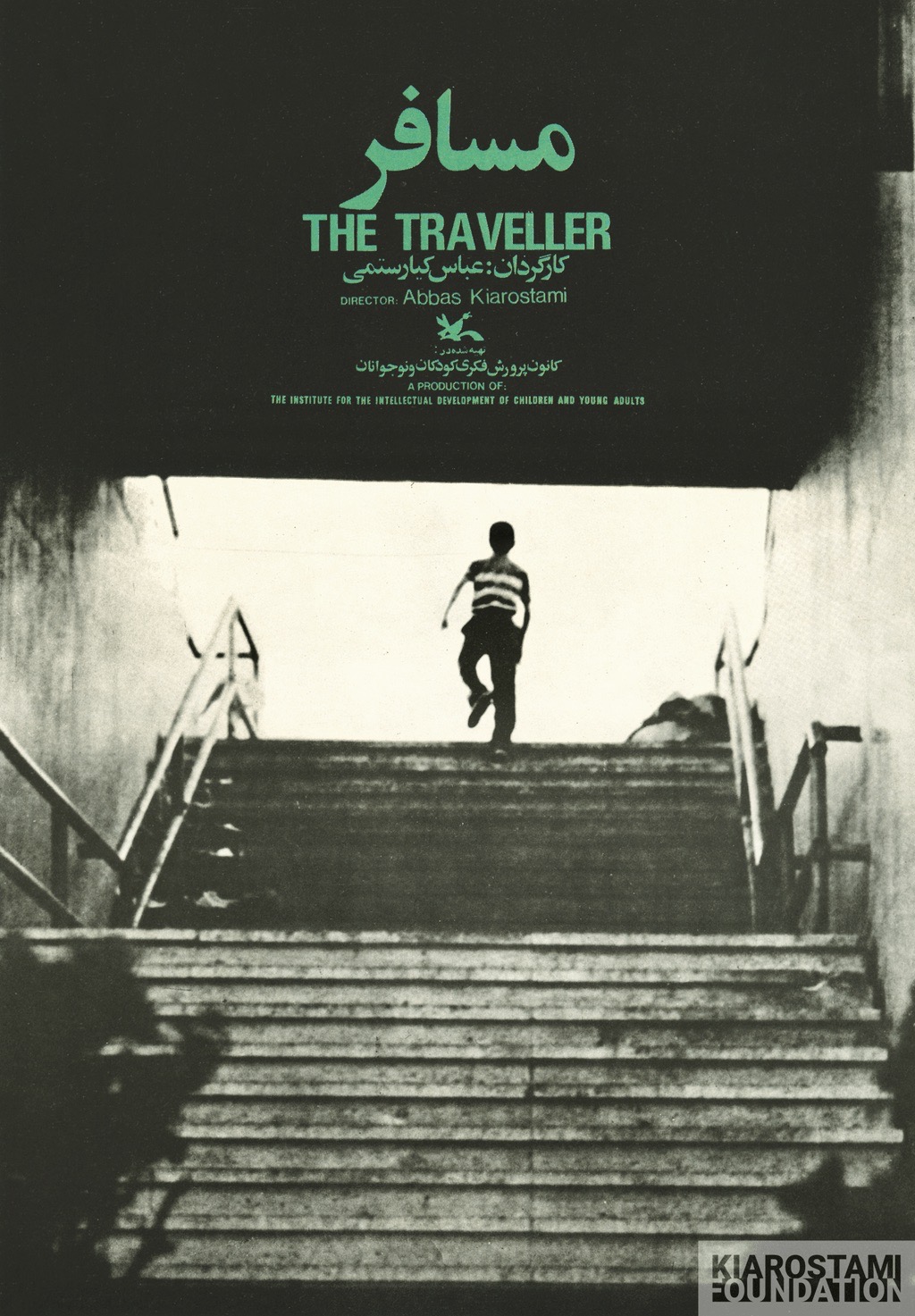
Qassam is a ten-year old living in the Iranian town of Malayer who is obsessed with soccer. When he isn’t skipping classes at school to play the game in back alleys, he is stealing money from his mother’s secret hiding place to buy soccer magazines. Considering the limited career choices available to Qassam after he finishes school, it is no wonder why soccer serves as the boy’s escape from reality. And his obsession becomes all-consuming when he learns that his favorite soccer team is coming to Tehran (which is approximately 385 miles away). He begins scheming of ways to raise the money required for the bus and game tickets. This is the basic premise of Abbas Kiarostami’s Mossafer (English title: The Traveler, 1974), which is both a parable about wanting something too much as well as an unsentimental portrait of an alienated and problematic kid in the tradition of Francois Truffaut’s The 400 Blows (1959).

Continue reading

A City or a Labyrinth?

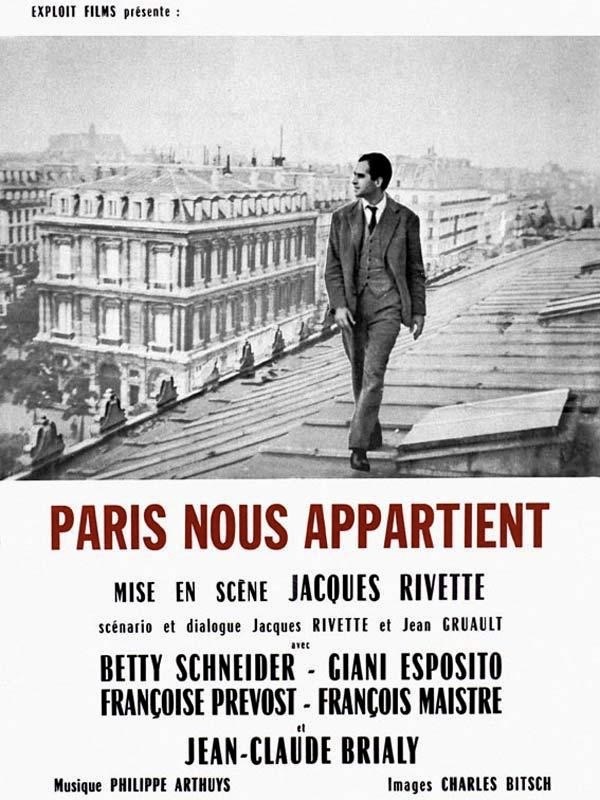
Whether by accident or design, French filmmaker Jacques Rivette is probably the least known member of the influential Nouvelle Vague movement of the late fifties though, like Jean-Luc Godard, Francois Truffaut, Eric Rohmer, and Claude Chabrol, he too was a former writer and film critic for Cashiers du Cinema. He even started production on his first feature length film, Paris Belongs to Us (French title: Paris Nous Appartient), in 1957, before Chabrol, Truffaut and Godard began work on what would become their universally acclaimed debuts of, respectively, Le Beau Serge (1958), The 400 Blows (1959) and Breathless (1960). Yet, despite the artistic and liberating impact the latter three films had on world cinema, Paris Belongs to Us might be the most ambitious, challenging and intellectually provocative film of the whole movement. It is also the darkest, waltzing toward an imagined or possibly real oblivion. The Homeland Security System would give it a code orange classification.       

Continue reading

The Case of the Missing Raincoat

The film was released in the U.K. under its original title, YOUNG AND INNOCENT (1937).

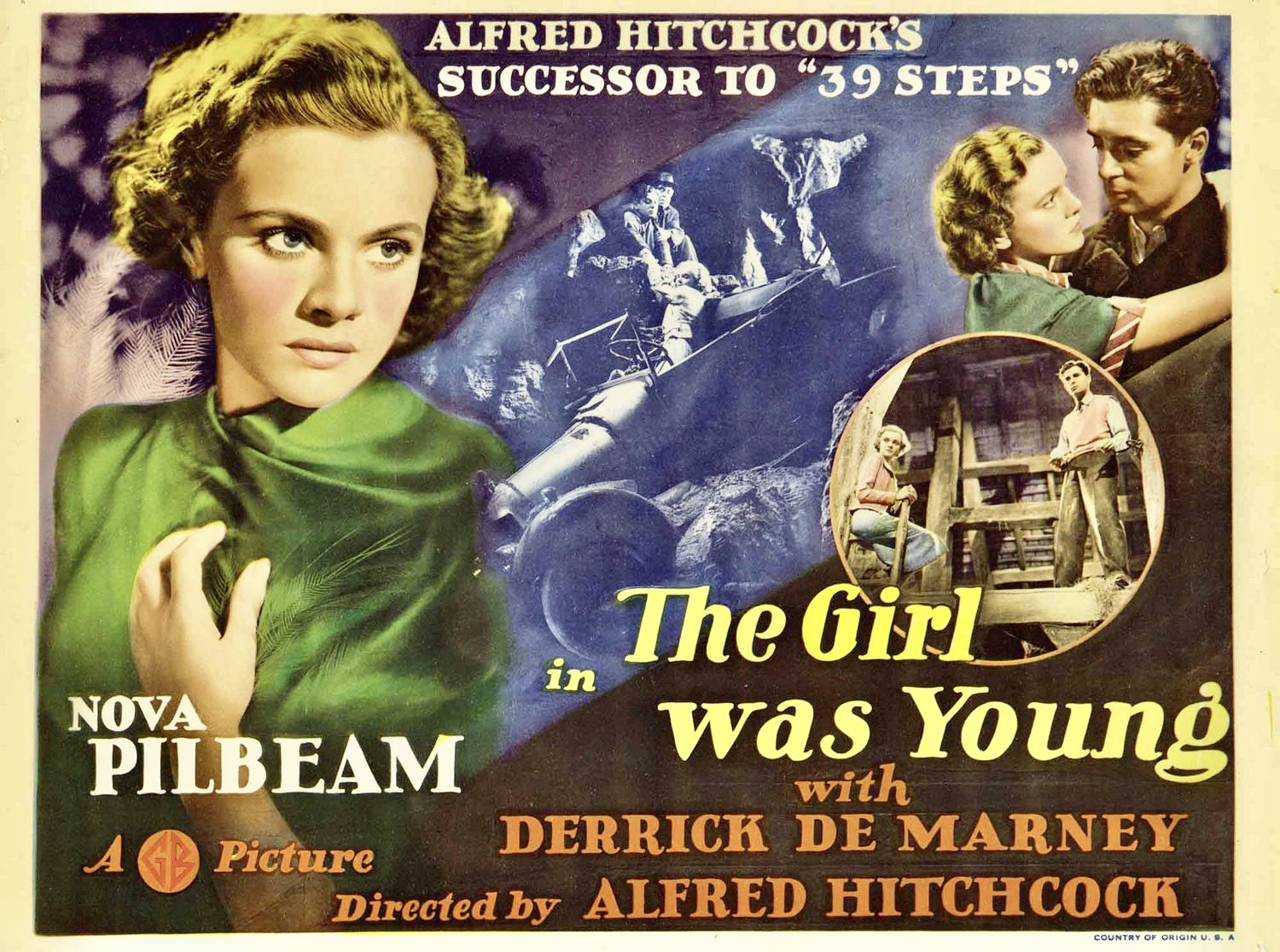
In one of the more striking opening sequences in Alfred Hitchcock’s entire filmography, a man and woman argue violently in a cliff-top mansion above the sea as a storm is brewing. A quick fade to the following morning reveals the lifeless body of a woman in the surf and the murder weapon nearby – a raincoat belt. A man walking along the dunes is the first person to find the victim and runs to get help. Two women on the beach also discover the body and see the man fleeing the crime scene, assuming the worst. When he returns with the police, he is fingered as the murderer and taken into custody, followed by a montage of newspaper headlines. All of this is accomplished in a brilliantly edited sequence of less than five minutes that not only sets the narrative of Young and Innocent (1937, U.S. release title: The Girl Was Young) in motion but could also serve as a textbook example of Hitchcock’s storyboard approach to moviemaking.

Continue reading

Stop the World…I Want to Get Off!

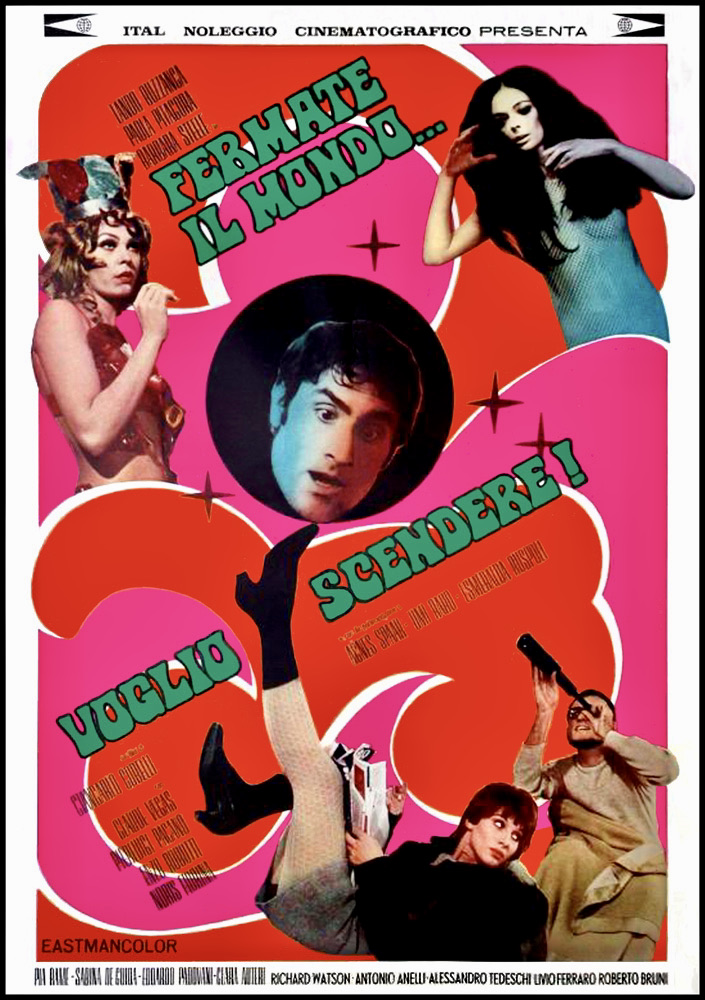
No, I am not referring to the 1961 musical by Anthony Newley and Leslie Bricusse, which enjoyed successful stage productions in London and Broadway before being adapted for the screen in 1966. I’m talking about the 1970 satire, Fermate il Mondo…Voglio Scendere! (the title translates as Stop the World…I Want to Get Off! In English), which was the directorial debut of Italian actor Giancarlo Cobelli, based on a screenplay he wrote with fellow thespians Giancarlo Badessi and Laura Betti, a close friend and frequent collaborator with Pier Paolo Pasolini. The film is a frenzied attack on consumerism and the Italian media but its bursting-at-the-seams energy emanates not so much from outrage as it does from a madcap sense of anarchy.

Continue reading

Jeanne Moreau is Mata Hari

Jeanne Moreau as the famous WWI era spy Mata Hari in Jean-Louis Richard’s 1964 film biography, MATA HARI, AGENT H21.

The road to international fame was a long and arduous journey for Jeanne Moreau but it all began in 1948 when she became a stage actress at age 18. She started appearing in films a year later though it wasn’t until 1958 that she emerged as an important French actress, thanks to two Louis Malle features, the noir thriller Elevator to the Gallows and the scandalous romantic drama, The Lovers. More famous career-defining roles followed such as Michelangelo Antonioni’s La Notte (1961), Francois Truffaut’s Jules and Jim (1962), Jacques Demy’s Bay of Angels (1963) and Luis Bunuel’s Diary of a Chambermaid (1964). Yet, in terms of global recognition, she probably reached her peak in the mid-sixties when she appeared in big-budget Hollywood productions like The Victors (1963), The Train (1964) and The Yellow Rolls-Royce (1964). It was during this period that she appeared in Mata Hari, Agent H21 aka Secret Agent FX18 (1964), one of her least known and rarely seen movies.

Continue reading

Two Cats and a Mouse

When a movie is released under various titles it usually means there are problems. It could be confusion over how to market it or a simple case of a movie that doesn’t fit clearly into any designated genre or maybe it’s a star-driven, major studio release that’s too quirky for the average moviegoer but yields enough curiosity value to inspire various promotional approaches to finding the right audience. All of these could apply to Joy House (1964), an international production based on a pulp fiction paperback by American author Day Keene and filmed on the Riviera near Nice. It stars English-speaking (Lola Albright, Jane Fonda, Sorrell Booke, George Gaynes of Tootsie fame) and French-speaking actors (Alain Delon, Andre Oumansky, Annette Poivre, Marc Mazza) and is also known as The Love Cage and Les Felins (the original French title). Joy House was not a popular success at the time (most critics were unkind in their coverage) but it is a favorite film of mine, flaws and all.   Continue reading