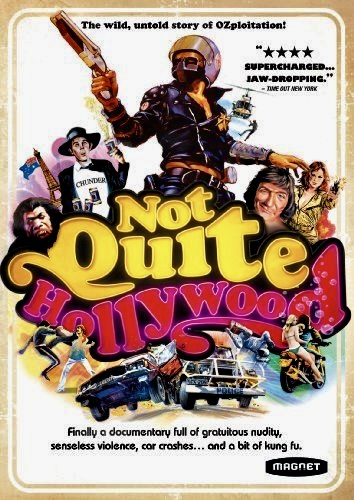
Aussie Awesomeness

Many countries are well known for their film industry but Australia was not one of them until the early 1970s due to the efforts of prime ministers John Gorton (1968-1972) and Gough Whitlam (1972-1975) who instituted various forms of government support for filmmaking and the arts. Thanks to their encouragement, a number of talented directors emerged from Australia and went on to enjoy international careers with such diverse work as Picnic at Hanging Rock (Dir: Peter Weir, 1975), The Chant of Jimmie Blacksmith (Dir: Fred Schepisi, 1976), My Brilliant Career (Dir: Gillian Armstrong 1979) and Breaker Morant (Bruce Beresford, 1980). This creative movement, known as the Australian New Wave, was often focused on the country’s past and often resulted in critically acclaimed art house fare but not really box office hits in its own country. What is interesting is that the seventies also saw the rise of many Aussie filmmakers who specialized in genre fare and it was their work that generated large revenue streams at home and around the world, especially in the U.S.
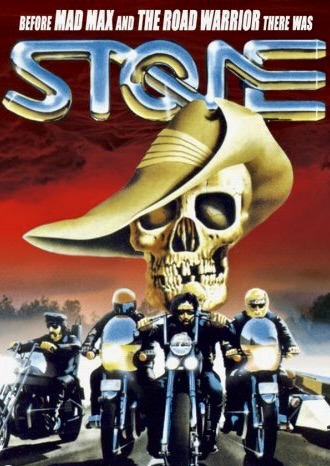
The most successful of these commercial films tended to be sex comedies, horror/fantasy or action/adventure thrillers and were much more representative of contemporary Australian culture than award-winning historical chronicles like Philip Noyes’s Newsfront (1978). It was also the over-the-top quality and extreme nature of these B-movies that earned the moniker of Ozploitation and resulted in such classic cult hits as Time Burstall’s Alvin Purple (1973), Sandy Harbutt’s Stone (1974), Richard Franklin’s Patrick (1978), and George Miller’s Mad Max (1979). If you want a crash course in this raucous period in the Aussie film industry which lasted until the late 1980s, Not Quite Hollywood: The Wild, Untold Story of Ozploitation, written and directed by Mark Hartley, is just the ticket to whet your appetite.

Continue reading
The Monkees’ Film Debut

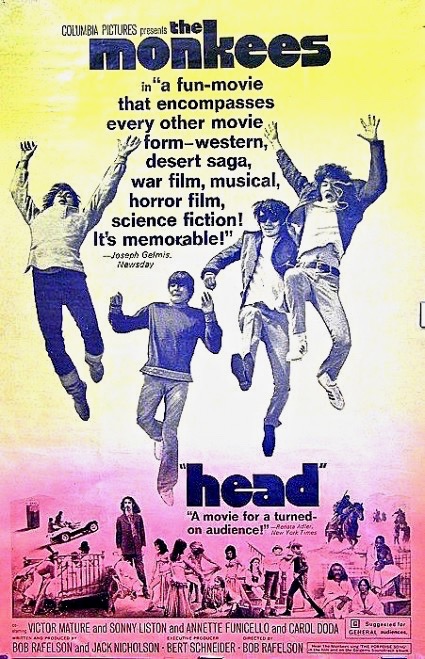
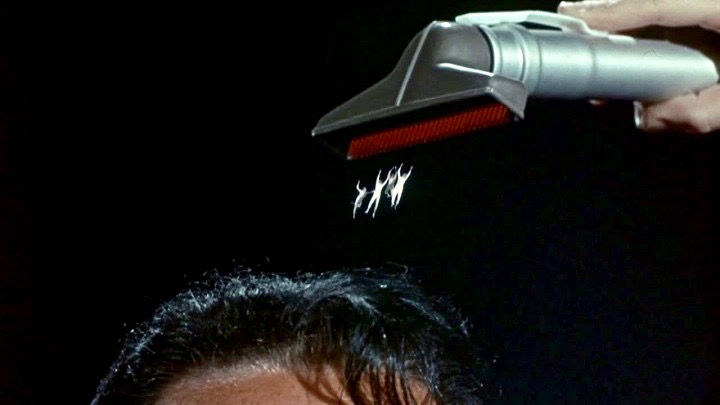
It sounds like someone’s LSD flashback. Frank Zappa, boxer Sonny Liston, Annette Funicello, female impersonator T.C. Jones, San Francisco’s legendary topless dancer Carol Doda and other cult celebrities appear in a movie co-scripted by Jack Nicholson and directed by Bob Rafelson (Five Easy Pieces, 1970) that showcases the TV-created pop band The Monkees in the leading roles, who in one scene play dandruff in Victor Mature’s hair. Entitled Head (1968), this Cuisinart-puree of pop culture infused with anti-establishment posturing and served up in the then-current style of a trippy experimental film could only have happened in the late sixties when Hollywood studios were in a try-anything phase to capture the rapidly receding youth market.

The Monkees get to play dandruff in Victor Mature’s hair in Head (1968), directed by Bob Rafelson.

Continue reading

The Unforeseen Journey from Jean-Luc Godard’s 1 AM to D.A. Pennebaker’s 1 PM

With more than 100 feature films, shorts, video and TV work to his credit, Jean-Luc Godard is surely the most audacious, groundbreaking and prolific filmmaker from his generation. Even longtime admirers and film historians have probably not seen all of his work and some of it like the political cinema he made with Jean-Pierre Gorin under the collaborative name Groupe Dziga Vertov is tough going for even the most ardent Godard completist. Weekend (1967) is generally acknowledged as the last film Godard made before heading in a more experimental, decidedly non-commercial direction which roughly stretched from 1969 until 1980 when he reemerged from the wilderness with the unexpected art house success, Sauve qui peut (Every Man for Himself). But most of the work he made during that eleven year period prior to 1980 championed social and political change through ideological scenarios and leftist diatribes that were overly cerebral and static compared to earlier career milestones like Breathless (1960), Contempt (1963) and Pierrot le Fou (1965).

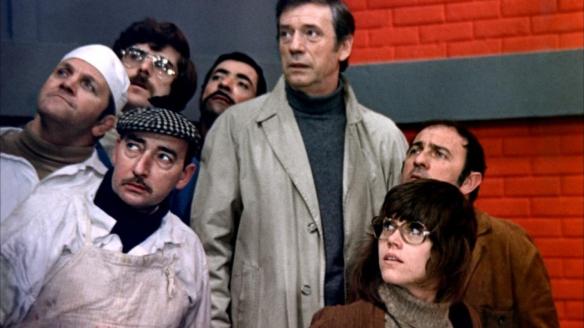
Yves Montand (center in raincoat) and Jane Fonda (lower right) star in Jean-Luc Godard’s Tout Va Bien (1972).

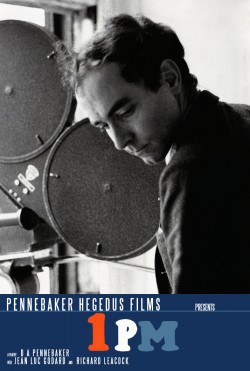
Of the films he made during the Groupe Dziga Vertov period, only Tout Va Bien (1972), which starred Jane Fonda and Yves Montand, attracted mainstream critical attention but most of the reviews at the time were indifferent or hostile to this Marxist, Bertolt Brecht-inflluenced polemic about a workers’ strike at a sausage factory. Much more interesting to me was the film he attempted to make in 1969, tentatively titled 1 AM (or One American Movie). A collaboration with cinema-verite pioneers D. A. Pennabaker and Richard Leacock, the project was abandoned after Godard lost interest during the editing phase but Pennebaker ended up completing his own version of the existing footage which he titled 1 PM (or One Parallel Movie). This is a brief history of the film’s journey from concept to screen.  Continue reading

Robert Altman and the Cult of James Dean

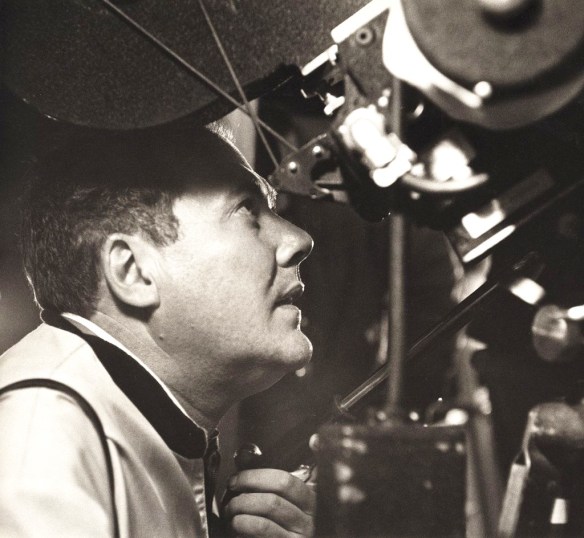
A young Robert Altman ponders a camera set-up.

A young Robert Altman ponders a camera set-up.

While it is rarely shown in retrospectives of his work, Robert Altman’s The James Dean Story (1957) is easily one of the more offbeat and poetic examples of documentary filmmaking. Officially cited as his second feature (Altman’s first was The Delinquents, 1957), The James Dean Story was co-produced and co-directed with George W. George, a former writing partner of Altman’s, as a serious exploration of the young actor’s mystique and impact on the youth culture of the fifties.   Continue reading

…And Bob Dylan Plays a Chainsaw-Wielding Conceptual Artist.

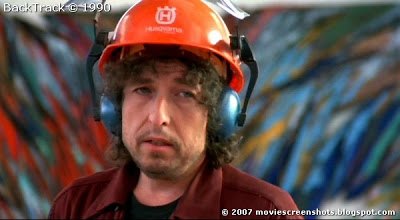
Bob Dylan in Backtrack aka Catchfire (1990)

Bob Dylan in Backtrack aka Catchfire (1990)

Sometimes the casting in a film is so peculiar and unique that you feel compelled to take a chance on it no matter how many negative things you’ve heard about it. Wouldn’t you want to see a movie that featured Jodie Foster, Vincent Price, Joe Pesci, Charlie Sheen, Dean Stockwell, Bob Dylan and numerous other well-known stars? Such is the case with 1990’s Catchfire, one of Dennis Hopper’s least known movies but there’s a reason for that.   Continue reading