
Going Bananas!

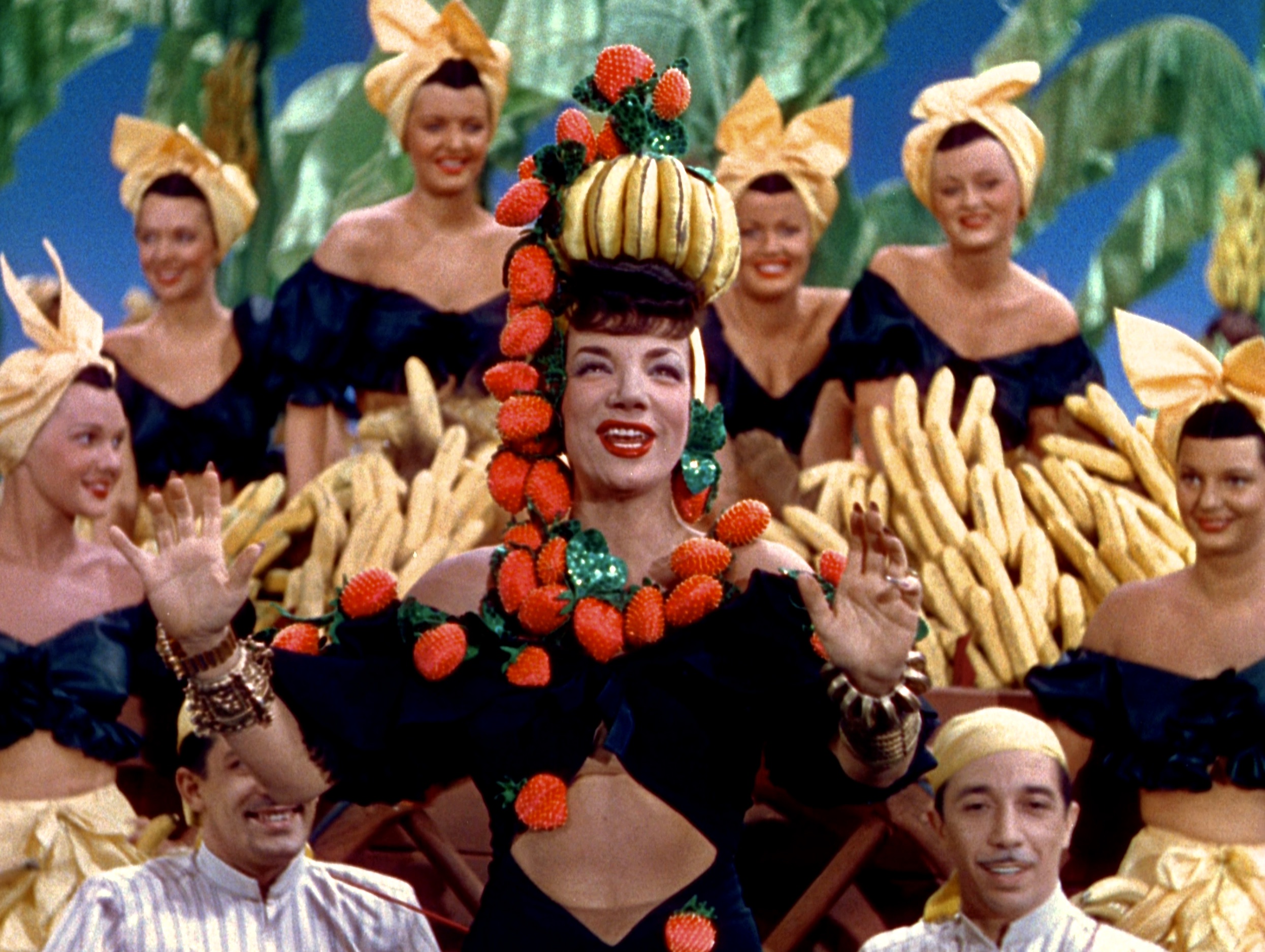
Carmen Miranda and chorus girls performing “The Lady in the Tutti Frutti Hat” from THE GANG’S ALL HERE (1943), directed by Busby Berkeley.

In the early 1970s midnight movies became a craze after the Elgin Theatre in New York discovered a surprise hit with Alejandro Jodorowsky’s El Topo (1970). Soon other theatres across the country launched their own midnight film series and movies like Night of the Living Dead (1968), Pink Flamingos (1972), The Harder They Come (1972) and Harold and Maude (1972) began to attract audiences that missed those movies during their limited initial release. Some of those early midnight movie choices were surprising and included Hollywood classics like Walt Disney’s Fantasia (1940), the rock ‘n’ roll satire The Girl Can’t Help It (1956) and the WW2 era musical The Gang’s All Here (1943). Yet, when you consider the fact that a lot of those early midnight movie screenings were attended by younger audiences, many high on pot or other substances, it starts to make sense. The Gang’s All Here, in particular, with its eye-popping dayglo Technicolor hues, surreal art direction and outlandish dance choreography is as psychedelic and mind-blowing as the “trip sequence” in Kubrick’s 2001: A Space Odyssey (1968).

Continue reading
Looking for Love in All the Wrong Places

Director John Cassavetes broke all the rules, inventing his own and then discarding them as he went along. He improvised and experimented with everything from the cinematography to the performances to the actual financing of the film. He even mortgaged his own home numerous times to subsidize his movies over the years and took on acting jobs purely for monetary reasons. His directorial debut Shadows (1958), with its jerky, hand-held camerawork, vivid location shooting on New York City streets and edgy subject matter involving an interracial romance, is one of the most influential films to emerge from the independent New York City cinema movement of the 1950s. Yet, it was just a warm-up for Cassavetes’s next film, Faces (1968), which was even more provocative and unconventional. 

Continue reading

Pool Days

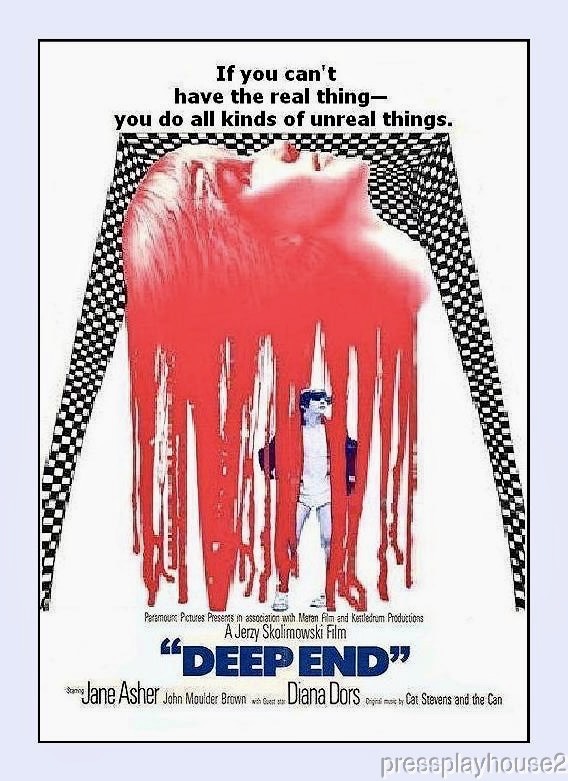
Sometimes a film comes along that no marketing department can get a handle on and as a result it just gets tossed out there to fend for itself and to find an audience on its own. That was the case with Deep End, made in 1970 but released in 1971 by Paramount Pictures to selected art houses and whatever theaters were willing to book it. I saw the film at the Westhampton Theatre in Richmond, Virginia, which was obviously run by an Anglophile because almost any new British film would play there. Of course, Deep End is only British on the surface. It is set in London but the cast includes British, Germany actors and Polish actors and much of the film was shot in Munich, Germany by Polish director Jerzy Skolimowski.

Continue reading