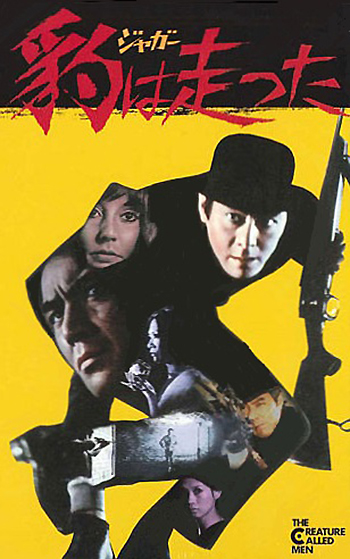
The film poster for JAGA WA HASHITTA (1970), a Japanese film that is also known as THE CREATURE CALLED MAN.
In the late 1960s and early 1970s Toho Studios began toying with some of its genre offerings by slipping some social or political references into the narratives while adding additional cinematic influences. A prime example of this is the 1970 Japanese film Jaga Wa Hashitta (English title: The Creature Called Man), an offbeat actioner about rival hit men with obvious references to the James Bond spy series as well as American crime thrillers.
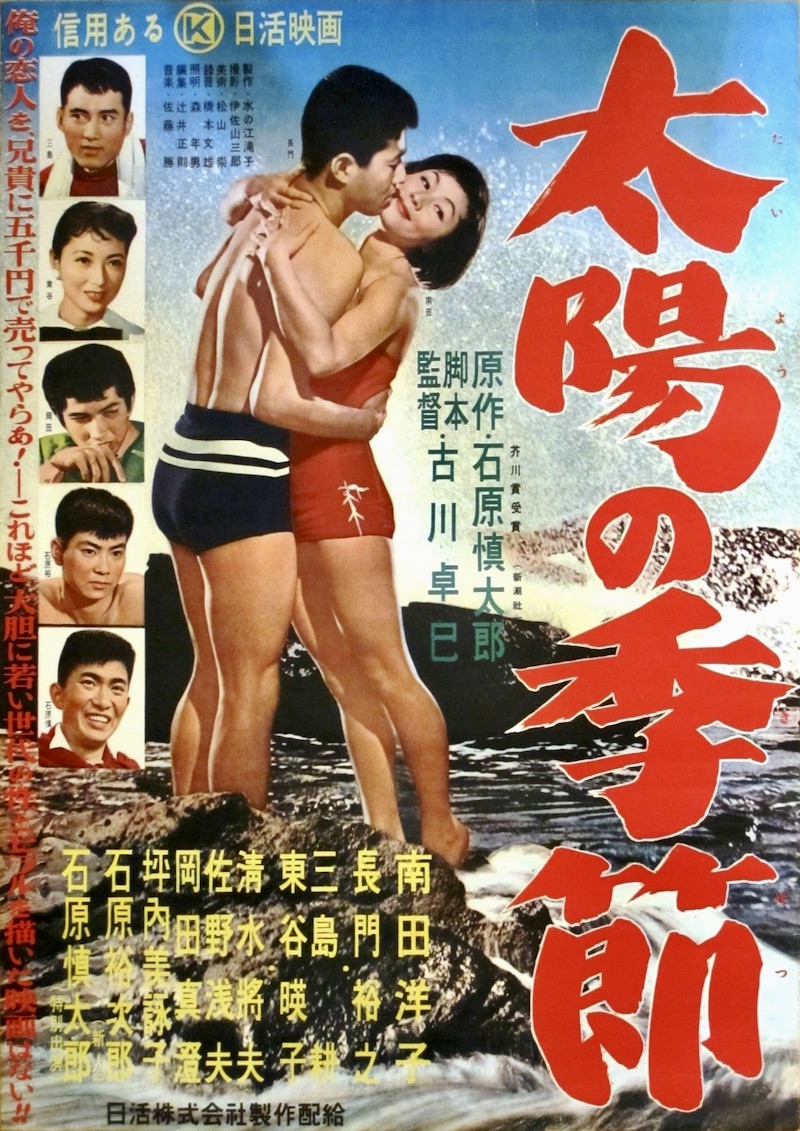
The Japanese film poster for SEASON IN THE SUN (1956) aka Taiyo no Kisetsu.
When Ishihara Shintaro died on February 1, 2022 at age 89, most obituaries focused on his career as a politician in Japan. He first served as a member of the House of Councillors (1968 to 1972) and then as a member of the House of Representatives (1972-1995) before becoming the Governor of Tokyo from 1999 to 2012. A controversial figure in his own country, Shintaro was famous for his ultra-nationalist stance on Japan and extreme right-wing views such as discriminating against Japanese-Koreans, the disabled, women, LGBT and other social minorities. He is now considered an early proponent of “hate speech” and often denied historical accounts of atrocities committed by the Japanese against the Chinese in the infamous Nanjing Massacre of 1937, which in Japan is the same as being a Holocaust denier. What is most surprising about Shintaro, however, is his earlier career as an author and highly successful screenwriter for movie studios like Nikkatsu, Daiei and Shochiku. His critically acclaimed first novella, Taiyo no Kisetsu (English title: Season of the Sun), was published in 1955 and he adapted it into a film for director Takumi Furukawa. It became a box office sensation and inspired several successors in a film movement that became known as the “Sun Tribe” (aka Taiyozoku) movies.
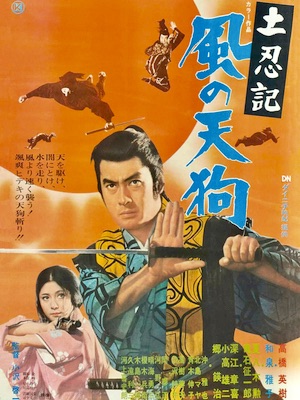
The Japanese film poster for HAUNTED SAMURAI (1970)
The samurai film in Japanese cinema was often classified as a chanbara, a sub-category of the jidai-geki (period drama) which was more action oriented. The chanbara was at the peak of its popularity in Japan from the early 50s to the early 70s with occasional revivals of the form up through the present and some of the most famous examples of the genre are Teinosuke Kinugasa’s Gate of Hell (1954), Hiroshi Inagaki’s Samurai Trilogy (1954-1956), and Akira Kurosawa’s Seven Samurai (1954) and Yojimbo (1961). One aspect of the samurai film that always struck me was that it seemed like a period variation on the American western and the fact that Kurosawa was a huge fan of director John Ford seems obvious when you look at Seven Samurai and Yojimbo, whose main protagonists are samurai-for-hire, not unlike professional gunfighters or bounty hunters in the wild west. Both of Kurosawa’s films went on to inspire two popular westerns respectively – John Sturges’s The Magnificent Seven (1960) and Sergio Leone’s A Fistful of Dollars (1964). Reminiscent of Kurosawa’s chanbara efforts is Haunted Samurai (Japan title: Kaze no Tengu, 1970), an often overlooked samurai action-adventure from director Keiichi Ozawa that came toward the tail end of the genre’s peak period but also seems custom made for an American western remake.
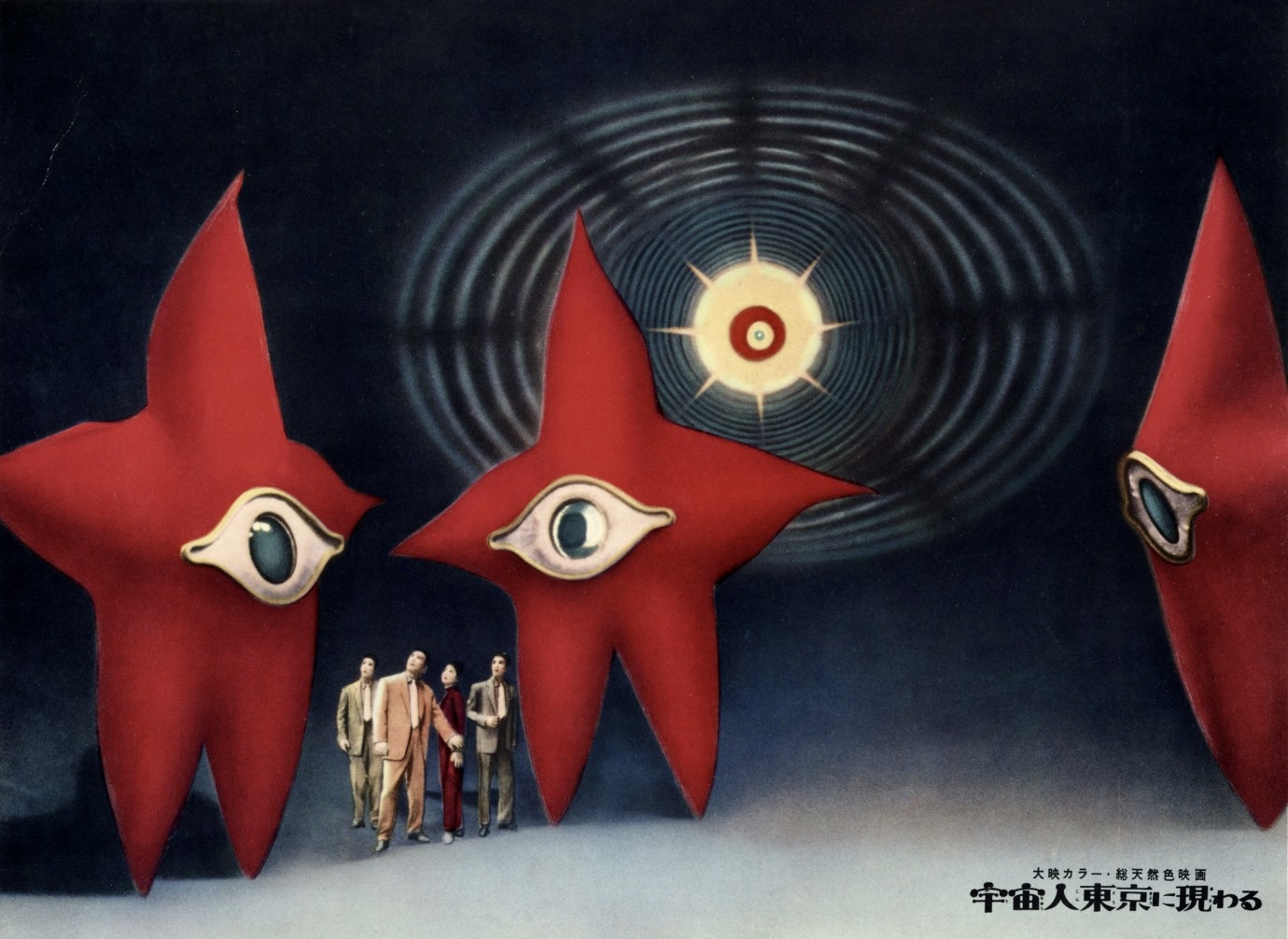
A promotional still from the Japanese science fiction film Uchujin Tokyo ni Arawaru (1956), which was released in the U.S. in 1963 as WARNING FROM SPACE.
The early 1950s is generally regarded as the time when science fiction truly became a popular and profitable film genre thanks to a number of pioneering efforts from Hollywood such as The Day the Earth Stood Still (1951), The Thing from Another World (1951), The Man from Planet X (1951), It Came from Outer Space (1953) and Invaders from Mars (1954). Other countries quickly followed suit producing their own sci-fi entries but Japan was a latecomer in this regard. It wasn’t until 1956 when Daiei Studios released the first Japanese movie to address the subject of UFOs and extraterrestrials – Uchujin Tokyo ni Arawaru aka Spacemen Appear in Tokyo, directed by Koji Shima. The film was a commercial failure and quickly vanished from cinemas before turning up seven years later on American television screens in an English-dubbed version known as Warning from Space. Unfortunately, this altered version for TV syndication with its pan-and-scan format deviating from the original presentation was intended for juvenile audiences. The original 1956 Japanese version, however, is a fascinating and important genre entry in the development of the science fiction film and deserves to be better known today. (When I refer to Warning from Space throughout the following article, I am talking about the Japanese version).
A Japanese film poster for the 1952 film DOBU aka The Ditch aka Gutter.
One of the most famous Japanese directors of his generation (1912-2012) to emerge from the post-WW2 years was Kaneto Shindo but, outside of a handful of films, most of his work remains largely unseen in the U.S. That is a shame because much of his filmography provides a fascinating glimpse into the lives and mindsets of Japanese people, especially the working class, in the difficult years following the country’s defeat in the war. One of his earliest and most provocative depictions is Dobu (1954), which is also known as The Ditch, but is more accurately translated as The Gutter. And the main protagonist of the film is Tsuru (Nobuko Otowa), who could easily claim to be the most memorable guttersnipe of all time. When the film opens, she is a filthy, wandering beggar on the verge of starvation who collapses in a shantytown known as Kappunuma and here she will remain for the rest of her brief life.
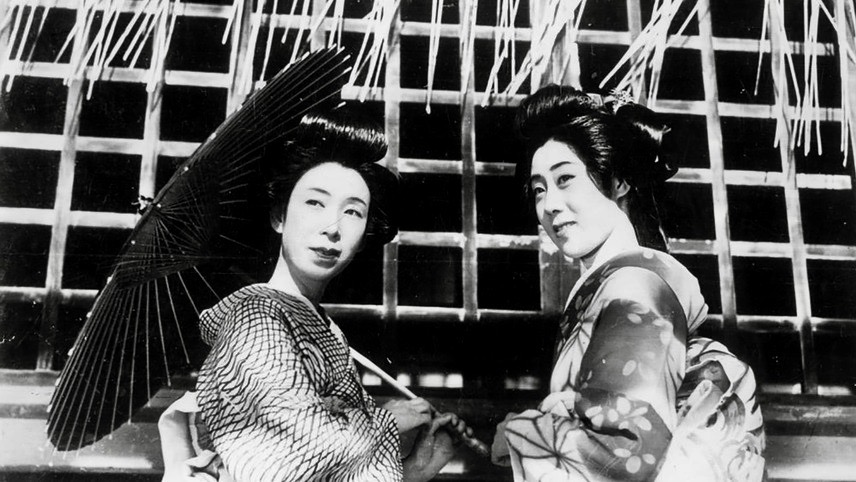
Umekichi (Yoko Umemura, left) and Omocha (Isuzu Yamada) are two sisters enmeshed in the geisha life in Kyoto but couldn’t be more different from each other in Kenji Mizoguchi’s SISTERS OF THE GION (1936).
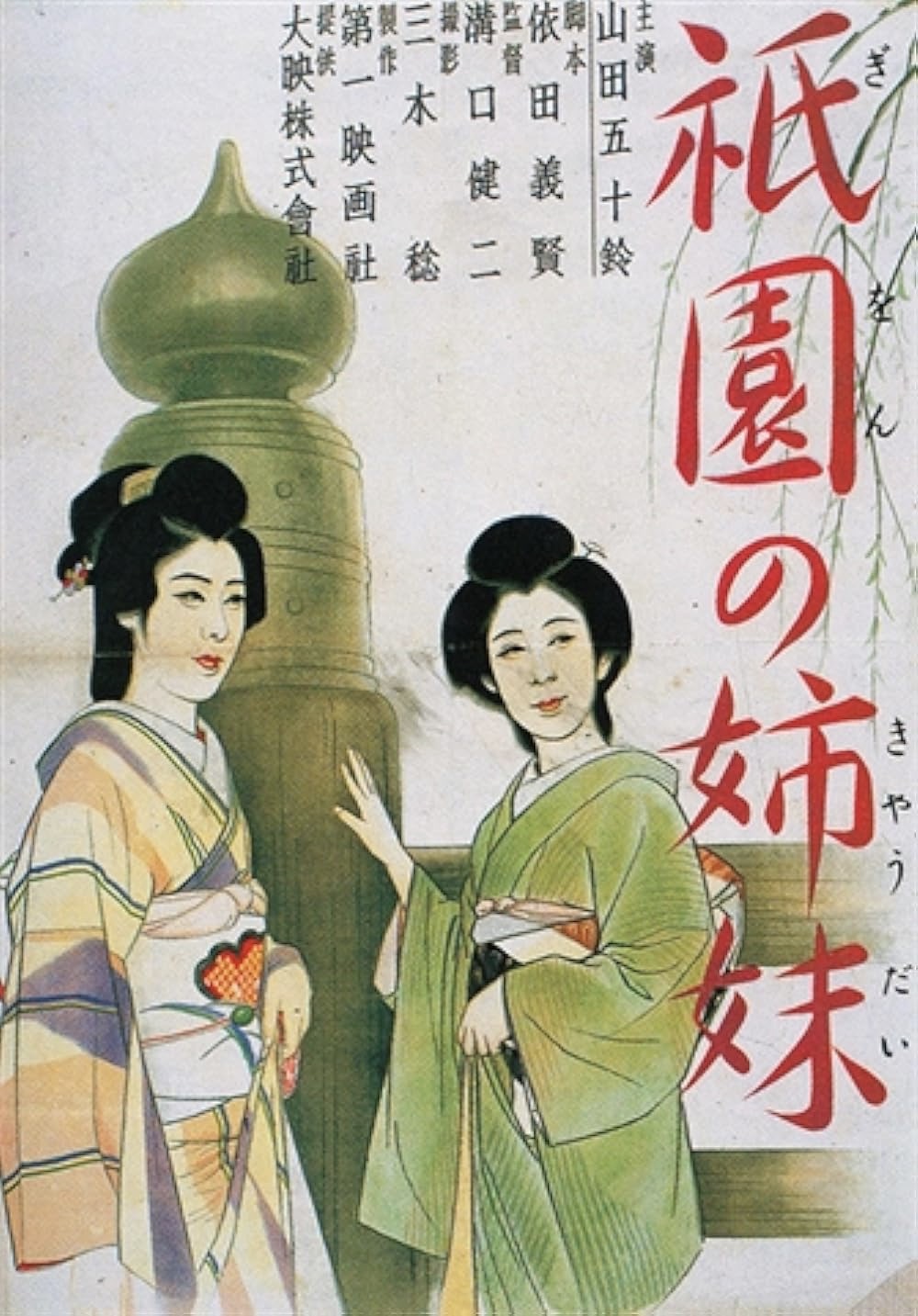
When it comes to equality between the sexes, do you think life has improved for women over the past 100 years? According to a June 2023 poll by CNBC, the best countries for women in terms of equality and work opportunities are (in this order) Iceland, Norway, Finland, New Zealand and Sweden. The UK is further down in the 15th position and the U.S. is surprisingly ranked at the 46th slot out of 146 countries. Of course, the places where women are treated like second class citizens or worse is no surprise. A poll on the Global Citizen website in 2021 shows the ten worst places for gender equality led by Afghanistan and followed by Syria, Yemen, Pakistan, Iraq, the South Sudan and other African countries. And what about Japan? Despite its reputation as a sophisticated culture and a major world power, the country is still a patriarchal society where women continue to serve the men who hold the power. Japanese director Kenji Mizoguchi has often examined and critiqued the kind of society that forces women to give up any independence and make constant sacrifices for their men which is why the director is often considered a proto-feminist in cinema circles. Yet, in Mizoguchi’s long career of almost 100 features and short films, the demeaning patriarchy of Japan has often been a running theme in his work and it created considerable controversy in his country early in his career, emerging most strongly in two of his finest movies, Naniwa Hika (English title: Osaka Elegy, 1936), which was banned by censors in 1940 for displaying “decadent tendencies,” and Gion no Shimai (English title: Sisters of the Gion, 1936), which is even angrier and more despairing than the later.
The Japanese fllm poster of SISTERS OF THE GION (1936).
The Japanese film poster for Ginrei no hate aka SNOW TRAIL (1947).
Many people believe they are masters of their own fates but occasionally mother nature steps in to remind them that there are outside forces they cannot control such as a mountain wilderness or a blizzard or an avalanche. Such is the case in Snow Trail (Japanese title: Ginrei no hate, 1947), an engaging B-movie crime drama in which three bank robbers flee to the snow-covered slopes of Mount Hakuba, located in the northern alps of Nagano Prefecture. With the law in close pursuit, the trio soon find themselves in dire straits with no experience in mountain climbing or dealing with extreme weather conditions. Nature is simply indifference in such matters.
The Japanese film poster for THE BEAST SHALL DIE (1959), directed by Eizo Sugawa.
According to the Oxford Dictionary, a sociopath is a person who has a personality disorder which causes them to behave in an aggressive, violent or unpleasant way towards other people. The general opinion among psychiatrists is that sociopaths are not born that way, which is usually the case with psychopaths. Instead, sociopaths are shaped by their environment and experiences. A classic example of this is profiled in Eizo Sugawa’s Yaju Shisubeshi (English title: The Beast Shall Die). The protagonist of this 1959 psychological thriller is Date Kunihiko (Tatsuya Nakadai), a quiet, well-mannered graduate student who is exceptionally gifted as a writer and athlete. Behind his benign façade, however, is a cunning sociopath with a plan that slowly reveals itself as the film unfolds. As portrayed by Nakadai, Date is a truly chilling figure and one of his least known but most potent early performances. It deserves to be included with his more celebrated work in such Japanese masterpieces as Masaki Kobayashi’s The Human Condition (1959-1961), Kihachi Okamoto’s The Sword of Doom (1966) and numerous collaborations with Akira Kurosawa such as Sanjuro (1962), High and Low (1963) and Kagemusha (1980).
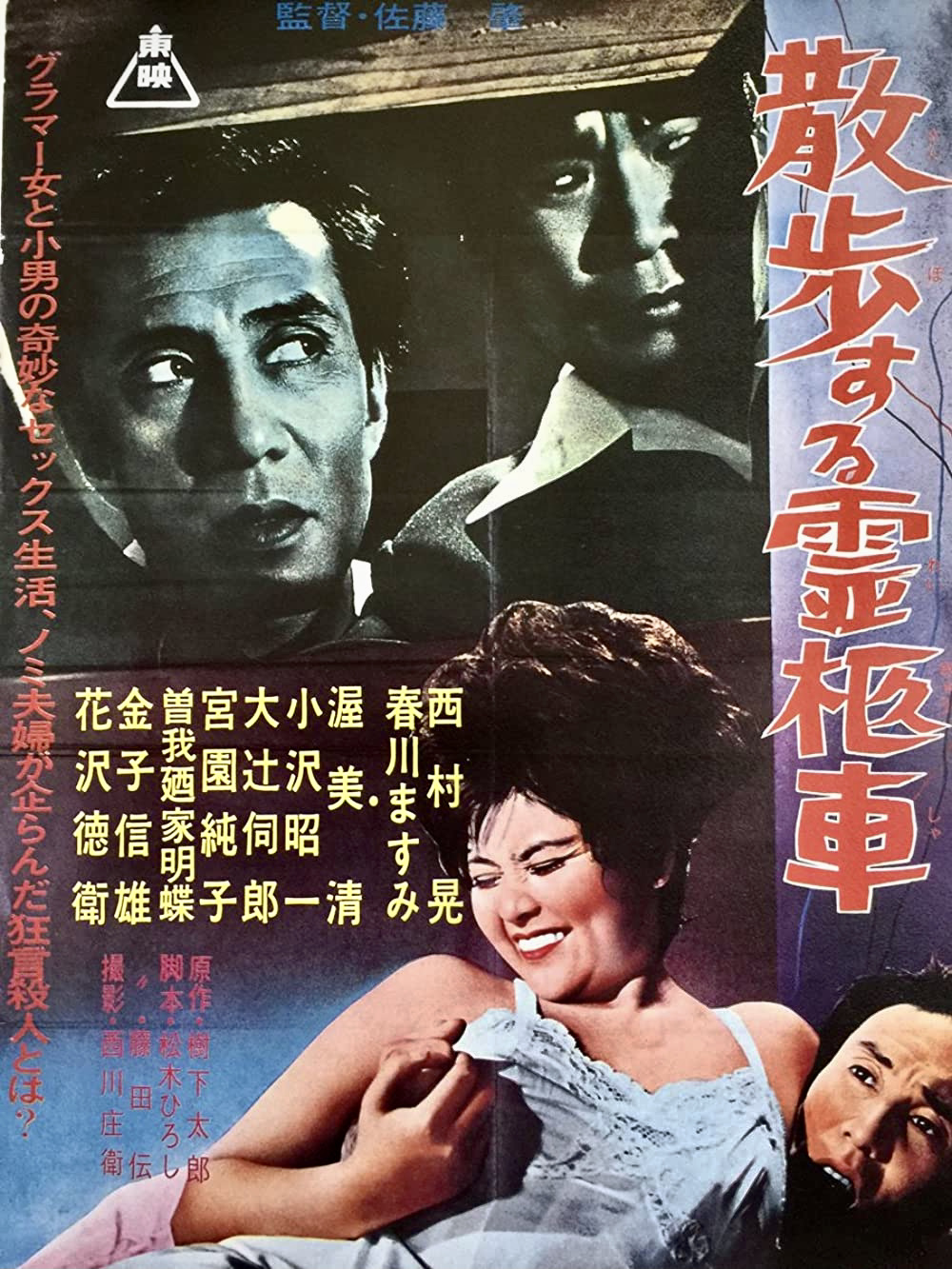
Japanese film poster for THE GLAMOROUS GHOST (1964)
The Glamorous Ghost (Japanese Title: Sanpo Suru Reikyusha, 1964) is something of a rarity in Japanese cinema – a noir comedy. This is the sort of twisty, convoluted farce in which all of the main characters are greedy, immoral and deceitful and you end up rooting for Asami (Ko Nishimura), the taxi driver protagonist, only because he is a pitiful underdog with a simple dream – to retire and run a pig farm in the country. His plan to accomplish that, however, involves blackmail and worse and before The Glamorous Ghost reaches its macabre but amusing climax, most of the major players have departed this mortal coil.
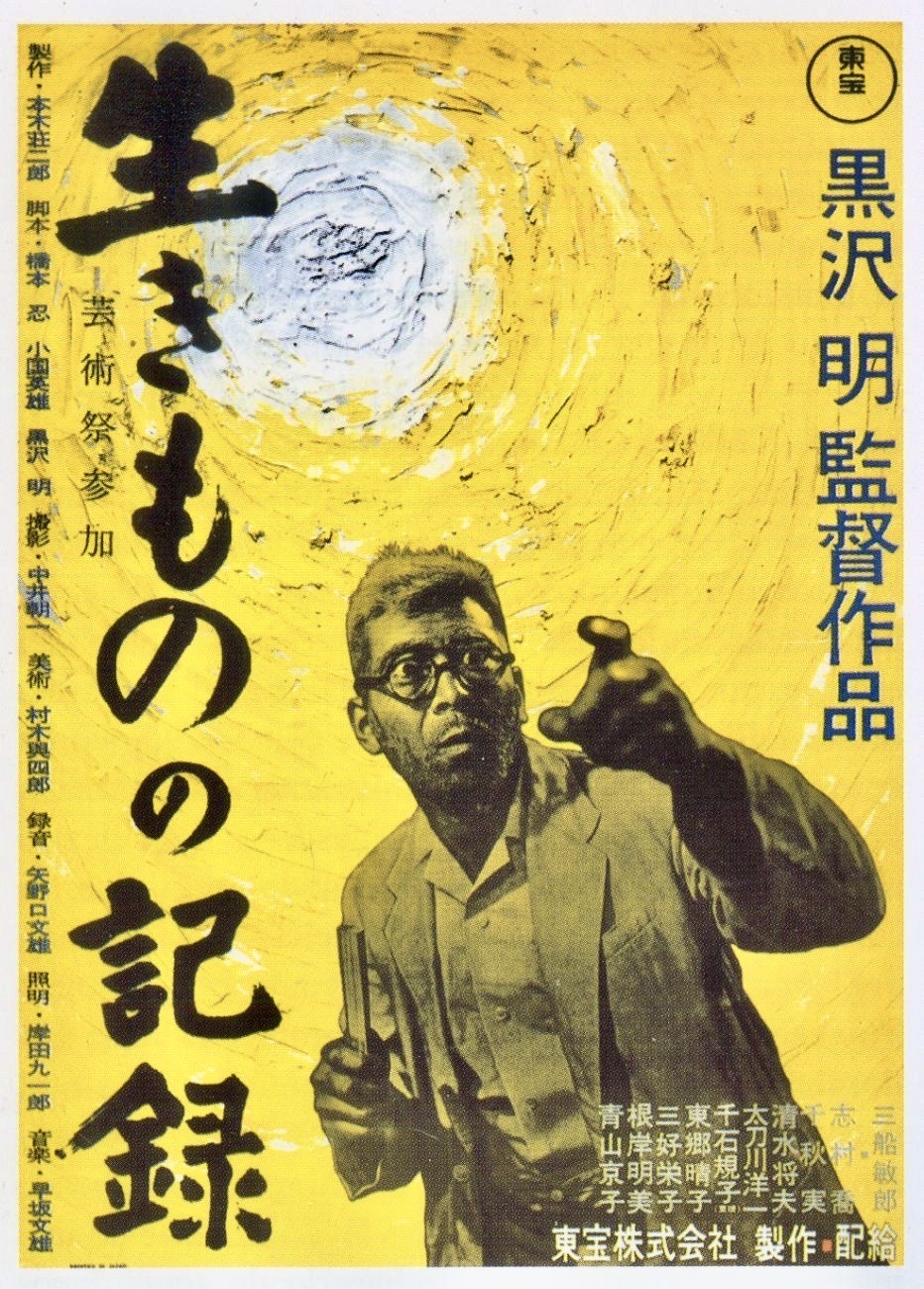
The Japanese film poster for I Live in Fear (1955), directed by Akira Kurosawa and starring Toshiro Mifune.
One of the first Japanese commercial features to directly address the fear of nuclear holocaust and the implications of the atom bomb, Record of a Living Being, which is better known as I Live in Fear (1955, aka Ikimono no Kiroku) was an unusual and unexpected movie for director Akira Kurosawa. He had recently completed Seven Samurai (1954), a huge box office and critical success in both Japan and around the world, but his new work was much smaller in scale compared to that sprawling period epic. Continue reading →




 Cinema Sojourns