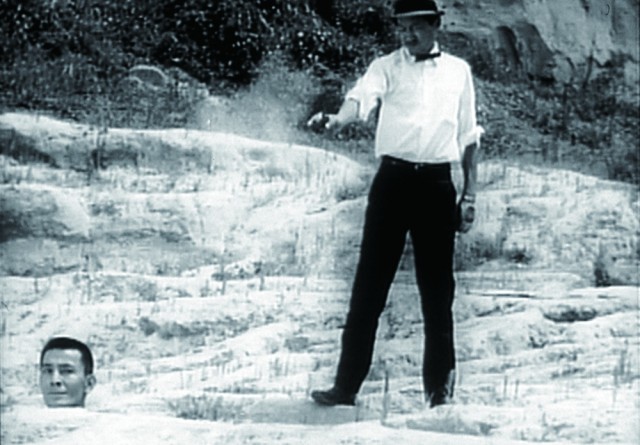
There is a popular misconception these days that almost any movie you want to see is available for streaming or viewing somewhere in cyberspace but that simply isn’t true. Thousands of films go missing, become inaccessible or go into distribution purgatory as the years pass and they become forgotten in time. Birds in Peru (aka Birds Come to Die in Peru) would probably be forgotten too if it hadn’t received such scathing reviews upon its original release in 1968. Continue reading
Faded Delusions of Grandeur: The Desert of the Tartars
Each year hundreds of international films never get picked up for distribution in the U.S. and the select few that do are either high profile film festival prize winners like Michael Haneke’s Amour (2012) or popular commercial hits like March of the Penguins (2005) from France and Life is Beautiful (1997) from Italy. So when you come across an austere and haunting cinematic work like Valerio Zurlini’s The Desert of the Tartars (Il Deserto Dei Tartari), you have to wonder how many great films from other lands are out there that you are not going to see…and probably never will. Continue reading
What’s So Funny About a Clown With a Machete?
When clowns are the main characters in movies, you can almost bet they aren’t going to be very funny (He Who Gets Slapped, La Strada, The Comic)…especially in a film by Alex de la Inglesia; this is the fantasist who gave us such outlandish spectacles as Accion Mutante (1993), Perdita Durango (1997) and 800 Bullets (2002). Similar in tone to his pitch black farce Muertos de Risa (1999), in which a two-man comedy act self-destructs in a bitter, homicidal rivalry, de la Inglesia takes this basic conflict and pushes it further into bloody madcap surrealism in The Last Circus (Spanish title: Balada Triste de Trompeta, 2010). It opens in the midst of the Spanish Civil War, circa 1937, as a circus clown, wearing a dress, is interrupted in the middle of his comedy routine and forced into service by the militia. Armed with a machete, he single-handedly massacres scores of Nationals before being captured by the opposition. Before he is executed, he is allowed to give some parting advice to his son Javier, who is so traumatized by the experience that it marks him for life. Though Javier vows to continue in his father’s line of work, he is incapable of playing the happy clown and finds his niche as a sad clown instead. Continue reading
Hitchhike Into Darkness: Tomorrow is Another Day
Released in 1951 by Warner Bros. and often considered a film noir by some film buffs and critics, the little known TOMORROW IS ANOTHER DAY is a hard-to-peg but exceptional B-movie that proves to be something of a shape shifter in the genre department. The title is bland but also deceptive in the sense that it calls to mind a completely different and inappropriate reference – Margaret Mitchell’s Gone With the Wind. The movie is also not true noir because, by general consensus and tradition, a noir can’t have a happy ending yet the two main characters – a bitter ex-con and a gold digging taxi dancer – are archetypes from a noir universe who try to flee their circumstances and still find redemption in the end. Along the way, the film effortlessly morphs from one cinematic convention to another, starting with a social reform drama (shades of Heroes for Sale or I Am a Fugitive From a Chain Gang) in the gritty Warner Bros. tradition before detouring into noir. Then the tone quickly changes as the movie moves from the city to the rural backroads, becoming first a road trip/pursuit thriller of the paranoid kind, then a romance of thwarted lovers and finally an ethnographic slice of Americana that introduces a migrant worker subculture and the socio-economic hardships that come with it a la The Grapes of Wrath. Continue reading
CINEMATEK in Brussels – Enter The Sacred Film Shrine
Prior to traveling to Brussels, Belgium this past November, I put some serious research time into identifying the key sights and activities I wanted to see and do while visiting. Apart from the essentials like a walk through “The Grand Place” and a visit to the Magritte Museum, there are plenty of offbeat detours like the incredibly cluttered but charming Musee de Jouet (a vast collection of toys from the past) and the Musee des Instruments de Musique, housed in a former 1899 department store in the art nouveau style. If you are a fan of Belgium beers, you will be in heaven here (visit A La Morte Subite and Delirium Tremens Cafe for starters) and your choices of various cuisines will be endless though you may be tempted to try the local specialty – mussels & frites – at least once unless you have an aversion to shellfish and french fries. And if you a film lover, particularly one interested in repertory programming, you will be amazed at what you find for Brussels has a thriving movie culture with even more “classic cinema” viewing options than nearby Amsterdam (less than 3 hours by train), another mecca for cinephiles which we visited a few days before. Continue reading
Rififi in Tokyo
Rififi, Jules Dassin’s quintessential 1955 noir/heist thriller, had quite an impact on the European crime movie genre in its day, although most of its imitators or similarly inspired creations rarely found distribution in the U.S. except as English-dubbed second features in limited runs in a few major cities like New York. I have yet to read of any major film critics or movie buffs like Quentin Tarantino championing any of the Rififi knockoffs. But for anyone with a soft spot for heist films, you might enjoy sampling some of these lesser efforts, particularly RIFIFI IN TOKYO (1963). Continue reading
EYE – Film Archive of the Future

On a recent November trip to Amsterdam with my wife, we had no set agenda other than pure pleasure – to soak in the culture, see the city sights and various art museums, tour the canals and neighborhoods, sample the great beers, and occasionally retreat from the constant onslaught of bicycles into some cosy cafe or coffeeshop. (A word of warning to first time visitors to Amsterdam: bicyclists have the right of way over pedestrians and their own designated lanes everywhere. If you don’t look carefully both ways before stepping across a bike lane, you could get creamed by someone going 30 miles an hour or more. The trams (streetcars) can be just as deadly if you aren’t paying close attention to the street traffic.) Continue reading