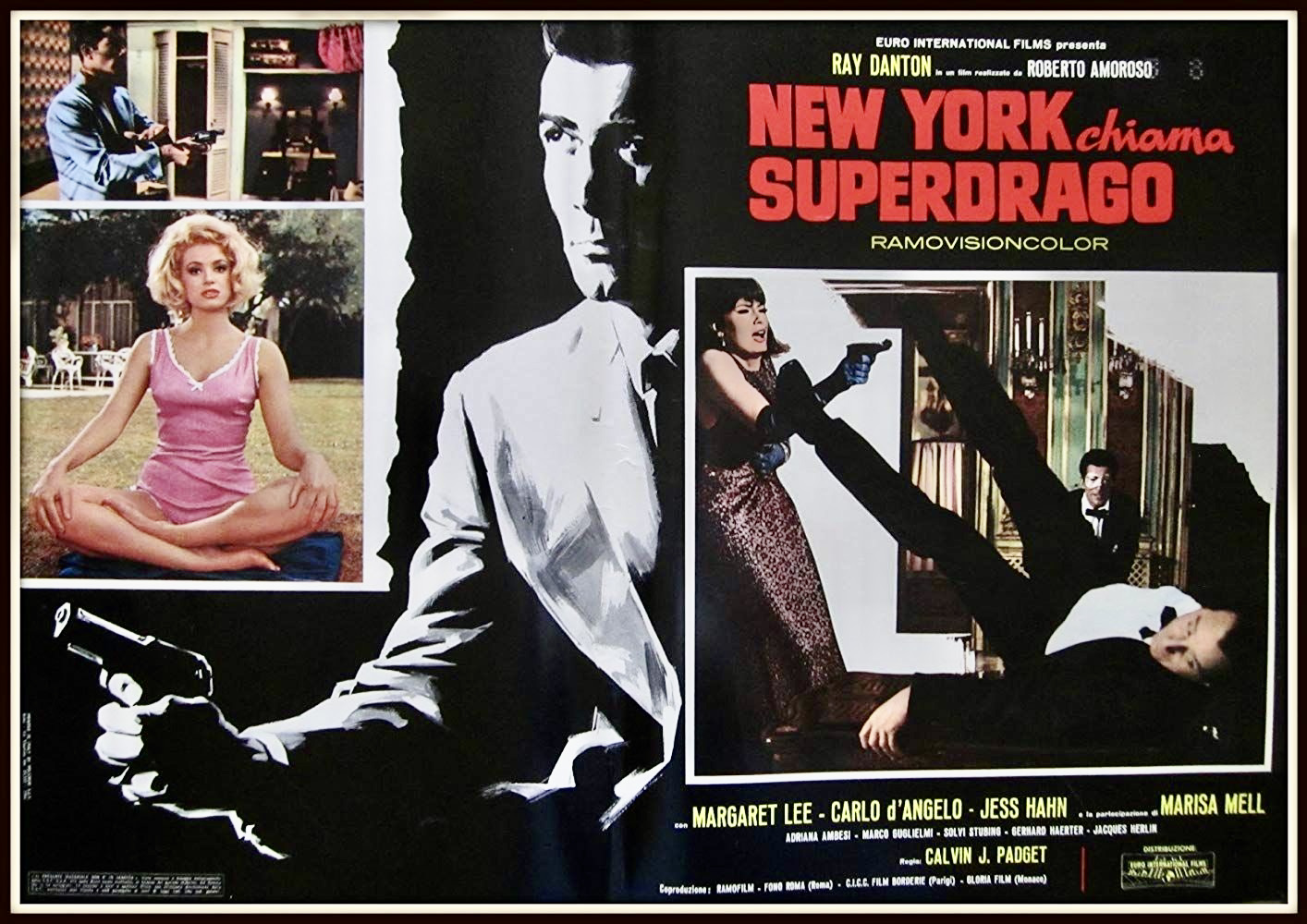
One of countless Eurospy actioners released in the wake of the James Bond film craze in the sixties, Secret Agent Super Dragon (aka New York chiama Superdrago, 1966) has been mercilessly ridiculed on MST3K but served straight up, it’s often funnier in its own poker-faced way and has some oddball flourishes to set it apart from its fellow spy wannabes. I know it denotes a certain immaturity in the writer to even do a post on this, yet I am compelled…I must!
Most major art movements in America during the 20th century were led and dominated by male artists but the post-minimalist movement that emerged in the mid-1960s in New York City was unique for the number of female artists that captured the attention of the art world. Foremost among them was Eva Hesse, whose work utilizing plastics, fiberglass and latex represents some of the most radical and influential creations from that group. Unfortunately, she was struck down by brain cancer at the height of her fame at age 34, but the 2016 documentary Eva Hesse provides a wonderfully immersive deep dive into her art, life and career.
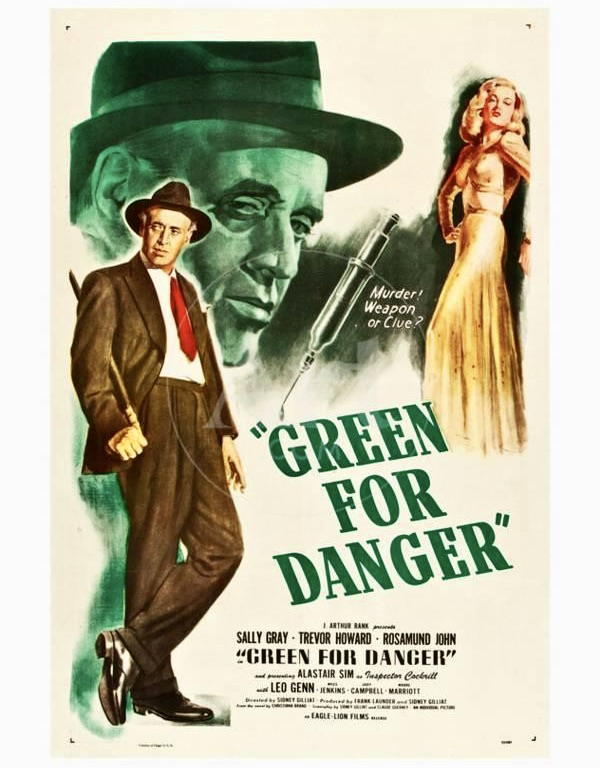
Classic movie lovers in the U.S. probably know Alastair Sim as Ebenezer Scrooge in the perennial holiday favorite, A Christmas Carol, the 1951 version. He is also memorable for his supporting role in Alfred Hitchcock’s Stage Fright (1950) but, more importantly, British comedy fans adore Sim specifically for his eccentric comedic characters in such popular films as The Happiest Days of Your Life (1950), Laughter in Paradise (1951) and Innocents in Paris (1953). Less familiar to American audiences but guaranteed to turn you into an Alastair Sim fanatic if you’re not one already is Green for Danger, a 1946 suspense thriller starring Sim as the sly-as-a-fox Inspector Cockrill.
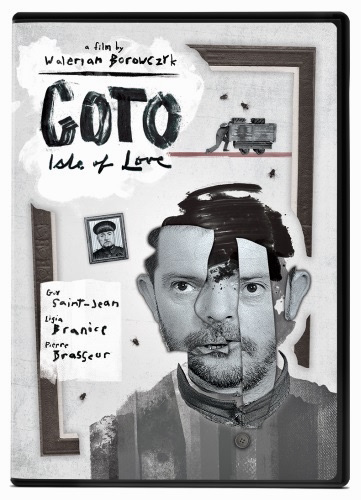
In the film world of the 20th century, there were not too many animators who made the transition to live action feature film directing. Certainly Frank Tashlin was one of the most famous, going from Porky Pig and Daffy Duck cartoon shorts to manic pop culture comedies like The Girl Can’t Help It (1956) and Hollywood or Bust (1956). Another rare exception was George Pal, who became famous for his Puppetoon shorts for Paramount before establishing himself as a director of fantasy features such as Tom Thumb (1958) and The Time Machine (1960). It is far easier to name more contemporary filmmakers like Terry Gilliam, Tim Burton and Brad Bird, all of whom graduated from cartoons to live-action features successfully. The above are all artists who worked in the commercial cinema but, if you are talking about art cinema, the list is much smaller and Polish animator Walerian Borowczyk should be in the top slot. Goto, Island of Love (1969, Polish title: Goto, I’ile d’amour), his feature film debut, is a fascinating achievement that successfully brings the avant-garde sensibilities of his animated shorts to a live action feature.
I’m a sucker for any film starring Tuesday Weld. Ditto any high school/teen angst/juvenile delinquent flick from the fifties and sixties. Toss in American radio and TV personality Dick Clark in his dramatic film debut and musical appearances by the “King of Twang” Duane Eddy and Because They’re Young (1960) becomes essential viewing.
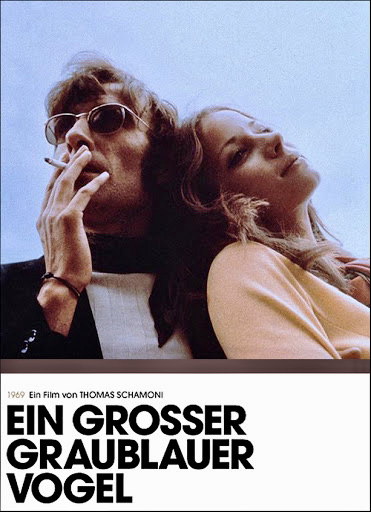
The New German Cinema of the late sixties-early seventies introduced the world to some of the most original and provocative filmmakers of the 20th century such as Rainer Werner Fassbinder, Wim Wenders, Werner Herzog and Volker Schlondorff, but some of pioneers never attracted much attention outside their own country and their films are in danger of being forgotten. Among them are Helma Sanders-Brahms, Peter Lilienthal, Hans W. Geissendorfer and Thomas Schamoni, who is probably the most obscure of them all. Schamoni worked for most of his career in television, turning out documentaries and made-for-TV movies, but in 1970 he directed his only feature film, A Big Grey-Blue Bird (German title: Ein grober graublauer Vogel). A lo-fi mashup of sci-fi and spy genre elements reminiscent of Jean-Luc Godard’s Alphaville (1965), it is a playful and surprisingly entertaining cinematic “experiment” that should have found a wider audience.
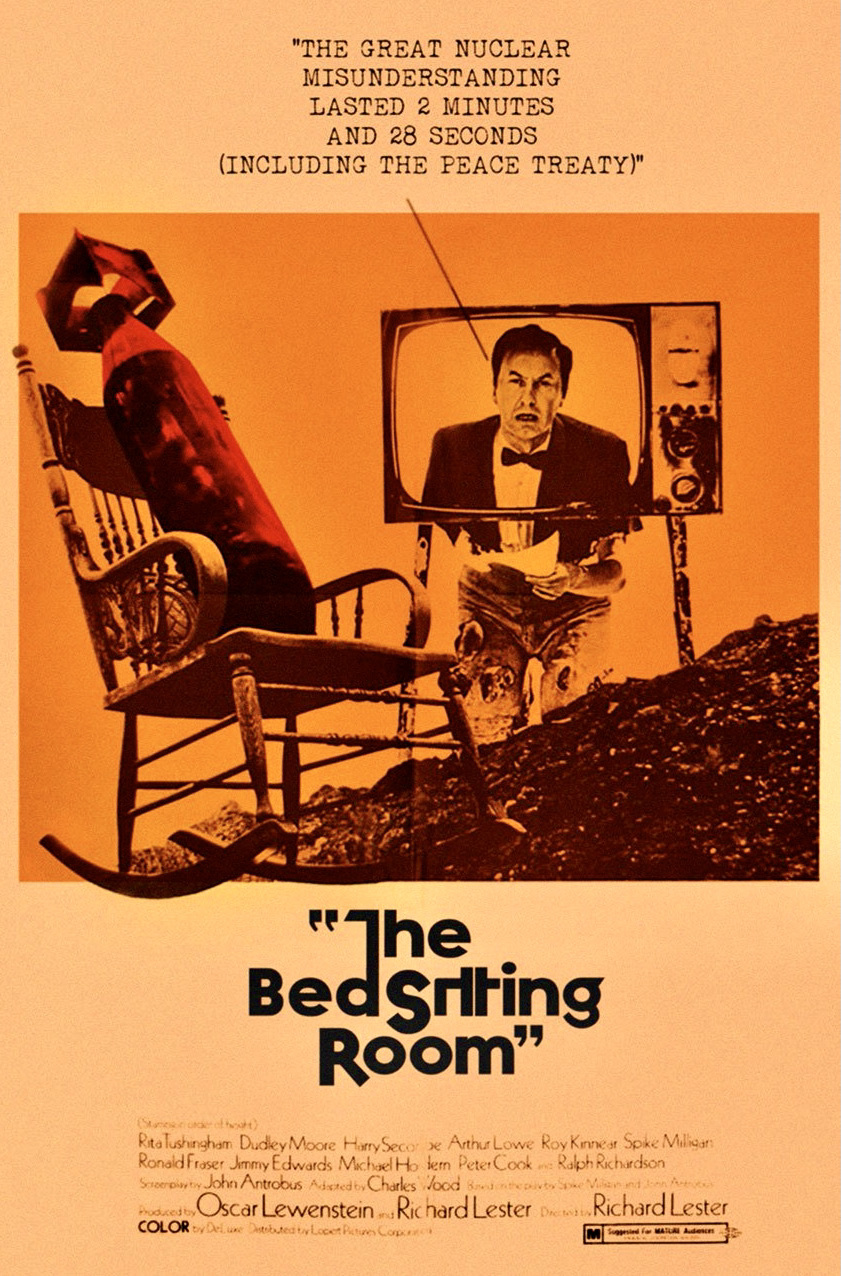
What would life be like after a global apocalyptic event or would there be any life at all? It is certainly a topic that has inspired filmmakers to create an entire subgenre upon the premise. Some of the more famous and/or infamous efforts have usually focused on a handful of survivors like Arch Oboler’s low-budget message melodrama Five (1951), Stanley Kramer’s On the Beach (1959), the interracial menage-a-trois of The World, the Flesh and the Devil (1959) and Roger Corman’s similar three-character B-picture, The Last Woman on Earth (1960). Other variations have been more epic in scope and ambition with a distinct sci-fi/horror approach like the various film versions of Richard Matheson’s I Am Legend, The Road Warrior (1981) and other Mad Max sequels and clones as well as post-apocalyptic zombie flicks like World War Z (2013). Comedies about life-after-the-bomb, however, are a rarity but probably the weirdest and most deeply cynical of them all is The Bed-Sitting Room (1969), directed by Richard Lester.
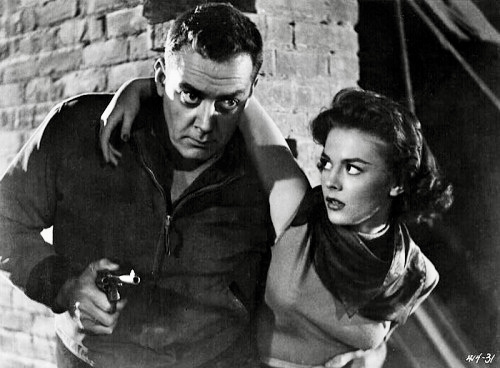
You probably couldn’t find a more unlikely friendship in Hollywood during the fifties than the one between Raymond Burr and Natalie Wood but most biographies of Wood document this little-known period of the actress’s life. The 38-year-old actor and the 17-year-old ingenue became close friends and possibly more during the making of A Cry in the Night (1956), in which he played an unhinged stalker and she was his victim.
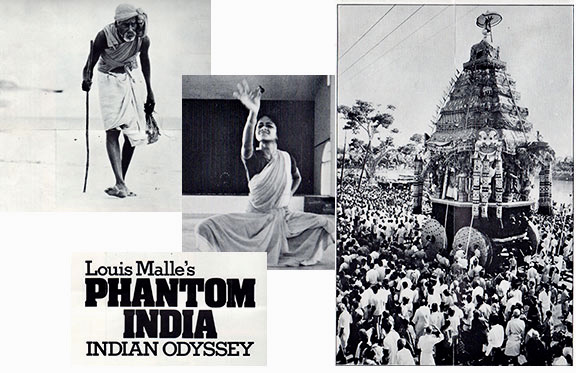
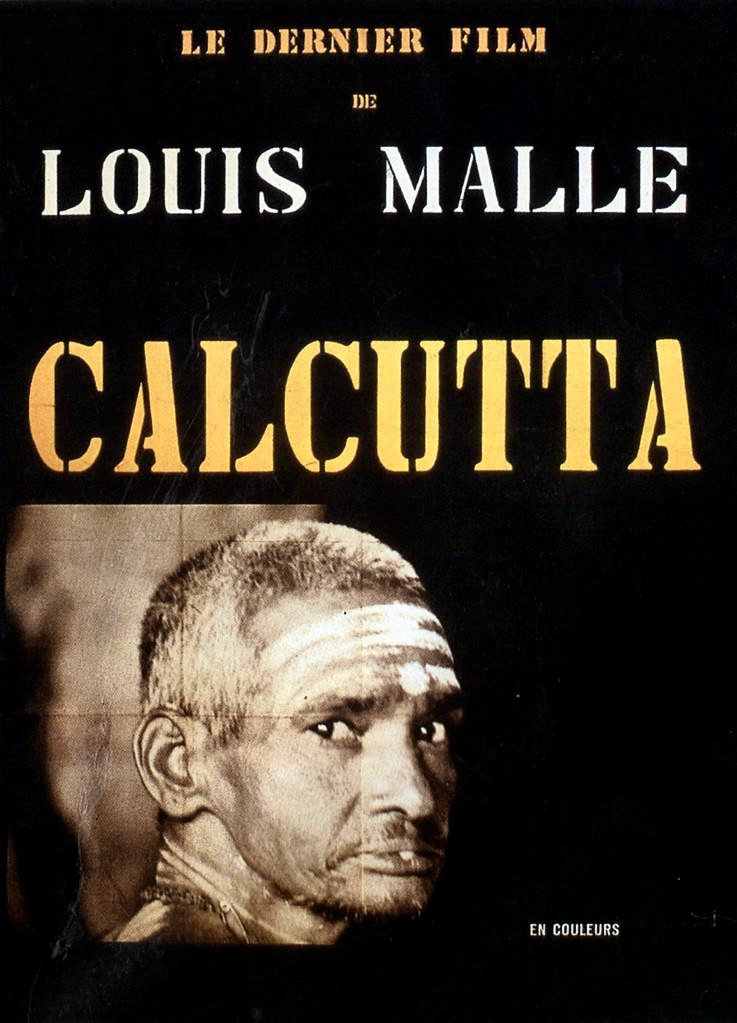
Unaccountably missing or overlooked on most reviewers’ top DVD releases of 2007 was a remarkable set from Eclipse (Criterion’s no frills, affordable editions division) – The Documentaries of Louis Malle. Among the 7 titles featured were the relatively obscure God’s Country [broadcast on PBS in 1986, but filmed in 1981], And the Pursuit of Happiness [1986, also made for television), Place de la republique [1974] featuring man-in-the-street interviews on a busy Parisian boulevard, Humain, trop humain [1974], a fascinating time capsule of French auto workers with industrial noise and Godard-like imagery and the 18 minute short Vive le tour [1962]. But the real highlights of the collection were Phantom India [1969], a 378 minute portrait of that nation that was distributed theatrically as a 7-episode series, and Calcutta [1969], which was filmed at the same time but released separately (It was nominated for a Golden Palm at the Cannes Film Festival). To call both films an overwhelming experience is an understatement to say the least.
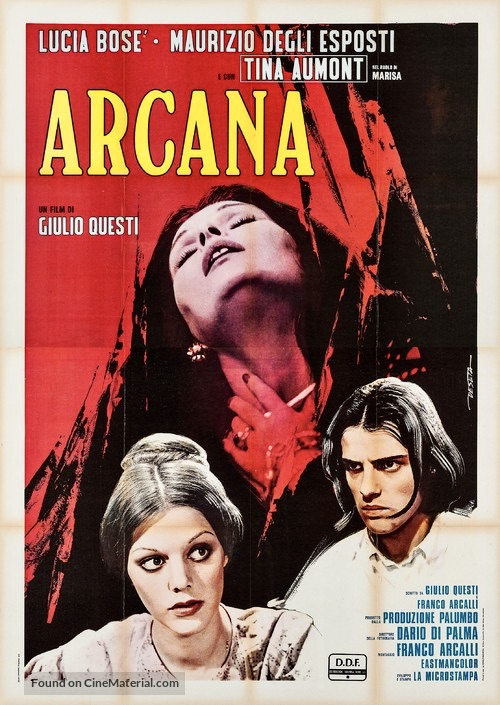
People usually have certain expectations when they invest the time to watch a movie, especially if it has been advertised as a genre film like a western, sci-fi or horror thriller. This must have been a perplexing problem for the distributors of Arcana (1972), Guilio Questi’s mysterious tale of a widow and her brooding son who use fortune telling, tarot cards and seances to con a gullible clientele. The film dabbles in the supernatural but it also flirts with other topics like voyeurism, incest, Macedonian rituals, neglected children, middle class despair and inept bureaucracies. Some critics have pigeonholed Arcana as a horror film and it is certainly horrific in tone and attitude but don’t expect the movie to conform to genre conventions. The director even issues a disclaimer at the beginning: “To the watchers: This movie is not a story but a game of cards. For this reason both its start and the epilogue are not believable. You are the players. Play smartly and you’ll win.” Make of that what you will, I think Arcana works best as a puzzle, even if it is an often inscrutable and unsolvable one that is presented in two acts. Continue reading →