Cosa Nostra Bromance

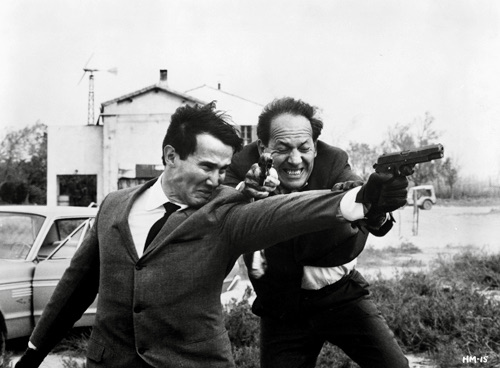
Professional hit men Schaft (Henry Silva, left) and Phil (Jack Klugman) converge on their target in the Eurocrime cult favorite, Hail, Mafia (1965), directed by Raoul Levy.

Do hit men have a code of ethics? It might seem like a bit of an oxymoron to have hit men and ethics in the same sentence but in most movies about organized crime like The Godfather, The Public Enemy or Scarface, there does seem to be some sort of moral code observed among the rank and file of thugdom, regardless of how hypocritical it may seem. Rarely though do we see crime thrillers where hit men have philosophical discussions about their work and Hail, Mafia (1965) is not only fascinating for this reason but it’s also a criminally overlooked little B-movie. Taut, suspenseful, oddly funny at times and a road movie of sorts, the European produced movie stars Henry Silva and Jack Klugman as ill-matched assassins on a journey to silence their target, an expatriate American (Eddie Constantine) living in France.

Continue reading

Elvis is Leaving the Building

During his lifetime, Elvis Presley made 31 feature films, two theatrical documentaries and numerous TV specials. What is rather surprising is the fact that Hollywood never showcased Elvis as a live performer or in a concert film until the end of his career. How much of that was due to his manager, Colonel Tom Parker, is debatable but Elvis on Tour (1972) is regarded as the last official Elvis movie that was distributed to theaters.

Continue reading

The Insurrection Cometh

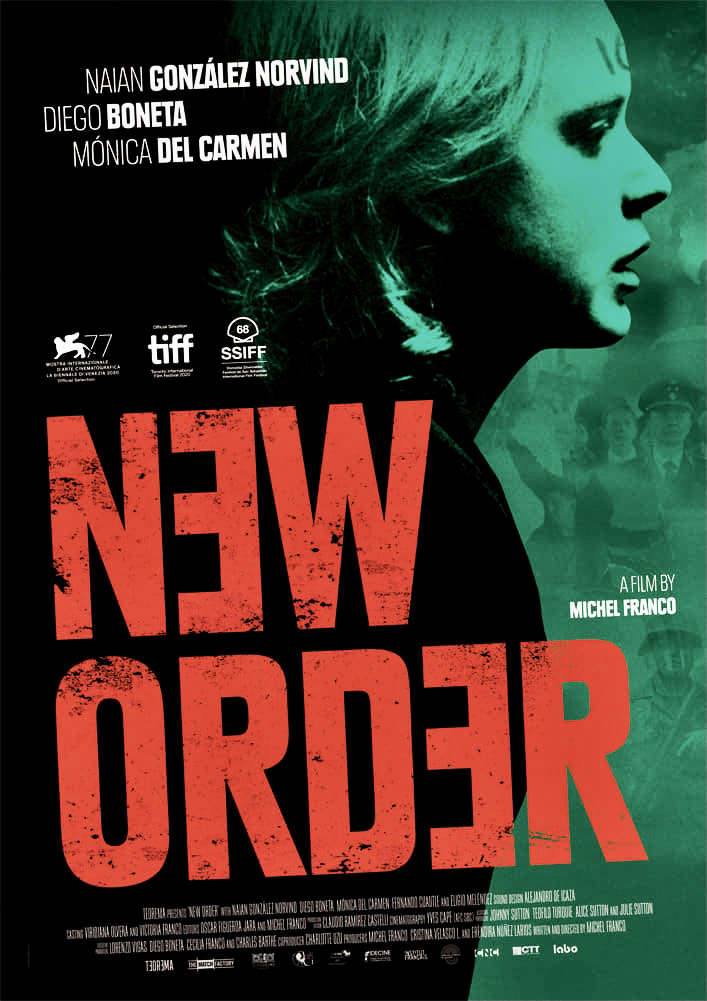
What does anarchy look like? The events of January 6, 2021 when a violent mob stormed the U.S. capitol provided a chilling example of social order under siege but this has happened before. Remember New Orleans in the wake of Hurricane Katrina in August 2005? The communications infrastructure was temporarily disabled, support services and emergency aid were unavailable and security became an issue as looting and other criminal activities took place until some semblance of order was restored by the arrival of National Guard troops a few days later. The absence of law enforcement and a rising sense of panic and chaos was broadcast to TV viewers around the world. Michel Franco’s New Order (2021), the Grand Jury Prize winner at the Venice Film Festival, taps into this fear of impending dystopia with a gripping thriller set in the wealthy enclave of what appears to be Mexico City but is never explicitly identified.

Continue reading

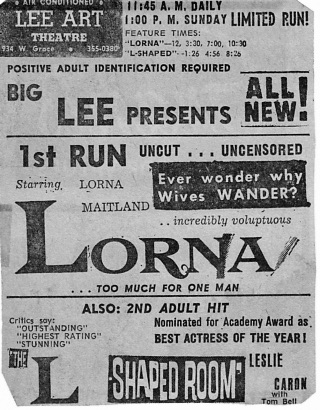
The Lee Art Theater: A Forgotten Cinema Treasure

As a lifelong film lover, I have fond memories of my movie-going youth in Richmond, Virginia. There were not only distinctly different neighborhood venues like The Westover Theater, the Willow Lawn and the Westhampton but also much more opulent movie palaces in the city like the Byrd, the Loew’s and three first-run hardtops, which were situated on one Broad Street block known as Richmond’s Theater Row – the State, Colonial and the National; the latter was later renovated and rebranded the Towne. B-movie double features, sword and sandal epics and English dubbed European genre films were more likely to show up at seedier theaters like The Grand and the Venus. There was even a theater that catered solely to black audiences – The Booker T – and a plethora of drive-in theaters scattered around the city like the Sunset, Rose Bowl and Twin Pines which exhibited some of the most obscure and bizarrely titled films of the period as witnessed by marque headliners Invasion of the Animal People, Daughter of the Sun God and other oddities. But the most eclectic of all was The Lee Art Theater on West Grace Theater, which often paired racy adult features (Russ Meyer’s Lorna, Paris Ooh-La-La) with serious art house dramas (The L Shaped Room, Breathless).

Continue reading

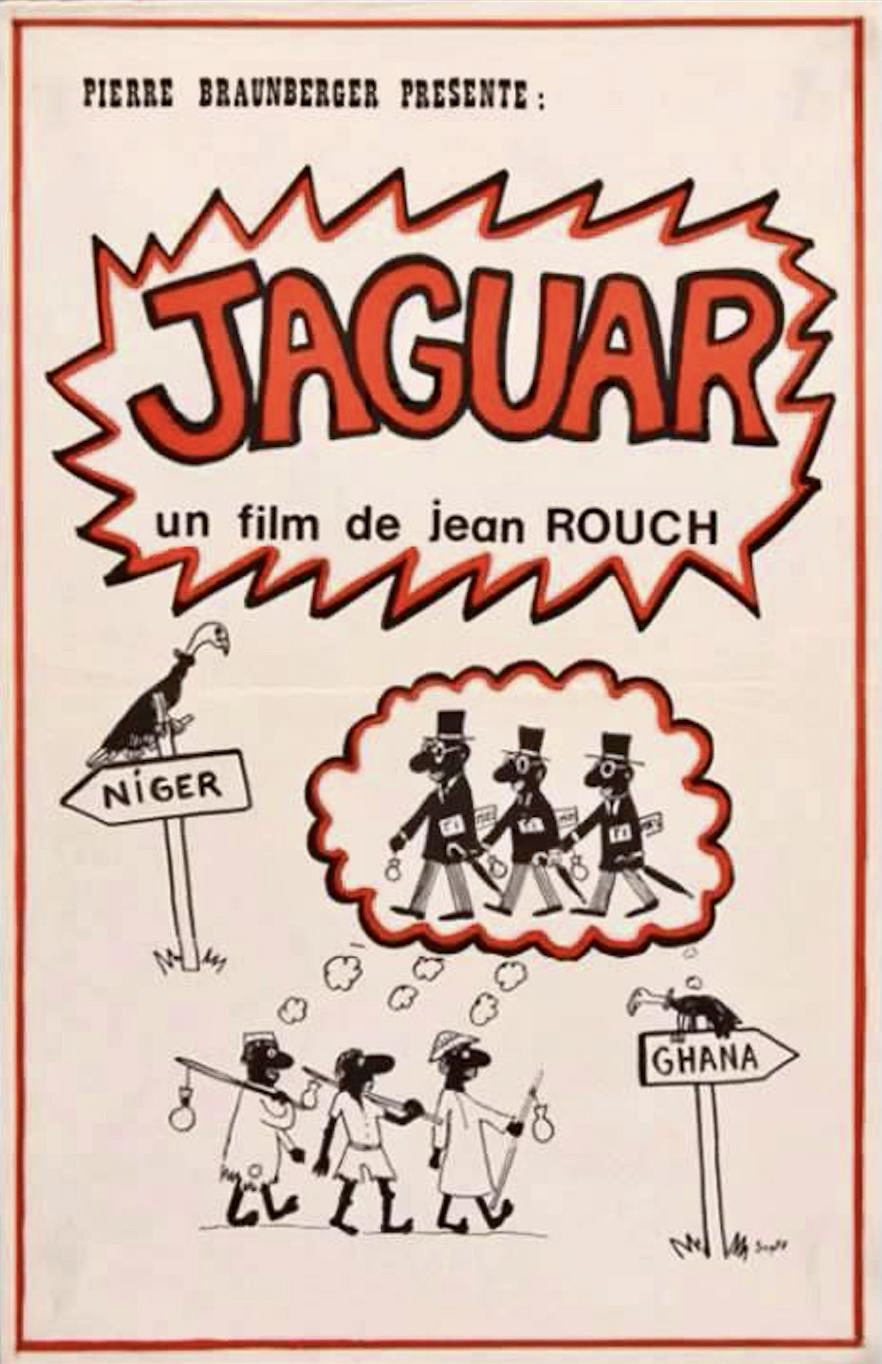
A Funny Thing Happened on the Way to Ghana

“The camera eye is more perspicacious and more accurate than the human eye,” French filmmaker Jean Rouch once said, and his idiosyncratic documentaries, which were often fusions of reality and fiction, bear this out. Jaguar (1967) is a perfect example of this duality.

Continue reading

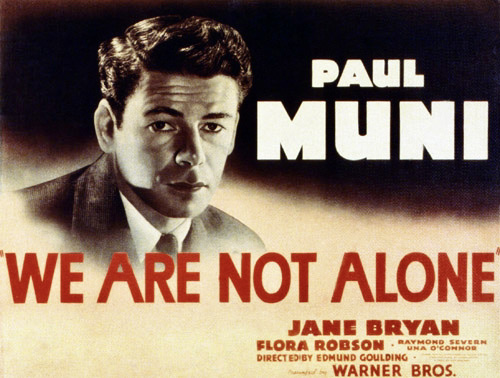
A Case of Bad Timing

WE ARE NOT ALONE, Paul Muni, 1939

Everyone knows 1939 was a banner year in American cinema and probably the peak of the studio system. Mr. Smith Goes to Washington, Stagecoach, Wuthering Heights, The Hunchback of Notre Dame, The Women, The Wizard of Oz and Gone With the Wind were just a few of the iconic American movies that premiered that year. In fact, so many films of superior quality were released in 1939 that it was inevitable that a few of them would fall between the cracks and go undiscovered. One of these was We Are Not Alone which was virtually ignored by the public despite appearing on several critics’ top ten lists. Yet, it seemed to have all the necessary ingredients for Best Picture nominee.

Continue reading

Two Heads Are Not Better Than One

The title creature and star of The Manster (1959), a Japanese-American co-production made in Japan and co-directed by George P. Breakston and Kenneth G. Crane.

What we have here is a different type of mutant monster. It’s part man, part monster. In other words, a manster. The unlucky title creature of this 1959 horror thriller is Larry Stanford (Peter Dyneley), a brash American reporter who hopes to land a front-page story about some startling new developments in the field of medical experimentation. Well, he gets his front-page story all right. You could say he IS the story.  

Continue reading

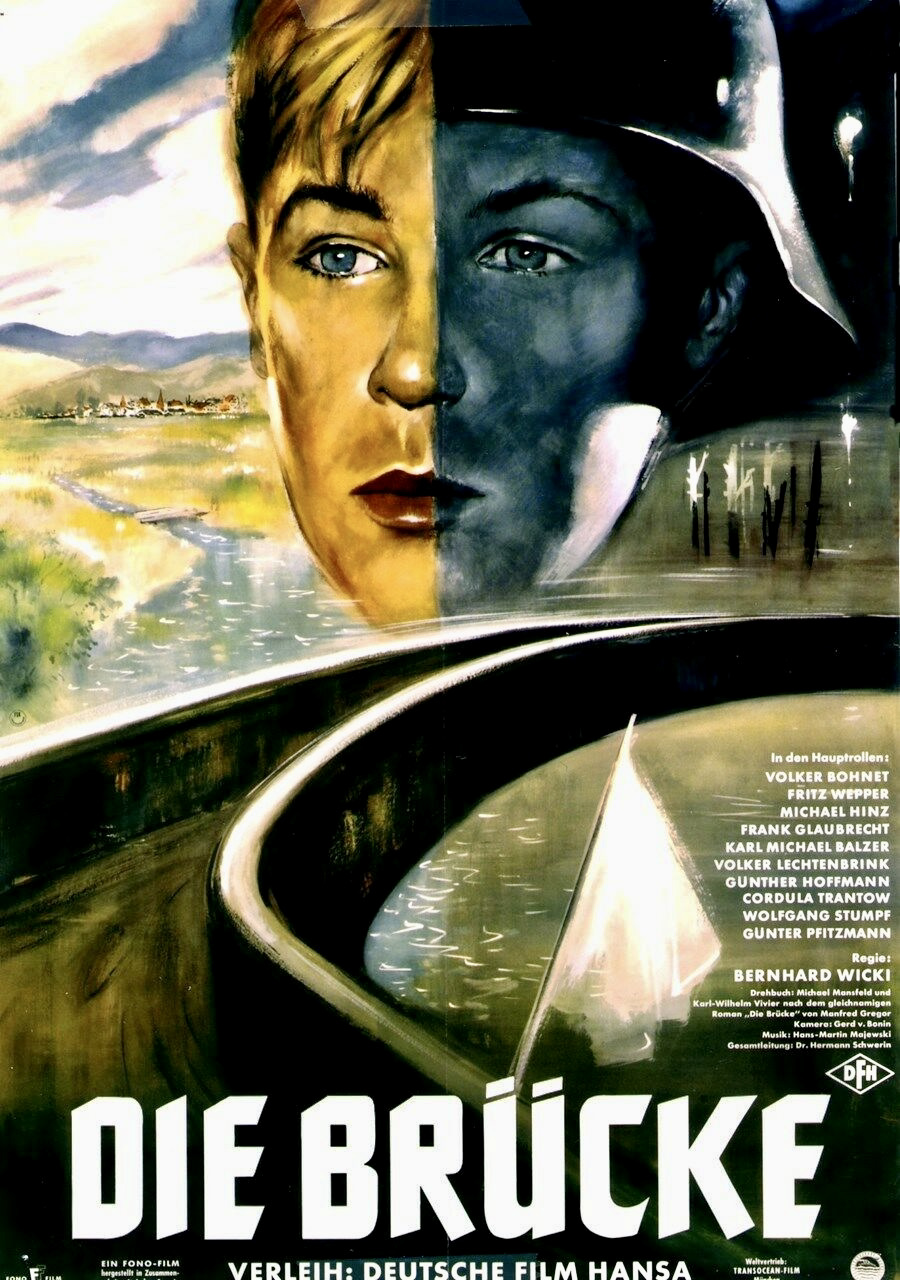
Bernard Wicki’s Die Brucke

When film critics compile their favorite top ten lists of anti-war movies, you can usually expect to see titles like King Vidor’s The Big Parade (1925), Lewis Milestone’s All Quiet on the Western Front (1930), Stanley Kubrick’s Paths of Glory (1957), Kon Ichikawa’s Fires on the Plains (1959), Wolfgang Petersen’s Das Boot (1981) and Elem Klimov’s Come and See (1985) among the favored elite. It has only been in recent years that Bernhard Wicki’s The Bridge (German title: Die Brucke) has popped up on lists, thanks in part to The Criterion Collection, which remastered it on DVD and Blu-ray in June 2015. Almost forgotten since its original release in 1959, the film is just as powerful and moving as it was over sixty years ago.

Continue reading

White Boy Elgar

Marge (Pearl Bailey) welcomes Elgar (Beau Bridges), her new landlord, to the neighborhood in Hal Ashby’s debut feature, The Landlord (1970).

In the early seventies Hollywood studio executives began to realize there was a huge untapped market for films dealing with African-Americans, a situation made obvious by the unexpected success of Cotton Comes to Harlem (1970), an action comedy based on the Chester Himes novel about two black cops, Coffin Ed Johnson (Raymond St. Jacques) and Gravedigger Jones (Godfrey Cambridge). In the ensuing rush to capture this previously ignored audience, the “blaxploitation” film was born, but the majority of these films were urban crime thrillers like Shaft (1971) and Superfly (1972). Films which attempted to explore racial issues or feature complicated black and white relationships were a rarity but one unique exception was The Landlord (1970), which was virtually ignored by the public when it opened.

Continue reading

Down on the Farm

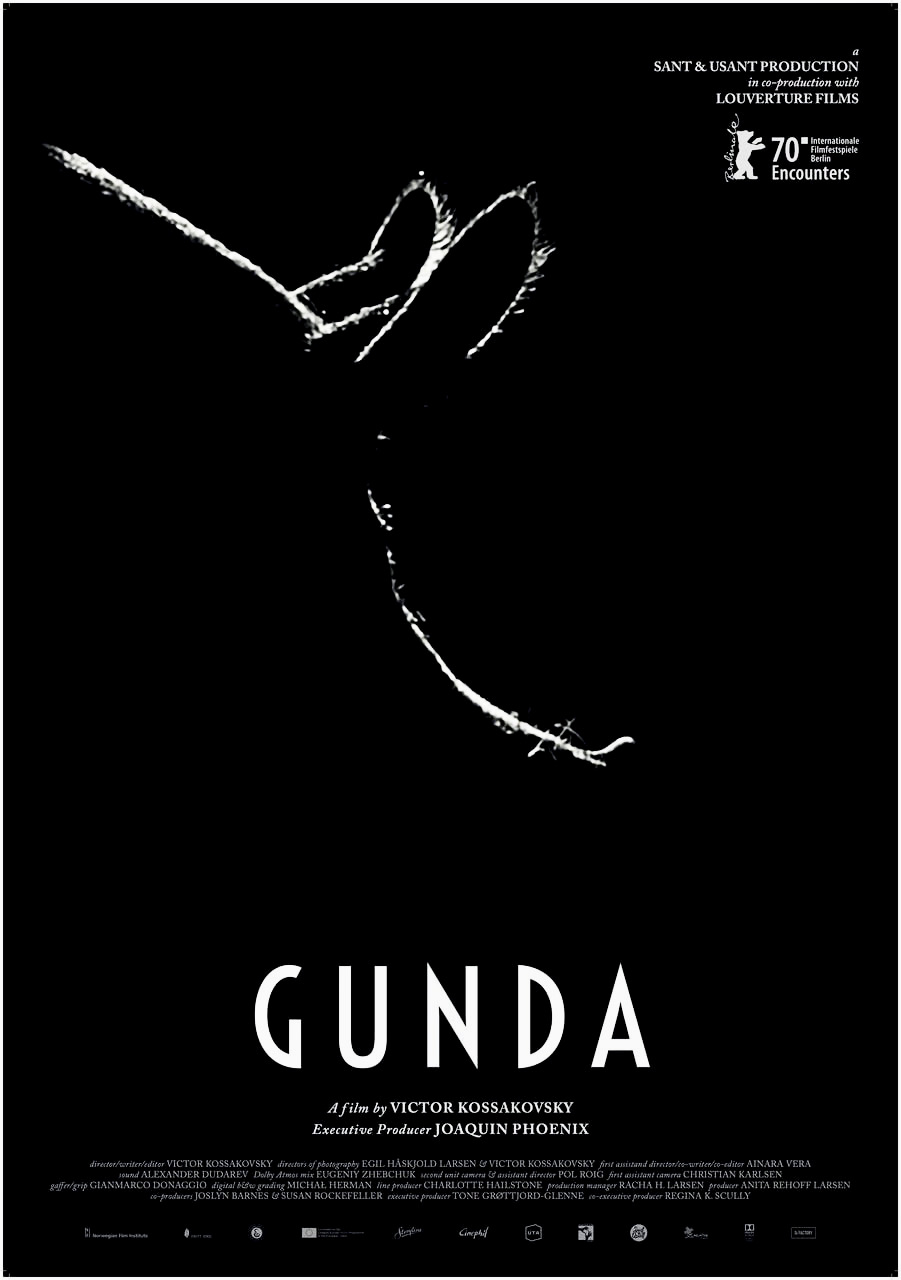
The exploitation of animals in society and the food industry, in particular, is a problem most consumers don’t want to face or consider but a protest movement against the practice is growing larger every year thanks to hard-hitting documentaries like Myriam Alaux & Victor Schonfeld’s The Animals Film (1981), Shaun Monson’s Earthlings (2005), and Robert Keener’s Food, Inc. (2008) – all of which expose the mass production of animals for food. Tackling the same subject but taking a completely different approach to it is Gunda (2020) by Russian filmmaker Viktor Kossakovsky, which dispenses with voice over narration, a music score or any on-camera interviewees. Instead, it focuses a sow named Gunda and her piglets, a few chickens and some cows over a brief period on a farm before they become “products.” The concept may sound uninteresting and tedious but Gunda is not really a traditional documentary by any stretch of the imagination and the result is a completely engrossing, emotional drama with animals as its main characters.

Continue reading