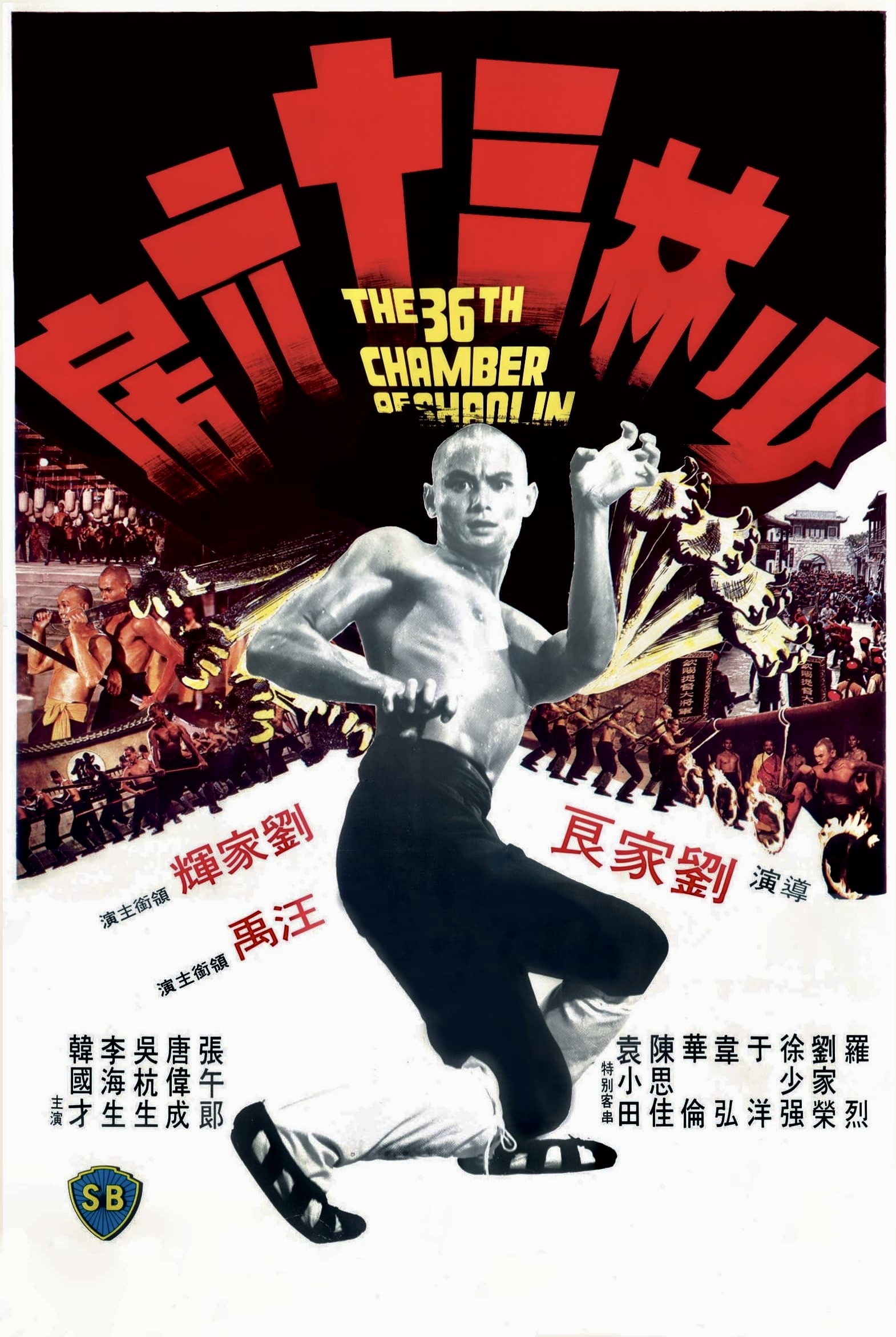
Did you know that there are more than 180 styles of martial arts practiced around the world and that includes karate, judo and other similar forms? Many experts trained in Chinese martial arts generally agree that one of the oldest forms of this practice and the most difficult to master is the Hung Gar style which can be traced back to the 17th century. That is also the time period featured in Shao Lin sans hi liu fang (English title: The 36th Chamber of Shaolin aka Master Killer aka Shaolin Master Killer, 1978). The film, directed by former actor Chia-Liang Liu (aka Lau Kar-Leung), is considered one of the cornerstones of Hong Kong martial arts cinema and it showcases the fluid movements and balletic grace of the Hung Gar style as practiced by its star, Chia-Hui Liu aka Gordon Liu.
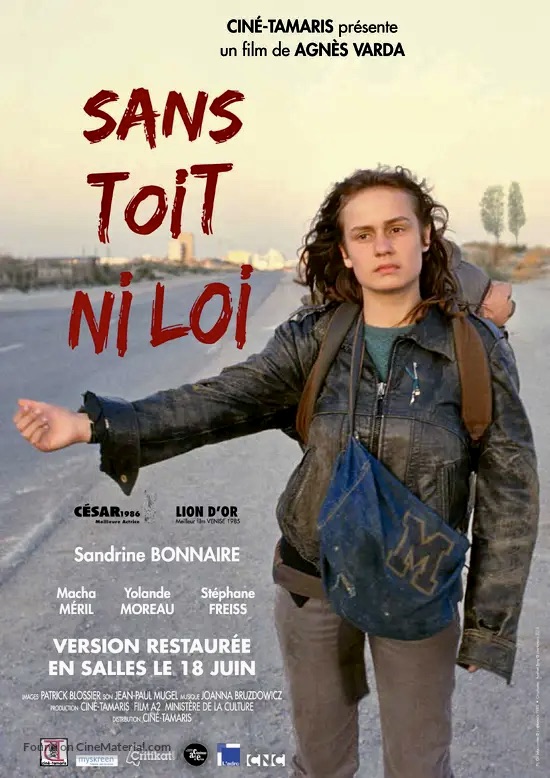
The French film poster for VAGABOND (1985), directed by Agnes Varda.
Film critics and moviegoers familiar with the work of French filmmaker Agnes Varda were unprepared for her seventh feature film Sans toit nil oi (English title: Vagabond) when it hit theaters in 1985. It had been eight years since her previous dramatic work One Sings, the Other Doesn’t (1977), an optimistic, semi-musical tale of female solidarity and friendship during the rise of the feminist movement in France, and her new feature couldn’t have been more different or unexpected. Nor did any of her earlier features – the New Wave influencer La Pointe Courte (955), Cleo from 5 to 7 (1962), Le Bonheur (1965), Les Creatures (1966) or the experimental happening Lion’s Love (1969) – prepare viewers for the harsh realities and raw authenticity of Vagabond. Certainly the film was partially shaped by Varda’s own experience in documentary filmmaking but it also exerted a dramatic power and an almost visceral visual sense that was not apparent in the director’s previous dramatic work. Based on Varda’s encounter with a female vagrant, Vagabond focuses on the final weeks in the life of a homeless woman named Mona (Sandrine Bonnaire) who meets and interacts with various people along the roads of southern France before dying of exposure in a vineyard during a harsh winter.
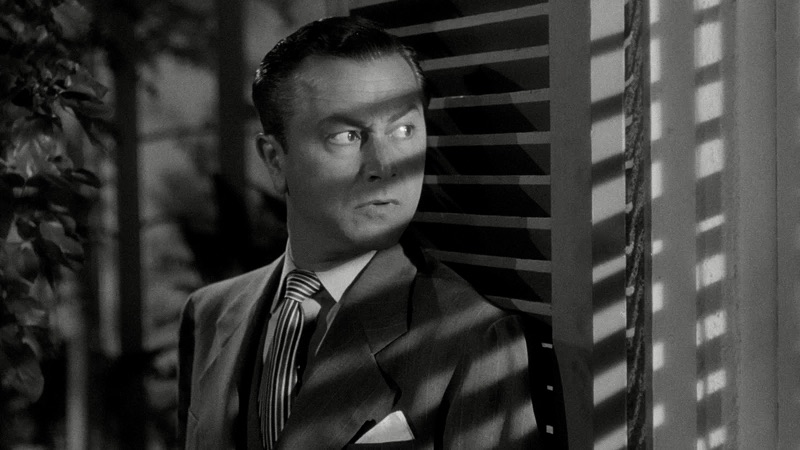
Robert Young plays an embezzler and a womanizer whose luck runs out in THEY WON’T BELIEVE ME (1947), an underrated film noir.
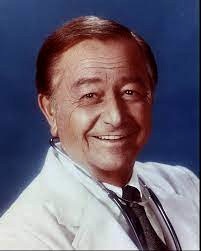
When most baby boomers think of actor Robert Young, they probably recall his popular TV medical series Marcus Welby, M.D. (1969-1976) where he was the epitome of the kind, compassionate doctor or they remember Jim Anderson, the perfect dad in the all-American family sitcom Father Knows Best (1954-1960). He was also typecast as “Mr. Nice Guy” in most of his Hollywood films, playing cheerful romantic leads or the leading man’s best friend or some other debonair, noble or well-intentioned character who rarely made a strong impression compared to more assertive male leads like Clark Gable, Gary Cooper or Spencer Tracy. But there were several occasions when Young discarded his good guy image by playing shadowy characters, outright villains, or damaged human beings. Among these atypical casting choices, Young is most memorable in Alfred Hitchcock’s Secret Agent (1936) as an undercover spy, a budding fascist in The Mortal Storm (1940), a shellshocked and physically maimed war veteran in The Enchanted Cottage (1945), a complete cad and accused murderer in the underrated film noir They Won’t Believe Me (1947), directed by Irving Pichel, and an architect who is suspected of being a dangerous criminal in The Second Woman (1950).
Robert Young as the star of the popular TV series, MARCUS WELBY, M.D. (1969-1976).
There may come a time in the future when science or even advanced AI creates a way that humans can time travel to another year or century. It might seem improbable now but look at all the technological innovations that we never thought possible and are now a reality. At the same time, movie lovers already know they can vicariously visit people and places in the past thanks to the miracle of motion pictures. Just as recently as 2018, Peter Jackson produced and directed They Shall Not Grow Old, a stunning collection of archival footage from World War I which he had restored and colorized from black to white to give the documentary an immediacy and impact that brought the soldiers on screen to life (before they met their untimely deaths on the battlefield). If you want to go back even further to the turn of the century, you can experience life in the U.K. (mostly northern England with a few stops in Ireland) in Electric Edwardians: The Lost Cinema of Mitchell &Kenyon (2005), an amazing treasure trove of footage from 1901 and beyond that was considered lost for years until its discovery in 1994.
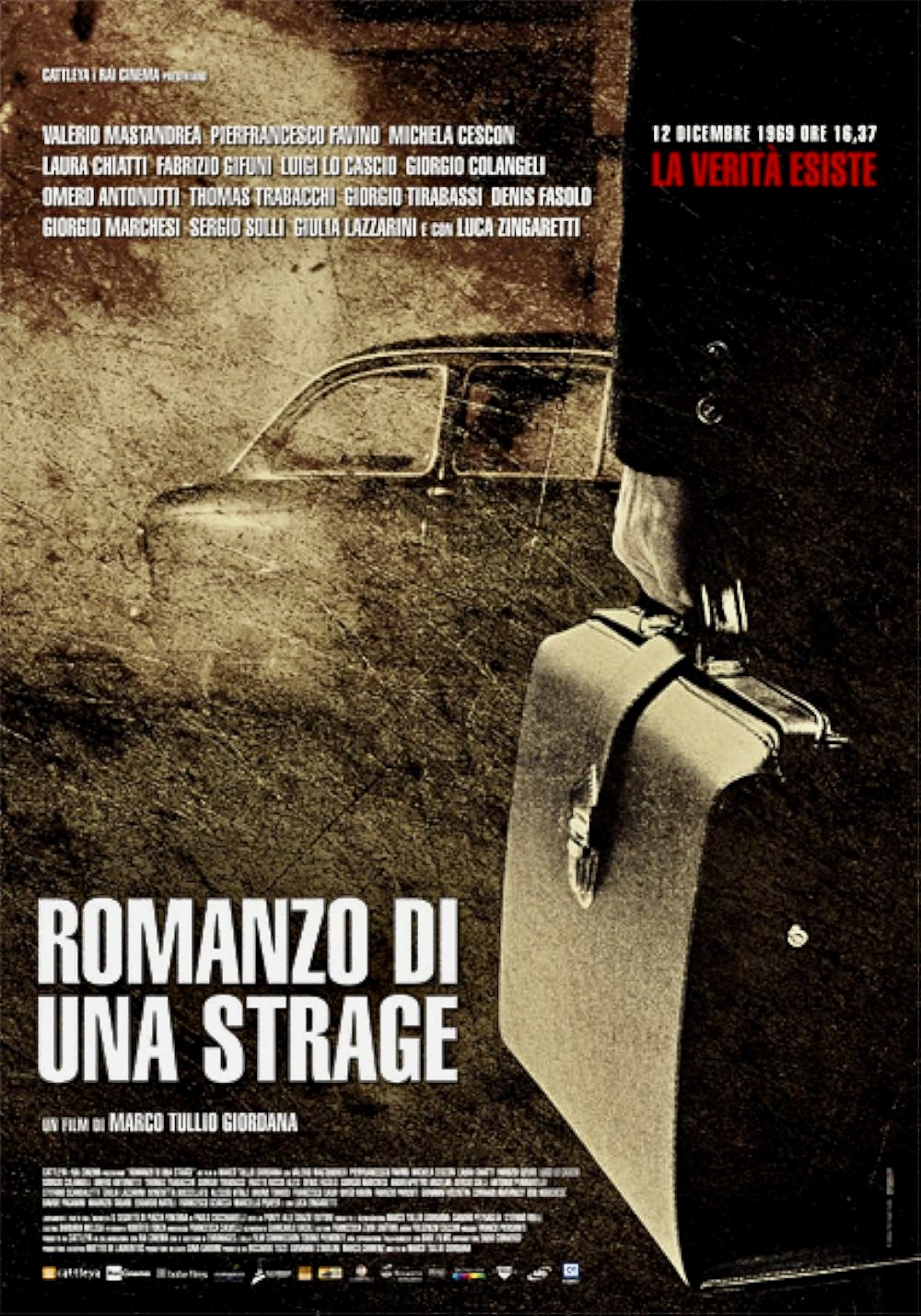
The Italian film poster for PIAZZA FONTANA: THE ITALIAN CONSPIRACY (2012).
On December 12, 1969, a bomb exploded in the Banca Nazionale dell’Agricoltura (National Agricultural Bank) in Piazza Fontana, near the Duomo in Milan, Italy. 17 people died from the explosion and more than 84 were injured. Other unexploded bombs were discovered at several places in the city the same day and the attack was obviously the coordinated effort of a terrorist group. More than 80 arrests were made and, at first, the police suspected members of the Anarchists Club. One of them – Giuseppe ‘Pino’ Pinelli – was held for questioning at police headquarters for more than 72 hours. During a break in his interrogation on the fourth floor, he allegedly went to the window for air and fell to his death below. Luigi Calabresi, the police commissioner, had left the room briefly to retrieve a telegram when this occurred, but was told varying accounts of what happened when he returned – most of which stated that Pinelli had committed suicide by leaping to this death. The press and the public were immediately suspicious of this and the investigation became more complicated with other terrorist groups being implicated, most notably the neo-fascist group Ordine Nuovo. The Piazza Fontana bombing resulted in three different trials – one in 1972, one in 1987 and one in 2000 – but no one was ever officially changed and convicted for the crime. The investigations launched countless conspiracy theories and remain a controversial subject even today but it was more than forty years later that a filmmaker would dramatize the events in a movie. That would be celebrated Italian director Marco Tullio Giordana, who released Romanzo di una Strage (English title: Piazza Fontana: The Italian Conspiracy) in 2012.
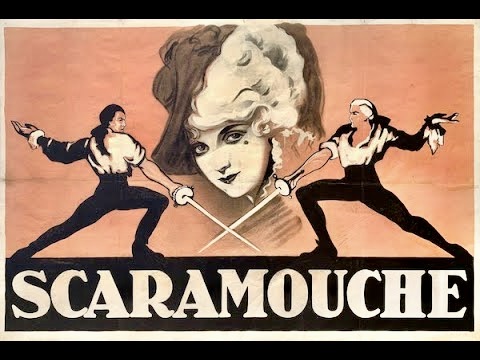
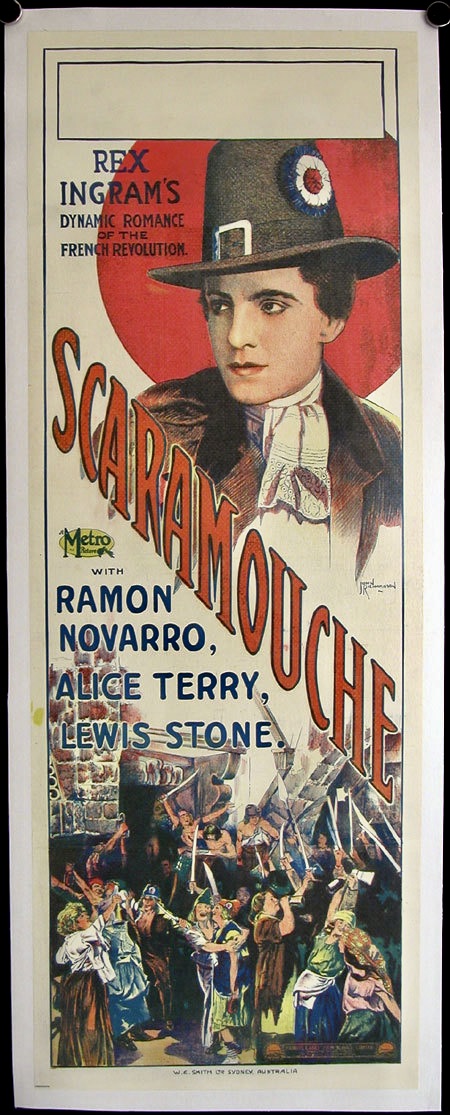
When was the last time you heard someone use the term swashbuckler? That’s a word that harkens back to another time but cinephiles associate it with a specific kind of action-adventure costume drama that became popular during the silent era. It also brought the work of novelist Rafael Sabatini to a larger audience thanks to movie adaptations of his most popular books. Early film adaptations include Scaramouche (1923) with Ramon Novarro in the title role, the 1924 versions of Captain Blood and The Sea Hawk and Bardeleys the Magnificent (1926) starring John Gilbert. And it was Errol Flynn who would come to represent the epitome of a swashbuckling hero, one skilled in sword fighting and other daring feats, in definitive versions of two Sabatini novels, Captain Blood (1935) and The Sea Hawk (1940) plus his iconic role in The Adventures of Robin Hood (1938)
Yet, of all the swashbuckling novels written by Rafael Sabatini, Scaramouche is probably his best and most enduring work, even more so than Captain Blood, because of its rich and complex narrative, which spawned so many movie adaptations. Besides the superb 1924 silent version, there is MGM’s lavish 1952 Technicolor remake with Stewart Granger, the 1963 French costumer The Adventures of Scaramouche, an Italian comedy spoof Da Scaramouche or se Vuoi L’assoluzione Baciar devi sto…Cordone! (1973), a Spanish spinoff Los Hijos deScaramouche (1975) and the 1976 international production The Loves and Times of Scaramouche (1976), directed by Enzo G. Castellari. There were even more adaptations and ripoffs including TV versions but my favorite of the lot is MGM’s 1952 remake.
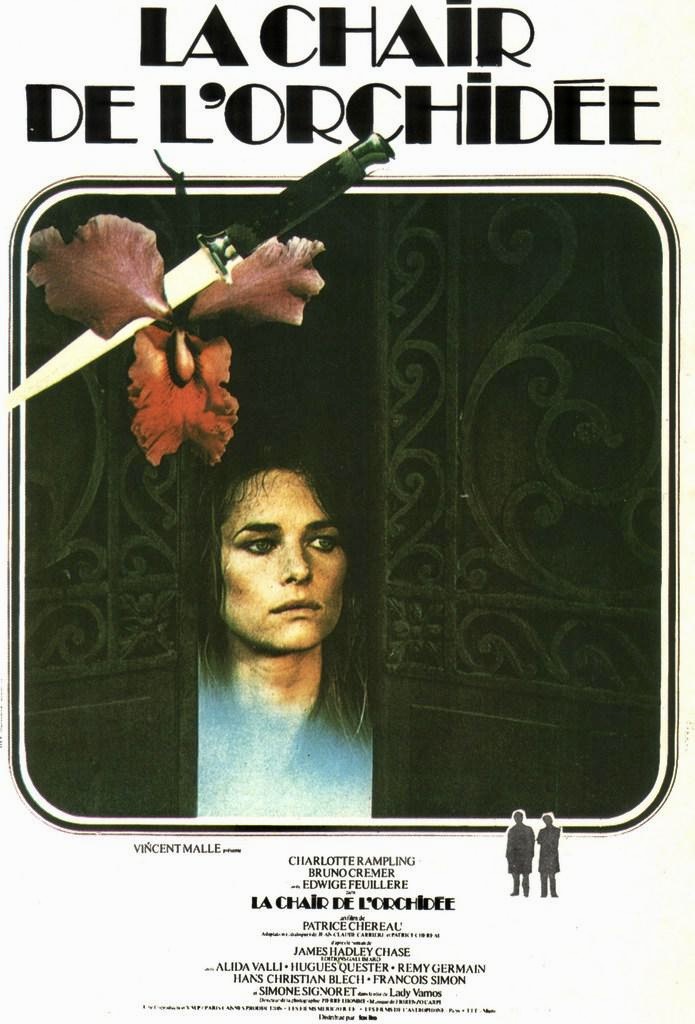
The French film poster for the 1975 thriller THE FLESH OF THE ORCHID, directed by Patrice Chereau.
Charlotte Rampling has been an international star since the mid-1970s when she appeared in Zardoz (1974), The Night Porter (1974) and Farewell, My Lovely (1975), but during her early career, critics were more likely to comment on her beauty and sex appeal over her acting talent. It wasn’t until she began appearing in the films of Francois Ozon (Under the Sand [2000], Swimming Pool [2003]) and other independent, cutting-edge directors like Dominik Moll (Lemming, 2005) and Laurent Cantet (Heading South, 2005) that Rampling finally came into her own as a critically acclaimed actress and cult favorite. She has rarely steered clear of edgy material or doing nude scenes or choosing unconventional roles over more audience friendly fare and her movies from the late sixties through the mid-nineties reflect this. Some were pretentious misfires like The Ski Bum (1971) or eccentric one-offs (Yuppi du, 1975) or mainstream showcases for her talent such as Woody Allen’s Stardust Memories (1980) and Sidney Lumet’s The Verdict (1982). Yet, even her lesser known work from this period is often worth seeking out and La Chair de I’orchidee (English title, The Flesh of the Orchid, 1975), the debut film of French director Patrice Chereau, is certainly a wild card. A psychological thriller that seems to take place in an alternate universe where everyone is misanthropic, corrupt, greedy or violent, Chereau’s first film is based on a 1948 pulp fiction novel by James Hadley Chase.
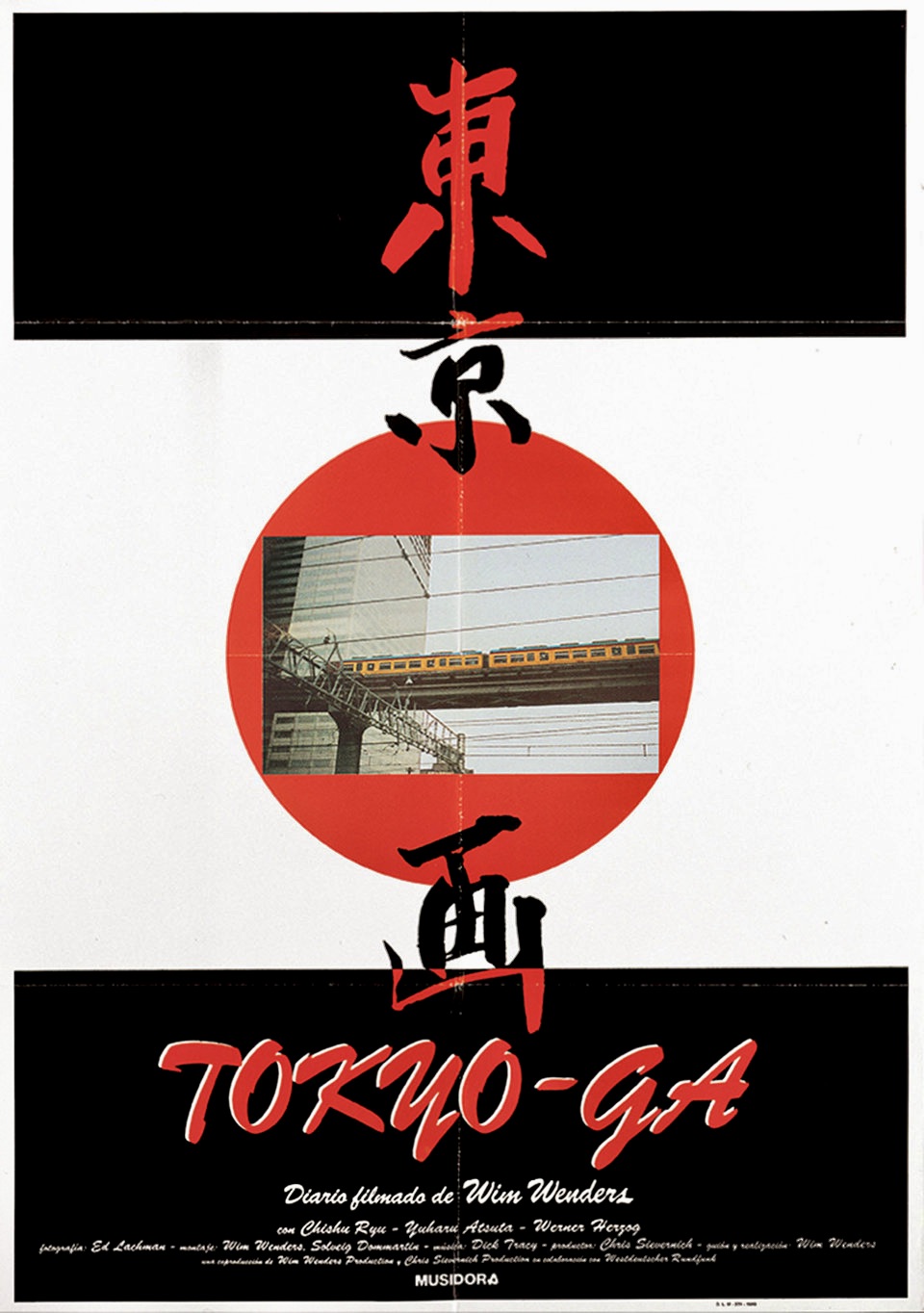
By the time Wim Wenders won the Palme d’Or at Cannes for Paris, Texas in 1984, he was well established as an internationally renowned director. He made his first big splash on the world stage in the early 1970s along with other New German Cinema directors (Werner Herzog, R.W. Fassbinder, etc.) with films such as The Goalie’s Anxiety at the Penalty Kick (1972) and Alice in the Cities (1974). Wenders had also dabbled with non-fiction-like formats in early experimental shorts, music videos and the Cannes-focused TV documentary of various film directors in Chambre 666 (1982). Yet, it was Tokyo-Ga 1985), the feature length portrait he made directly after Paris, Texas, that really triggered Wenders’s interest in not just non-fiction filmmaking but in Japan cinema and culture, especially the works of Yasujiro Ozu.
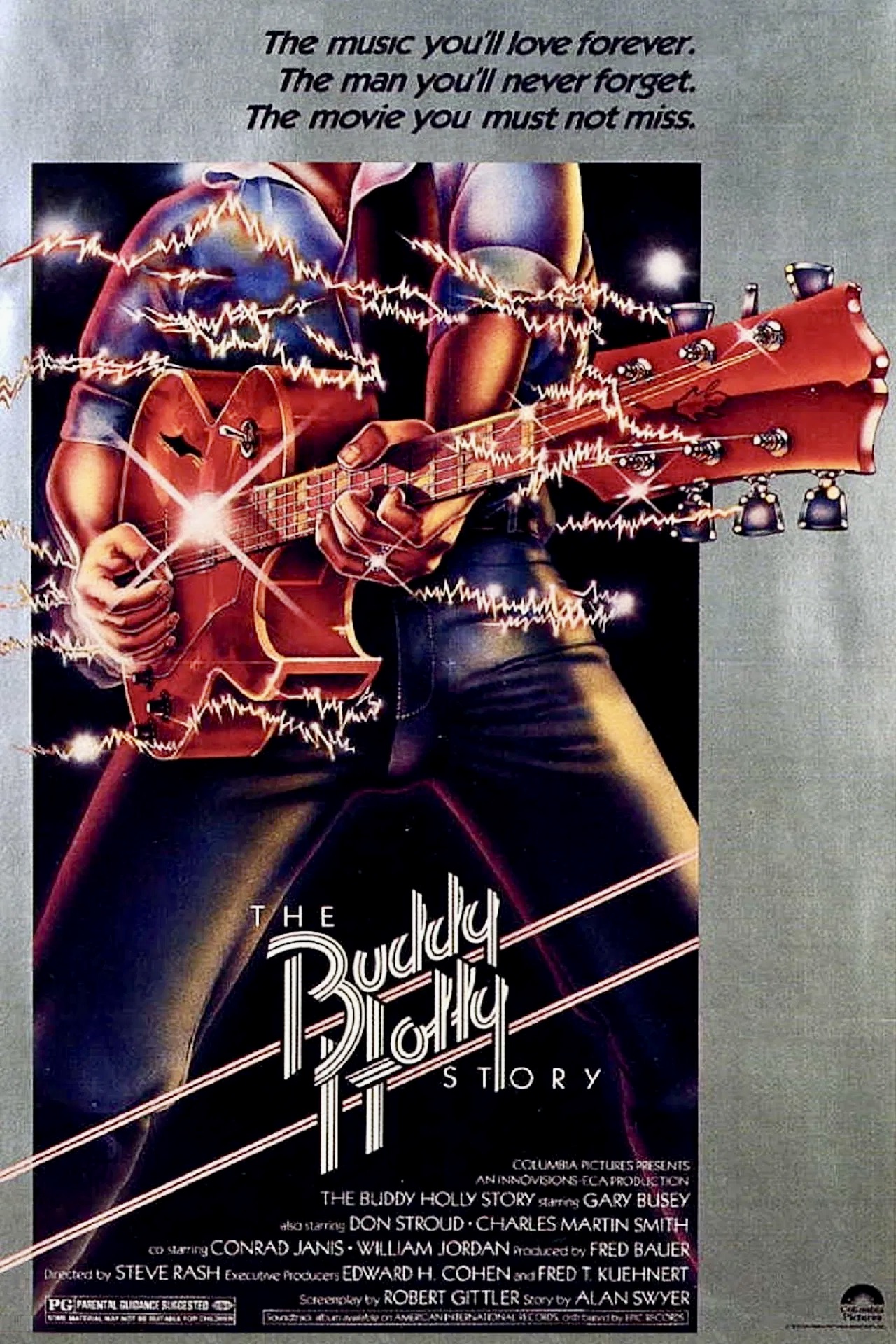
For rock ‘n’ roll fans, February 3, 1959, has a special significance. It’s “the day the music died,” because on that date Buddy Holly, one of the pioneers of rock ‘n’ roll music, was killed in a plane accident in the midwest along with Ritchie Valens and the Big Bopper. The incident robbed the world of a true musical visionary whose constant experimentation in this new music might have had an even greater impact on the recording industry had he lived. But Holly’s music had a life of its own and would later serve as inspiration to the Beatles and musicians like Marshall Crenshaw (who would eventually play Buddy Holly in La Bamba, 1987, a dramatization of Ritchie Valens’ life). In The Buddy Holly Story (1978), the legend from Lubbock, Texas, is reassessed in a thoroughly entertaining musical biography that mixes fact and fiction in equal parts, a practice Hollywood is unable to resist despite the potential for distortion and false allegations. Luckily, the film captures Holly’s charm and stubborn individuality through Gary Busey’s chameleon-like performance in the title role.
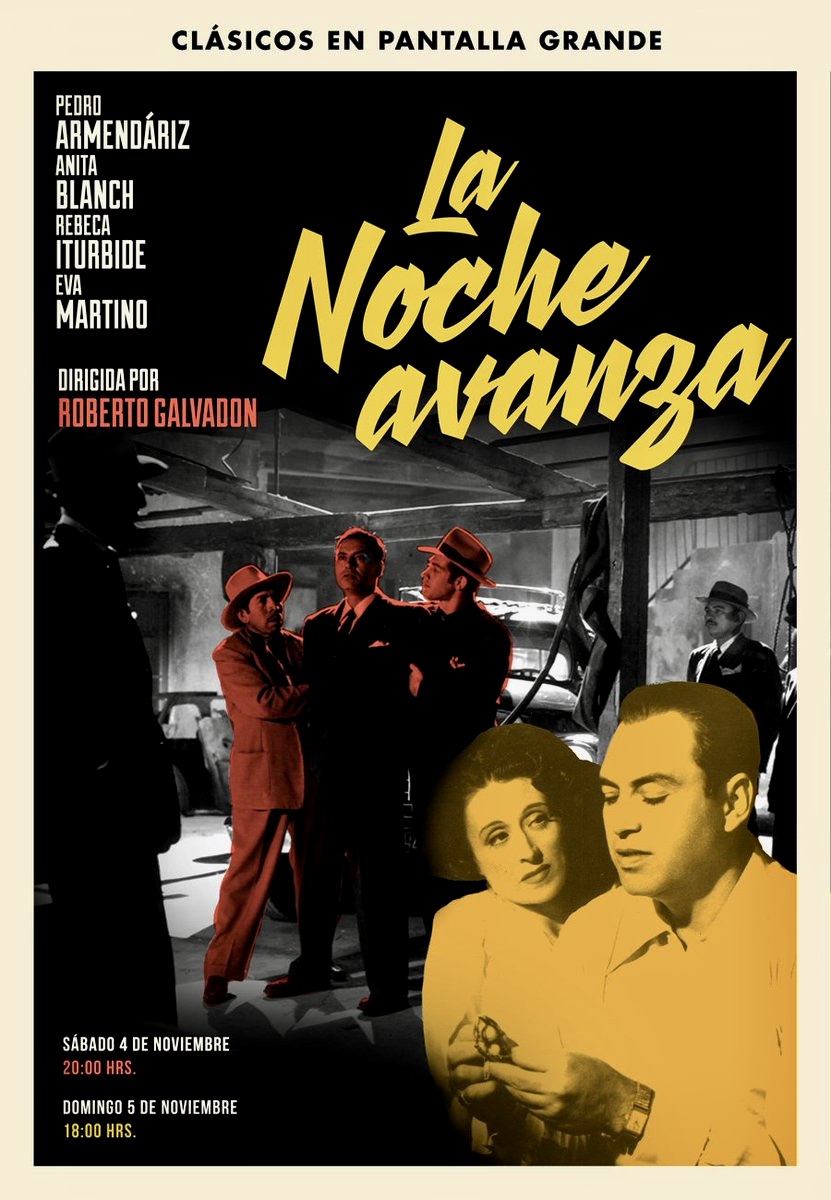
Men behaving badly could easily qualify as a cinema subgenre with such classic examples as Kirk Douglas in Champion (1949) and Robert De Niro in Raging Bull (1980) leading the pack but the athletic anti-hero of La Noche Avanza (English title: Night Falls or The Night Draws On, 1952) might even surpass them in terms of sheer toxic masculinity. Marcos (Pedro Armendariz) is Mexico’s most famous undefeated jai alai champion, a public hero and a sexually magnetic lure for women. He is also the epitome of an arrogant macho muchacho Latin male who considers everyone else inferior with boasts like “I’m one of the victorious, the strong…The weak don’t count.”


 Cinema Sojourns