Unknown's avatar

About JStafford

I am a writer for The Travel Channel, ArtsATL.com, Burnaway.org and other publications. I am also a film researcher for Turner Classic Movies and a member of the Atlanta Film Critics Circle. This blog is dedicated to overlooked, obscure or underrated movies and other cinema topics that I want to share.

Lost in The Yabba

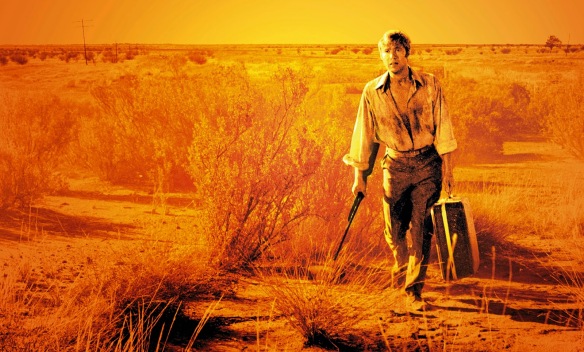
Gary Bond stars in the 1971 cult classic Wake in Fright aka Outback, directed by Ted Kotcheff

Gary Bond stars in the 1971 cult classic Wake in Fright aka Outback, directed by Ted Kotcheff

Retitled and released as Outback in the U.S. and Great Britain in 1971, Ted Kotcheff’s Wake in Fright was barely noticed by American critics and moviegoers and quickly vanished from screens. What attention it did receive in England at the time was mostly critical of the film’s negative depiction of the Australian Outback region and its inhabitants. And despite the fact that it was a huge critical success at Cannes and was nominated for the Golden Palm, the film went missing soon after and until recently was considered a lost film.      Continue reading
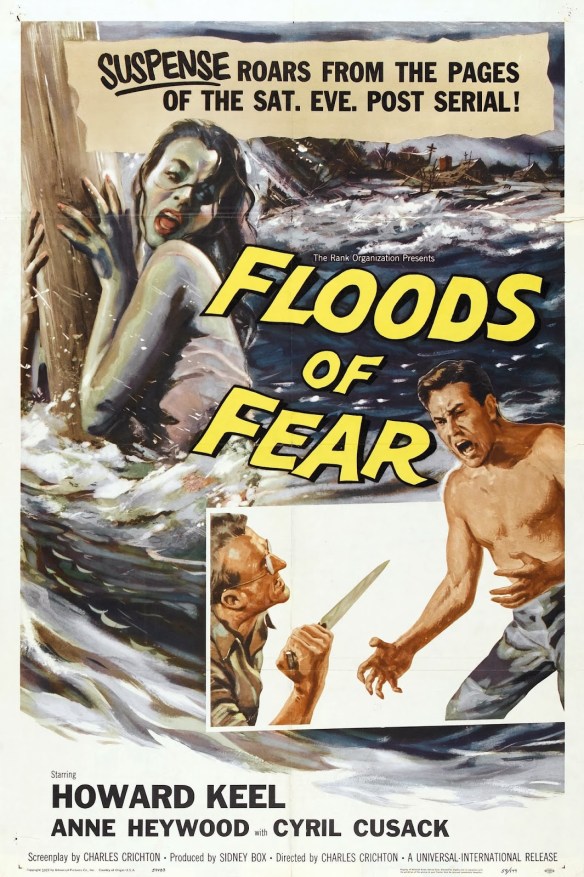
Ten Feet High and Rising

Floods of Fear posterMost moviegoers know Howard Keel as the brawny, baritone singing star of such MGM musicals as Show Boat (1951), Kiss Me Kate (1953) and Seven Brides for Seven Brothers (1954) but occasionally the actor would appear in straight dramatic vehicles such as Desperate Search (1952) or Ride, Vaquero! (1953), which proved he was more than competent as a rugged leading man. Floods of Fear (1959), one of his least known films, falls into this latter category and is a surprisingly taut and suspenseful thriller that was originally serialized in The Saturday Evening Post under the pulp fiction title of A Girl, a Man and a River.    Continue reading

Polyurethane Companion

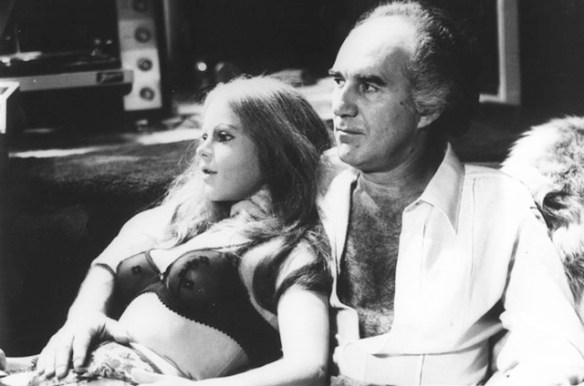
Michel Piccoli and his polyurethane companion in Luis Garcia Berlanga's Life Size (Grandeur Nature, 1974)

Michel Piccoli and his polyurethane companion in Luis Garcia Berlanga’s Life Size (Grandeur Nature, 1974)

The topic of men preferring lifelike dolls or mannequins to real women is nothing new in cinema and has been treated as poignant character study (Lars and the Real Girl, 2007), rom-com fantasy (Mannequin, 1987) and bleak psychological drama (The Doll aka Vaxdockan, 1962) to mention just a few examples of the different paths taken. Luis Garcia Berlanga’s Life Size (French title: Grandeur nature, 1974) takes a more ambiguous approach to its tale of a successful dentist and his new obsession and could be interpreted as a critique of misogyny, an attack on bourgeois values or a dark, perversely amusing character study.  Continue reading

Kay Francis as the Notorious ‘Spot White’

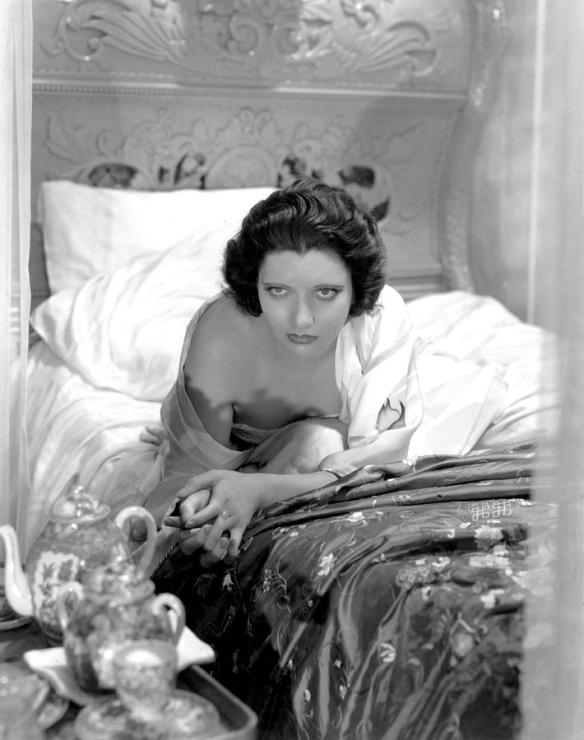
Kay Francis has that come-hither look in Mandalay (1934), an often overlooked Pre-Code drama

Kay Francis has that come-hither look in Mandalay (1934), an often overlooked Pre-Code drama

Today her place in film history rates little more than a footnote in the ascendancy of Warner Bros. as a major Hollywood studio, but Kay Francis was their first major female star whom they had lured away from Paramount in 1931. During her peak years for the studio between 1932 and 1935, she specialized in melodramas, soap operas and lightweight comedies which accented her elegance and chic fashion sense but also stereotyped her in increasingly inferior films.

She was dethroned by Bette Davis as Warners’ top star in 1936 and, by 1938, she was labeled “box office poison” in an article by The Hollywood Reporter. Still, there are several essential must-see titles among the more than sixty-five movies that she made (Ernst Lubitsch’s Trouble in Paradise [1932], Jewel Robbery [1932], Wonder Bar [1934], for example) and Mandalay (1934) is one of her best dramatic showcases as well as an enormously entertaining, eyebrow-raising Pre-Code wonder. (It was made before the Code was officially enforced but released after the fact.)    Continue reading

Every Man for Himself

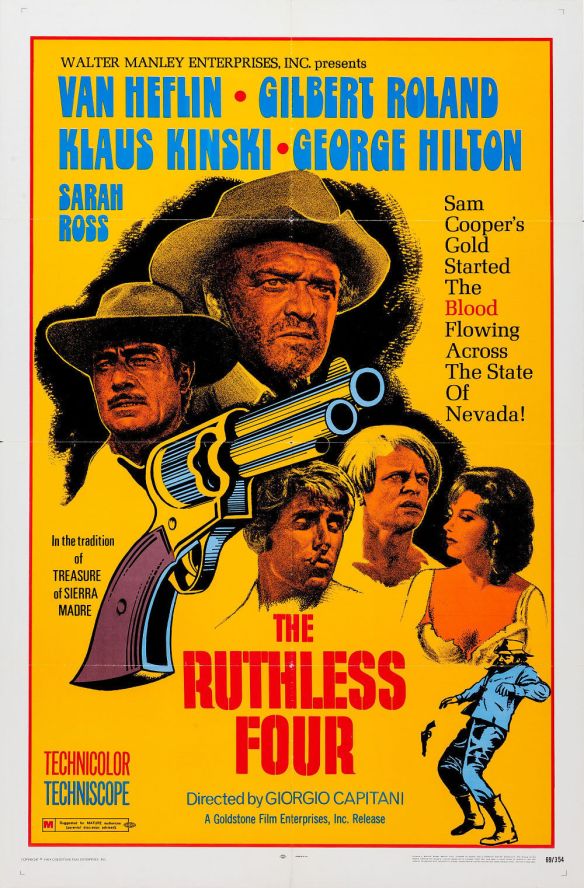
The Ruthless Four (1968)Often overlooked in the Spaghetti Western hall of fame, The Ruthless Four (1968) is a riveting, well-crafted tale of a ill-fated search for hidden gold that bears some thematic similarities to The Treasure of the Sierra Madre. While it is not quite in the same league as John Huston’s 1948 classic, the cast alone should still pique the interest of any film buff starting with the top-billed Van Heflin and Gilbert Roland, two Hollywood legends with some classic Westerns to their credit; Heflin with Shane (1953) and 3:10 to Yuma (1957) and Roland with his series of “Cisco Kid” oaters that began with The Gay Cavalier in 1946. The curiosity factor is also undeniable with the eclectic casting of Uruguay-born actor George Hilton, a veteran of countless giallos and Euro-westerns, and the inimitable Klaus Kinski, who has a substantial role here unlike many of his genre efforts where his appearance is often little more than a cameo or brief walk-on.    Continue reading

Confessions of a Girl Watcher

Barry Evans is at the center of things in Here We Go Round the Mulberry Bush (1967)

Barry Evans is at the center of things in Here We Go Round the Mulberry Bush (1967)

Among the many films to emerge from the “Swinging London” film phenomenon of the sixties, Here We Go Round the Mulberry Bush (1967) followed in the wake of such popular titles as Georgy Girl (1966), Morgan! (1966) and Alfie (all 1966) but is not as well known to American audiences. Based on Hunter Davies’ first novel, the film is a giddy, high-spirited time capsule of its era with day-glo colors, groovy fashions, British slang and playful cinematic techniques influenced by Richard Lester’s Beatles films such as speeded up motion, still frames, and the breaking of the fourth wall; the protagonist, Jamie McGregor (Barry Evans), constantly addresses the viewer in the manner of a confessional.   Continue reading

A Walking Plague Called Sheila

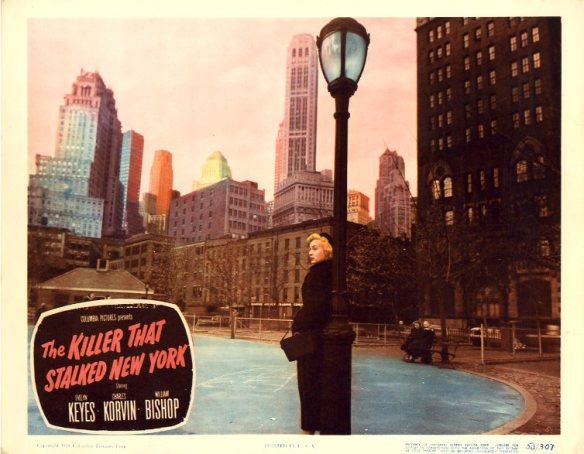
The Killer That Stalked New York (1950)Think of the teeming hub of humanity that is New York City and then imagine a person with a highly contagious and deadly disease wandering among the masses, spreading death and panic. Based on an actual case in 1946 – a smallpox scare in which millions of New Yorkers received free vaccinations – The Killer That Stalked New York (1950) is a fictionalized dramatization of that incident. It stars Evelyn Keyes as Sheila Bennet, a modern day “Typhoid Mary” who contracts smallpox in Cuba while serving as a courier for Matt (Charles Korvin), her no-good musician boyfriend, in a stolen diamond smuggling scheme.

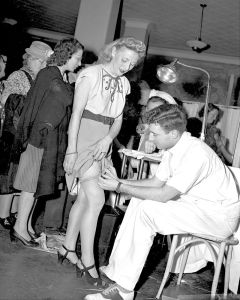
Smallpox vaccine is administered to citizens of New York City in 1947 during an outbreak of the disease

Smallpox vaccine is administered to citizens of New York City in 1947 during an outbreak of the disease

Continue reading

The Original Odd Couple

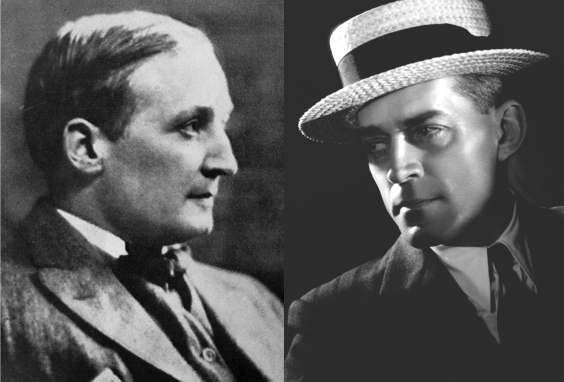
Robert J. Flaherty (left) and W.S. Van Dyke collaborated on White Shadows in the South Seas (1928).

Robert J. Flaherty (left) and W.S. Van Dyke collaborated on White Shadows in the South Seas (1928).

Either by accident or design, MGM came up with the most unlikely partnership in the history of motion pictures in the late twenties. Imagine if you can a collaboration between Robert Flaherty, the filmmaker who is generally credited with pioneering the documentary form (though some film scholars take issue with that classification), and W. S. Van Dyke II, who was known in the industry as “One Take Woody” because of his quick, cost-saving shooting schedule. Flaherty’s filmmaking method was just the opposite. His painstaking preparation for each film was legendary; both Nanook of the North (1922) and Moana (1926) took over two years to complete. Somehow these two men were brought together by MGM mogul Irving J. Thalberg for White Shadows in the South Seas (1928).   Continue reading

Fade to White

Charles Denner retreats from the world in Life Upside Down (1964), directed by Alain Jessua

Charles Denner retreats from the world in Life Upside Down (1964), directed by Alain Jessua

Films that explore mental illness, especially Hollywood productions such as The Snake Pit, The Three Faces of Eve and A Brilliant Mind, usually tend to be heavy on the histrionics providing highly dramatic showcases and Oscar award opportunities for actors. But a descent into madness isn’t always signaled by wildly disruptive or overwrought behavior from the afflicted. Sometimes the illness can creep up slowly by degrees and pass for something more fleeting and subtle that avoids detection during the early stages. Life Upside Down (La vie à l’envers), directed by Alain Jessua, is a remarkable example of this, presenting a man who goes quietly mad while interpreting his erratic behavior as a profound new self-awareness.     Continue reading

The Devil Made Me Do It

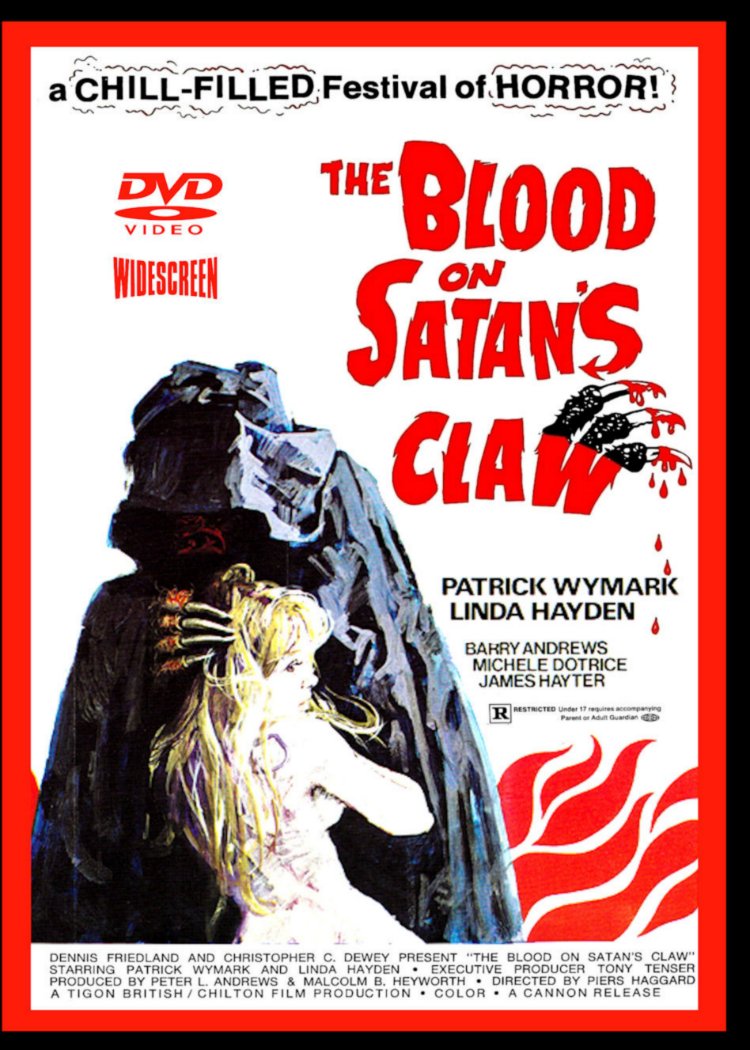
The Blood on Satan's ClawLooking for a Halloween film to creep you out? How about The Blood on Satan’s ClawContinue reading