Unknown's avatar

About JStafford

I am a writer for The Travel Channel, ArtsATL.com, Burnaway.org and other publications. I am also a film researcher for Turner Classic Movies and a member of the Atlanta Film Critics Circle. This blog is dedicated to overlooked, obscure or underrated movies and other cinema topics that I want to share.

Dining in the Buff

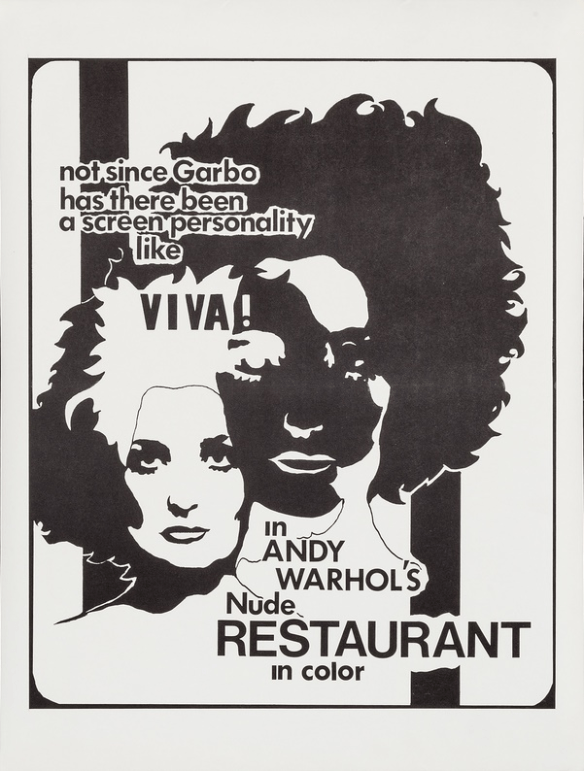
The idea of a nude restaurant where the clientele and wait staff are composed of various members of Andy Warhol’s Factory crowd such as Taylor Mead and Viva wearing little more than skimpy black briefs may not sound like the most appetizing destination for dining. Yet, as a film, The Nude Restaurant (1967) is a lively, frequently hilarious and occasionally despairing communiqué from the underground for those who have always avoided or dismissed the experimental cinema of Andy Warhol as something boring and interminable based on seeing snippets of 1963’s Sleep (a 321 minute static camera study of John Giorno asleep in bed) or 1964’s Empire (a 485 minute single shot portrait of the Empire State Building from dusk until approximately 3 am) or just reading about them.  Continue reading

Degenerates at Large

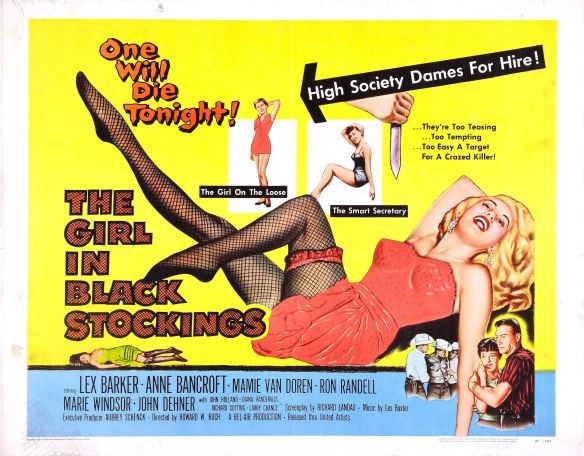
Long before it ever became available for the home video market, The Girl in Black Stockings would occasionally pop up on late night television screenings in unexpected places like Turner Classic Movies. Such a lurid, sensationalistic crime drama was a natural fit for the drive-ins of its era but it actually makes sense that TCM would air this rarely seen obscurity because The Girl in Black Stockings is a classic sleazefest and definitely several notches above the standard exploitation drive-in fare that tantalized audiences in the late fifties before the advent of more explicit films like Blood Feast (1963). Continue reading

Like Catnip for Women

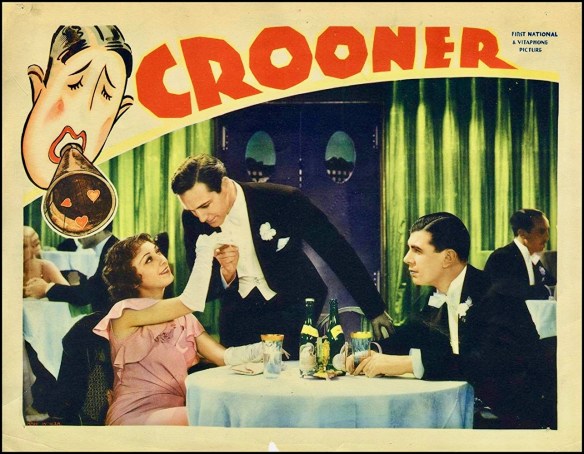
David Manners (center) turns on the charm for Ann Dvorak as Ken Murray looks on in Crooner (1932).

Thanks to Warner Archives and several other distributors there have been an astonishing number of Pre-Code films made available to classic movie fans on DVD, MOD and streaming services over the years. But not every title is available and there are still some major omissions such as A Free Soul (1931) starring Norma Shearer or The Story of Temple Drake (1933) with Miriam Hopkins. There are also lesser-known oddities awaiting discovery such as Crooner (1932), which pops up occasionally on Turner Classic Movies. Directed by Lloyd Bacon, starring David Manners, Ann Dvorak and J. Carrol Naish and clocking in at a brisk 68 minutes, the film charts the rise and fall of Teddy Taylor (Manners), a struggling musician and his jazz band, Ted Taylor’s Collegiates.  Continue reading

The Naked Lens of Philippe Garrel

Jean Seberg is the main focus of Philippe Garrel’s Les Hautes Solitudes (1974).

In 1974 very few people outside of France knew anything about Philippe Garrel, an experimental filmmaker who had first attracted attention in Parisian film circles with his 1964 fifteen minute short, Les Enfants Desaccordes (1964). Decidedly non-commercial, Garrel’s abstract, often autobiographical ruminations on disenfranchised youth and the vagaries of romantic love appealed to a fringe group of European cinephiles. But Les Hautes Solitudes, which was first screened in Paris in December 1974, raised Garrel’s profile considerably due to the film’s cast which included model/actress/singer Nico (formerly of The Velvet Underground) and current companion of Garrel, French stage and screen star Laurent Terzieff, the stunning Tina Aumont (daughter of Maria Montez and Jean-Pierre Aumont and, most notably, American actress Jean Seberg, who had reinvented her screen career in France with Jean-Luc Godard’s Breathless (1960). Continue reading

A Paean for Terra Firma

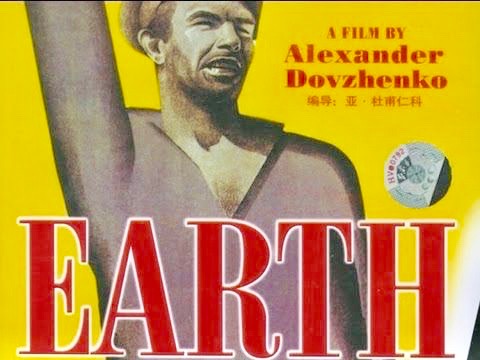
From an early age I developed a fascination with film but it wasn’t until college when my film interests expanded beyond American cinema to include international films and more specialized genres like underground, silent, documentary and exploitation movies. A Film History 101 course at the University of Georgia, curated by a drama professor, was partly responsible for that due to his eclectic overview which sampled the early work of Sam Fuller (The Steel Helmet, Park Row), Fritz Lang silents (Die Nibelungen: Siegfried & Kriemhild’s Revenge), the roots of Neorealism (La Terra Trema) and Hollywood studio system gems (George Sidney’s Scaramouche, An Affair to Remember). What made one of the strongest impressions, however, were examples of early Soviet cinema like Sergei Eisenstein’s Battleship Potemkin and Dziga Vertov’s Man With a Movie Camera. And my favorite of them all was Aleksandr Dovzhenko’s Earth (Russian title: Zemlya, 1930), the third film in a trilogy that included Zvenyhora (1928) and Arsenal (1929).  Continue reading

Commies at the Greasy Spoon Diner

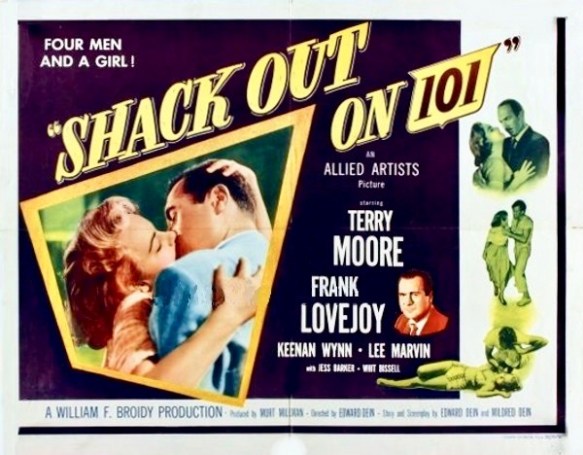
The Psychotronic Video Guide calls it “One of the oddest movies of the fifties,” Leonard Maltin’s Movie Guide deems it a “trash classic,” and any movie buff who has ever seen it will probably concur that Shack Out on 101 (1955) is easily the nuttiest B-movie to emerge in the Cold War era when paranoia over communist infiltration provided Hollywood with a new type of villain.   Continue reading

For the Boys

Between 1941 and 1945 as World War II engulfed the world most major studios in Hollywood demonstrated their patriotism by producing numerous flag-waving musicals in support of the troops and to raise money for the war effort. Warner Bros. was represented by This is the Army (1943), Thank Your Lucky Stars (1943) and Hollywood Canteen (1944); Paramount served up Star Spangled Rhythm (1942) and Here Come the Waves (1944); Universal had a major hit with Buck Privates (1941) starring Abbott & Costello and The Andrew Sisters; 20th-Century-Fox unveiled the mind-warping visual excess of Busby Berkeley’s The Gangs All Here (1943) and MGM brought their signature gloss and glamor to Thousands Cheer (1943) and Anchors Aweigh (1945). But probably one of the biggest extravaganzas of all in terms of star cameos and musical guests was Stage Door Canteen (1943), released by United Artists.   Continue reading

Vampire Machine

First, let me get this out of the way. The Bloodstained Lawn (Italian title: Il Prato macchiato di Rosso, 1973) is a haphazard mash-up of a genre film, but an entertaining one for Eurotrash completists. The English language title suggests it might be a giallo or a horror film or even a poliziotteschi (crime drama). Actually, it has some elements of those with some sci-fi flavoring added. The central premise involves a form of vampirism which is a complete departure from the old school mythology of Bram Stoker’s Dracula and much closer to the metaphorical horrors of Alain Jessua’s Shock Treatment (French title: Traitement de Choc, 1973) and Rod Hardy’s Thirst (1979). Oddly enough, director Riccardo Ghione seems much less interested in playing up the horrific aspects of the story than depicting bourgeois decadence and the exploitation of the disenfranchised as a quasi-political fantasy. Continue reading

Himansu Rai’s 1929 Indian Epic

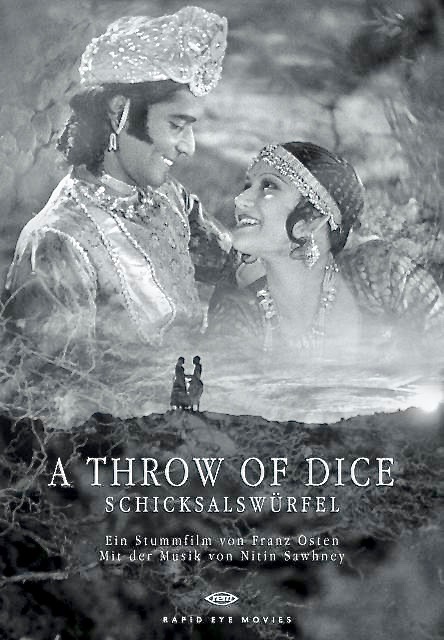
At the 23rd San Francisco Silent Film Festival (May 30-June 3, 2018), the Castro Theater played host to a diverse program of silent era masterpieces accompanied by live music, performed by either solo musicians, small ensembles or orchestras. Some of the new restorations screened included Ernst Lubitsch’s Rosita (1923) starring Mary Pickford, Buster Keaton’s Battling Butler (1926), the 1928 version of The Man Who Laughs with Conrad Veidt and a 1929 German version of The Hound of the Baskervilles, directed by Richard Oswald. As always, the festival also unveils several lesser known titles and rarities such as a magnificent new restoration of Prapancha Pash (aka A Throw of Dice), a 1929 Indian epic produced by Himansu Rai and directed by German filmmaker Franz Osten. A key pioneer effort from the early silent years of Indian cinema, A Throw of Dice holds up beautifully after almost ninety years with its exotic mix of adventure, romance, pageantry and sensuality. And it is an excellent entry point for any silent film beginner. Continue reading

Czech Mates

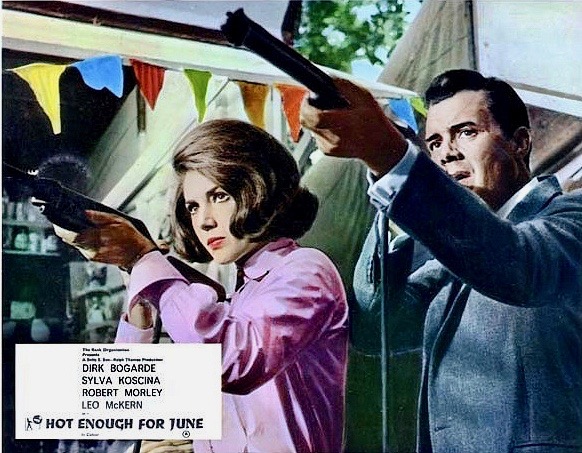
Sylva Koscina and Dirk Bogarde star in Agent 8 3/4 (aka Hot Enough for June, 1964), directed by Ralph Thomas.

Not all of the spy thrillers that followed in the wake of the James Bond craze, which began in 1962 with Dr. No, were pale imitations or grade B action-adventure fare. There were exceptions in this burgeoning genre and one of the best was Agent 8 ¾ (1964, aka Hot Enough for June). Instead of relying on high tech gadgetry, special effects and slam bang action sequences, this British import took a droll, tongue-in-cheek approach to the spy genre and had fun parodying the politics of the Cold War era in its tale of an aspiring novelist being used by British Intelligence as a pawn in their spy games with Communist foes in Prague.  Continue reading